

According To Reddit, Tourists Think These Foods Are Traditional, But Locals Say Otherwise
One of the greatest things about traveling is trying new foods, and nearly every country on the planet has at least a few dishes it's famous for. Take tacos in Mexico, sushi in Japan, and tagine in Morocco. Some tourists even plan trips to certain places specifically for the cuisine, with a bucket list of dishes they want to try once they're there. But how popular are those dishes really with local people? You might be surprised to learn that some "traditional" dishes aren't as ingrained in the local culture as you might think.
In some cases, the disconnect comes down to geography. A dish might have deep roots in immigrant communities abroad but isn't actually a staple in its supposed home country. Other times, it's a matter of audience. Certain foods appear on menus because visitors expect to see them, not because locals regularly order them. And then there are dishes that don't actually exist in their supposed home countries at all.
Over the past year, several Reddit threads have asked locals to weigh in on the foods outsiders assume they eat all the time, and the responses are eye-opening. Instead of confirming stereotypes, locals often push back, explaining that the foods visitors expect to find everywhere are either outdated, overhyped, or more popular abroad than at home. According to multiple comments, these are some of the foods locals say travelers most often get wrong.
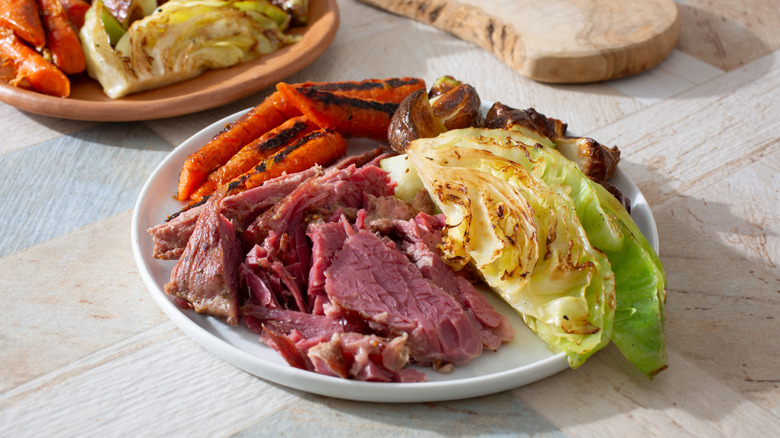
Corned beef and cabbage in Ireland
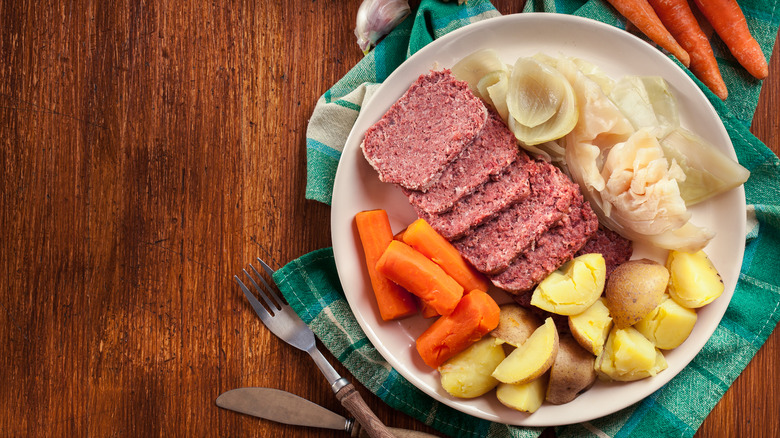
Come St. Patrick's Day, bars and restaurants across the United States tout corned beef and cabbage as an "Irish" special. However, if you make a trip across the pond, you'll rarely see Irish people eating the dish on St. Paddy's Day, or any other day of the year, for that matter. As one Reddit user commented, "Never ate it in my entire life, but tourists seem to think it's the national dish." So, how did the dish become so closely associated with Ireland?
Corned beef is a cut of beef (typically brisket) that's salt-cured. The reason it's called corned beef is because the salt crystals once used to preserve the beef were the size of corn kernels. While Ireland does have a history of salt-curing beef, it was typically reserved for the wealthy and often exported. Salted pork was much more affordable, and thus, more commonly eaten. In fact, boiled bacon or ham with cabbage is still a familiar comfort food in Ireland today.
When Irish immigrants settled in cities like New York City in the 19th and early 20th centuries, they found that corned beef from Jewish butcher shops was more readily available and affordable than pork. When paired with inexpensive vegetables like cabbage and potatoes, it made for a practical, budget-friendly meal. Over time, the dish became an Irish-American tradition. In Ireland, you might see it at some restaurants that cater to tourists, but pork is still the go-to for many locals.
Shrimp on the barbie in Australia
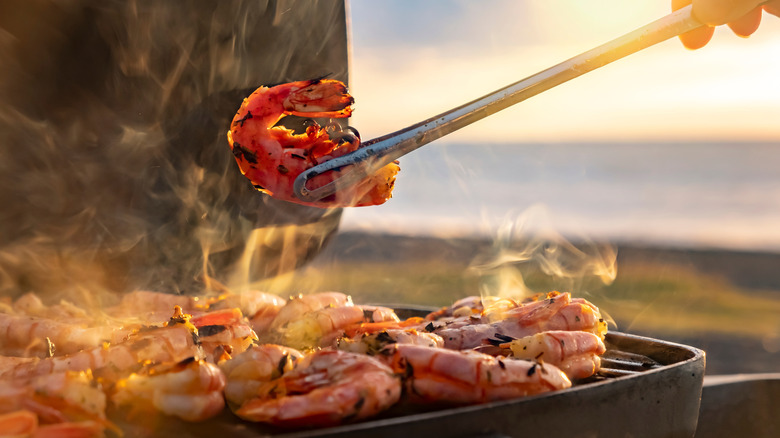
The idea of Australians casually tossing "shrimp on the barbie" has traveled far and wide. And while barbecuing is big in Australia, you'd be hard-pressed to find anyone grilling shrimp. For one, Australians call them prawns. Plus, they're just not a common food to grill Down Under. As one Reddit user said, "Aussies love a barbecue but I've never eaten prawns cooked on one. It would be a weird way to cook something like a prawn."
The "shrimp on the barbie" myth stems from a series of television advertisements the Australian Tourism Commission produced in the 1980s to promote Australian tourism in America. The ads featured Australian actor Paul Hogan (aka Mick "Crocodile" Dundee) showing off gorgeous beaches, sleek boats, and sun-dappled restaurant patios. In one 1983 ad, Hogan famously said, "I'll slip an extra shrimp on the barbie for ya." The word "shrimp" was deliberately used to align with American vernacular.
Since that ad came out, "shrimp on the barbie" has become shorthand for Australian cuisine. It also doesn't hurt that one of Outback Steakhouse's popular appetizers is Grilled Shrimp on the Barbie, further instilling the idea that Aussies love grilled shrimp. In reality, you're more likely to find Australians grilling up meats like steaks, lamb chops, chicken, and sausages (also called "snags"). As for the prawns, a Reddit user said, "We all buy cooked prawns and eat them cold. Especially at Christmas."
Sangria in Spain

Picture yourself sitting at a Spanish cafe having a drink. What are you sipping on? For many tourists, that has to be a glass of sangria. After all, the fruity wine punch is one of Spain's most famous drinks. But if you look around to see what the locals are drinking, sangria probably isn't it. "It's not a drink you order in a bar or anywhere really," said one Reddit user. Another Redditor said, "Spaniards don't really drink Sangria, it's considered a drink for tourists."
Sangria likely evolved from the spiced and sweetened wines that ancient Greeks and Romans drank. In Spain and Portugal, it likely took on its modern form of red wine (the name means "blood," which is a good indication of its color) with citrus fruit and fruit juice sometime after Muslim rule ended in the late 15th century. But it wasn't until the 1964 World's Fair in New York City that sangria was introduced to a wide American audience. From there, it quickly became cemented abroad as the drink most closely associated with Spain.
If you want to drink like the Spaniards do, skip the sangria and opt for a tinto de verano. This bubbly lemon-lime wine drink typically features red wine mixed with a lemon or lime flavored soda. You can also find versions made with white wine and sometimes plain soda water. Another popular drink is the kalimotxo, which features equal parts red wine and Coca Cola over ice.
Frogs legs in France
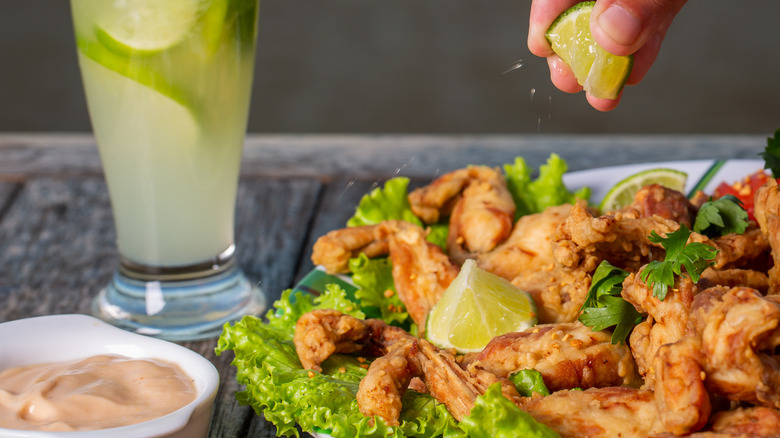
Ask someone to name a "quintessential" French dish, and frog's legs often make the list, right up there with baguettes and escargot. The dish is called "cuisses de grenouille" in France, and it dates back to the 12th century when Catholic monks began eating frog's legs as an alternative to meat (frogs were classified as fish). Later, the French introduced the dish to the New World where it became wildly popular in Louisiana, although it's now somewhat of a forgotten Southern barbecue dish.
Frog's legs are still considered a delicacy in France today, but the dish is not as common as you might think. While some people say they've eaten them and enjoy them, plenty of folks say they're not common at all. For example, one Reddit user said, "I have never eaten any, never seen it on any French [bistro] in France, no one I've known ever craved it — if you see frog legs in a restaurant in France, it's 100% a tourist trap."
Some people point out that you're more likely to find escargot (snails) in France than frog's legs, but that the dish is also somewhat of a stereotype. As one Reddit user put it, "It's mostly a dish that is liked by [the] older generation and is more about your grandma flexing her cooking skills by filling a snail body with cognac-infused stuffing and your grandfather flexing his eating etiquette." That said, the user admitted it's pretty common to see frozen snails at the supermarket.
Singapore noodles in Singapore
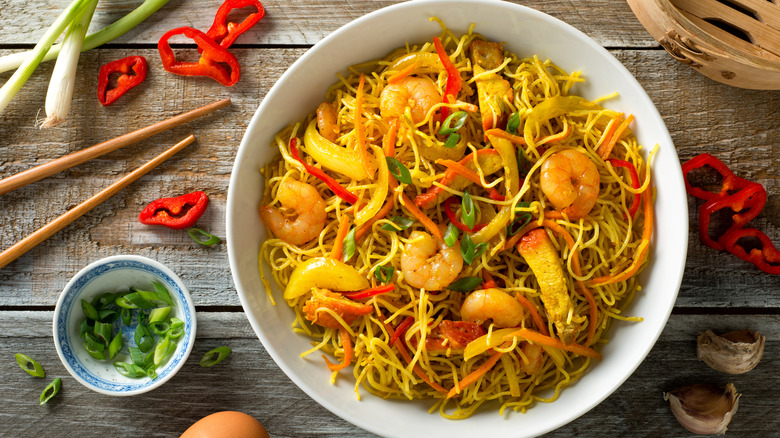
Visit a Chinese restaurant in a Western country like the U.S., Australia, or the U.K. and there's a good chance you'll find Singapore noodles on the menu. The dish typically consists of rice vermicelli noodles tossed with meats like shrimp and pork, eggs, veggies like sliced onions and red peppers, soy sauce, and curry powder. But if you try to find the dish in Singapore, you'll most likely come across plenty of blank stares.
The general consensus among Singaporean Reddit users is that Singapore noodles simply don't exist in Singapore. "I remember the first time I saw "Singapore Noodles" in Australia and asked my dad about it," said one Reddit user. "He just laughed and said he's seen it in almost every other country in the world that he had been to except Singapore and Malaysia." According to most accounts, the dish was actually created in Hong Kong sometime in the mid-20th century and then spread to other parts.
That's not to say the flavors would feel entirely unfamiliar in Singapore, as many traditional Singaporean dishes feature multicultural influences, like Chinese and Indian flavors. For example, char kway teow is a smoky stir-fry of flat rice noodles with seafood, egg, and Chinese sausage. Laksa is a spicy noodle soup featuring thin rice noodles in a coconut-curry broth with add-ins like shrimp, cockles, fish cakes, bean sprouts, and hard-boiled eggs. In other words, the taste may nod to Southeast Asia, even if the dish itself doesn't have roots in Singapore.
Fettucine Alfredo in Italy
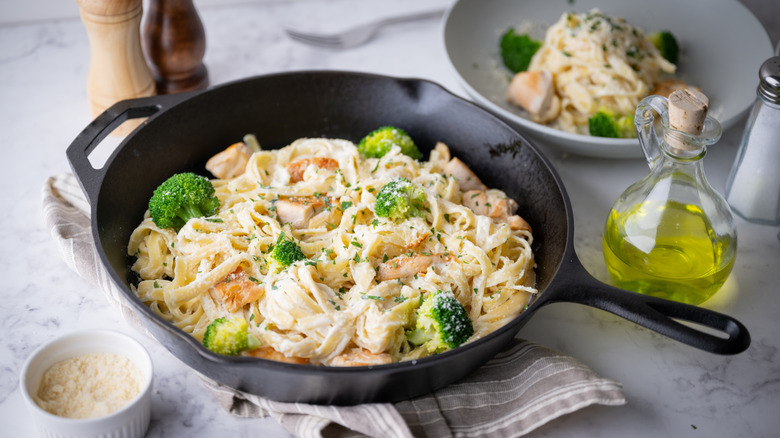
Speaking of noodles, Italy is famous for pasta, but some of the creamy, saucy dishes foreigners assume are traditional aren't really staples in Italian kitchens. Fettuccine Alfredo is a great example of this. While it was created in Italy, it's not widely consumed there. As one Reddit user pointed out, "Half of the time I ask people what their favorite Italian dish is, they answer fettuccine Alfredo. The only place you'll find this is tourist traps."
Fettuccine Alfredo was created by a man named Alfredo di Lelio in 1908. The story goes that he wanted to whip up a hearty and comforting meal for his wife Ines, who had just given birth. He tossed fresh fettuccine noodles in a simple mix of emulsified butter and cheese, and Ines loved it so much that she convinced him to add it to the menu at their trattoria in Rome. When Hollywood couple Douglas Fairbanks and Mary Pickford visited the trattoria and tried the pasta, they spread the word about it back in the States, popularizing it abroad.
While Americans took to fettuccine Alfredo like wildfire, it never really gained traction in Italy. Sure, you can still order it at Alfredo alla Scrofa in Rome, but outside of that, it's mostly relegated to tourist-centric restaurants. All up, many locals consider it in the same vein as some of the "Italian" dishes that aren't actually Italian at all, like spaghetti and meatballs and garlic bread.
Jellied eels in the U.K.
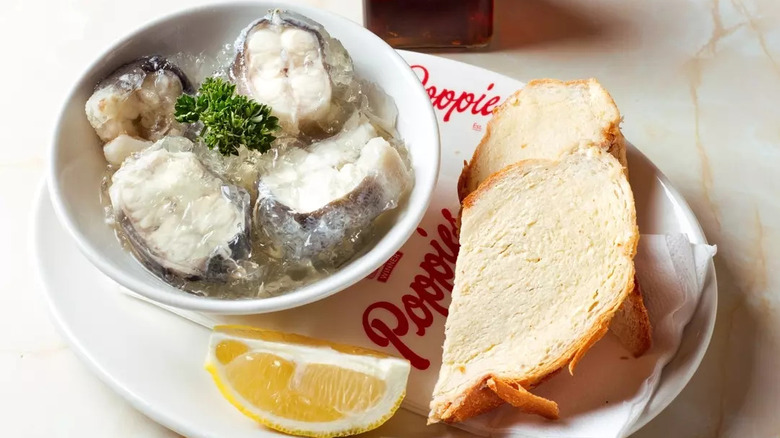
There was a time when eels were all the rage in London. As far back as the 16th century, people were eating eel pie, and by the 18th century, jellied eels were a popular snack sold at street stalls, particularly in the city's East End. The dish consists of chopped, boiled eels cooled in their own juices or set with gelatin to form a savory jelly, and it's typically served with vinegar. It's often cited as one of London's most traditional foods, but if you've never encountered it, you're not alone.
Ask a Brit about jellied eels and they'll likely recognize the name, although many will admit they've never tried them. As one Reddit user put it, "Obviously a few people in London must occasionally eat them but if you surveyed the British population I would bet that the percentage who had tried them would be pretty close to zero." Another Redditor said, "I've never even seen an eel. Alive or dead or jellied."
There are a few reasons the dish isn't as common as it once was. Eel populations in the River Thames have declined significantly, making them harder to source locally, so today, many suppliers have to import them from places like the Netherlands or Northern Ireland. And let's be honest — it's not exactly a glamorous dish. Much like the jiggly Jell-O salads you find in 1950s cookbooks have become passé, jellied eels have also become somewhat of an oddity.
Belgian waffles in Belgium

When you hear the words "Belgian waffle," what do you think of? For many people, that would be a a breakfast dish featuring a large, fluffy waffle covered in an array of toppings like butter, whipped cream, fresh berries, some sort of syrup (maple, chocolate, or fruit), and perhaps even crunchy items like sprinkles, nuts, or chocolate chips. But that's not typically how Belgian folks eat waffles in their home country. And, in fact, many Belgians don't really eat waffles at all.
In Belgium, there are two main types of waffles. Liege waffles are typically small, square, and dense. They're made with a brioche-style dough that's laced with pearl sugar, so they develop a caramelized crust as they cook. They're often eating as-is, no toppings needed. Brussels waffles are larger, lighter, and fluffier. These are the waffles that were presented at the 1964 World's Fair in New York City (the same place many Americans became acquainted with sangria), and that's why many non-Belgians call this style Belgian waffles.
Visit Belgium, and you'll come across plenty of stands selling waffles with infinite arrays of toppings. But according to many Reddit users, they're mostly just tourist traps. Many say waffles are more of a snack or dessert than a breakfast in Belgium, and that they're usually simple affairs. As one Redditor said, "We eat waffles, but not to the extent and the honestly disgusting amount of toppings that 'Belgian waffles' are known for. A waffle is light as air, topped with some sugar."
Surströmming in Sweden
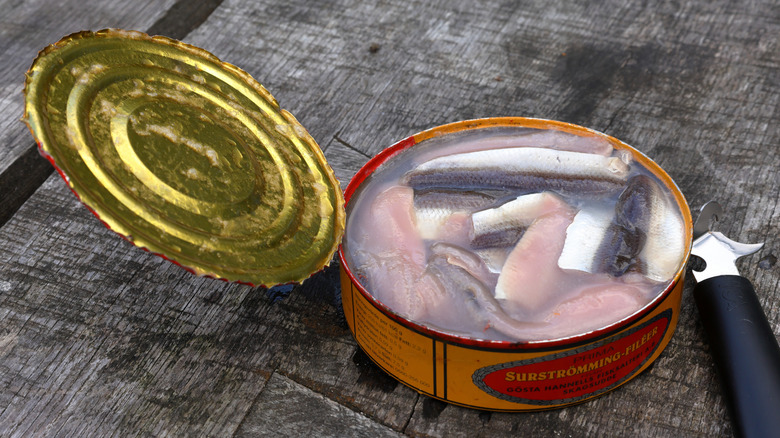
Sweden may be is best known for foods like gravlax and meatballs, but there's another dish that's been garnering a lot of attention lately thanks to viral videos. That dish is surströmming, and it's often described as extremely pungent with intense sour notes and deep umami flavors. It's made from Baltic herring that's fermented in salt water, then canned. It's a traditional dish that dates back to the 16th century, but it's not necessarily every Swede's favorite.
Plenty of Swedes are quick to point out that while people do, in fact, eat surströmming in Sweden, it's far less common than you might think. One Reddit user said, "First of all, it's only a specialty in Norrland, the northernmost part of Sweden where 10% of the country's population lives. Second — even there, they eat it once a year." Traditionally, the dish could not be sold before the third Thursday in August, so it became custom to eat it in the late summer and early fall.
If you want to try surströmming, you don't have to wait for the end of the summer, as it's sold year-round in many grocery stores. However, there are a few things to note. First, you may want to enjoy it outside, as the smell can be overpowering. Many also suggest opening the tin under water and letting the fish soak for a bit to help temper the smell and saltiness. It's typically eaten wrapped in flatbread called tunnbröd with some condiments like sour cream and onions. Alcohol also helps.
Methodology
To compile this list, we combed through Reddit discussions where locals weighed in on the foods outsiders assume they eat all the time. We looked for recurring themes in threads where people shared their thoughts on dishes that are more aligned with tourist expectations than reality. The dishes featured here were repeatedly described as rare, overrepresented, or in a few cases, not really part of the local food culture at all.