

How To Grow A Healthy Lemon Tree In A Pot
We may receive a commission on purchases made from links.
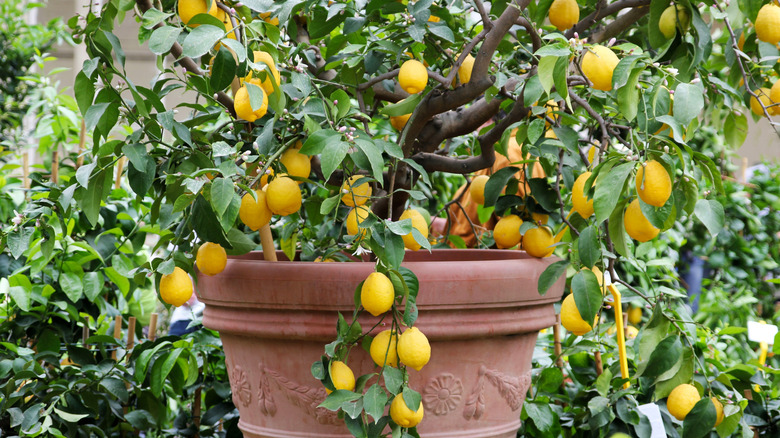
Fresh lemons are an invaluable ingredient in your kitchen. Whether you're upgrading your cocktails with grilled lemons, using lemon juice to brighten the flavor of chicken noodle soup, or, of course, following my tips for making the best homemade lemonade, there is no shortage of ways to use their flavor to enhance your recipes. If you find yourself going through more lemons than you can count, you might be tempted to put your green thumb to use and grow your own lemon tree, in theory increasing your access to this juicy citrus for all of your culinary pursuits.
You'll be happy to know, then, that you don't need acres upon acres of land — or heck, even a garden — to grow your own lemon tree. With some careful planning, you can actually grow your own tree in a pot. Aside from bearing fruit, this planting method will add greenery to your space and allow you to reap all of the socio-emotional benefits of gardening, including reducing stress, all without needing a large amount of space to do so. Granted, growing these plants inside a pot isn't the easiest project to take on (if you're a beginning gardener — be sure to check out my list of things to know before you start), but with these handy tips, you could be well on your way to potted citrus success. Here's what you need to know before growing a lemon tree in a pot.
Select the right tree variety
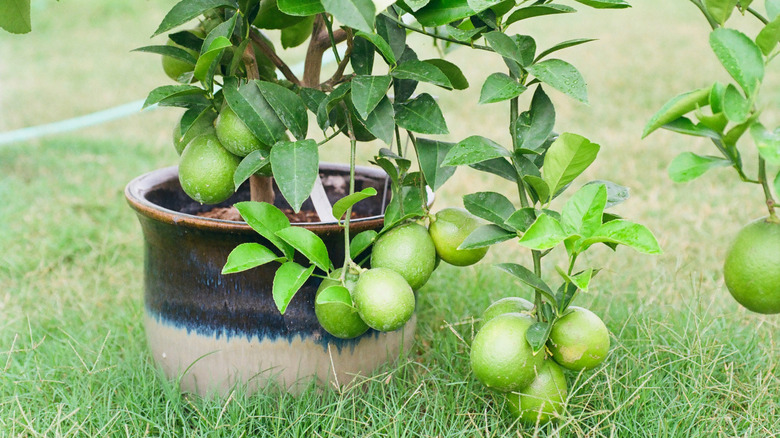
When your recipe for homemade lemon bars calls for lemons, your mind might immediately flash to the basic, yellow, oblong fruit you regularly see in the grocery store. But there are many different types of lemons outside of the basic variety (aka Eureka lemons). Some of them can be grown in pots, while others cannot.
Thin-rinded Lisbon lemons, for example, can be grown in large pots and boast a balanced tartness, perfect for zesting or using in cocktails. Another popular variety that can be grown in a pot is the Meyer lemon (which is actually a hybrid between a lemon and a mandarin orange); these slightly darker-colored fruits are more well-known for their sweetness and can be used in a host of lemon desserts, including lemon meringue pie. Even Eureka lemons can be grown in pots, so you won't have to abandon the tart taste and familiarity of this grocery-store staple.
When shopping for varieties, you're going to want to look for dwarf trees rather than full-sized ones (like Eureka). As their name suggests, dwarf trees do not grow as tall as standard fruit trees, making them more conducive to growing in pots and indoors. It's also important to pay attention to the specific growing conditions required for each variety, as cold tolerance and growing specifics vary.
Use a pot that gives the tree enough room to grow
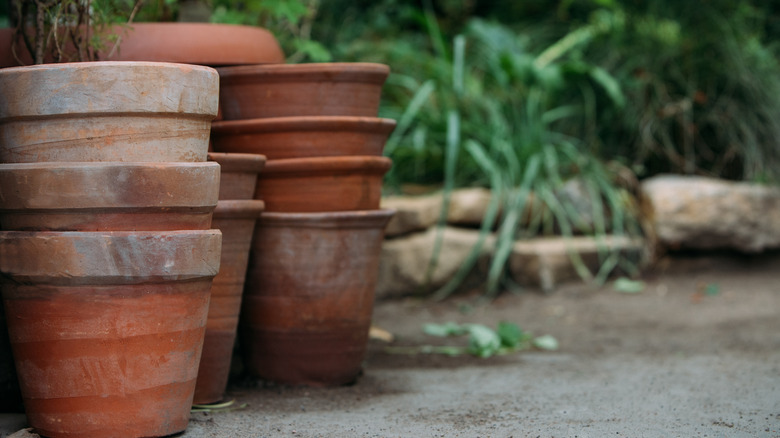
Fruit trees, even the dwarf varieties, are a fair bit larger than most of the plants you'd grow indoors, so you can assume they'll need a bigger container. Indeed, lemon trees generally require larger pots to grow in because of their size and extensive root systems. On the flip side, you'll also want to avoid getting a pot that's too big, as it may make you more likely to overwater your lemon tree. Start with a pot that's about a 1½ feet wide and about a foot deep, though you could potentially upgrade to a 2-foot-wide pot as your tree grows.
Besides giving your lemon tree adequate space to grow, you'll also want to make sure you consider drainage when selecting a pot. Lemon trees don't respond well to overwatering, so your vessel of choice should have enough drainage holes to prevent the roots from becoming waterlogged or moldy. To prevent waterlogging from occurring, consider using a terra-cotta pot instead of one made from non-porous material. This allows water and moisture to pass through from the soil to the pot. Drilling drainage holes on the bottom of your pot before adding soil can also give the water somewhere to go. You also may want to consider adding wheels to the bottom of your pot so that you can easily move it to the sunny spots inside or outside on days when the weather is cooperating.
Pack the pot with compatible soil
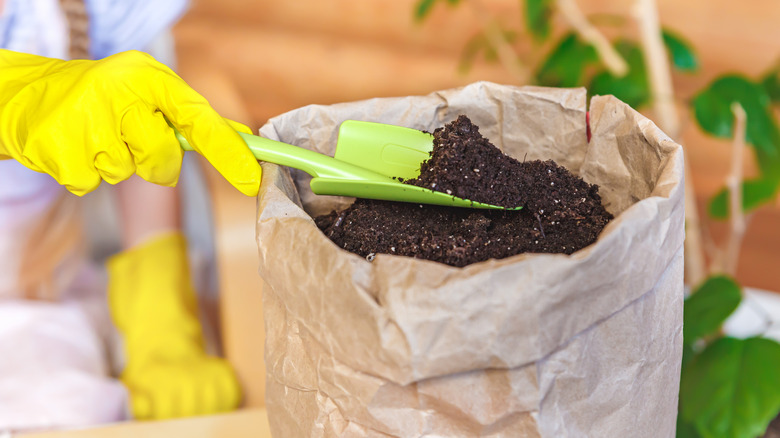
Soil is everything when it comes to planting, which is why it's very, very important to choose one that matches the right pH, aeration, and texture for the plant you're growing. Luckily, there are some brands of potting soil designed specifically for the needs of citrus plants that take some of the guesswork out of deciding.
Because drainage is important for lemon trees, the best soil for citrus plants tends to have a mixture of mostly fine bark with a little bit of perlite and potting soil thrown in. The fine bark may include hardwood chips, which drain easily. You'll also want to make sure your potting soil drains well; some soils are loaded with absorbent peat moss or worm castings, meaning that you'll need to offset the soil with some fine bark to help it drain properly. When you're potting your tree in its new pot, be sure to shake off any of the existing soil so that its roots will be exposed to the new soil, and gently pat down around the plant to remove air from around its rooting system. You may need to add more soil as your lemon tree grows or repot it when the roots become exposed.
It is also important to pay attention to pH, a metric of soil acidity. Lemon trees prefer slightly acidic conditions — between 5.5 and 6.5. Acidity controls iron availability in the soil, and a soil that is too alkaline may cause iron deficiency (chlorosis) — which often manifests as leaf yellowing. You can use a tester (like this Yamron model) to monitor soil acidity and adjust as needed.
Fertilize your lemon tree as needed
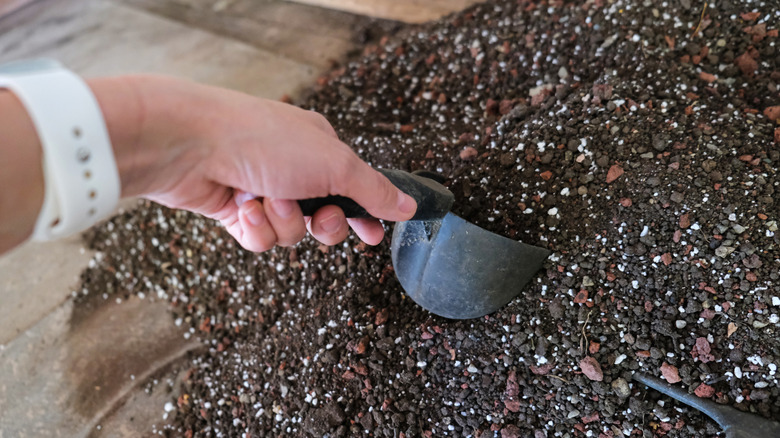
Fruit trees, as a whole, are nitrogen suckers, meaning you will likely need to replenish your lemon tree's pot with specific fertilizers to prevent the leaves from yellowing and to keep the tree healthy. The more often you water it, the more fertilizer you will need, seeing as all of those nutrients can get washed out of the soil. That being said, you can't just love-bomb your citrus tree with an onslaught of nitrogen fertilizers; adding too much nitrogen or at the wrong point in its growing cycle can prevent it from fruiting — and it may even attract pests.
If you are growing a lemon tree in a pot, you may specifically opt for a slow-release citrus fertilizer, which also contains trace minerals like iron, zinc, and manganese. A general rule of thumb is to fertilize your lemon tree every other month or so during the growing season; however, there may be variety-specific instructions; you can check the label on the lemon tree when you purchase it to see these specific requirements.
Another great resource for fertilizing tips (as well as any plant-specific needs you have) are the certified Master Gardeners, which are offered through Cooperative Extension programs at land-grant universities. They can give you recommendations for soil and synthetic additions based on your plant's health and the point in the life cycle that it's in.
Water your lemon tree regularly
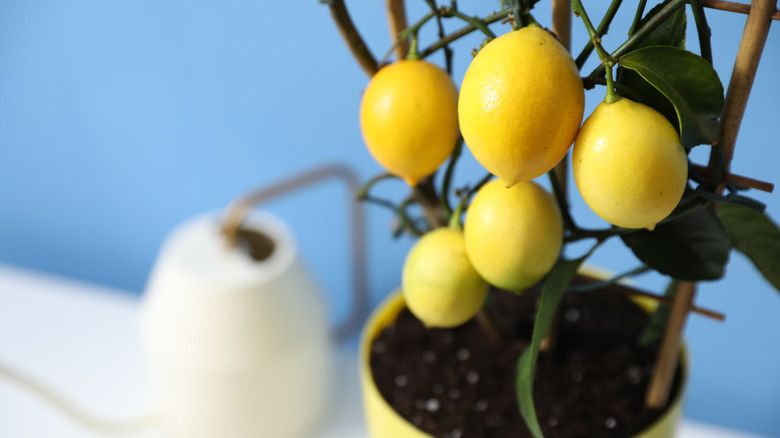
Lemon trees are thirsty plants, so you'll want to stay on top of watering yours to ensure that it both bears fruit and stays healthy. As a whole, potted plants require more water than plants that grow outside of pots; since they're entirely dependent on you to keep them well-watered, you'll want to pay attention to the feel of the soil and the color of the leaves to ensure you're not under- or overwatering it. Water needs also depend on environmental factors and the soil's absorbency, but most container-bound citrus trees may only need to be watered once or twice a week. That said, water needs may be specific depending on the variety (Meyer lemons, for example, prefer well-watered but not soggy soil), so read up on the label before planting.
A good test to see if your lemon tree needs to be watered is to stick your finger into the soil up to your second knuckle — or around 2 inches. Just looking at the top may not be an accurate metric, since soil may be well-saturated underneath. If it feels dry, add water until you can see it trickling out of the bottom of the pot. Some folks have also mentioned only watering your lemon tree once it starts to wilt, as overwatering can do more harm than good. If you go with the latter method, you should notice your tree perking up within about a day. You can also use a moisture tester, though these may not entirely be accurate, as factors such as salinity can alter the reading.
Ensures your lemon tree gets enough sunlight
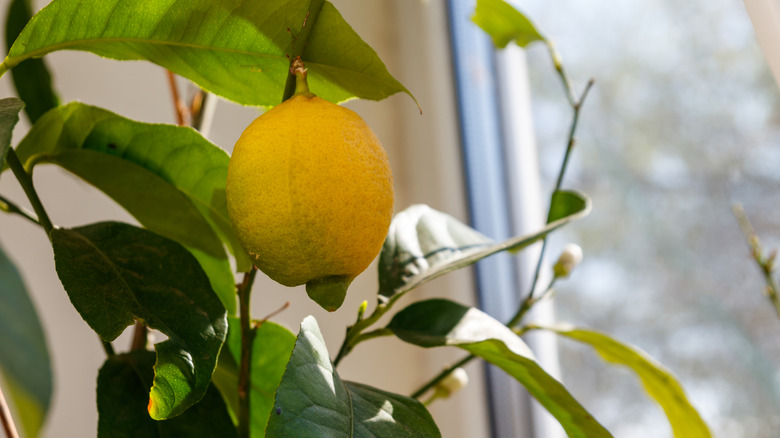
As you can probably guess, lemon trees are heliophiles (sun-loving) — but only to an extent. Lemon trees need between six and eight hours of direct sunshine a day to thrive and produce fruit; however, they can essentially get sunburns if they aren't taken out of the sun enough or if the light is not gradually introduced. Part of this is due to the glossy coating on the outside of the leaves, which has a tendency to heat up rapidly, and because they are lower canopy trees — meaning they grow underneath taller species. The bark and leaves of young trees are especially vulnerable to sunburns. You can identify these by scorching or curled leaves, failure to thrive, bark damage, susceptibility to nutrient deficiency, fruit dropping, and more.
The best approach to prevent sunscald is not to apply sunscreen to your trees (we wish it were that easy). Instead, you'll want to gradually harden them by introducing them to morning sunlight and moving them to a shadier spot when the UV index starts to rise. Over the course of weeks, you can extend how long young trees are left in direct sunlight by short increments, though you'll want to avoid exposing them to high-sun events and heat waves. Paying attention to moisture and nutrients will also help reduce stress on the plant and help ease the acclimatization process.
Protect your lemon tree from the cold
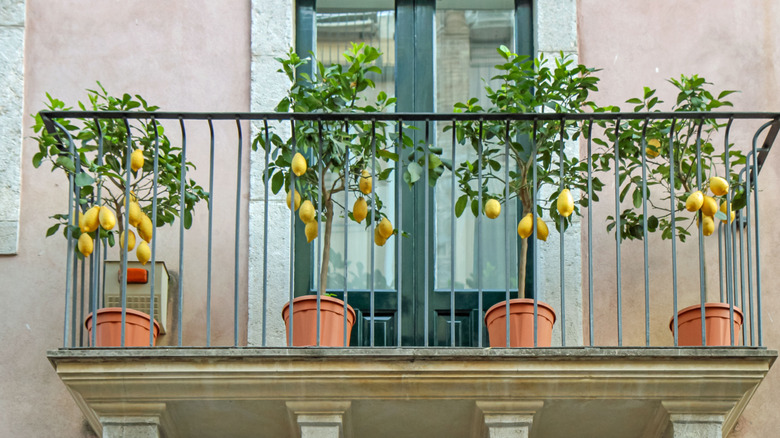
There is a reason why lemon trees don't grow in the Arctic Circle. These fruit trees are big fans of warmth, so you'll want to be sure to monitor ambient conditions in your space to ensure that your tree can thrive. Citrus trees thrive between 55 degrees Fahrenheit and 85 degrees Fahrenheit, though they can be exposed to colder temps for short periods of time — however, this is dependent on the variety. Meyer lemons, for example, don't really like temperatures below 50 degrees Fahrenheit, so if you live in a place where the temps dip at night, you may want to consider bringing your pots inside. In the colder months, be sure to elevate the container to improve its airflow and mist it regularly to increase the humidity and combat dryness.
Although citrus trees can tolerate colder temps, you won't want to expose them for too long (regardless of the type of lemon tree). If you normally keep your citrus trees outside, be sure to bring them inside — either in a garage or your home — before anything frosts (or dips below a safe temperature). Knowing your plant hardiness zone is important if you plan on keeping plants (including potted lemon trees) outside year-round, as the map will inform you of the minimum annual temperature of your region (essentially, how cold you can expect it to get) and what plants can survive near those temperature limits. Meyer lemons, for example, can be grown safely outdoors year-round in zones 9 through 11 and will need to be brought inside for at least part of the year in colder zones.
Keep an eye out for pests
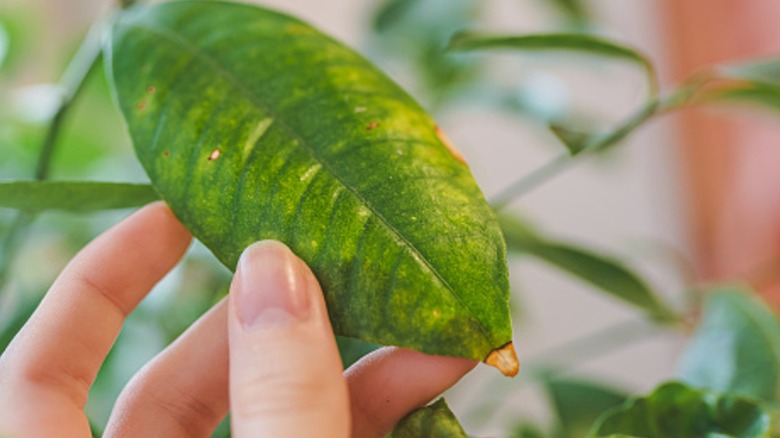
Sure, growing your lemon tree in a pot inside is a great way to deter hungry critters, but you still need to keep a watchful eye on your plants even indoors in case pests start to appear. Aphids and boring insects may affect Meyer lemon trees in particular, while other citrus species may be at risk of infestations of mealybugs, scale, and whiteflies. Earwigs also like citrus trees, as do small moths called citrus leafminers, whose caterpillars leave behind meandering bite marks on foliage.
It's better to be proactive than reactive when it comes to pests, meaning that inspecting leaves, roots, and the bark for any signs of damage or insect presence is easier than dealing with a large-scale infestation. Keep in mind healthy citrus trees are less susceptible to damage than ones that are under-watered, not receiving enough nutrients, or undergoing some sort of stress, so keeping your plant in good shape is paramount to pest prevention.
If pest issues arise, you can consult your Master Gardener and/or Cooperative Extension Office about these infestations and explore management solutions beyond just chemical sprays. These folks will help you identify pests and select a treatment option that works best for that specific pest. Oil treatments, for example, have been shown to treat Asian citrus psyllid and citrus rust mite infestations, while utilizing parasitoid wasps in outdoor spaces may ward off other pests.
Prune your lemon tree for healthy growth

Pruning your plant can seem somewhat counterintuitive: Why would you cut a plant back if you want it to grow? However, this process is actually helpful, as it cuts back dead or damaged material and allows new plant matter to grow in its place. You don't want to get too far ahead of yourself and cut too much off the plant, though, as this can stifle new growth. Ideally, you should prune your tree after moving it, after the mature fruit has been removed, and before it starts to flower again.
You'll want to remove any pieces of wood that look broken, have blemishes or signs of fungus, or sound hollow (meaning they're dead). Always cut these limbs at the point where they meet the main branch of the tree. You'll also want to cut back any suckers, which usually pop up near the root ball and the graft site. They will not bear fruit; instead, they just suck water and nutrients away from the rest of the tree. You should also thin the center of your tree — with care. If there are weak limbs that can't hold full-sized fruit or that won't get enough sun to thrive, remove them. Be sure to wear gloves during this process; Meyer lemons in particular have thorny points.
Be patient with your potted lemon tree
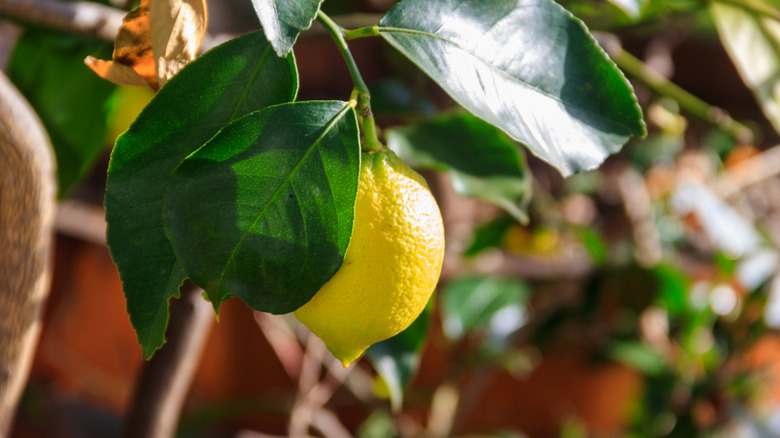
We hate to tell you this, but if you want an immediate return on your plants, you should opt for an indoor herb garden that will thrive if you avoid certain rookie mistakes rather than a potted fruit tree. You will need to wait at least a year for a Meyer lemon tree to bear fruit, and you'll only want to cut (not pick, as twisting and pulling can damage the plant) the fruit from the tree once it's fully ripe and soft to the touch. Other types of dwarf citrus trees bear fruit faster than full-grown plants — usually within two to three years.
If you want to maximize fruit yield, you can start by taking good care of your tree, such as by watering it often, providing adequate sunlight and shade, and pruning it. You can also purchase a 2- or 3-year-old dwarf lemon tree from a nursery instead of starting one from seed (the latter of which is unpredictable anyway and is generally not recommended, especially when it comes to disease resistance) to give yourself a head start. As long as you are patient and follow these tips carefully, you could eventually have a fruit-bearing lemon tree in your living room in a matter of years — just be sure you have a list handy with ways to use all that fruit when the time comes.