

Jet Tila Shares His 6 Top Tips For Making Shumai
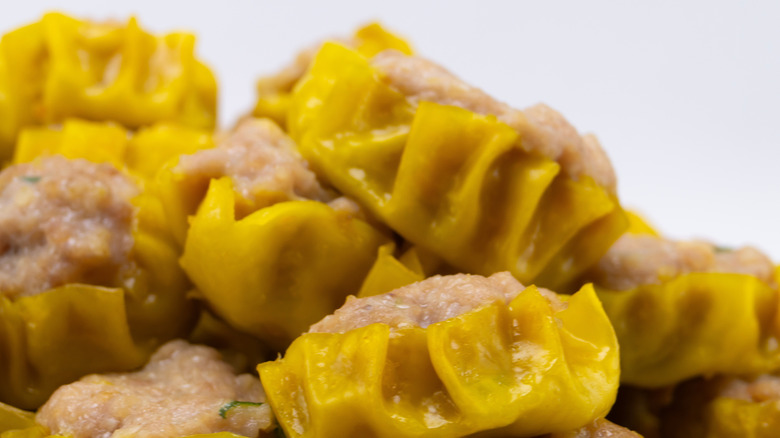
Do you love bite-sized morsels of chewy, warm, goodness as much as I do? And are you tired of spending money on delivery every time you're craving shumai? Shumai are small, steamed dumplings often prepared in servings of four, and eaten alongside other dim sum dishes (although if you're feeling hungry, you certainly could have a large serving of shumai on their own). What separates a shumai from other dumplings is its distinct look — a stuffed yellow egg noodle wrapped around a meaty interior, which you can see, because it's open on top.
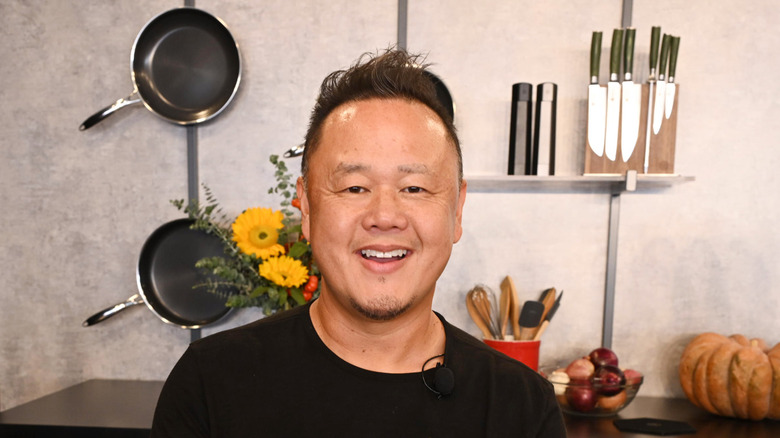
While they may sound daunting, you don't have to have decades of culinary experience to create your own shumai. I had the opportunity to speak exclusively with celebrity chef and cookbook author Chef Jet Tila at the Sun Wine & Food Fest at Mohegan Sun about how to achieve your own dim sum experience at home. Chef Tila took the time to impart his years of knowledge on how to hand-make these delectable savory treats, and shared his top tips to set you up for success!
1. Don't make your own wrappers
If you're making shumai from scratch, you may have an impulse to start with mixing up your own dough. However, Chef Tila encourages you in your first endeavor to just buy your wrappers at the store — keep it simple!
"First time: don't make your dough. It's just too much work," Tila says. "Noodle-making is a mastery." He recommends store-bought shumai wrappers (or wonton wrappers, if shumai aren't available), especially the yellow ones, which indicate they were made with more egg and are likely to have a thin skin.
Look in the refrigerator or freezer section for packs of around 20. The wrapper should already be round, which makes them ideal for traditional shumai. However, if you have to use wonton wrappers, be prepared to cheat or manipulate the edges, as they're typically square. You could also use a cookie cutter to make round shapes out of the square dough.
2. Mix fatty pork with diced shrimp
Sorry to the vegetarians out there: while you can use a non-meat filling as a swap, Chef Tila points out that shumai are Cantonese in origin, and a true Cantonese filling traditionally uses pork and/or shrimp.
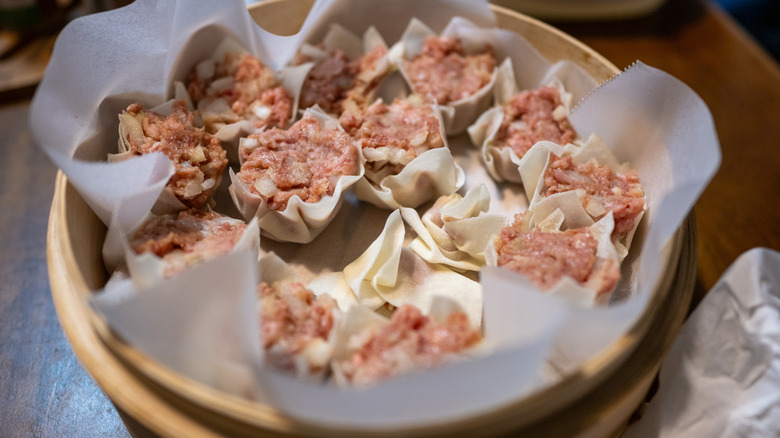
He recommends using a 50% fatty pork and 50% diced shrimp combination, and as Tila says, "The hallmarks of Chinese flavor are oyster sauce, chicken powder, and sesame oil," so make sure to mix those in, as well. You can finish off your interior mix with a very small amount of ginger and optional scallions, if you prefer. The shrimp should be very coarse, chopped with a small dice.
For those who love everything extra-spicy, Tila emphasizes that if you want to be authentic, you would never add heat at this stage. Save any chili oil or other spice for dipping.
Don't overstuff your shumai, either. Your wrapper should be about 4 inches across, so your filling should be about 2 inches wide to leave room for the soft container to wrap everything comfortably.
3. Shape like an upside down drum
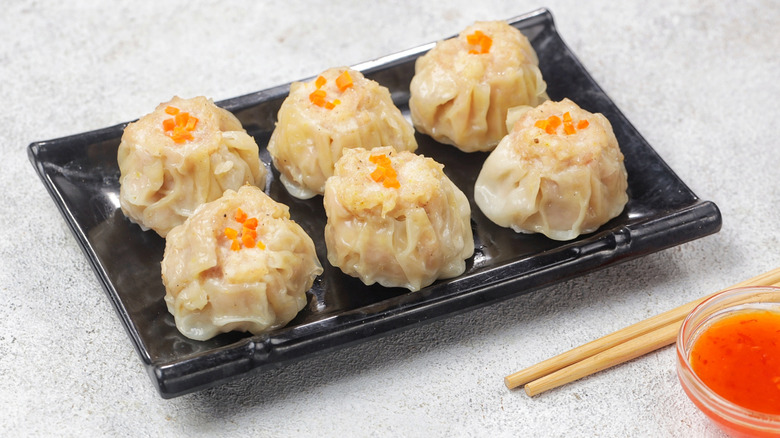
You may have noticed one primary difference between shumai and dumplings is that shumai are traditionally open on top, revealing their delicious, internal filling. (Some shumai also add a garnish on top you can see like or pea, tobiko, or fish roe, but that is optional, and not necessary.)
Chef Tila describes the shumai shape as an "upside-down drum," with the bottom pulled tight across and around the filling. You can easily create this shape by cupping the wrapper in your hand, rotating, and pulling the dough upwards with your fingers to create the small waves that are typical.
This shape makes shumai easier to make than some of its other comparable cousins. As Tila notes, there are no special pleats or folds to learn, so you should be able to make these much more quickly than other Asian snacks such as pot stickers, wontons, or dumplings. He says that "you will master a shumai a thousand times faster" than those others, which is encouraging.
4. Use what you have to steam
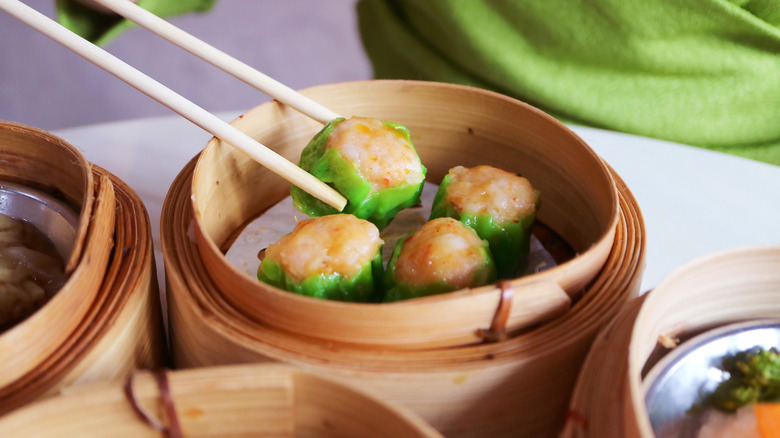
If you want to make genuine shumai, Chef Tila says, "There's only one way to authentically prepare shumai, and it's steaming." A shumai must never be boiled or fried. Tila recommends a steamer basket with parchment paper or a lettuce leaf on the bottom, and to steam for 6 to 8 minutes or until the center reaches 165 degrees.
As for how many you can steam at once, Tila says, "As long as you put a little space in between all your dumplings, in a six-inch basket, you [can] serve them as a four, but you can probably make six to eight."
However, not to worry if you don't own a steamer basket — you can make a DIY steamer! Tila says if you have a pot and a riser, you're good to go. One home chef hack is to add aluminum foil balls with water under a plate in the pot if you're short on risers.
5. Save any spicy elements for the dipping sauce
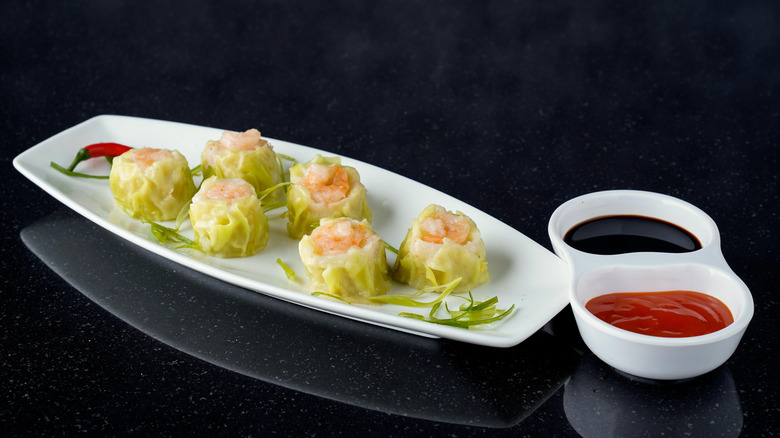
Remember when we talked earlier about keeping the authentic filling straightforward and not spicy? Now that your dumplings are complete, you can change up the flavor and dunk them in a sauce of your choice.
However, as Chef Tila notes with a smile, "If you want to be authentic, you serve nothing [on the side]." As a purist, he prefers to keep his shumai sauceless. But he does say you can have soy sauce or a little chili garlic, if you desire.
Tila also recommends his Thai-Chinese grandmother's "secret" hot sauce, which is not-so-secret anymore. He includes the recipe in his cookbook and online at Food Network — a mixture of Sriracha, soy sauce, and sugar, for the more adventurous and heat-seeking. Other online recommendations include adding a bit of vinegaror Chinese mustard to soy sauce for some bite, but largely, you're encouraged to keep the shumai simple.
6. Freeze the leftovers uncooked
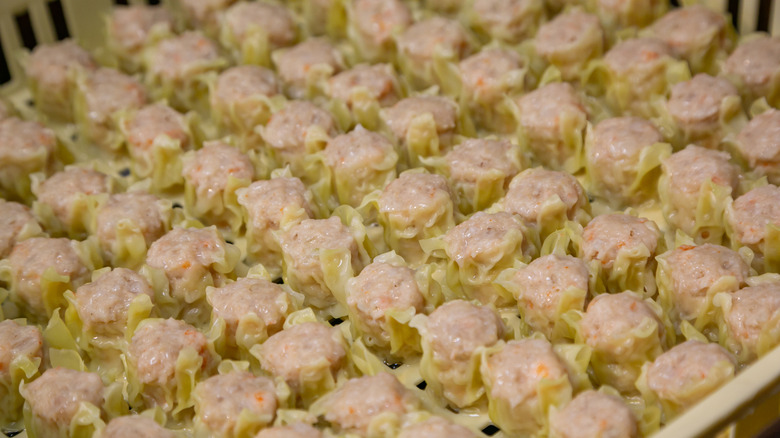
The first time you make a batch of shumai, you may overestimate the quantity you actually need or want to consume — or just give up on the effort it takes to steam them all by hand. (Although it's likely your shumai will be so delicious you'll eat them all!) But just in case your eyes are bigger than your stomach, don't steam them all right away. Save the raw shumai and put them in the freezer before they hit the steamer.
Chef Tila says, "If you're making a lot, freeze them uncooked. You can put [the leftovers] in the steamer frozen for twelve minutes (instead of eight). That's how we do them in bulk at a casino or hotel." If done correctly, your dumplings will retain their supple richness, and if frozen airtight, will preserve their umami flavor for the next time you have a shumai craving. "It's my favorite dim sum dumpling," says Chef Jet Tila. I couldn't agree more!