

Shaken Or Stirred? We Put Both Martini Making Methods To The Test And One Came Out On Top

Whether you are ordering a martini at a bar or making one at home, the devil is in the details, as they say. After all, you can't just ask for a martini. There are a few decisions to be made about the cocktail. Do you want vodka or gin? An olive or a lemon peel garnish? Also, would you like it served up (aka in a martini glass without ice) or on the rocks? While the answers to the first two questions are pretty straightforward and depend on your personal tastes, if you answer up to the third, you are then faced with another question: Shaken or stirred? This one often throws people for a loop, but does it really make that much of a difference?
Yours truly was a server and a bartender for 20 years, and, as you might expect, I made countless martinis during that time. However, I wanted to put the age-old question of whether a classic martini should be shaken or stirred to rest once and for all, so I made a couple of gin martinis to put both methods to the test. While both have their merits, in the end, only one came out on top. If you're ready to find out which method reigned supreme and start ordering and making your martinis so they match your preferences to a T, look no further. After all, you don't have to be as debonair as James Bond to be a martini pro.
What goes into a classic martini?
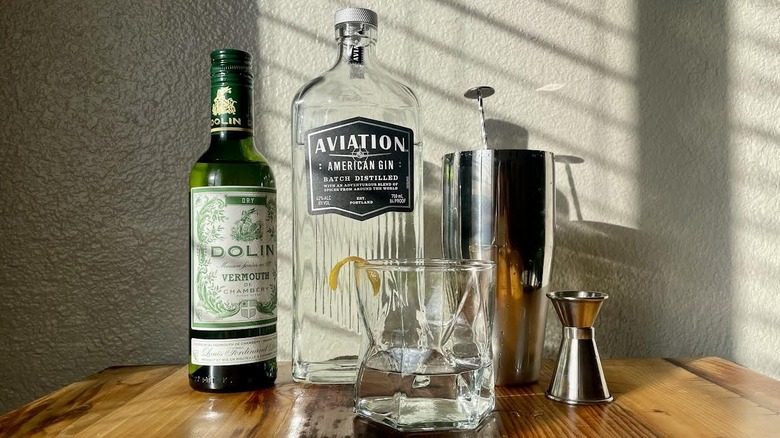
Martinis come in all different formats. Technically, everything from a Cosmopolitan to a Gimlet to an Espresso Martini is, in fact, a type of martini. However, a classic martini is what most of us think of when we hear the word. I mean, there's no denying that it defines the genre. Now that we have that settled, what actually goes into a classic martini? For all the amateur home bartenders and busy mixologists out there, luckily, not much.
A classic martini contains 2.5 ounces of gin or vodka, 0.5 ounces of dry vermouth, and a lemon swath (aka peel) or olive garnish. Of course, some ice is needed to chill it as well, but it doesn't go into the final drink if you order or make it up (in a martini glass) — on the rocks is a different story.
When testing whether a classic martini should be made shaken or stirred, I opted for gin and a lemon swath, but even if you go for vodka and an olive, the results will be the same regarding which method leads to the best cocktail. Vodka and gin are both booze, after all, and the garnish is just the finishing touch.
Theory behind shaken
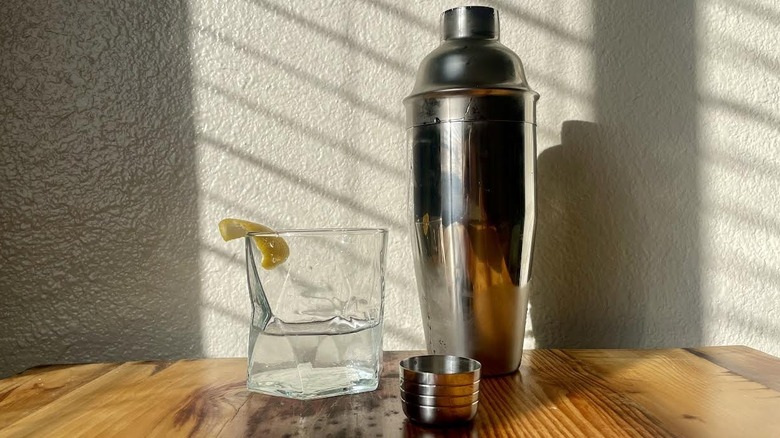
There are many instances when shaking a martini or any cocktail, for that matter, undeniably leads to better results. For example, if a drink recipe contains juice, citrus, egg whites, fresh herbs like mint, or sweeteners like honey or agave, a quick shake is required to ensure all of the ingredients mix with the alcohol properly. However, with a classic martini, none of these ingredients are present, so the argument to do so gets a bit weaker. In fact, you might even want to take that literally because when you shake a classic martini, it actually leads to more dilution, i.e., a weaker drink.
One benefit of shaking a classic martini is that it reaches a maximum chill level. Translation: It's as cold as possible, and it stays that way for an extended period of time. To achieve this, you have to add the ingredients to a shaker (a mason jar also works) and shake vigorously for about 10 seconds. Still, the timing may vary, so just keep shaking until the glass or shaker becomes cold to the touch and, in the case of a metal shaker, gets a little frosty on the outside. Ideally, when you pour your shaken martini into a glass, it will have tiny shards of ice floating on top. Quick reminder, though, these tiny flecks of ice are watering your martini down. Still, will the added water mellow the harshness of the gin and dry vermouth or simply make it less appealing?
Theory behind stirred
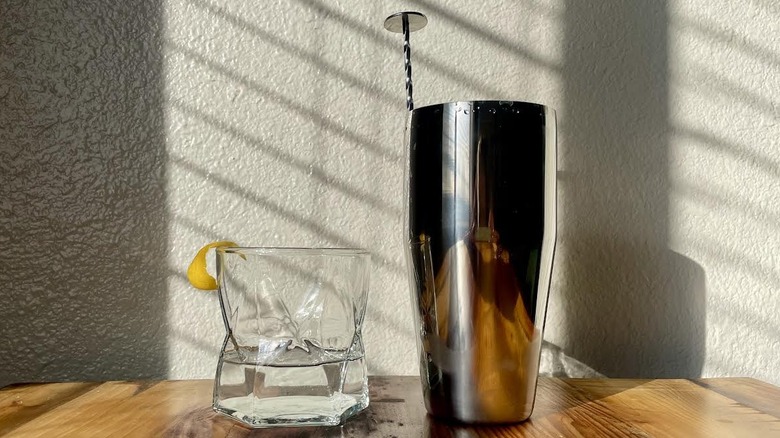
As for the theory behind stirring a classic martini, it centers on prioritizing a pure drink with minimal dilution. As opposed to shaking, stirring your classic martini gently combines the elements without adding quite as much water to the mix. Even so, there are quite a few factors that contribute to doing it properly. Get one of them wrong, and you'll wind up with a diluted martini regardless of how hard you try to get it right.
To properly stir a classic martini, you'll want to add dry vermouth and either gin or vodka to a glass with ice and stir for anywhere from 25 to 35 seconds. It may take a few tries to get your ideal level of chill just right, but once you do, note how long it took and stick to it moving forward. Unfortunately, though, consistency is key, and it spreads beyond timing. The size of the ice cubes and the speed at which you stir also make a difference. The smaller the cubes and the faster the stir, the more dilution occurs. This may seem more complicated than shaking, and it is. However, many classic martini lovers swear it is the way to go — James Bond be darned — because watering down a boozy drink like a classic martini is not considered ideal. So, who has it right, the shaken or stirred crowd? Let's find out!
Taste test: Shaken
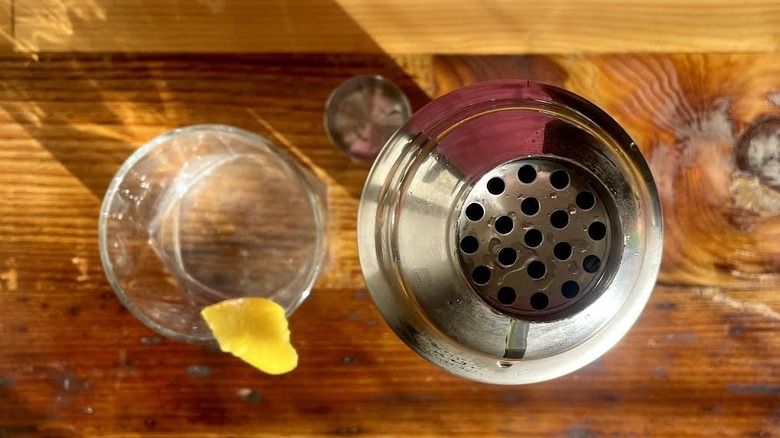
Now that we have all the details out of the way, I started my taste-testing adventure by shaking up a gin martini. After shaking it vigorously until the tin was extra cold and frosty, I poured it into a glass and garnished it with a lemon swath. By sight alone, I could tell it was deliciously chilled thanks to an abundance of flaky ice shards floating on top. Would shaking it lead to a better martini, though? I couldn't wait to find out, so I went in for the kill, i.e., got straight to tasting.
After a small sip of my shaken gin martini, I knew I was in for a treat. Not only was it uber cold, as a good martini should be, but it had a mellowed out flavor that could only be the result of the added water. Speaking of which, once I stirred up my second martini, it became apparent exactly how watered down the shaken one was because it had significantly more volume overall. Regardless, I seriously enjoyed the smooth flavor the added water gave the martini. Don't get me wrong, I could still taste the gin and dry vermouth, and the citrus from my lemon garnish shone through as well. However, instead of being harsh, the taste was delectably smooth and satisfying. Plus, as you'll learn coming up, it blew the stirred martini out of the water when it came to staying cold and drinkable for longer. Just saying.
Taste test: Stirred
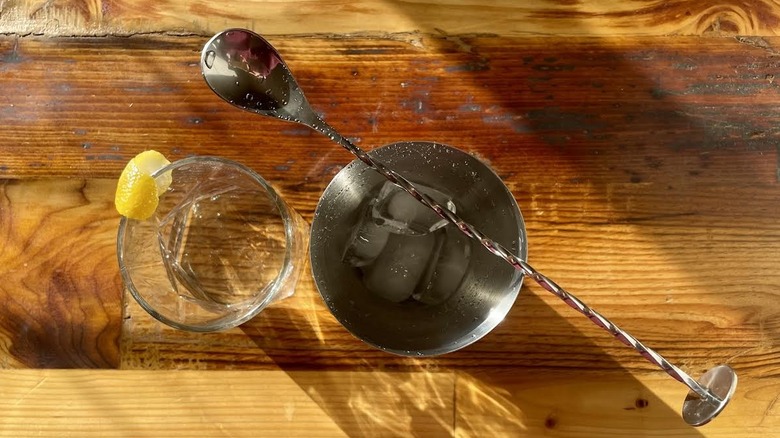
After a quick taste test with my shaken martini, I immediately got to making another, but this time stirred. I wanted to do a direct comparison of the two methods, after all. I stirred my gin martini for 30 seconds (yes, I timed it), and then poured it into a glass. A quick side-by-side comparison clearly showed that the stirred martini had less volume. This isn't a slight, though. In fact, it's a nod to how effectively stirring prevents dilution. It was plain to see that it wasn't nearly as watered down as the shaken martini. Martini purists rejoice!
As for taste, my stirred gin martini tasted significantly purer and less diluted than my shaken one, because it is. No surprises there after comparing volume, though. Even so, it had nice, sharp edges and lots of bite. So much so that it actually slowed me down a touch, but maybe that was a good thing. Regardless, my stirred martini boasted bold, unrelenting flavors. With each sip, I thought this is a potent drink, and it sure does taste and feel like one. Not that the shaken martini didn't taste strong, but the stirred version was pure, simple, and nothing if not in your face.
Aside from dilution, the main difference between my shaken and stirred gin martinis was how long they stayed chilled. As you might suspect, the stirred one lost at this game. In fact, it lost its chill quite rapidly. Bummer.
Final verdict: Shaken martinis are where it's at if you prefer a smoother taste and the ultimate chill
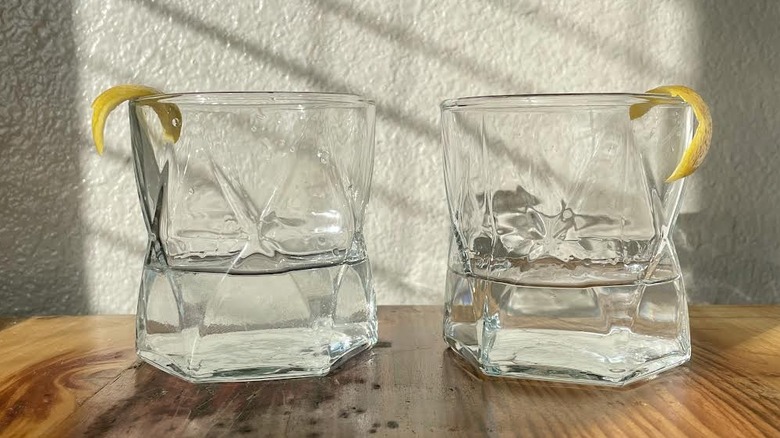
After tasting both the shaken and stirred gin martinis I made, I came to a final conclusion about which one came out on top. For me, it could only be the shaken one. I know it is a bit diluted, but I enjoyed that. I mean, without a touch of water, it is basically a giant shot of straight-up booze. Not that that is necessarily a bad thing, but I loved how the water mellowed out the flavors. I have to say, I seriously enjoyed the ice on top as well, and the fact that it stayed chilled for significantly longer was the icing on the cake. Could this be an unpopular opinion? Yup, but what can I say, shaking proved to be the far superior martini-making method.
Additionally, anyone who likes a dirty martini should always opt for shaken. Otherwise, the brine will not thoroughly mix in and become a cohesive part of the cocktail, and nobody wants brine just floating on top. No, thanks!
So, what did all this teach us? Stir your martinis if you value purity. If you like a smoother taste or are just starting to dabble in the world of classic martinis, it's shaken all the way. With that in mind, I guess you can go ahead and call me James Bond because it's shaken for me forevermore.