

8 Mistakes Everyone Makes When Deboning A Whole Chicken
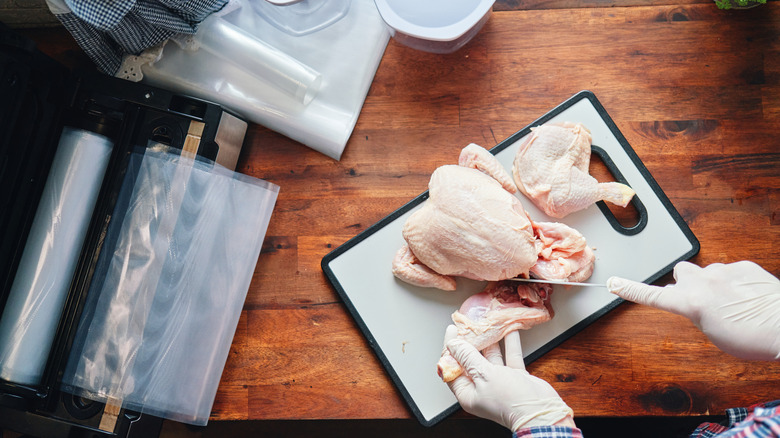
The thought of having to break down and debone a whole chicken may strike immense fear in a novice home cook. After all, we have butchers for a reason, and it's easy to take for granted the fact that the grocery store is filled with most of the individual cuts and portions that we need. However, even if you don't need to debone a chicken every day, it's always a good idea to know how to on the off chance that your recipe calls for it.
That said, the fact that all home cooks should know how to debone their own chickens doesn't make the task itself any less intimidating. To get the ins and outs of this important skill, we spoke with chef Franklin Becker of New York City's Point Seven Restaurant. Becker shared some of the pitfalls and mistakes that you may be making when breaking down your bird and how to resolve them for a more seamless deboning experience.
1. Mistake: Not deboning for the right recipes
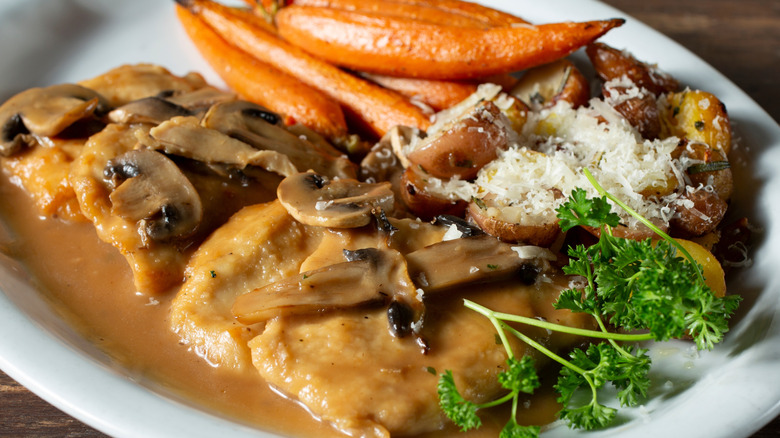
You don't want to create any more unnecessary work for yourself in the kitchen, so going through the process of deboning your chicken when you don't necessarily need to may be a waste of your time. However, as chef Franklin Becker explains, the purpose of deboning a chicken is that it "cooks quicker and more evenly" — so you'll certainly want to do it if your recipe specifically calls for it.
When we asked Becker which recipes he would recommend deboning chicken for, he named a few examples, including chicken marsala, chicken paillard, and chicken supreme. The thing that these recipes all have in common is that the chicken isn't cooked for very long, and having massive pieces of meat on the bone would make cooking the meat quite difficult. "The style of cooking warrants a boneless chicken breast," Becker says. "It cooks quickly and stays tender." Some instances where you don't need to debone your chicken include frying, roasting, and spatchcocking, which is the chicken prep trick you need for crispy skin because it removes the breastbone but not the rest of the bones. The bones act as a buffer against the heat, keeping the meat moist and flavorful. Remove them only when it's warranted.
2. Mistake: Allowing the cutting board to move around
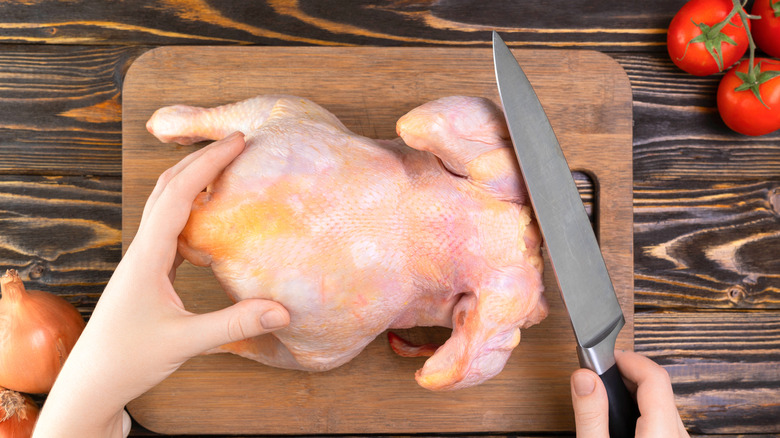
If you are deboning a chicken, you'll first want to make sure you take all of the necessary safety precautions. Chief among them is ensuring that your cutting surface doesn't move around. One of the most common cutting board mistakes that a home cook can make is not securing the board. If the surface is wet or the board doesn't have any plastic edges to keep it in place, you could be opening up the door to accidents. The wet towel hack that prevents bowls from sliding while you're mixing also works to prevent your cutting board from moving around.
You could also be making your work surface inadvertently slippery by rinsing your raw chicken, which is always a mistake. Not only is a slippery bird an accident waiting to happen, but washing your chicken before deboning it (or working with it in general) is a big no-no because it can spread bacteria around your kitchen and cause cross-contamination.
3. Mistake: Using the wrong knife
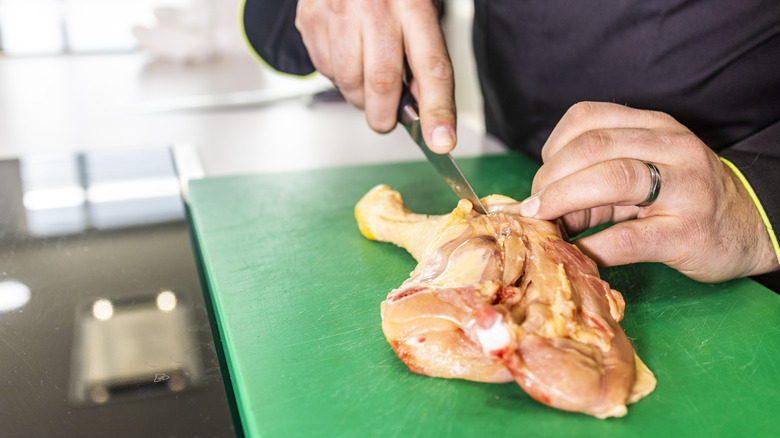
Deboning your chicken is an intricate task, so it requires a knife that can get into all those nooks and crannies. Franklin Becker explains that the two tools that you need for deboning a chicken are a boning knife and your fingers. You may not be familiar with this type of kitchen knife and when to use it unless you break down meat often. The blades tend to be more nimble and smaller than the ones you'd find on chef's knives, which allows you to get into those joints and near the bones of the carcass with ease. The boning knife's flexibility is also one of its most important features, as is its ultra-sharp tip. Some often confuse it with the filet knife, though the filet knife is designed to cut fish, which means it has a little more flexible of a blade. In a pinch, you can use a filet knife instead of a boning knife to debone your chicken.
Besides making sure you have the right knife, Becker also notes that it should be sharpened. "A sharp knife is important for all skills in the kitchen," he says. "You can simply see if your knife can cut a piece of paper in midair cleanly, or you could see how easy it is to cut through a lemon without too much effort." Besides being more effective at cutting through the chicken, a sharp knife also prevents accidents in the kitchen. You can sharpen your knife using a whetstone or invest in a knife sharpener before you start.
4. Mistake: Missing the joints
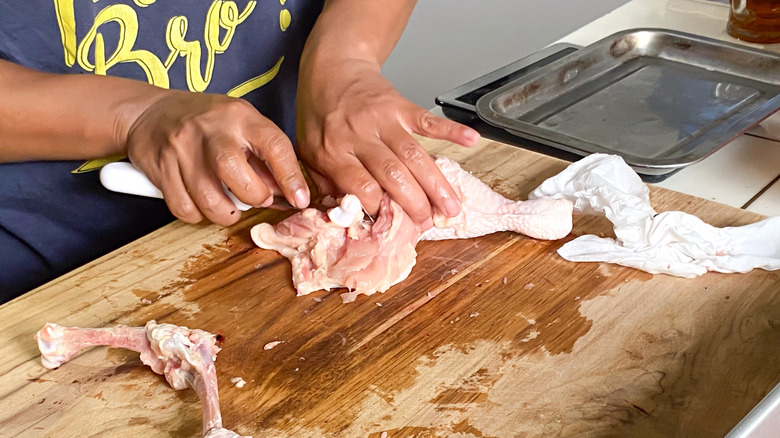
When we asked Franklin Becker about the most common mistakes people make when deboning chicken, one of his responses was missing the joints on the bird. These joints are made up of cartilage and soft tissue, meaning they should come apart when you work a sharp knife through them. However, if you're just stabbing into the bird and blindly hacking around the joints in an effort to pull the bones out, you could be wasting meat unnecessarily or potentially chipping off bone fragments (hello, choking hazard!). Following the joints of the bird and cutting around them accordingly will allow the meat to come off easily and prevent you from leaving any behind.
As Becker explains, you should first cut along the backbone of the carcass (spatchcocking the bird), then detach the wings and legs at the joints. Doing a brief primer beforehand and understanding where these joints are can save you time and preserve the greatest amount of usable meat possible.
5. Mistake: Cutting the chicken with the knife blade rather than the tip
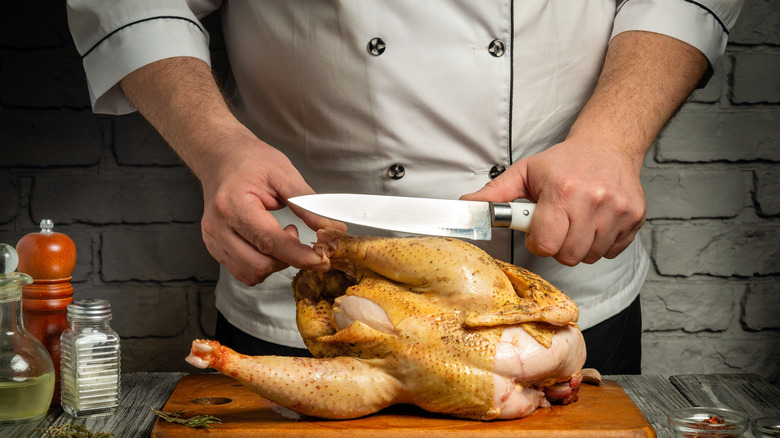
When you debone a chicken, not only should you have a good idea of the anatomy of the bird, but also the anatomy of your knife. Instead of using the main part of the knife to hack through your chicken, you'll want to focus your attention on the tip. The sharp tip of the boning knife is the perfect shape for cutting close to the joints. The main part of the blade won't give you the same level of precision. When you debone your chicken, let the tip of the knife be your guide, then use the main part of the blade to slice into the chicken as needed. That's not to say that you won't need to use the edge at all; it will come in handy when it comes to scraping the meat off the thigh bone or around the joints.
One of the biggest misconceptions about deboning a chicken is that it requires a ton of knifework. In reality, you may only need your knife tip to make slits in the breast to pull out the wishbone, slice through the chicken, and break off the legs and wings at the joints; you can do the rest of the work with your fingers.
6. Mistake: Leaving the wishbone in
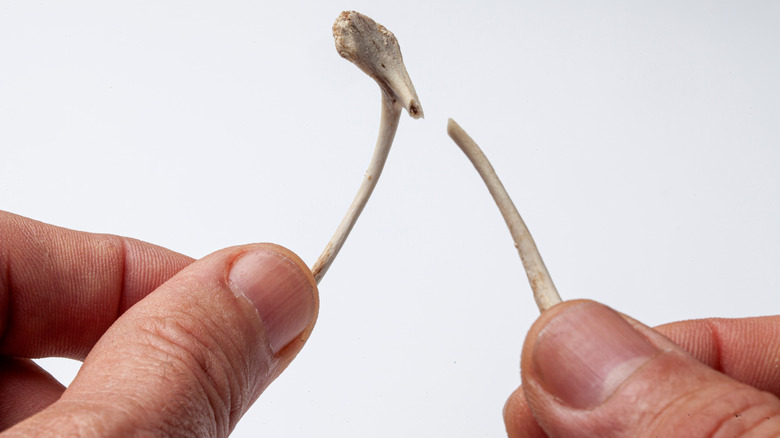
You may have fond memories of cracking the wishbone from the Thanksgiving turkey and making a wish, but this is one instance where you'll want to remove that pesky little v-shaped bone before preparing your chicken. If you leave the wishbone in the chicken, it would be harder to remove the entire breastbone in one shot. Franklin Becker says that leaving the wishbone in is one of the biggest mistakes that people can make when deboning the bird.
Luckily, removing the wishbone is pretty easy to do. Once the chicken is lying flat on its back, slice into the skin just enough with the tip of your knife, making two indents on either side of the breast. Then just use your fingers in a pincher motion to enter the cavity and pull out the wishbone.
7. Mistake: Throwing the bones away
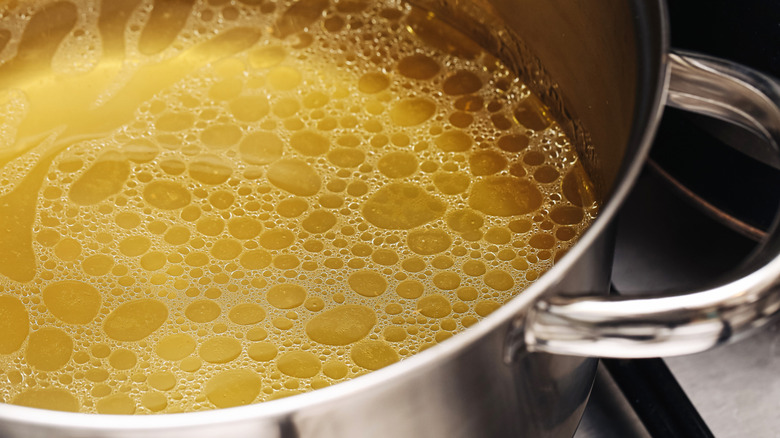
Once your chicken is deboned to perfection, you'll have a plate of bones, cartilage, and sinew destined for the trash — or so you think. Instead of immediately tossing these parts into the trash, consider repurposing them, as Franklin Becker suggests, for stocks, sauces, and soups. There is a ton of flavor packed into the residual cartilage and any chicken meat that may have been left behind, and when you simmer them in water, you'll get a flavorful broth that you can repurpose for many recipes. The trick is to get the perfect ratio of chicken to water for your chicken stock; we recommend using 2 pounds of chicken for every 2 quarts of water. Otherwise, you could get a stock that has too much gelatin in it (which is leached from the cartilage and bones of the chicken and thickens the stock).
If you are only breaking down a small chicken, you could freeze the leftover bones and cartilage in a resealable bag and prepare it when you have accumulated enough. For optimal flavor for your chicken broth, try roasting your bones first, before you add them to the stockpot. You can even deglaze the pan that you roast them on to add extra flavor to your stock.
8. Mistake: Trying the resealable bag hack to debone your chicken
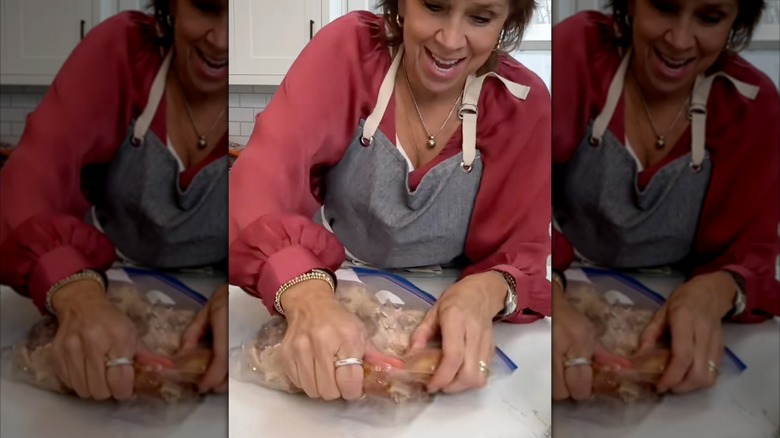
If deboning a chicken seems like a lot of work, well, that's because it is — until you get the hang of it. However, that has not stopped the internet from getting its hands on one of the wildest hacks for deboning a chicken in an effort to simplify the process. Folks primarily use it for cooked chicken (like a store-bought rotisserie), and it's done by placing the bird inside of a plastic bag, sealing it, and then pressing it until the bones are dislodged and can be picked out of the bag — so much for clean fingers.
Besides only being able to be done on cooked chicken, rather than raw chicken, this hack also has other shortcomings that make it a trend worth skipping. For one, you could still end up with bones left in the bag (some of which may be broken, depending on how heavy-handed you are). Plus, it leaves the meat absolutely eviscerated rather than in a large piece. Sure, if you were shredding it for pulled chicken, it might work, but it won't fly for most other recipes. "I would never disrespect a product like this. Not my style," Franklin Becker says — and we would have to agree with him.