

7 Tips For Cooking With Stainless Steel Like A Pro Chef
We may receive a commission on purchases made from links.
Pots and pans are cooking essentials, whether you're a novice home cook or a professional chef. Pans can be made from a range of materials, including cast iron, enameled cast iron, carbon steel, and one of the most common options for home cooks: stainless steel. Stainless steel pans are made by pressing together layers of metal into a single sheet using a hydraulic press; the number of layers and types of metals used varies. Broadly speaking, this metal construction offers excellent conductivity, affordability, and ease of use, making stainless steel a staple pan material for all levels of cooks.
Although stainless steel cookware is popular and widely available, it can be a finicky material to cook with, especially if you aren't familiar with how to heat it correctly, keep it nonstick, and avoid (and remedy) those pesky water marks. That's why we consulted the experts — private chef Rob Smith, from the Culinary Collective ATL; Wyatt Rogers, executive chef at the OKANA Resort & Indoor Waterpark; Taylor Falco, chef de cuisine at Rolo's; Adam Fiscus, executive chef at the Central Park Boathouse; and executive chef Joseph L. Paire III of the Claremont Resort & Club – to get the 411 on how to best cook with, clean, and store these stainless steel cookware.
1. Consider the compatibility of your cooktop
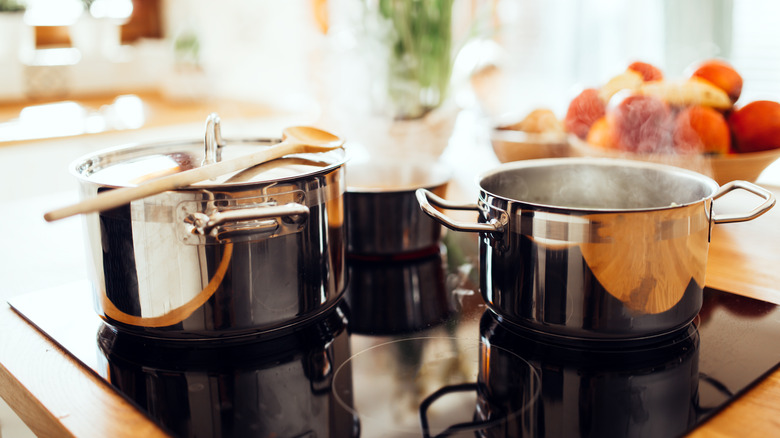
One of the most frustrating parts of moving into a new home is adjusting to a new cooktop. If you already have an established cookware collection, the last thing you want to have to do is buy new pots and pans because your cooktop isn't compatible with them. Luckily, our experts affirmed that stainless steel is a pretty universal material and can be used on both gas and electric ranges.
Induction burners, however, are a pain point for stainless steel. As chef Rob Smith points out, you'll need to find a stainless steel pan with a magnetic base in order for it to work on your induction cooktop. Most 400-series stainless steel pans are induction-compatible, but cheaper 200- and 300-series pans may not be. You can test compatibility with a magnet; run it over the bottom of the pan to see if it sticks, or look for a coil or "induction compatible" label on new cookware.
Another important caveat is that you'll need to be careful with stainless steel on glass cooktops — both induction and electric. "While stainless steel can be used on glass cooktops, care must be taken to avoid scratching the surface," says Smith. In other words, don't drop your full stainless steel pot on your glass cooktop, nor pull it by the handle across the surface when moving it from burner to burner.
2. Know what you can and shouldn't cook in a stainless steel pan
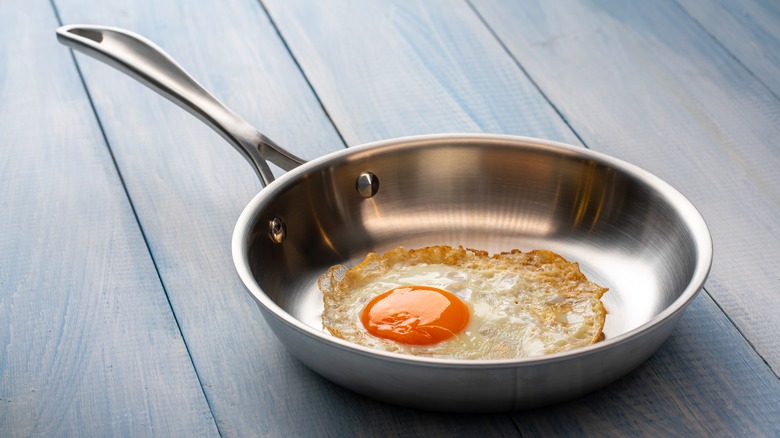
Just because you can cook something in a stainless steel pan does not mean you should. "You can cook just about anything in it because stainless steel is a non-reactive metal," says executive chef Joseph L. Paire III. But whether you want to deal with the sticky consequences is another question entirely.
Our experts offered their fair share of ideas for what should be cooked in a stainless steel pan and which foods were better left to other materials. Executive chef Wyatt Rogers recommends cooking vegetables, pasta, and sauces in stainless steel, but cautions against cooking seafood unless a lot of oil is involved. Scallops and eggs, per Rogers, are the worst foods to cook in this pan. However, chef de cuisine Taylor Falco welcomes this challenge, "There is a fear of staying away from things like eggs and fish, but when preheated well I would say have no fear."
Stainless steel's non-reactivity does make it a great choice for sauces, as chef Rob Smith suggests. "Unlike nonstick, stainless steel allows for better fond development for sauces, and it doesn't react with acidic foods, maintaining flavor integrity," he says. He shares that it's an ideal pan for deglazing, which makes sense, considering he suggests searing steaks and chicken in it, as well. When the meat sears in the pan, you'll get all that delicious fond left over that you can make a sauce from. But in the case of seafood and eggs, that "fond" can be more trouble than its worth, as it makes cleaning it off a pain.
3. Preheat and oil your stainless steel to prevent sticking
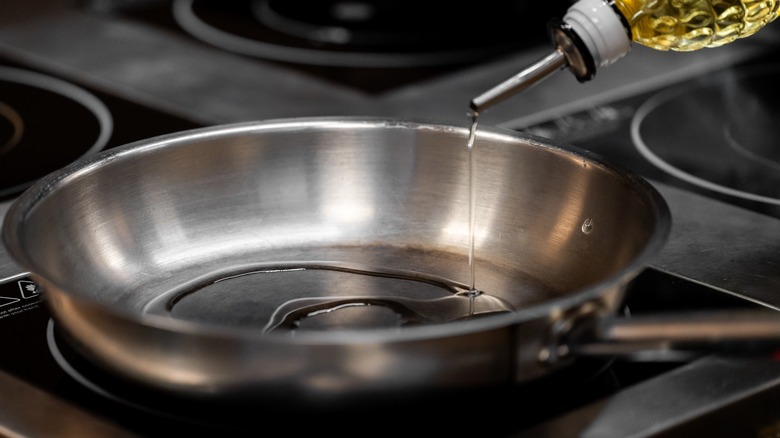
Stainless steel is notorious for being a magnet for sticking. However, our experts affirm that there are some strategies you can employ to reduce the risk of your food sticking to the bottom and becoming a pain to clean later on.
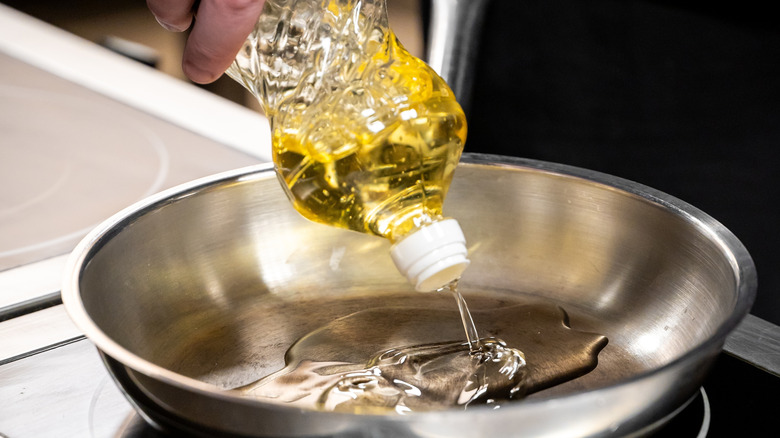
First is the step that many home cooks selectively choose to skip over in their recipes: preheating the pan. "Preheating is important, as it helps prevent sticking and allows food to sear properly, enhancing flavor and texture," says Rob Smith. Taylor Falco shares his preheating process with us, noting that he likes to preheat the stainless steel pan on the stove for about five to 10 minutes while he's preparing his ingredients. Then, when the time comes, he cranks up the heat, adds a high smoke-point oil, and waits for it to smoke before cooking. "If you're newer to cooking and worried about [flare-ups] after your oil starts to lightly smoke, you can turn the heat down, or even off, until the thing you're searing stops sizzling as much then turn the heat back to your desired [temperature]," he says.
Oil is another critical adversary in the fight against stickage. When you cook with a well-seasoned cast iron or nonstick pan, you already have some sort of protective barrier between the pan and the food to prevent it from sticking. Since stainless steel doesn't have that, you need to be generous with the amount that you use. Wyatt Rogers shares that he likes to use a "liberal amount" of it when cooking with stainless steel — so be sure to stock up on cooking oil before you cook with yours.
4. Be mindful of its heat tolerance
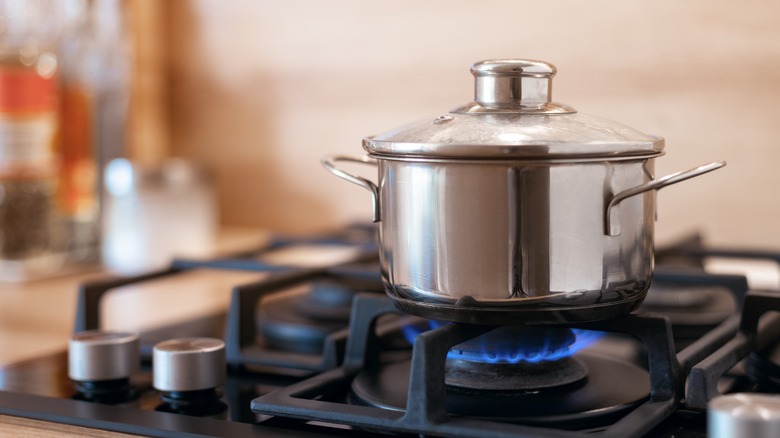
Stainless steel is the workhorse of the kitchen, but that doesn't make it indestructible. Although it can tolerate high temperatures over gas, electric, and induction burners, it does have a threshold. "High temperatures can warp the pan or cause discoloration," says Rob Smith, noting that reaching those temperatures is one common mistake home cooks make that can damage stainless steel pans. "I would refrain from throwing them into our [800 F wood-fired] oven or right over the coals of our grill, but anywhere else is typically fair game," says Taylor Falco.
Falco does caution that washing a hot stainless steel pan immediately under cool water can warp it. If you're trying to keep your stainless steel in tip-top shape, you may also want to avoid dishwashing. "Dishwashing or overheating — especially cooking on excessively high heat — can damage the core," says Joseph L. Paire III.
But wait: Haven't you seen your favorite stainless steel brands being marked as "dishwasher-safe?" Well, you should really hand-wash them, especially if they are clad cookware. This means that there is some aluminum poking through the rim of the pan, which could become degraded if exposed to the heat of your dishwasher. You'll also want to skip the dishwasher if the steel doesn't contain nickel — like 18/0 pans — because there aren't any safeguards against corrosion. Plus, as Wyatt Rogers points out, "the dishwasher would really just spray the pan down, ignoring the [hard-to-reach] places."
5. Select a reliable cookware brand
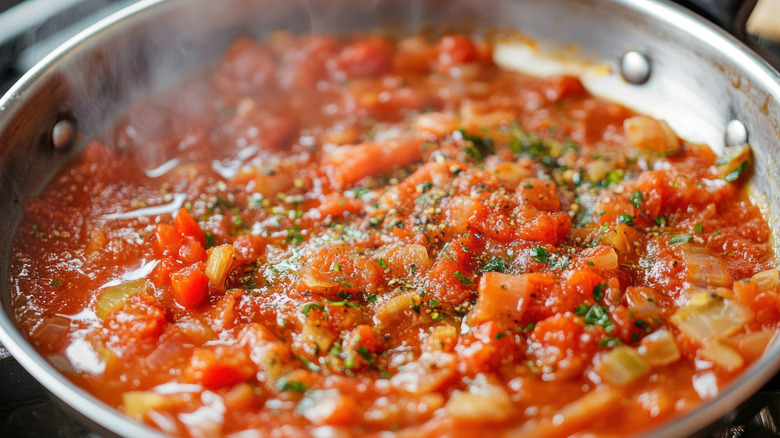
Stainless steel cookware isn't a cheap date, and if you want it to last a while, you'll need to invest in the highest-quality pans possible. Luckily, our experts shared some of their top brand picks with us. All-Clad was a popular choice that came up several times. "All-Clad is a hit for me. Presentation and the hammered-out steel make it aesthetic and [user-friendly]," says Wyatt Rogers. Rob Smith agrees, saying All-Clad is "renowned for high-quality construction and performance." Another up-and-coming brand that the pros recommended, in addition to staples like Viking, was Made-In. Adam Fiscus says he recently received his Made-Ins and is "looking forward to using [them], as their reputation is very good." Calphalon is another brand that's recommended for its durability overall, per Smith, as well as Cuisinart, which he says offers excellent value and performance.
You could end up spending upwards of $50 to $100 on a single premium pan, but the cost and performance are worth it if you use it regularly. Our top tip? Scour the aisles at your local HomeGoods, TJ Maxx, or cooking outlet store (like Williams Sonoma). You may end up finding one-off pans or discounted sets for great prices.
6. Take care in cleaning your pan
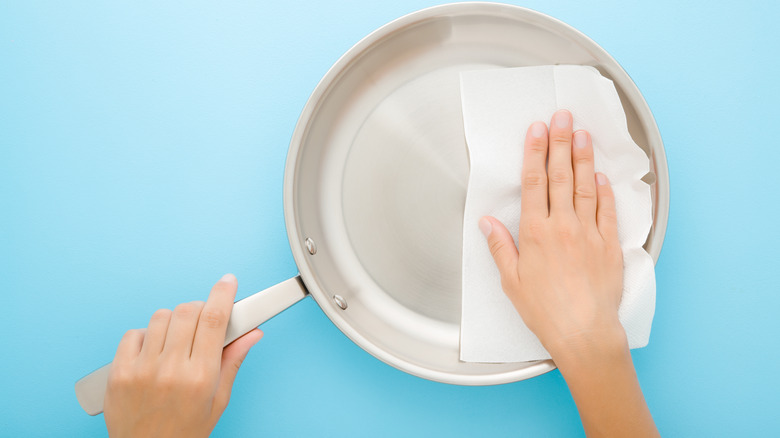
Stainless steel: Somewhat finicky to cook with and even finickier to clean. Although keeping your stainless steel in good condition by cleaning it properly and avoiding scratching it isn't necessarily a tip for cooking with it per se, taking proper care of them ensures their longevity. "Any pan worth investing in is worth mindfully caring for. The more work you put in to treat them well, the longer you will have them," says Taylor Falco. Plus, as Rob Smith notes, "poor cleaning can lead to stains and build-up."
Smith recommends using gentle dish soap and a soft sponge to clean your pan; it's best to do this right after using the pan (though not while it's still hot, as it can cause warping). "Treat it well, no harsh cleaning methods are necessary," says Adam Fiscus. "Simple cleaning and hang to dry or towel dry." Removing the residual moisture from the pan is one of the most important things that you can do to keep it looking as new for as long as possible. As our experts noted, when water is left on the pan, it can cause splotches to form; Smith attributes the splotches to the mineral deposits left by hard water. "The water spots don't affect the taste of your cooking but can result in bacteria building up, so it's best to get ahead of it," Falco says, recommending that folks use a diluted vinegar spray to keep the stainless steel looking shiny.
Joseph L. Paire III goes so far as to suggest that you should be cleaning your stainless steel with filtered water if you have hard water. "Warm, soapy water and Bar Keepers Friend will keep it clean and shiny," he says.
7. Store your pans with a protective barrier to prevent scratches
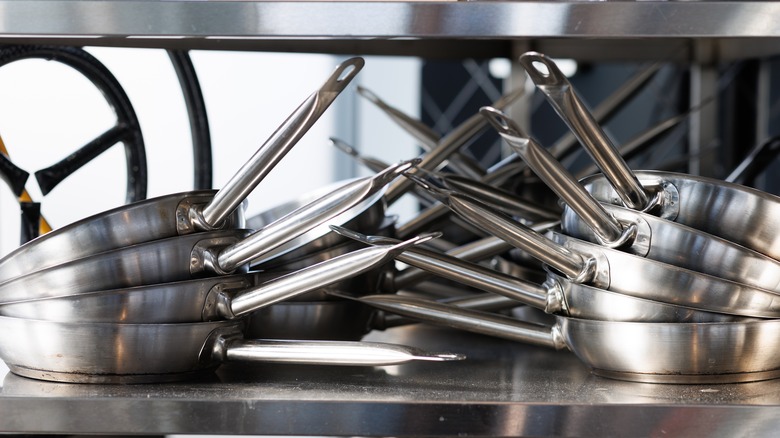
You've gone through all of the work to use and clean your stainless steel carefully; the last thing that you want to do is waste all that effort by letting those pans scratch and dent one another when they're stacked together. When we asked Taylor Falco about the best way to maintain his cookware, he highlighted this common mistake folks make when storing their stainless steel. "Preventing deep scratches is best, so don't stack them," he says. "If you must, add a towel or a protective barrier between the pans beforehand." You can also employ creative storage solutions, like hanging your pans off a rack — like this one from Rothley. Hanging your pans will not only prevent them from scratching and damaging one another; it will also allow you to see and grab the ones that you need.
Another way that you could be inadvertently damaging your stainless steel pans is by using any sort of abrasive material on them — namely, steel wool. While steel wool is effective at removing caked-on food, you do risk scratching the surface of the pans. Adam Fiscus recommends instead using a gentle sponge to remove any debris.