

9 Tips You Need When Cooking Fresh Lobster
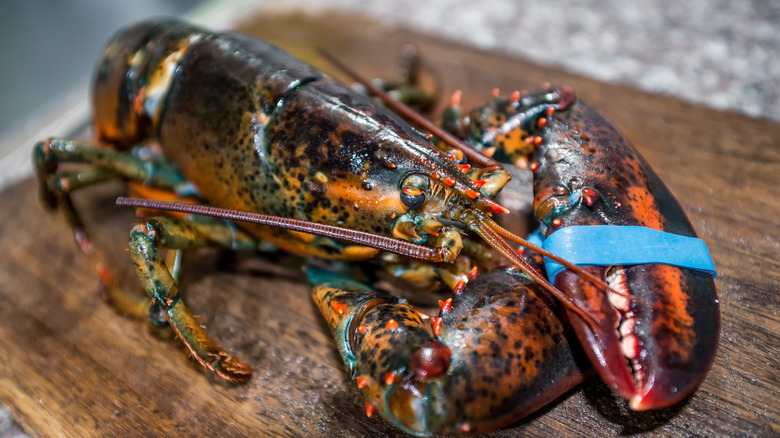
Lobster has had quite the glow-up; it went from prison food to a luxurious surf-and-turf staple over the course of just a few centuries. Now, no summer in New England is complete without a hearty lobster roll, and the soft, slightly sweet flesh is an excellent addition to hearty pastas, salads, eggs Benedict, and more.
While we love all of the things that lobster can become, there are many steps that have to happen between selecting a very much alive lobster in a tank and having a buttery lobster tail in front of you. It kind of shows how much we take buying Cryovac-wrapped chicken breast, steak, or frozen seafood from the grocery store for granted. If you consider yourself a lobster newbie, or the thought of having to kill a lobster yourself makes you quake in your boots, you're in the right place. We spoke to Curt Brown, lobsterman, president of Bold Coast Seafood, and board member of the Maine Lobster Marketing Collaborative, about some of his top tips for selecting, processing, and preparing fresh lobster at home.
1. Look for spryness when shopping for live lobster
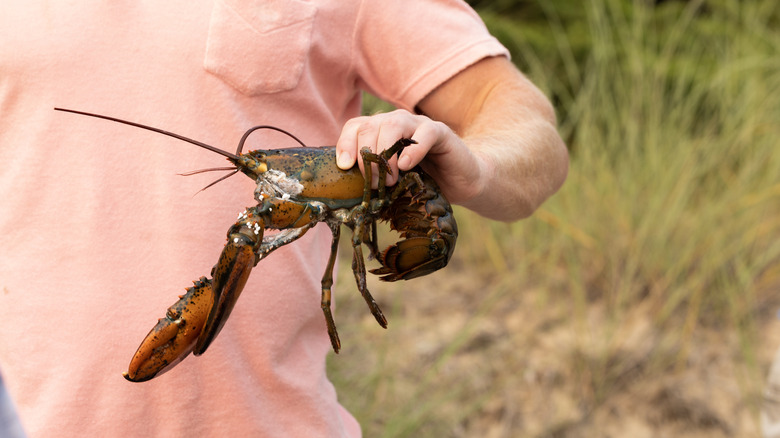
One of the most essential parts of cooking fresh lobster starts long before you've set up your mise en place, fired up your grill, or set the pot to boil. You first have to ensure that the lobster you're selecting at the grocery store is the freshest that it can be. Luckily, lobster guru Curt Brown has some tips for selecting the highest-quality lobster.
First, your live lobster should look, well, alive. "Spryness is a key indicator of vitality. A fresh lobster should hold up its claws, curl its tail, and move actively when handled," Brown says. If you're watching your pick lie sadly on the bottom of the grocery store lobster tank as the seafood counter employee pulls it out, you may want to pick again.
If you're used to shopping for other types of seafood, you may also be inclined to select a lobster that has an excellent color — or whatever color you perceive to be correlated with freshness. However, as Brown points out, not all lobsters will be the same, nor does color have a significant weight on the quality or freshness of the flesh underneath. "Maine New Shell Lobsters tend to have brighter red undersides of their claws while Maine Hard Shell Lobsters often have darker, scuffed shells," he offers as an example. In that same vein, you may be less enthusiastic about selecting a lobster that's missing an antenna or looks like it got caught in a fistfight (err ... claw fight) with its neighbor. However, Brown shares that missing or broken antennae also don't affect meat quality — it's just a common visual blemish among trapped or tanked lobsters.
2. Know the difference between the different types of lobster before shopping
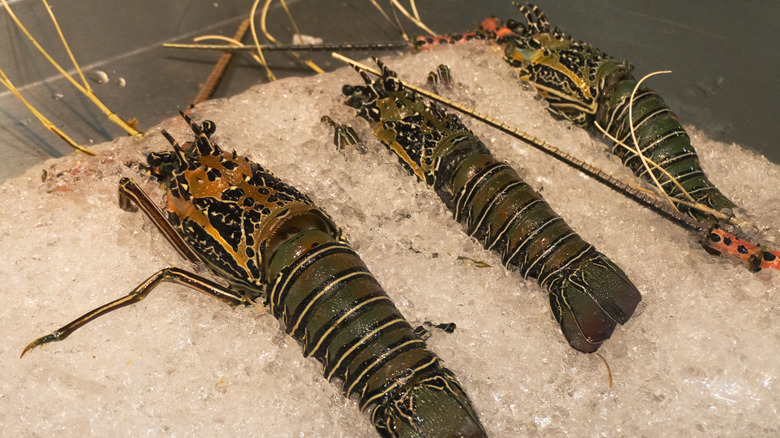
You open your recipe book to the seafood section, hell-bent on making something with fresh lobster in it. However, promptly making a trip to your grocery store without first reading up on the different types of lobsters, like the difference between Maine and spiny lobsters, can get you into quite the pickle when it comes time to prepare your dish. As a basic primer, Maine lobsters are the ones we often associate with New England seafood shacks and lobster bakes; they're sweet, tender, and have beautiful (and massive) claws. There's no way you can confuse them visually or texturally with spiny lobsters, which are firmer, chewier, and endemic to the warm waters of the Caribbean. Using one for the other in your recipe could spell disaster, so make sure you do your research and purchase accordingly.
To add to the confusion, there is also a difference between New Shell lobsters and Hard Shell Maine lobsters. As Curt Brown explains, the summer and fall months are dominated by New Shells, which, as their name suggests, have recently finished molting. "As these lobsters grow into their freshly molted shells, the natural seawater that fills the gap between the shell and meat creates a subtle marinade, delivering the sweetest, most tender lobster," Brown says. "The meat this time of year will be the sweetest and tenderest, and it is an excellent time to cook with fresh lobster." Hard Shells, as you can probably guess, have chewier flesh, yet will still allow you to enjoy a delicious lobster ravioli in the depths of winter.
3. Store your live lobsters in the fridge
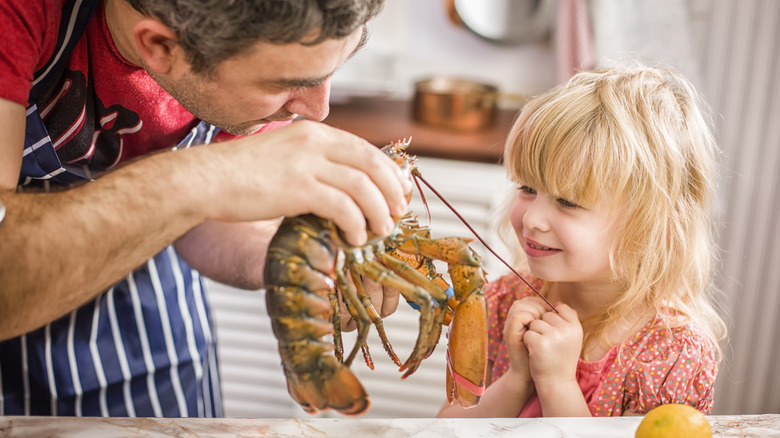
While some grocery stores will cook your lobster for you, if you're buying them in advance of a dinner party or event, you may want to process them yourself. "Ideally, you want to cook your live Maine Lobster the same day that you purchase it," Curt Brown says. This way, it will be at peak freshness — and you'll get the highest-quality meat.
However, Brown shares that you can keep them in your fridge for up to two days. He advises that the crustaceans need to be kept in an open container, rather than a sealed one or a bag, as they can suffocate. You'll also want to avoid rinsing them in fresh or tap water — which can also kill them. However, you can (and should) keep them fresh under seaweed or moist newspapers. As gruesome as it is to think about, lobsters aren't pets, so you'll only need to keep them comfortable for a short period of time so that you can process them.
4. Use the knife trick to properly and ethically kill your lobster
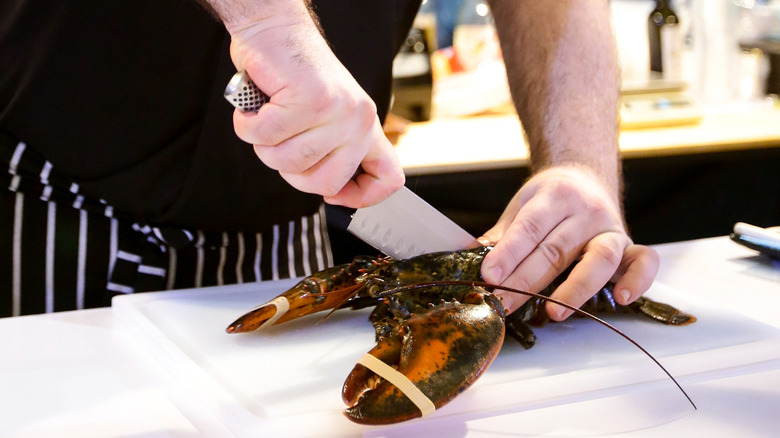
My plant-based friends may want to skip ahead here, but we had to ask Curt Brown what the most ethical way to kill a lobster is. He responded simply: "Place the lobster on a cutting board, and using a chef's knife, drive the knife into the head between the eyes." Some folks have suggested putting the lobster in the freezer for about 10 to 30 minutes before cooking, to anesthetize them before doing this. Once the knife has been plunged into the crustacean's head, you can continue to cut down its spine and tail to break it down. After this is done, you'll want to properly clean the lobster by pulling out the tomalley (the liver and pancreas of the animal) and the sac in the head.
As peculiar and freaky as it may sound, the lobster may still continue to move and twitch its legs during this process. These are involuntary movements, rather than a pain response; the same would happen if you plunge it headfirst into boiling water, which is one of the other commonly used methods to stun, kill, and prepare lobsters.
5. Steam your lobster for a beginner-friendly preparation
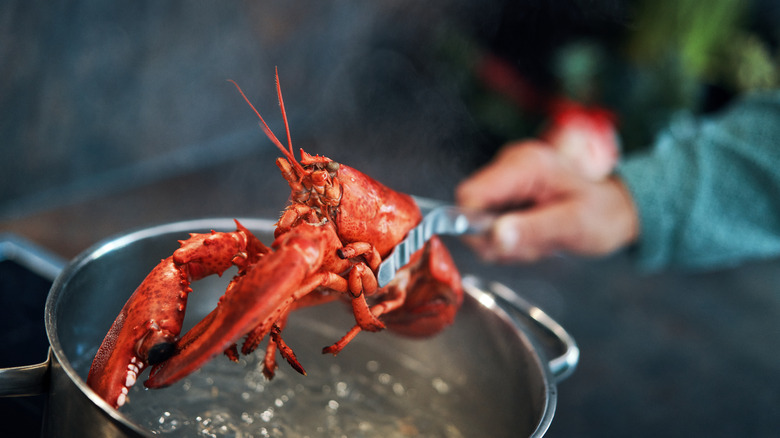
If you've done your research about how to humanely kill a lobster, you may be inclined to feed two birds with one scone by killing and cooking the lobster by boiling it. Plunging the shellfish head-first into boiling water will certainly do the job, but determining when the flesh is finished cooking — but not overcooked — is difficult to do with this method. This is especially true for larger lobsters, as the intense heat causes the exterior and interior of the crustacean to cook at different rates.
Instead of boiling, take Curt Brown's suggestion and try steaming. As Brown explains, one of the biggest pros of this method is its simplicity. "If you can boil water, you can cook a lobster. It is really that simple," he says, also noting that steaming the lobster is one of the best ways to preserve the natural sweetness and tenderness of the lobster flesh. The steaming method won't dilute the flavor of the lobsters in the same way that boiling does — since the flavor doesn't flow out of the shells into the surrounding water, and you are less likely to overcook the lobsters.
Brown instructs us to select a pot that can accommodate all of the lobsters and add about 2 inches of salted liquid to the bottom of the pot. Once the water is boiling, the dispatched lobsters (you'll need to use the aforementioned knife method here) can be added and steamed at a rate of about 10 minutes per pound. "Remember that the cooking times are for the weight of the individual lobsters in the pot, not the total weight of all the lobsters in the pot," Brown says.
6. Use different methods to remove the different parts of the lobster
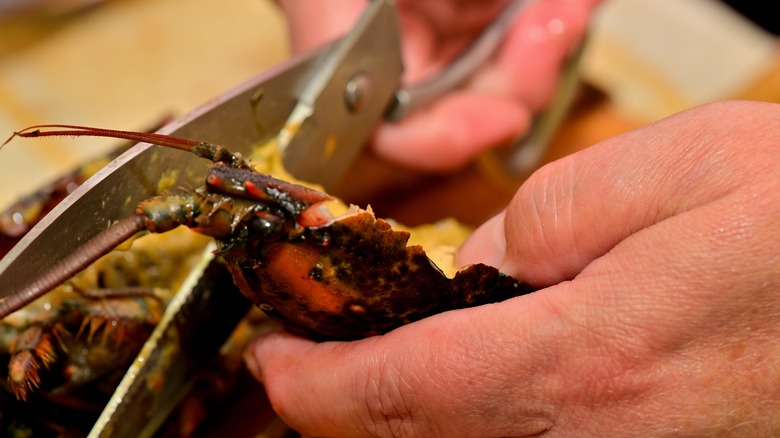
Once your lobsters have been sourced, dispatched, and cooked, it's time to, quite literally, get crackin'. When we asked Curt Brown about his best tips for removing lobster meat cleanly and efficiently, he shared some specific examples, which differ based on the body part. The lobster tail was first. "Hold the lobster in your hands and twist the tail and body in opposite directions to separate the tail from the body. Break off the tail flippers and use that opening to push the meat out of the tail," Brown says. He also shared some of his favorite ways to use the tail meat with us, which included grilling and brushing them with flavored butter. "I like to split the tails and drizzle them with honey butter finished with a little fresh dill from the garden," he says.
Getting the claws and legs off the crustacean may require a little more of a firm touch. You can manually twist the claws to separate them from the body, then from there, as Brown explains, you can either crack open the claws and your knuckles with your hands, or invest in and use a cracker to get it out. Another tool that he recommends for removing meat from the lobster — specifically from the legs — is a rolling pin. Once the legs have been twisted off, you can use a pin or a similarly shaped bottle to carefully roll the meat out. Or, of course, you can do what we in New England do and just suck that succulent meat out with your mouth.
7. Avoid overcooking your lobster at all costs
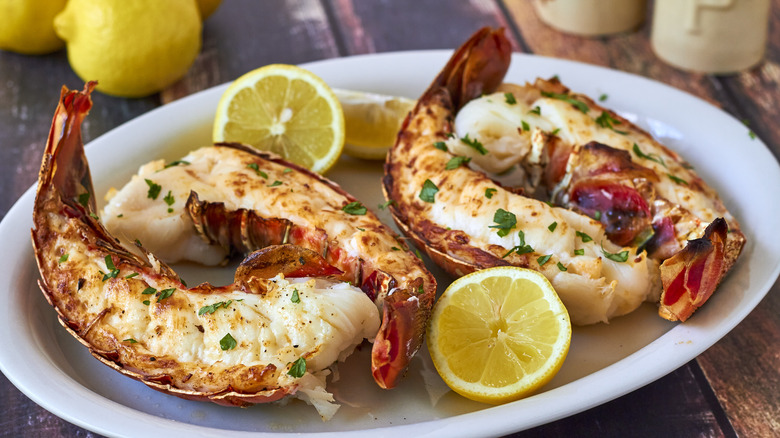
It would be a shame to get this far in the process of preparing fresh lobster only to royally mess up the cooking time. After all, lobster is an incredibly delicate and beautiful protein; overcooking it at any point in the process would be doing it a disservice. Curt Brown agrees. "Overcooking is the biggest mistake that people can make, resulting in tough or rubbery meat, and cooking guidelines should always be followed," he says. If you're boiling your crustaceans, this means cooking 1-pound lobsters for around eight minutes, 2-pound lobsters for around 15 minutes, and 5-pound lobsters (yes, they do get that big) for around 35 or 40 minutes. There are numerous ways to check your lobsters for doneness. If you crack the lobster at the spot where the tail converges with the body, it should be white — not translucent. "If you want to use the 'Maine' method to test if a lobster is done, just tug on one of the antennae when the time is up. When the lobsters are ready, the antennae should pull right off easily," Brown says.
You'll also need to avoid overcooking the lobster when preparing the dish you plan to use it in. Brown gives the example of quiche and ravioli, both of which require even more cooking than eating the flesh straight from the shell. He suggests blanching the lobster meat in these cases to reduce the risk of overcooking.
8. Find ways to use all parts of the crustacean
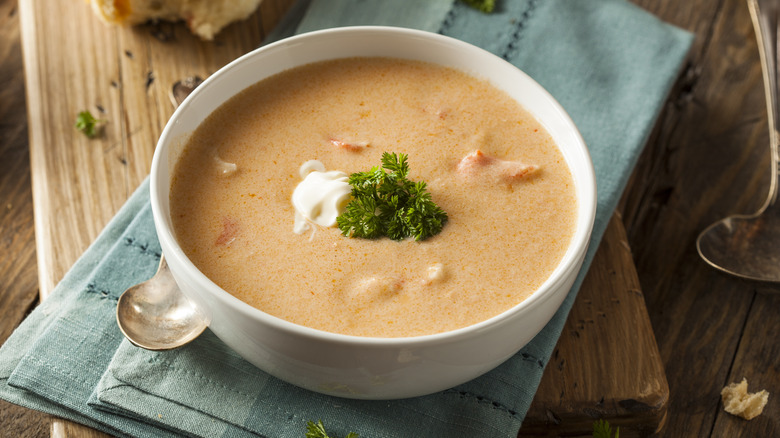
Lobster is a great ingredient because most of its parts can be utilized in some shape or form. Once you've pulled out all the usable meat (Curt Brown likes using the stuff from the legs, body, and tail fins for pastas and soups), you can get to work on the shells. These can be repurposed into seafood stock. One trick to enhance the flavor of your stock is to roast your shells with oil before adding them to a stockpot; this simple step will bring their briny flavor to the forefront. If you don't have enough saved up for making a seafood stock, you can freeze lobster shells for later. Once your stock has been prepared, enhanced with not only shells but also leftover fish and shellfish scraps, you can put it to use. It will enhance the briny flavor of a seafood risotto, or can be used for a classic and creamy lobster bisque.
There is one part of the lobster that you should discard immediately, though. "We don't recommend eating the tomalley because it is where toxins can accumulate; however, all other parts of the lobster can be used in various dishes," Brown says.
9. Follow proper food safety protocols when working with live lobster

Whenever you're working with a fresh ingredient, especially seafood, you'll want to take some special food safety precautions to ensure that you (and everyone eating your tasty lobster creation) stays healthy. For one, you cannot eat raw lobster, as it can carry parasites and cause food poisoning. Ensuring the flesh of your lobster is cooked properly (meaning it reaches between 135 and 140 Fahrenheit internally) is important. The lobster will continue to cook once it has finished steaming, boiling, or grilling, which is why these temperatures are generally regarded as safe. Use a probe on the underside of the tail, poking into the thickest part of the meat, and be sure to test the largest lobster in the pot, as those tend to take the longest to cook.
Besides cooking your lobsters correctly, you should also always wash your hands and surfaces thoroughly after handling the crustacean, per Curt Brown's advice, and throw away any lobsters that die before they can be cooked. The reason for this is that there are a plethora of bacteria living in a lobster's digestive tract, some of which release toxic compounds that do not go away with heat — meaning that even if you cook it, you could still get sick. As long as you're being cautious and follow tips like these, though, you should be setting yourself up for lobster success. All that's left to do is to get crackin' and enjoy the fruits of your labor — preferably with a side of drawn butter.