

11 Countries With The Highest Quality Coffee
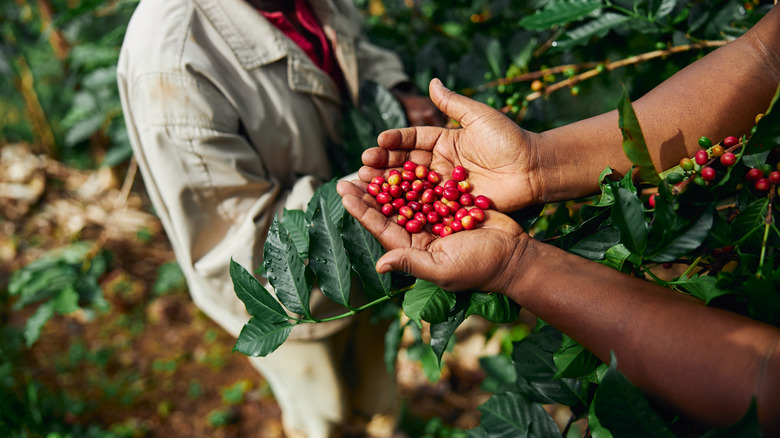
Renowned action movie star Jackie Chan once said, "Coffee is a language in itself," and he couldn't be more right. Perhaps all those gravity-defying kicks and light-speed punches were the result of Chan's coffee obsession. But what Chan is really getting at is this: The more you learn about coffee, the more you appreciate how diverse and complex it truly is. Much like the hundreds of mango varieties grown around the world — of which only about six types ever make it to our grocery stores — the same can be true for coffee. Most of us regularly drink Robusta varietals grown in Vietnam, or low-elevation Arabicas from Brazil: cheap and cheerful, and widely available in grocery stores or chains like Dunkin'. But the more you go down the rabbit hole, the more you realize coffee is a lot like wine, growing in specific regions — shaped by the genetics, terroir, weather patterns, processing, and finally, roasting.
After 13 years of working in the coffee industry, I've gained a deeper understanding of the best coffee-producing countries. From large, industrial farms with thousands of coffee trees — let's call this "Big Coffee" — all the way to quality-focused, small-holder farmers with only 50 trees, there is a wide range of production styles. In this list, I share with you 11 coffee-growing nations with stellar farms growing some of the world's finest beans — knowledge that should give you confidence the next time you read a coffee bag label.
1. Colombia
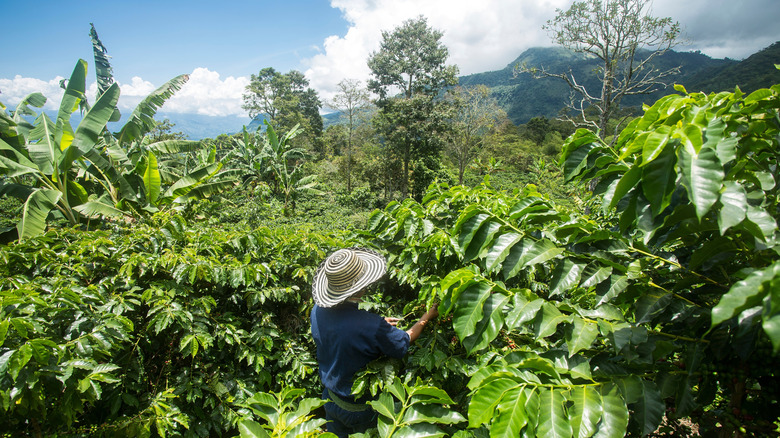
Colombia is my favorite coffee-producing country by a long shot. It took me many years of flirting with super fruity Yirgacheffes, floral West Valley Costa Ricans, and fudge-forward Bourbons from El Salvador, to arrive at Colombia as my sweet spot. I've come to appreciate the entire country's coffee output and what each microclimate offers. This encompasses a ton of coffee; Colombia is the world's third-largest coffee producer, with over 500,000 small farms that account for roughly 22% its GDP, covering large swaths of mountainous terrain. What makes Colombia so fun is how unique each region is, with rich volcanic soils adding to an already extremely fertile terroir, imparting a very wide range of flavors.
My absolute favorite growing region is Nariño, which tends to produce exceptionally clean coffees featuring notes of Bosc pear, toffee, Swedish fish, orchard fruit, and soft florals. Other regions — Tolima, Huila, Caldas, Quindío, Antioquia, and Cundinamarca — are home to some stunning farms, too, producing mind-bending beans. The quality of the beans is high here because there's so much competition, combined with a rich coffee culture where family farms pass down the craft from generation to generation. While you can ascertain a lot from your coffee's source country writ large, the truth is it's often more complex than you'd think. What I do know is that because of how advanced Colombia's coffee industry is, and how diverse its output is, the nation offers something for every palate.
2. Kenya
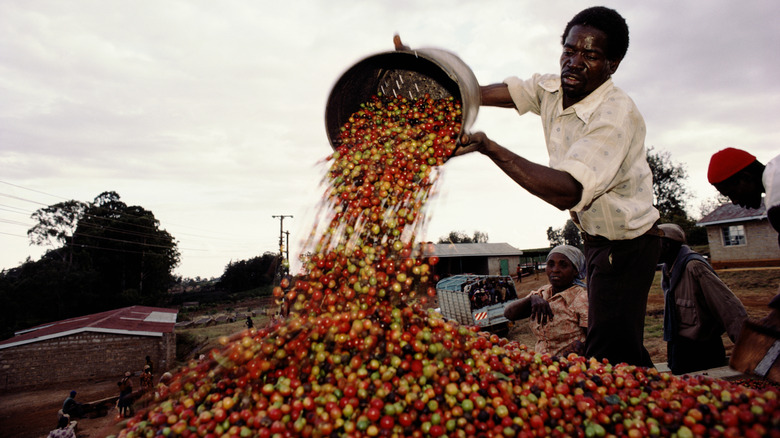
Once you get off the train of mass-produced, grocery store coffee — perfectly fine in its own right — you'll likely end up on board with specialty coffee, and quickly find out what sets it apart. It could take a single sip offered by a coffee nerd friend, trying it black, and noticing flavors that transcend the usual caramel, chocolate, and nuttiness we expect. You might find yourself saying, "I never knew that coffee could taste like blackberries, molasses, and rhubarb?" This can be said of many Kenyan coffees which, when roasted well, often bring about bright and fruity notes that are refreshing and tantalizing. Kenyan coffees are really like nothing else, but they're sometimes divisive among aficionados who can't stomach those zippy acids. If you like all things acidic, from kombucha to a lemony vinaigrette, you might find yourself on board with an SL-28 from Nyeri County. Other growing regions of note are Kisii, Nyanza, Bungoma, Nakuru, and Mt. Elgon.
Kenya simply has it all: port access as a non-landlocked country, the proper elevation for slow cherry maturation, some of the world's most sophisticated coffee processing infrastructure, and a rich history of coffee horticulture that created unique hybrids and genotypes dating back to the 1930s. The government tightly controls the industry, where coffee is bought and sold through the Nairobi Coffee Exchange, which prices beans against quality-specific grading standards. Because of this system, Kenyan coffees are invariably of high caliber every harvest.
3. Mexico
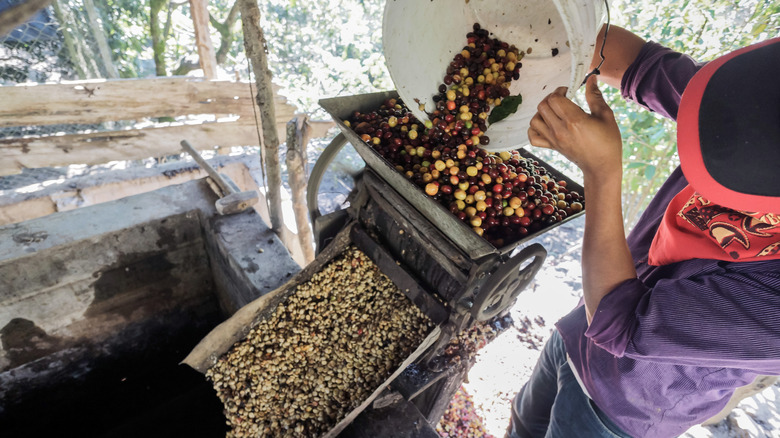
Mexico is finally getting its flowers. It seemed that for years, coffee professionals like me weren't necessarily writing off Mexican coffee, but we also weren't approaching it with an open heart. The country's coffee is phenomenal, but it never seemed to make its way to the best roasters in Europe and North America, or it was a very slow trickle rather than a steady stream. If anyone needs proof of Mexican coffee's quality potential, there's no greater acknowledgment of its potential than being served up at Noma, AKA the best restaurant in the world. The Copenhagen gastronomic titan had a satellite pop-up in Tulum, Mexico, in 2017. They opted to serve Mexican beans from Chiapas, grown by Jesús Salazar, for their coffee service. If you think about it, they could have gone for a Geisha from Panama — one of those $100-per-cup, auction-winning lots — because this is, after all, Noma. But when objectively choosing coffees, with the help of Norwegian coffee legend Tim Wendelboe, Jesús' coffee stood out to the Noma team as a clear winner.
I was able to spend some time in Mexico a few years ago, and during the entire month I was there — in both Mexico City and Oaxaca — I exclusively drank local coffee. I came to realize what makes Mexican beans different, and quickly found out that the country produces truly mouth-watering coffees. If you travel to Mexico, I recommend doing what I did: Only drink local beans, and you'll thank me later.
4. Ethiopia
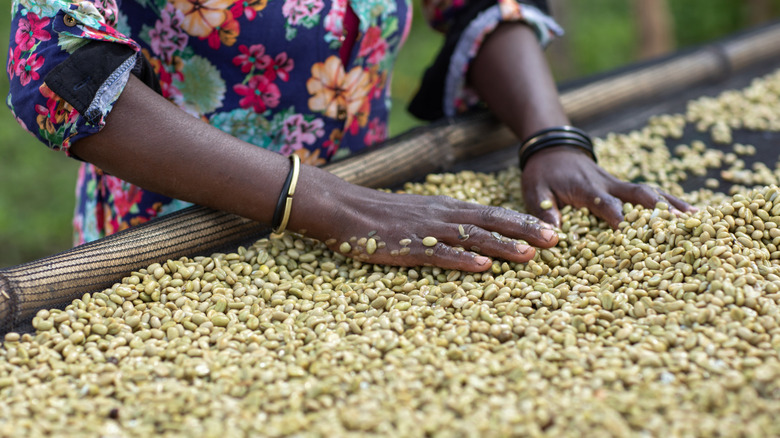
Coffee from Ethiopia is a truly singular experience. Some say it's the birthplace of coffee and is steeped in a rich coffee history rivalling its neighbor, Kenya. What makes Ethiopian beans so special is that they're incredibly expressive: Sipping on a washed Jimma can show notes of Meyer lemon, blueberries, honeydew, and Earl Grey tea. These coffees are so floral that it can be overwhelming; I recall one time working in a cafe years ago where I could smell heavily perfumed florals from coffee being ground 25 feet away. These aromas filled the cafe with an intoxicating smell that was almost overwhelming. To this end, they might not be for everyone, but if you're looking for something completely different, the profiles of washed and naturally processed Ethiopian coffees are worth exploring.
Similar to Kenya, the Ethiopian government has some involvement in the coffee trade via the ECX (Ethiopian Commodity Exchange), enacting strict rules about how the beans are sold. The trading system is complicated, but part of its purpose is to allow small-holder farmers easier market access. It's also to ensure quality standards are met through rigorous grading. Beyond the parameters set forth by non-farmers, this country possesses some very special qualities in its soil that make for unique coffee. My old boss, who founded a very successful Canadian roastery, winning international awards, would often describe coffee from the Gedeb region of Ethiopia as "magic little beans," where no matter how you roasted them, they always shone bright.
5. Panama
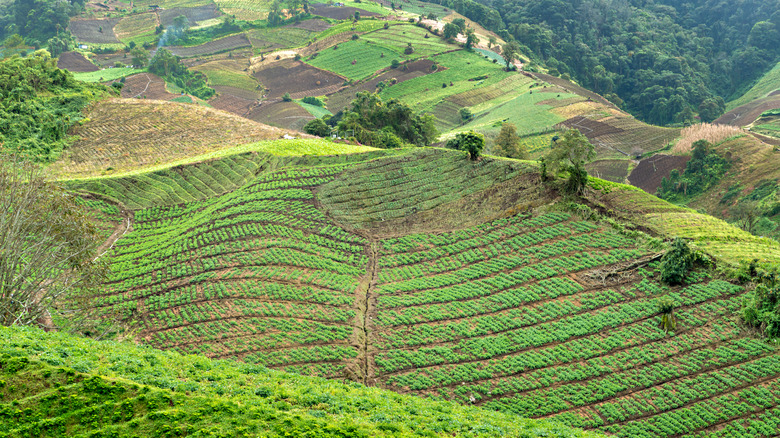
Panamanian coffee is high-quality stuff — so high, in fact, that in many cases it can be objectively considered the best on the planet. Let me elaborate. In 2004, the now-famous Hacienda La Esmeralda farm submitted a Geisha varietal coffee into the Best of Panama coffee auction and won. This incredibly floral and sought-after variety of coffee was then put on the radar of coffee aficionados, gaining traction globally as the champagne of coffees, driving up the thirst for, and prices of, Geisha beans. That auction in 2004 saw the coffee sell for $21 per pound, which is laughable now, as some of these coffees can fetch tens of thousands of dollars at auctions, as evidenced by a recent record-breaking La Esmerelda Geisha lot that sold for $13,700 per pound.
High-rolling buyers from Asia and the Middle East drive up the cost of these exotic Geisha coffees, which, as the numbers show, are cost-prohibitive and inaccessible for most. To wit, a scene from the TV show "Billions" comes to mind, where in a meeting, one of the characters offers a woman some Elida Geisha, with the price tag of $600 (for a single pot of the coffee) flashing on the screen — a big flex for the one percenters who only drink the best beans on the planet. Beyond pandering to pretentious elites, Panama grows a wide range of other tasty coffees, all of which are worth seeking out and, unlike Geishas, won't break the bank either.
6. Costa Rica
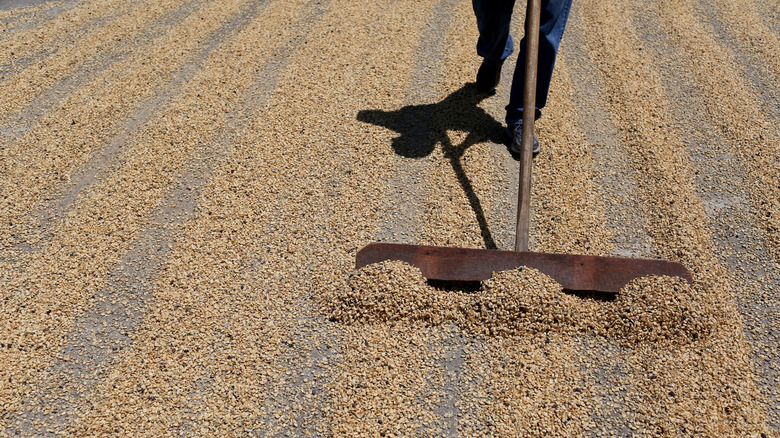
Unfortunately, Costa Rican beans seem to be getting more and more expensive, and less commonly found at your favourite specialty shop. But the country has always had a very high benchmark for quality, as its farms tend to be advanced and well-run. Costa Rica benefits from being somewhat more affluent than its Central American neighbors, and this is evident in the infrastructure of coffee farms and coffee mills. Many competition baristas will look to renowned Costa Rican farms like Volcán Azul, run by coffee guru Alejo Castro, to source their coffees for barista championships. Castro has a venerable coffee lab at his farm where he tinkers with various genetic varietals, growing unique species like SL-28s from Kenya on his land. Costa Rica has a very robust coffee industry writ large that produces stunning versions of Caturra, Catuaí, Typica, and Villa Sarchi varietals.
While notoriously hard to roast, coffees from the West Valley region of Costa Rica are some of my favorite beans in the world. What's more, the country is known for its honey-processed coffee, which means that some of the mucilage is left on the coffee bean to dry in the sun. I always tell people to think of the coffee bean as the pit in a peach, where, with honey processing, some of the juicy flesh clings to the pit, left there to impart flavor into the bean with its sugars and acids. Costa Rican coffees, no matter how they're processed, always hit!
7. Ecuador
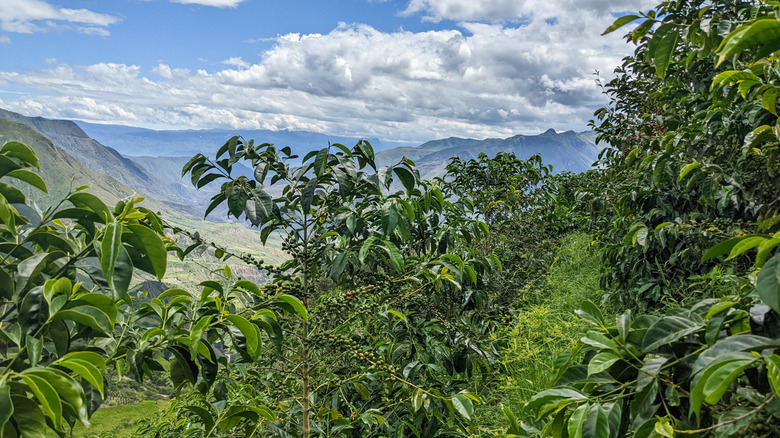
Out of all the coffee-producing countries in this list, Ecuador is one of the rarer origins that you'll see on cafe shelves and in coffee shop grinders. Even more rare would be to find a bag of Ecuadorian coffee in the grocery store, which is all the more reason to snatch one up if you see it. Namely, this small South American nation produces exceptional coffees that continue to thrill me, even after becoming a jaded coffee professional who has literally tried everything under the sun. Beans from this part of the world tend to be very elegant; they're refined and balanced with delicate and soft chamomile florals and round sweetness via milk chocolate. They also show fruit notes reminiscent of pear, red berries, and plum.
There isn't necessarily a best growing region or a best genetic varietal to single out in Ecuador; rather, it's best to embrace whatever offerings you come across when encountering these coffees in the wild. However, old-world varietals like Typica, although increasingly rare due to climate change and susceptibility to disease, are still grown here. Additionally, varietals like Sidra are equally tempting, as these two push the envelope of juiciness and floral notes. If you can't find any Ecuadorian coffee locally, go online and look for a roaster that offers free shipping with a two or three-bag order — this way, you can try perhaps a few different roast profiles of Ecuadorian beans roasted to order.
8. El Salvador
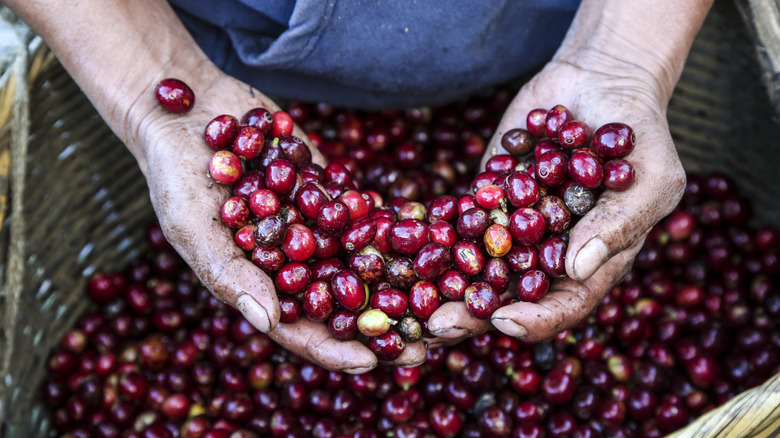
One of my first "ah-ha" moments of tasting specialty coffee was around 15 years ago. It was eye-opening and introduced me to a world of flavors I never knew could exist in coffee. At that time in the late 2000s, specialty coffee was new and exciting, and my coffee habits were pedestrian — I mostly drank grocery store and large chain coffee that tasted like, well, coffee. That quintessential taste of run-of-the-mill coffee — vaguely chocolatey, kind of nutty, and mostly riding on a caramel backbone — was the extent of my coffee language. But having a light-roasted El Salvadorian coffee in 2009 introduced me to notes of fudge, blueberry, red apple, and hazelnut. I couldn't believe what I was tasting, and all these years later, I'm always impressed at the quality of coffee coming out of this small Central American nation.
One of my favourite varietals of coffee is Bourbon, which comes in Yellow, Red, Orange, and Pink versions — all mutations of the original genotype, imparting subtle differences in the cup. Bourbons that grow in El Salvador are stunning and should be pounced upon if you encounter them at your local cafe. One of the world's best coffee farms — Los Pirineos — was founded by the late Gilberto Baraona in the Tecapa-Chinameca region of El Salvador. Its rich volcanic soil is especially fertile, and provides a shining example of some of the best Central American coffees available.
9. Brazil
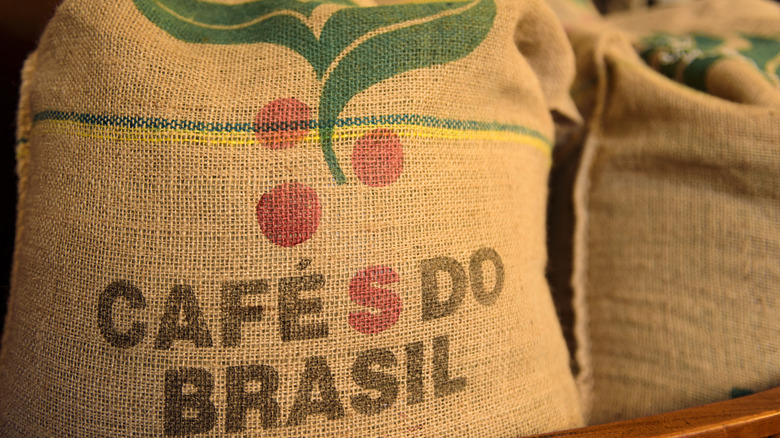
Out of all the countries in this list, Brazil produces the most coffee annually, accounting for around 37% of the total global production. It's mind-bending to think of how many people are getting caffeinated from Brazilian beans as we speak — chances are you've had a latte made with Brazilian espresso many times over. Historically, the country wasn't renowned for the best coffee, but more for its abundance via massive farms. The scale of coffee farming here dwarfs that of neighboring coffee-producing countries like Colombia, Peru, and Bolivia. Brazil figured out how to massively scale up its coffee plantations with advanced cultivation thanks to mechanized cherry pickers.
They can do this because of the terrain — many of these farms lie on relatively flat land, as the country's coffee farms usually sit on low-elevation mountains. Using mechanical pickers would be almost impossible in places like Bolivia or Colombia, where the best coffees are grown on steep mountain slopes, and must be picked by hand. Because of the terrain, climate, and scale of farming practices, Brazil can produce tons of coffee with a wide range of qualities. If you buy your coffee from a specialty coffee roaster, this means you're getting the top-shelf stuff. These coffees tend to remind casual sippers of biting into a Reese's Peanut Butter Cup, as they're usually quite nutty and chocolatey. You'll also be blessed with notes of red apple, raisins, almond milk, wild flower honey, and berries. Yum!
10. Guatemala
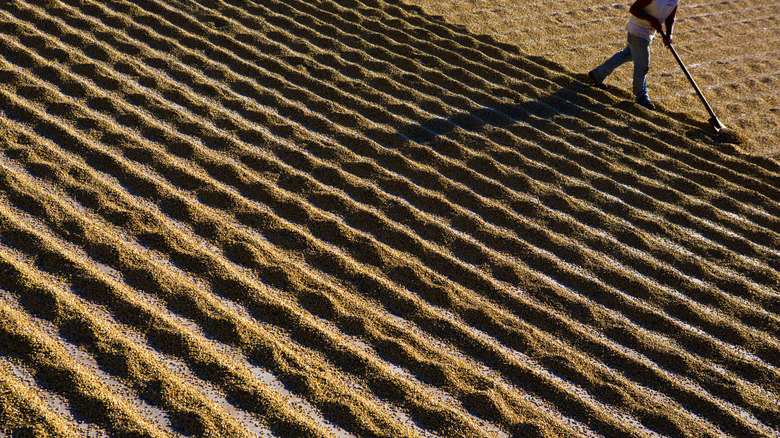
Guatemala has always been a coffee powerhouse with a highly respected local industry, dating back to the mid-18th century. During the Spanish conquests, coffee seeds from the West Indies were brought over and planted in and around Antigua, which remains a special growing region to this day. Out of all the Central American coffee-producing countries, Guatemala is one of my all-time favourites, and one that I revisit whenever I see it on menus. Chances are, you've had a few coffees from this region as it produces the second-largest volume of coffee in Central America, after Honduras. Its coffees are renowned for their smooth and balanced flavor profiles showing notes of cashew, stone fruit, caramel, milk chocolate, and spice.
A well-roasted Guatemalan bean will keep you coming back for more, as they're usually not too acidic, nor are they boring. These coffees really hit a sweet spot with rounded sugars and juicy fruit notes to entice coffee lovers. They're often characterized as "cozy" due to the familiarity they bring, but they can also be quite complex, rewarding thoughtful sipping. The Guatemalan edition of the Cup of Excellence coffee competition in 2025 had Geishas from the Huehuetenango region taking top ranks. Huehuetenango consistently produces my favorite Guatemalan coffees — so its high scores came as no surprise. If you see a bag of beans with this region on the label, grab it immediately!
11. Honduras
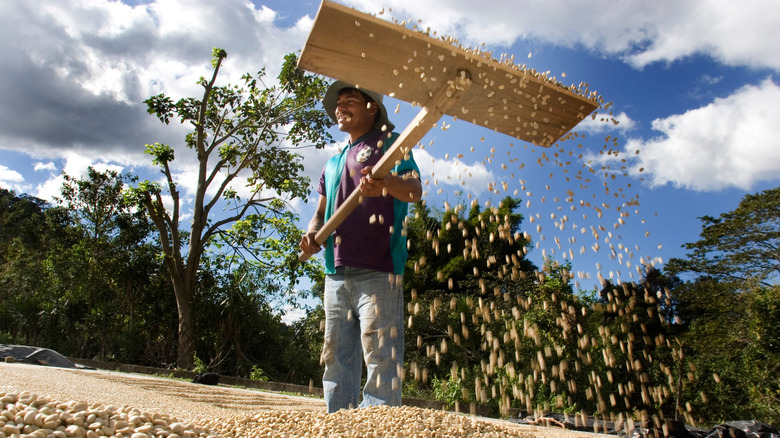
As the top Central American coffee producer by volume, you might be wondering if it's a case of quantity over quality with Honduran coffee. Thankfully, that's not the case, as you won't find many massive corporate farming operations, and contemporary smallholder farmers here continue to push the envelope. The six main growing regions of Agalta, Comayagua, Copán, Montecillos, Opalaca, and El Paraíso produce stunning beans that typically comprise Bourbon, Caturra, Catuaí, Pacas, and increasingly Catimor and Geisha varieties. The profiles of these coffees are wide-ranging, but if I had to narrow it down, I would characterize them as falling into the camp of mellow citrus, fruity (tropical, orchard fruit, and berries), with a caramel backbone and hints of nuts. They do well when brewed as espresso or filter, and while many big brands might roast them darker, I'd recommend seeking out a light-to-medium roast profile to really taste the terroir.
Even though the volume of coffee coming out of Honduras is high, it's often overshadowed by Brazil and Colombia. But if you encounter a Honduran coffee featured at your local cafe, I'd recommend giving it a try and noting what you taste. This way, you can begin to build up your coffee taste reference as you go down the rabbit hole of coffee regions, discovering what profiles best suit your palate. Either way, Honduran coffees are always high caliber and worth exploring!