

16 Types Of Hard Cheeses, Explained
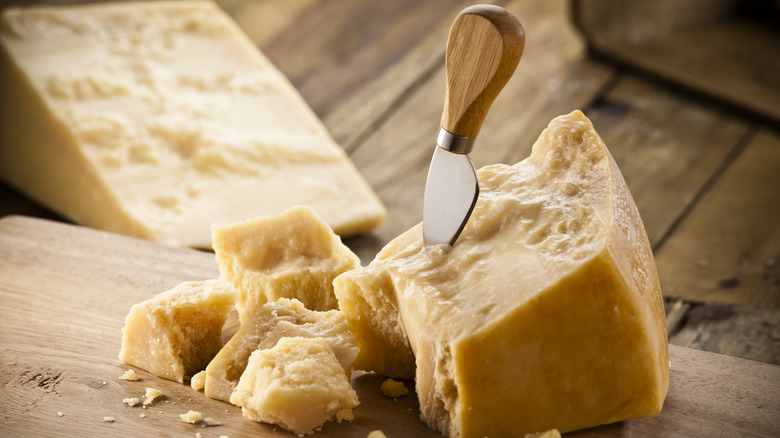
The saying goes that some things improve with age — an undeniably accurate statement for cheese! While I love the tangy zip of a freshly made goat's milk chèvre or a delightfully soft and milky burrata oozing with stracciatella, I'm also among the massive following of dairy-devoted worshipers reveling in the magnificence of hard-aged cheeses. Different cheeses are sold at various stages of aging, given the proper care by cheesemakers and affineurs. This aging process slowly continues fermentation, concentrating the cheese's flavor profile. The longer a cheese is matured, the more moisture is lost, and the more the wheels harden as they continue to age, developing textures that can range from semi-firm with a soft resistance to crumbly, brittle, and hard as a rock.
Perfect for grating on dishes as the finishing touch, seamlessly melting into a fondue, or serving as a textural contrast to softer selections on a cheese board, hard-aged cheeses bring their nuanced intensity and sharp salt content to your chosen food experience. As a current full-time cheesemonger and Certified Cheese Professional with years of experience in the industry, I'll explain some of the most popular types of hard-aged cheeses. Even though hard cheeses span an even wider net than the one I have cast here, my list of 16 styles is at least a solid introduction to how vast and complex this delicious category can be.
1. Parmesan
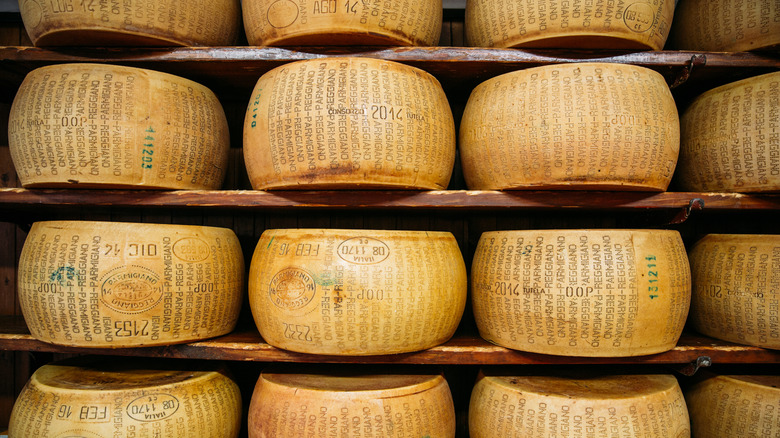
Parmesan has many formats, from Italian Parmigiano Reggiano to Wisconsin Parmesan SarVecchio to Argentine Reggianito. In pursuit of its true quintessence, Parmigiano Reggiano is the one. These hefty wheels, weighing upwards of 90 pounds, are granted PDO (Protected Designation of Origin) status, a certification approved through the European Union, guaranteeing a food product is made using carefully enforced methods indicative of its specific terroir. Detailing some of the many requirements, Parmigiano Reggiano is produced in only five Italian provinces (Parma, Reggio Emilia, Modena, Mantua, and Bologna), the cattle can only be fed hay and grass, and it can only be made with natural fermented whey.
The wheels are matured for a minimum of 12 months, up to 30 months, or beyond. Underneath the hardened natural rind, the taste of the cheese is robust and fruity, with an underlying umami flavor. The texture has a poppy personality: dry and crumbly, with crunches of tyrosine crystals. It's the king of grating cheeses, but it does equally well when served with balsamic vinegar and prosciutto.
2. Gouda
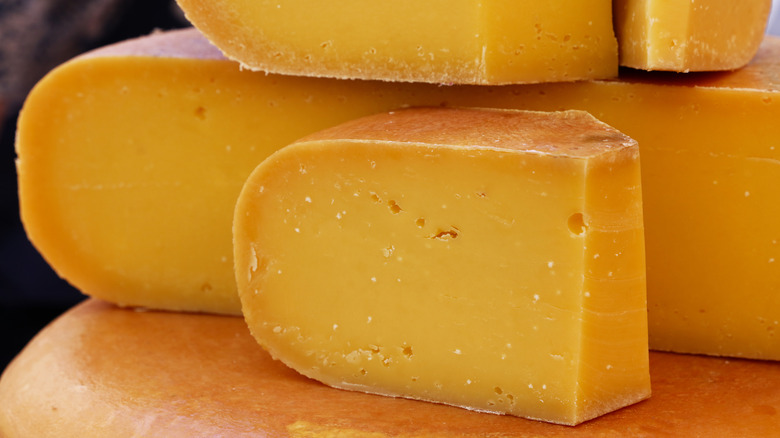
Originally coming from the Netherlands, Gouda refers to the Dutch town of the same name. Without a PDO on the general term "Gouda," it remains a versatile category with nearly limitless interpretations. Goudas can be made with cow, sheep, or goat's milk, or a combination. A quality unique to Gouda is its inherent sweetness. This is attributed to a method earlier in the cheesemaking process of rinsing the curds once they have separated from the whey, removing most of the remaining lactose to prevent excess development of lactic acid.
I currently sell a colorful range of aged goudas, and each one has a distinct personality. Goudas are soft and supple when aged for a few short months — they're mild in taste, gently pliable, perfect for a snack, and melt beautifully. When they are aged for a longer period of time, however, they can become tough and brittle with tons of crunchy tyrosine crystals and concentrated notes of soy sauce and dark toffee.
3. Manchego
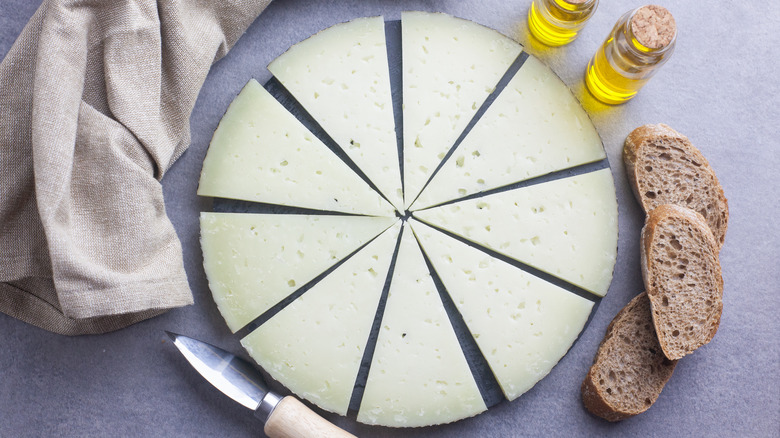
Manchego is a cheese with PDO protection from Spain's La Mancha region, using milk from Manchega sheep. I often recommend it for cheese boards — not only is it an interesting deviation from cow's milk cheeses, but it's also the right shape and texture to form designs. You can easily cut a wedge into pristine triangles to fan out, layer, and shingle.
Available in a range of ages, the younger wheels, aged about three months, contain more moisture and are slightly softer and pliable with milky, grassy notes. Despite only a few months of difference, the more mature wheels develop a distinct profile. Aged between six and 12 months, they have a firmer, drier paste and more pronounced salt notes. Manchego pairs well with other Spanish accompaniments like quince paste and Marcona almonds. When it's spooky season, pair Manchego with an Almond Joy for a Halloween-themed cheese tasting.
4. Piave
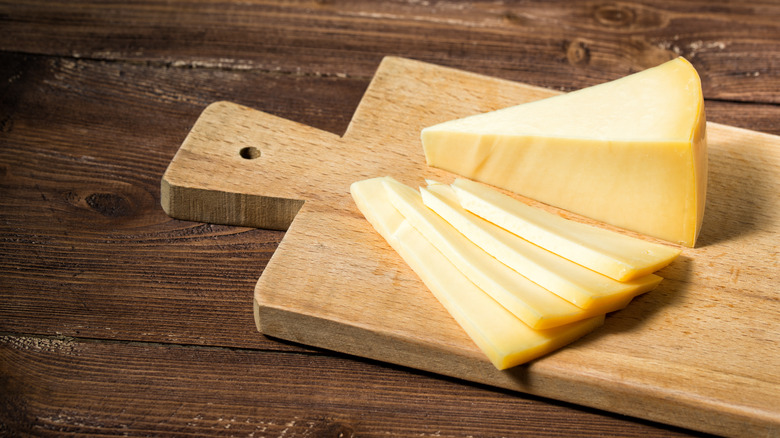
Piave is a pasteurized Italian cheese with a PDO status produced in the Alpine province of Belluno with milk from specific breeds of cows raised in the region. It's available to purchase at different levels of maturity, with each stage increasingly becoming drier and denser.
The youngest choice, Piave Fresco, is aged between 20 to 60 days and has a brightly acidic flavor. From there, the more mature wheels include Piave Mezzano (aged two to six months), Piave Vecchio (aged over six months), Piave Vecchio Selezione Oro (aged over 12 months), and Piave Vecchio Riserva (aged over 18 months). I currently sell Piave Vecchio, which has a naturally hardened outer rind and a densely compact and waxy texture, and strong notes of tropical passion fruit.
5. Gruyère
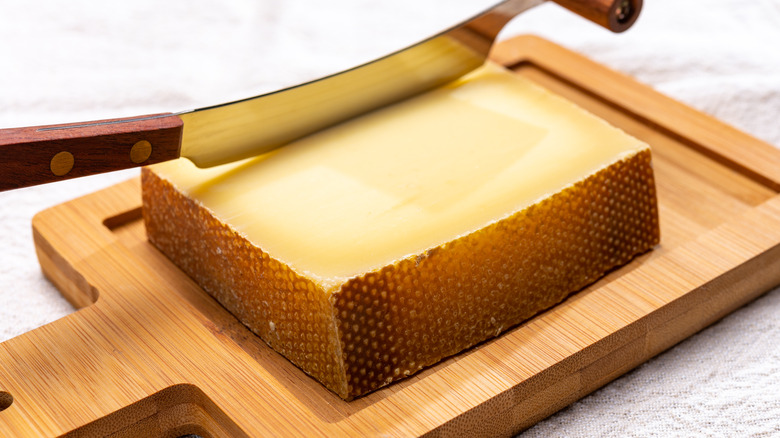
Gruyère has a dense, smooth, and fudgy texture with a complex flavor. It's one of the ultimate melters that amplifies dishes like fondues, soups, and gratins. Depending on the style and age, its flavor can range from sweet, grassy, and floral to more intense notes of beef broth, roasted nuts, and deeply caramelized onions.
Le Gruyère AOP (Appellation d'Origine Protégée) is the legally protected cheese exclusively produced in Switzerland, following strict adherence to traditional cheese production methods honored since the 12th century. In a recent 2023 appeal, the United States determined the word "gruyère" is a generic term, resolving that any producer can make gruyère-style cheese with no geographic restrictions, as long as it is not marketed under the title Le Gruyère AOP. For you as the shopper, this means you can choose to purchase both the traditional raw milk Le Gruyère AOP as well as any generic, more affordable versions under the standard name of "gruyère."
6. Comté
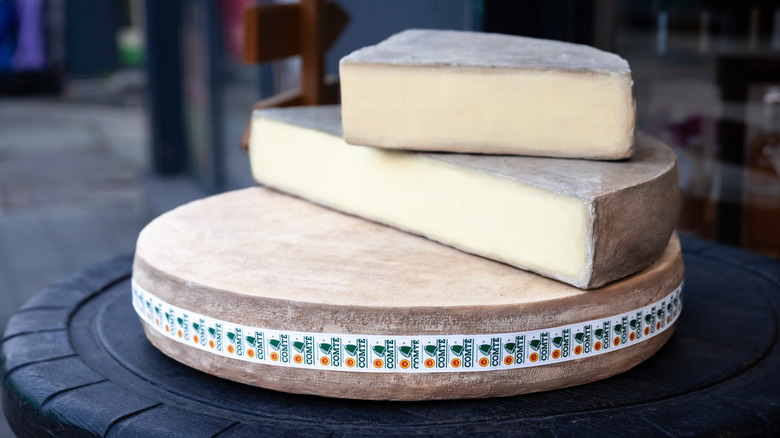
Similar to Gruyère, Comté is a protected French Alpine cheese often overshadowed by its Swiss counterpart. Every year since I have been cheesemongering, Gruyère is usually the first to be sold out, especially during the winter holiday season, while my neglected pieces of Comté patiently wait to be chosen. But let's offer the recognition it deserves here.
Produced in the Jura Massif region exclusively from the raw milk of Montbeliarde and French Simmental cattle, Comté is the most consumed cheese in France with an AOC (Appellation d'Origine Côntrolée) certification. According to the Comté Cheese Association, about 1,750,000 wheels are produced each year. Comté's rich, floral complexity is indicative of the cows' diverse grazing diet, and becomes increasingly concentrated the more it ages. The large wheels are stored in maturing cellars between four months and 24 or more months. Use Comté in any preparation for Gruyère, substituting in the same amount — it's particularly an excellent swap in French onion soup.
7. Pecorino
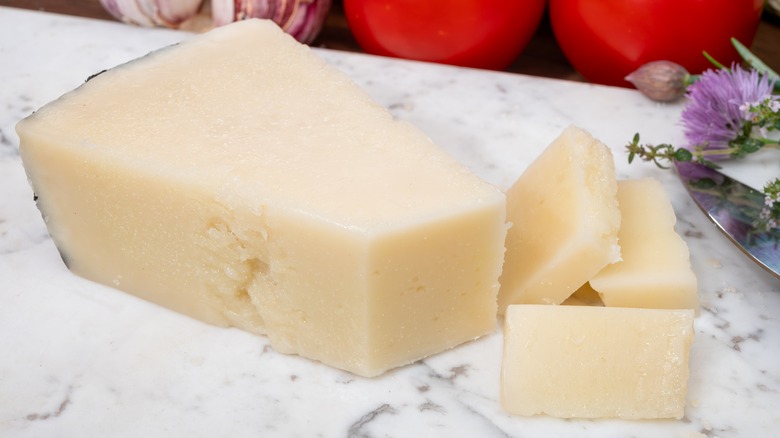
Pecorino is the generalized category of Italian aged sheep's milk cheeses. The name is derived from the Italian term "pecora," which translates to "sheep." One of the most recognizable styles is Pecorino Romano, a PDO-protected cheese produced with raw sheep's milk. The high levels of fat, protein, and lactic acid, as well as the generous salt content, give the cheese a pungent aroma and a pleasingly abrasive piquancy. It's granular yet yielding and moist, and it's a bold choice for use in savory Italian dishes like cacio e pepe.
For another selection, Pecorino Toscano is a 6-month-aged style with a hardened, natural rind that releases a slightly earthy, musky aroma. The cheese is mild and nutty with a hint of barely caramelized sugar. The texture is firm and waxy, and holds up well to slicing. It doesn't have a powerful bite like Pecorino Romano, which is why I prefer to feature the more subtle Pecorino Toscano on a cheese board.
8. Mimolette
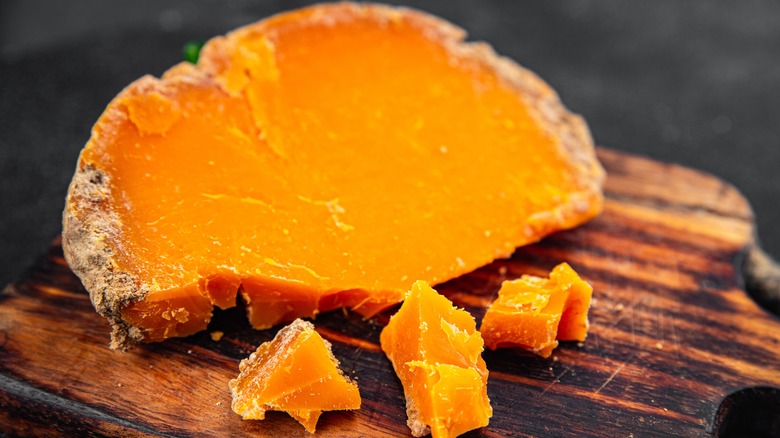
Mimolette is a French cow's milk cheese shaped like a small cannonball with a super tough, craggy rind. Underneath the gray exterior, it reveals a brilliantly orange interior paste with a flavor profile of butterscotch and candied nuts supported by a salty backbone. The cheese gets its vibrant hue from annatto seed, a popular natural food coloring. As part of the aging process, live (yet completely harmless) cheese mites are purposefully applied to the exterior to help form the rind and enhance the unique flavors.
Even though it's small and unassuming, experienced cheesemongers aren't fooled — it's a big toughie to cut straight from the cooler. At work, we leave out a wheel for at least one day at room temperature. Attempting to break into the rind when cold is a messy feat, but with enough time to warm up, backed by expert techniques and an arsenal of sharp tools, it's easier to cut.
9. Mahón
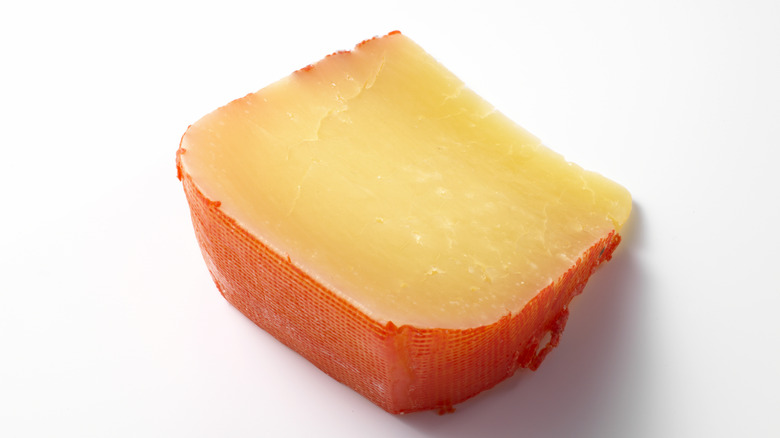
Spanish Mahón is famous for its brilliantly orange rind and pudgy square shape. Produced on the island of Menorca using milk from local cattle, Mahón has a PDO protection for two main styles. One is Artisan Mahón-Menorca, a historic raw cow's milk style periodically coated in olive oil mixed with spices during the aging process. The other style is a more industrialized Mahón-Menorca, made with pasteurized milk. The wheels are typically coated in carotene, a natural food dye.
Younger wheels, aged for a few weeks to a few months, are mild, moist, creamy, and slightly spongy. When matured for 10 months to one year, they darken in color and become hard and sharp. A little goes a long way to enjoy its piquant impact.
10. Sbrinz
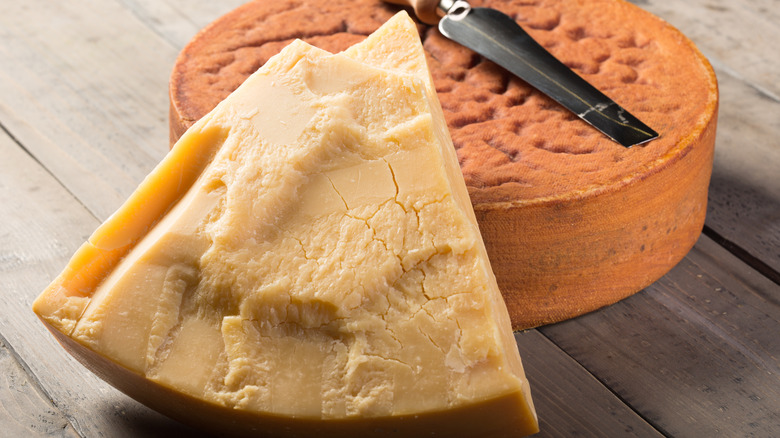
An extremely dense and aromatic AOP-protected Swiss cheese, Sbrinz production dates back to the 16th century, when cheese was a common food item transported on trade routes between Switzerland and Italy. There's even a transit path called the Sbrinz Route named after it. Sbrinz uses raw cow's milk from the Brown Swiss cow breed. With a serious focus on seasonality, the cattle graze on flora like grass, herbs, and wildflowers throughout the Alpine pastures in the spring and summer, and consume hay in the fall and winter.
Sbrinz must be aged a minimum of 18 months, and can be aged over four years. Younger wheels have a semi-firm texture that hold their shape when sliced, while older wheels are harder, drier, and more granular. Aged wheels are best for grating or serving in large shards on a cheese board.
11. Grana Padano
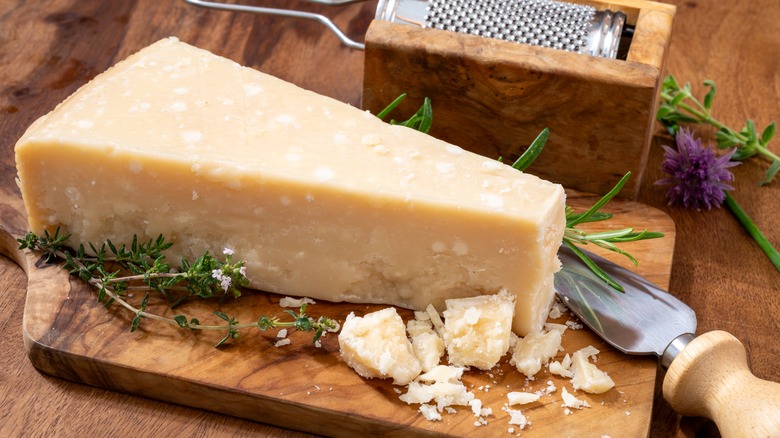
With a flaky, granular paste — "grana" means "grain" in Italian, after all — Grana Padano is a hard-aged cow's milk cheese produced in Italy, similar to its nearby neighbor, Parmigiano Reggiano. They are both EU-protected raw milk cheeses and share similar flavor profiles, with umami notes and bold salt contents. But there are some key differences that separate Grana Padano from Parmigiano Reggiano, particularly in how Grana Padano production doesn't have as many stringent guidelines.
While Parmigiano Reggiano is restricted to production in only five Italian provinces, Grana Padano has a broader production network of 33 provinces. Grana Padano can include additives like lysozyme to control fermentation, and can also use laboratory-produced lactic bacteria. The cows can be fed silage, as opposed to being fed hay and grass exclusively. Typically, Parmigiano Reggiano wheels are aged longer than Grana Padano, which has a minimum maturation of about nine months. With its younger age, the majority of consumers find Grana Padano to be a generally less intense flavor experience overall compared to Parmigiano Reggiano.
12. Fiore Sardo
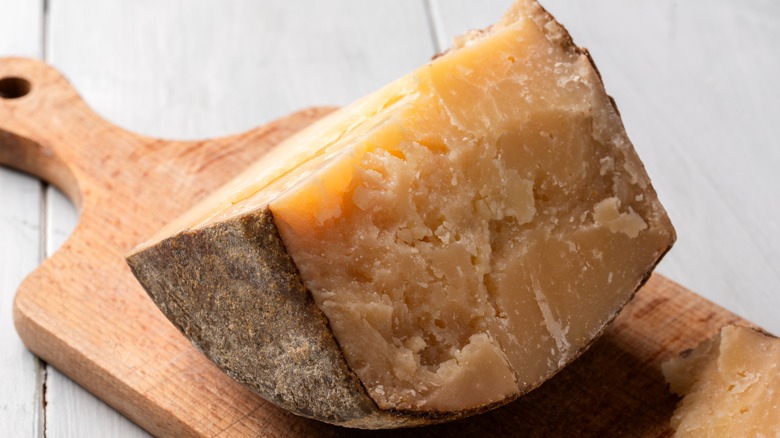
Fiore Sardo is a unique choice with a distinct flavor that is a result of smoking the wheels. The PDO-protected Fiore Sardo wheels are exclusively produced in Sardinia with raw milk from indigenous sheep. There are also modern, industrialized interpretations, some produced with pasteurized sheep's milk cheese or a combination of pasteurized cow's milk and sheep's milk.
You'll recognize the same salty bite and crumbly texture that is a common characteristic in most aged Italian sheep's milk cheeses, but the smoky flavor and stronger gamey notes add an entirely new level of complexity. Due to its earthy smokiness and bold gaminess, this is a natural pairing with heartier charcuterie, roasted nuts, and robust red wines. For the ultimate pairing that pays respect to the region, see if you can find a full-bodied Sardinian red wine.
13. Asiago
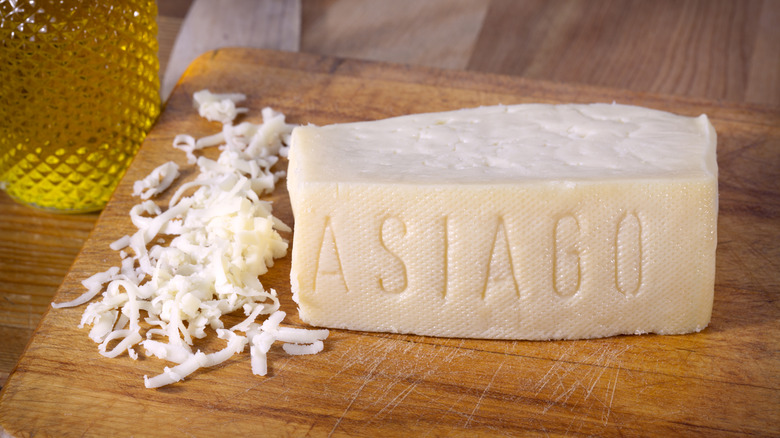
Asiago is an Italian cow's milk cheese available to purchase in both young and mature formats. There are both generic and PDO-protected versions. In my cheese department, we currently sell the younger wheels, Asiago Fresco, which are only aged for about a month and have a softer and very pliable texture with milder, slightly yeasty/tangy tasting notes.
The wheels aged for longer periods are sharp and piquant with a concentrated salt content, and those flavors become more intense the longer they are matured. Aged Asiago wheels are sold in a range of maturity lengths. Typically, Asiago Mezzano is aged between four and six months, Asiago Vecchio is aged ten months or more, and the oldest format, Asiago Stravecchio, is aged 15 months or more. The well-aged formats are brittle and crumbly, and can be used as a replacement in recipes that typically call for Parmesan. For a fun at-home culinary treat, it's a savory addition to an Italian-style baked potato.
14. Cheddar
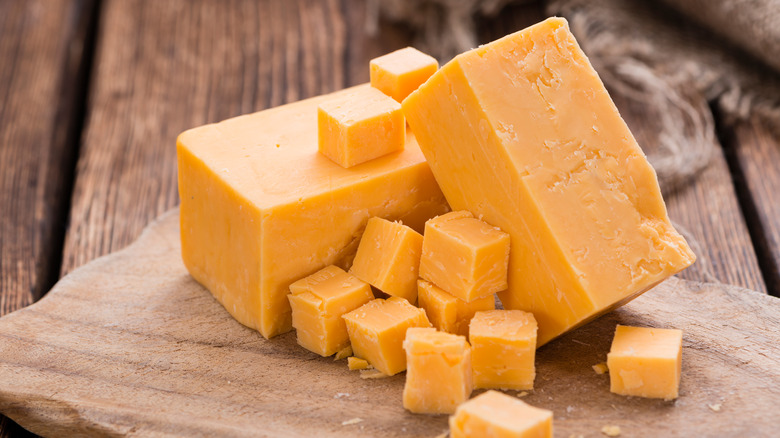
As one of the widest categories of cheese, cheddar includes some hard-aged selections with a broad range of bold personalities. One of the main indicators that a cheddar will have a firmer texture and more pronounced, sharp flavor is how long it has been matured. Seek out cheddars aged for well over one year — there are some cheddars that can be aged for 10 years or even more that'll prove even sharper.
But not all aged cheddars are equal. A 12-month-old cheddar from one producer can be completely different from a 12-month-old cheddar made by another producer. The tastes and textures will be different depending on multiple factors such as the animals' diets and the seasonality of milking, as well as decisions made during the cheesemaking and aging processes. Some will develop a creamy, dense texture with a tang that is ideal for any melting needs (I've been non-stop recommending these styles for grilled cheeses), while others will mature into dry, crumbly, savory wheels that are best for featuring all on their own on a cheese board.
15. San Michali
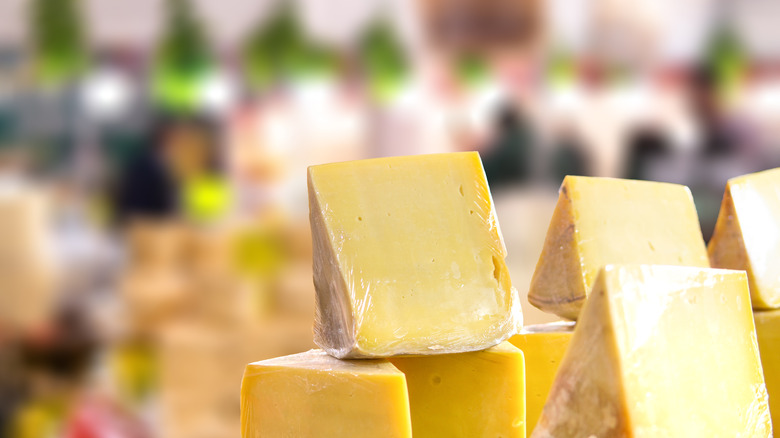
A Greek cheese made exclusively on the island of Syros in the Cyclades, San Michali has only been in recent production since the 1970s. It's a special selection with PDO protection following strict guidelines: The milk used for the cheese must be from cows bred on the island, and it must be partially skimmed and pasteurized. The cheese has a thin, natural rind and a firm, compact interior with small, irregular holes throughout the ivory-colored paste. It tastes sharp and salty, with a buttery aroma. While it might be too niche a cheese product to be sold in most supermarkets, you can order it online or check its availability at your local Greek specialty foods store.
San Michali can be used as a special grating cheese for finishing dishes. But don't let that stop you from serving a wedge of it on a cheese board with fresh figs and grapes, or cooking with it in different savory recipes. For your next dinner, I suggest incorporating some San Michali in traditional Greek foods like moussaka, pastitsio, tiropita, or keftedes.
16. Dry Monterey Jack
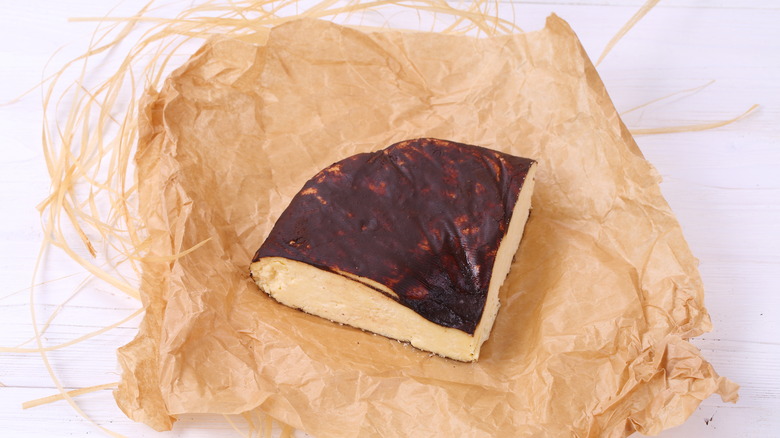
Monterey Jack is an all-American original dating back to the late 18th-century production of soft, white cow's milk cheeses called "queso blanco del pais" in Spanish-Franciscan missions established in California. While there are multiple theories, the current name of the cheese is widely credited to David Jack, a controversial American landowner who acquired Californian land in the Monterey area in the mid-19th century. Seeking to maximize his property gains, he marketed the cheese under his own name and the town in which it was produced.
Monterey Jack is still made by multiple producers in the United States in various ages. When young, it's a mild and creamy cheese with a clean, buttery flavor. The ultimate blank slate, Monterey Jack is often mixed with Colby or cheddar, as well as hot peppers, to make snackable, meltable blends. Dry Monterey Jack is the aged version, and offers a far bolder experience than its youthful self. The golden-hued cheese becomes nuttier and drier, perfect for grating and shredding over pasta, soups, tacos, and more.