

Here's How Meat Gets Infected With E. Coli. (Hint: It's Not After Processing)
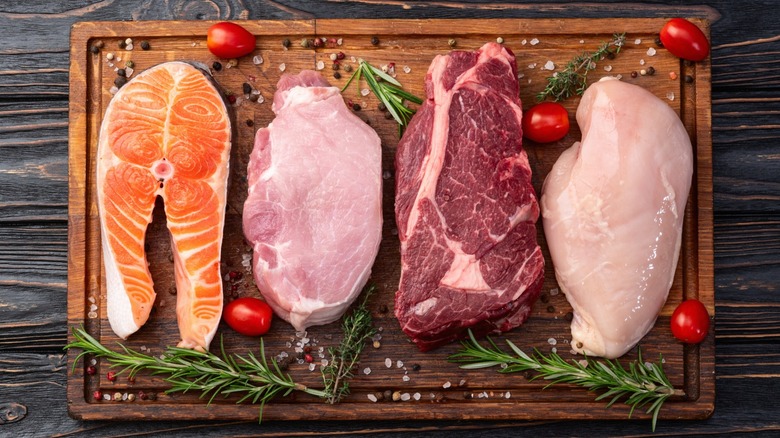
Many of the worst food recalls in U.S. history have been due to E. coli, as eating food contaminated with the bacteria can lead to serious cases of food poisoning. E. coli is naturally present in the intestinal tract of many animals, including cows, sheep, poultry — even in houseflies. When an animal harbors E. coli in its digestive system, the bacteria may be present in its feces. Sometimes, this can result in meat becoming contaminated with bacteria during the slaughter process, as bacteria from the intestinal tract may touch the parts of the animal that will eventually be consumed.
Some types of meat — such as ground beef — are more likely to contain E. coli bacteria than other types of meat. There are two reasons why this can occur. First, meat from several animals can be ground together to make a single package of ground beef. That means that if one piece of meat is contaminated, it can affect several packages (meaning it's far less likely that you'll get a piece of meat contaminated with E. coli if you choose, for example, a piece of steak).
Secondly, a single piece of meat — such as a steak — could have E. coli bacteria on its surface, but the bacteria would likely die upon contact with a heat source. Ground meat, on the other hand, can have E. coli throughout. This can make it harder for heat to fully kill E. coli bacteria (especially in a burger that's cooked medium or medium-rare).
How to keep E. coli off of your plate
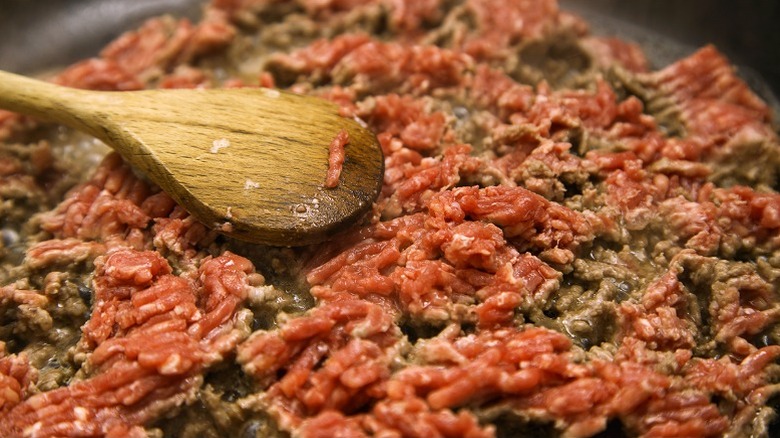
You can't tell whether a package of meat has been contaminated with E. coli bacteria by looking at it or smelling it, so it's important to take steps to kill off potentially harmful bacteria when you're cooking meat in your kitchen. One old-school option, if you have the time, is to grind your own meat at home. This won't protect you from potential E. coli on the outside of the meat, but it will ensure that your meat is from fewer animals than you'd find in store-bought ground beef.
While there are plenty of meat food safety mistakes to avoid in the kitchen, those following plant-based diets should still take caution by thoroughly washing fresh produce. It isn't contaminated in the same way as meat, but some fruits and vegetables can be exposed to E. coli bacteria at farms and processing plants. By cooking food to the proper temperature and following kitchen and food sanitation protocols, you can avoid potential food poisoning from E. coli.