

6 Mistakes Everyone Makes With Seafood Boils, According To Experts
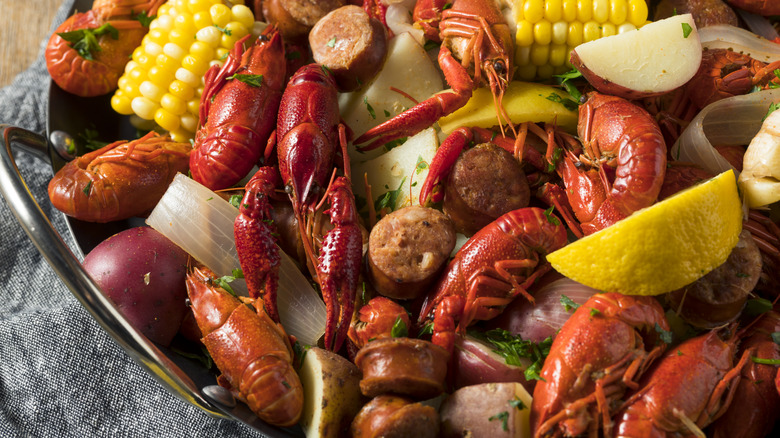
Seafood boils are meant to be unfussy, communal, and forgiving — but that doesn't mean just anything goes. Mistakes, from how you season the pot to how you time each ingredient, can sabotage flavor, texture, and consistency. None of the fixes require special equipment or advanced skills, making them easy to apply even if you're new to cooking seafood at home.
To find out where seafood boils go wrong most often, we spoke with Chef Devin Sansone at Abbracci in Mount Pleasant, South Carolina; Chef Cole Poolaw at Charleston Harbor Resort & Marina in Mount Pleasant, South Carolina; Chef Bryan Caswell at Latuli in Houston, Texas; and Chef Nelson German, owner of alaMar Dominican Kitchen in Oakland, California.
These experts know seafood inside and out. Their advice focuses on simple adjustments that make a real difference, helping you avoid common pitfalls and get more flavor, balance, and control out of every boil.
1. Mistake: Cooking everything at the same time
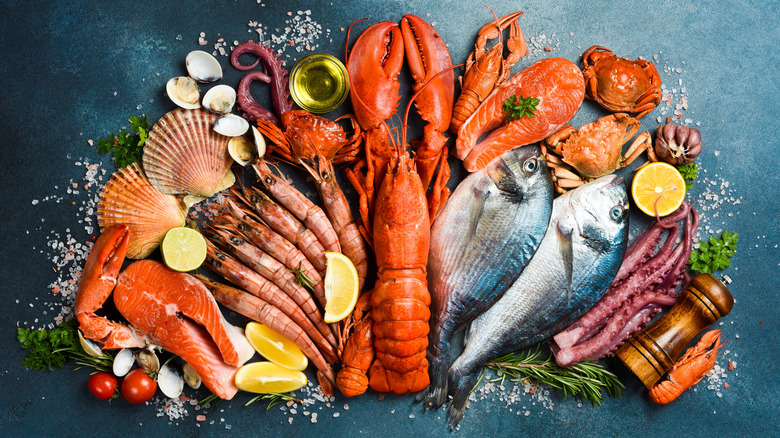
When preparing a seafood boil, there are a few mistakes that come up again and again. Our experts agree that the mistake you're making is cooking all of the ingredients at the same time. Shrimp, potatoes, corn, and sausage, for example, all have ideal cooking times. "The potatoes should go in first, then your sausage, then your corn, and then your shrimp," says chef Devin Sansone at Abbracci. Chef Nelson German, owner of alaMar Dominican Kitchen, echoes that advice. "Every ingredient has its own cooking time and texture," he says. "Seafood boils are about steps. If everything goes in together, something will always be overcooked."
It's also important not to rush your boil, no matter the circumstances. Even professional chefs have made errors with seafood boils earlier in their careers. "I once rushed the layering process and added everything at once — shellfish turned rubbery while potatoes were underdone," says chef Cole Poolaw at Charleston Harbor Resort & Marina. "It taught me that timing is everything in a boil."
Think of a seafood boil as a relay instead of a race. Cooking in stages is how you avoid chewy shellfish and undercooked vegetables.
2. Mistake: Overcooking the ingredients, especially shrimp
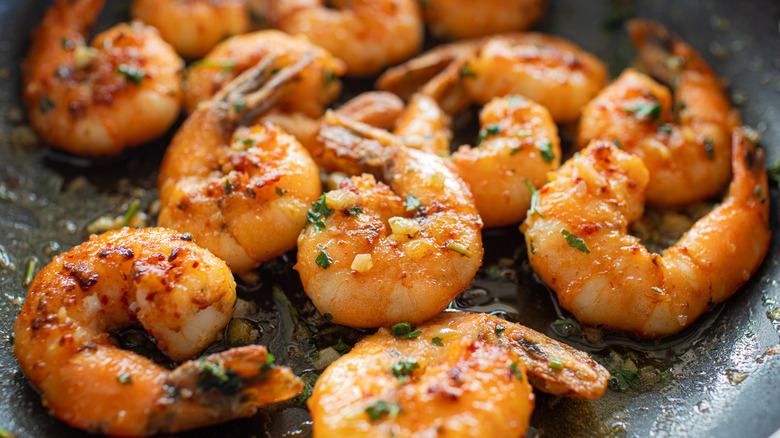
Speaking of chewy shellfish, getting the timing right in a seafood boil can be tricky, and shrimp cooking mistakes in particular are easy to make. Shrimp is the last thing you add to a boil because they only cook for a couple of minutes. Chef Nelson German, owner of alaMar Dominican Kitchen, warns cooks to pay attention to the size of the shrimp. "People stick to a set time from a recipe, but smaller shrimp cook much faster," he says. "Once shrimp curl tightly into a 'C' shape, you've already gone too far. As soon as the color changes, get ready to pull them — they'll keep cooking after." Chef Devin Sansone of Abbracci reiterates pulling the shrimp before you think it's time. "You can almost kill the boil and let the shrimp poach in there right before you dump everything out," he says.
Chef Bryan Caswell at Latuli emphasizes the importance of carryover cooking for all seafood in your boil to ensure nothing is overdone. "Seafood has a very narrow window where it's just right, and people tend to miss it," he says. "You actually want to pull the seafood when it's about halfway done and let it finish cooking off the heat in a cooler with carryover." In addition to shrimp, Chef Caswell mentions that crab is also prone to overcooking.
If you want a seafood boil that wins every time, make sure to start with high-quality seafood. The right ingredients make all the difference.
3. Mistake: Using a pot that's too small and crowding it
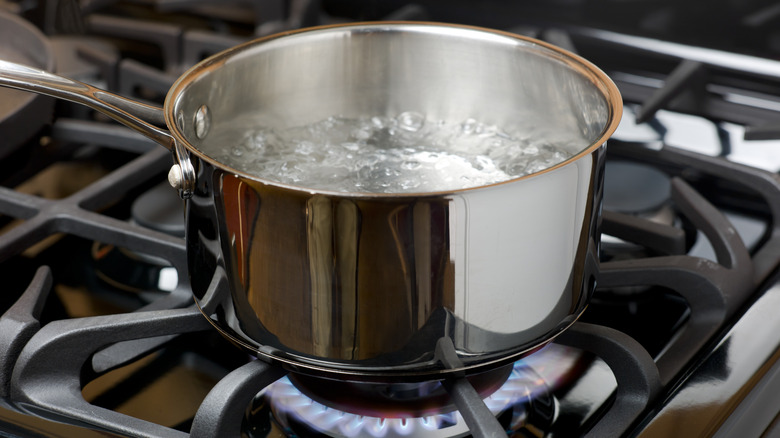
If you've already picked a pot for your seafood boil, chances are you'll need something larger than you think. Our experts agree that most home cooks crowd the pot, which leads to uneven cooking, steaming instead of boiling, and a bunch of other mistakes you don't want to make.
Chef Devin Sansone at Abbracci recommends using a pot that is at least three times larger than the amount of ingredients that you plan to cook. "Always use a larger pot than you think you're going to need," he says. "It's better to have too much space in the pot than to not have enough." Chef Cole Poolaw at Charleston Harbor Resort & Marina adds, "Use a pot large enough to keep ingredients fully submerged without crowding."
Chef Bryan Caswell at Latuli mentions that a large pot is what allows the boil to continue as you keep adding seafood and other ingredients. Check out what Chowhound says about what it means exactly to bring water to a rolling boil.
4. Mistake: Not seasoning the pot correctly
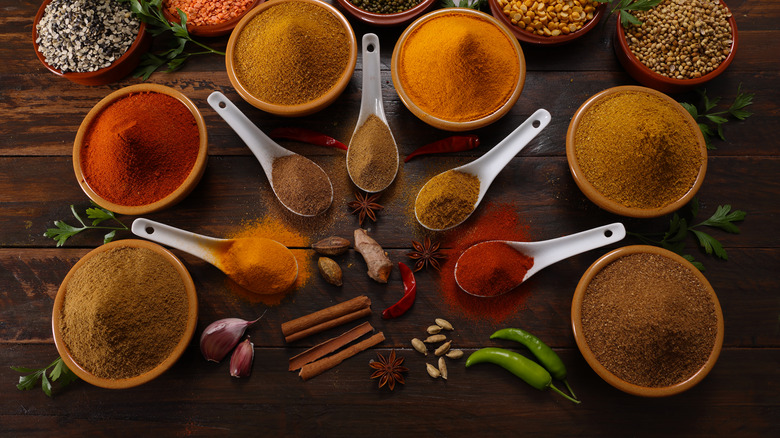
Like most dishes, seasoning makes all the difference. The same is true for a seafood boil. Our chefs agree that people underseason the water, though overseasoning is a common mistake, too. "The boil liquid should taste almost salty like the sea. Season generously and layer spices early," says chef Cole Poolaw at Charleston Harbor Resort & Marina. "I prefer a combination of Old Bay [and] Cajun seasoning." Learn more about what's in Old Bay seasoning. It's a blend of 18 spices that's stood the test of time. Chef Devin Sansone at Abbracci agrees on how the boil liquid should taste. "The water should be as salty as ocean water so that you can actually impart flavor into those vegetables," he says. "Also, use more seasoning than you think you're going to need because you lose a lot of it in the water."
Chef Bryan Caswell at Latuli shares tips on how to get the spice balance just right. "People forget that most of the seasoning ends up on your fingers, not inside the shell," he says. "That leads them to overdo it in the pot. There are two layers of seasoning. One is the bouillon or cooking liquid, which builds flavor from the inside. The other is the spice and butter that coats the shell. You need time for the flavors to come together. Let the pot simmer for 20 to 30 minutes so the seasoning can fully develop before you add the seafood."
5. Mistake: Not cooking in batches
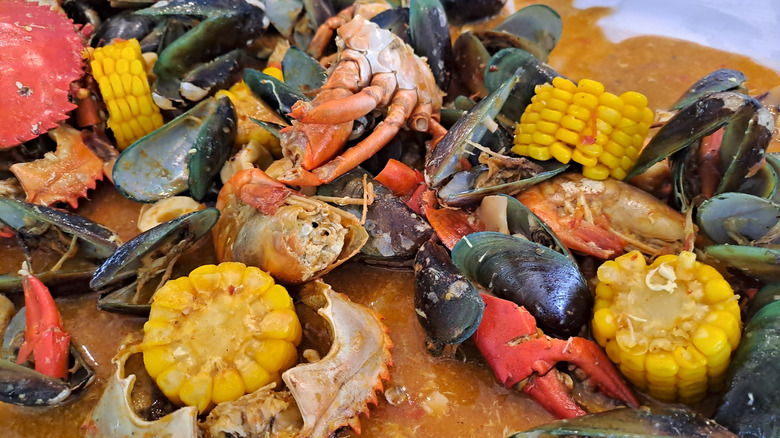
When preparing a seafood boil, most people cook the entire meal at once. Chef Bryan Caswell at Latuli discusses the importance of cooking in stages, regardless of pot size. "It's always better to cook in batches," he says. "For example, if you dump 100 shrimp into a pot that's too small, some will be undercooked, some overcooked, and there's no consistency. The faster you get back to a full boil, the more control you have over the final result." Chef Caswell compares the technique to blanching vegetables in batches, a method that helps maintain water temperature and ensures even cooking.
Another advantage of cooking in batches is that you're not missing out on big flavor. Letting the seafood rest for at least 10 minutes allows the flavors to fully marinate. By the time you cook your last batch, the first boil will be ready to enjoy.
6. Mistake: Not using simple upgrades to elevate the boil
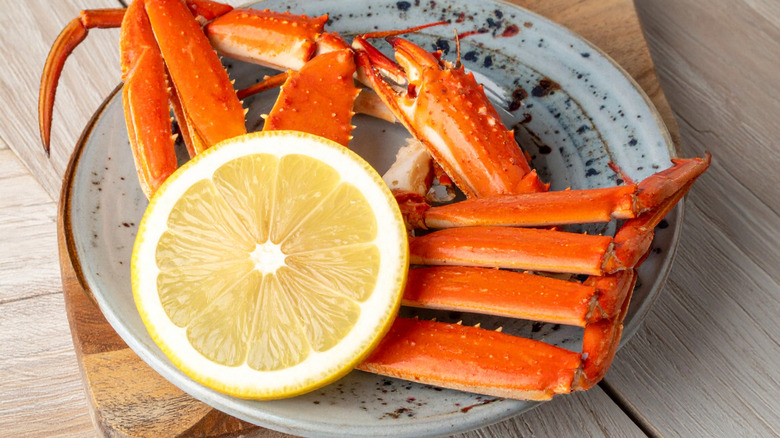
While shrimp, potatoes, corn, and sausage are your basic seafood boil ingredients, many home cooks miss an opportunity to elevate the dish by skipping easy upgrades. Chef Nelson German, owner of alaMar Dominican Kitchen, loves to focus on the butter. "Cook the boil traditionally, then toss everything in seasoned butter for richness and depth," he says. "Seasoning the butter is key — I use paprika and garlic. At alaMar, we're known for our butter sauces. One of our most popular is a rosemary coconut curry butter we call the 'Steph Curry' sauce."
Chef Devin Sansone at Abbracci likes to add crab legs and a squeeze of lemon at the end. Chef Bryan Caswell at Latuli adds celery. He says the vegetable adds a "je ne sais quoi" that ties the whole boil together. Chef Cole Poolaw at Charleston Harbor Resort & Marina suggests swapping water for a flavorful stock or adding a couple of halved lemons and oranges, celery, onion, and fresh herbs.
These small additions add layers of flavor without complicating the cooking process. They're also easy to customize based on what you already have on hand.