

15 Korean Foods To Try At Least Once
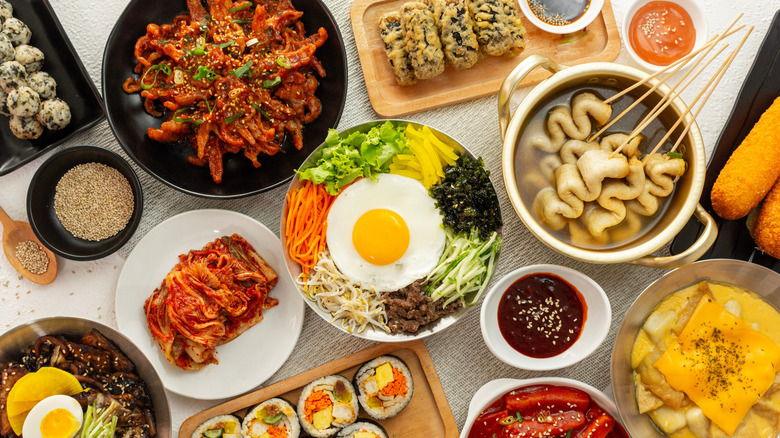
News flash: Korean food is much more than just kimchi and Buldak noodles. The cuisine is filled with bold flavors and dishes that range from herbaceous steamed mandu to heartwarming stews. My grandmother, Rumi, understood this more than anyone I knew. She was born and raised in Seoul, South Korea, during the early 1930s. Even though our family is Japanese, she carried those memories from Korea with her throughout her life. She took her Seoul roots with our combined heritage in the kitchen to create meals and experiences for us that didn't quite fit into either category, but somehow it felt like home.
Growing up, my siblings and I watched her gracefully work in the kitchen. Every time we would go over to her house, she was either peeling apples for her bulgogi marinade, making beef-filled mandu, or munching on pungent banchan while watching her favorite K-dramas. Now that she's passed, I've come to realize she was doing more than just cooking — she was preserving a piece of her past and gifting it to us, making sure that memories of her time in Seoul continued to the next generation. Here is a list of 15 Korean dishes that you should definitely try at least once — the ones that shaped my grandmother's life and mine.
1. Napa cabbage kimchi
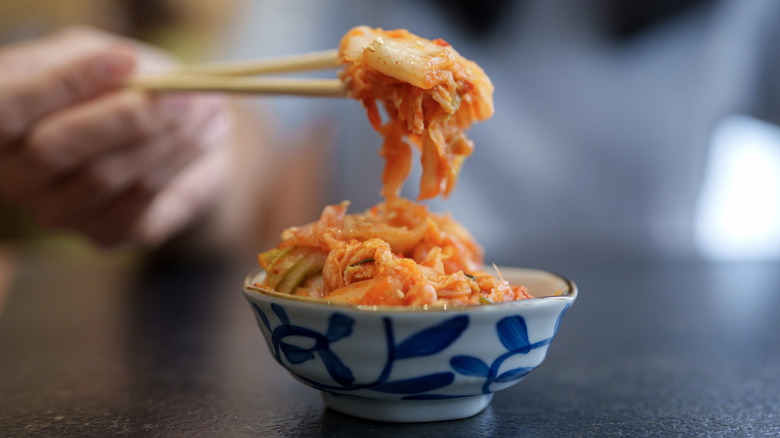
Probably one of the most famous Korean dishes out there, napa cabbage kimchi, or "baechu-kimchi" in Korean, or simply "kimchi," is a staple side dish that appears on tables across Korea and around the globe. If you haven't had it before, it's a spicy, fermented side dish made from salted and seasoned napa cabbage, daikon radish, garlic, ginger, shrimp paste, and gochugaru (Korean red chili powder).
It's known for its spicy, tangy, and irresistible umami flavor, developing a complex taste through lacto-fermentation. This is a natural process where the salt draws out water from the cabbage, creating a brine and lactic acid bacteria that consume the vegetable's sugars, converting them into lactic acid. This lactic acid helps preserve or "pickle" the cabbage, giving it its delicious, tangy, sour flavor. It's a staple eaten with nearly every Korean meal and used as an ingredient in other dishes like fried rice, stews, and savory pancakes.
2. Kimbap
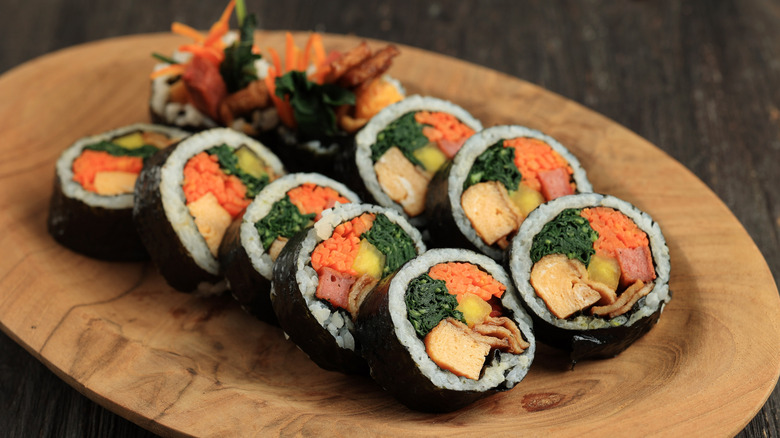
One of the most versatile Korean dishes, kimbap, or "gimbap" in Korean, is a beloved rice roll that combines seasoned rice, vegetables, and protein, wrapped tightly in seaweed, creating a portable and tasty meal perfect for picnics, office lunches, or a snack. Oftentimes, people confuse kimbap with sushi; however, they actually couldn't be more different. Sushi features rice seasoned with vinegar, sugar, and salt to create a tangy flavor, typically filled with raw fish and vegetables. Kimbap, on the other hand, uses sesame oil and salt to season its rice with a nutty taste and incorporates cooked ingredients such as meat, egg, and pickled vegetables.
There are three main types of kimbap. Traditional kimbap, the most popular type, is made with rice, filling, and seaweed. Nude or French kimbap reverses this structure with the seaweed on the inside and rice on the outside. Samgak kimbap, which are triangle-shaped kimbap that are commonly sold in South Korean convenience stores, are inspired by the Japanese rice ball onigiri. Whichever type you try, you'll surely fall in love with these delectable bite-sized rice rolls.
3. Bibimbap
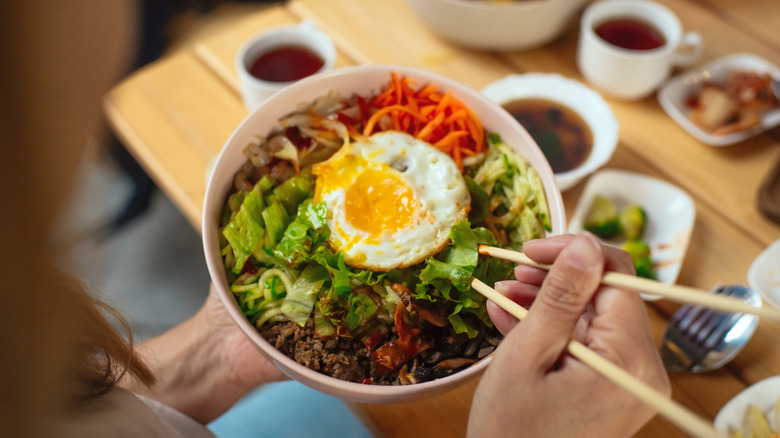
Bibimbap, or "bibim-bap" in Korean, is a mixed rice bowl topped with vegetables, protein, and a fried egg, finished with a dollop of gochujang (Korean red chili paste). The name literally means "mixed rice" (bibim meaning mix and bap meaning rice), and the key to eating it is stirring all the components together, which creates a wonderful blend of flavors and textures in every bite.
The most popular type is the dolsot bibimbap, which is served in a sizzling hot stone pot that cooks the bottom layer of the rice. The bowl typically arrives at the table extremely hot, with the rice already forming a crispy, golden brown layer on the bottom. Yangpun bibimbap is the simpler, more everyday version of bibimbap, which uses leftover banchan (Korean side dishes) and meat. If you've ever traveled across South Korea, you'll quickly realize that each area of Korea has its own regional variation of bibimbap, often featuring local produce, meat, and seafood.
4. Soondubu jjigae
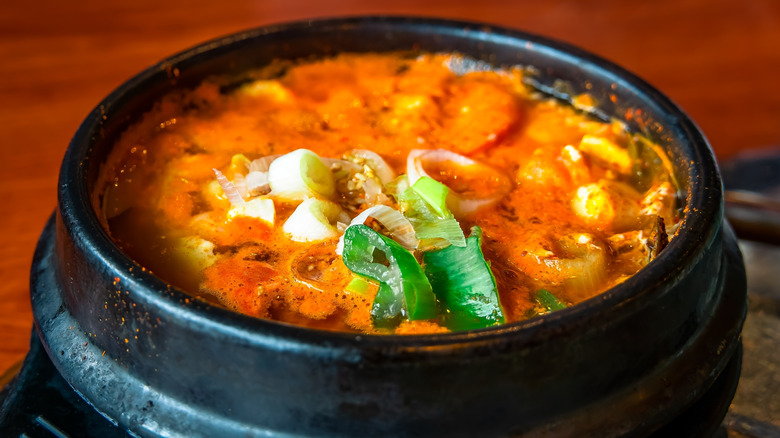
Imagine this: You're walking the snowy streets of Seoul, bundled in a ton of layers, and all you can think about is eating something warm and comforting. In comes the pinnacle of Korean stews: soondubu jjigae.
If you haven't had the honor of trying it before, soondubu jjigae, or "soft tofu stew" in English, is a piping hot, bubbling pot of silky soft tofu, vegetables, and protein swimming in a rich, spicy broth that's perfect when you want something hearty and seriously delicious. Typically, soondubu jjigae just features soft tofu as its protein, but you can also find regional variations including mussels, clams, shrimp, pork, beef, or even dumplings! Oh, and it also has a raw egg cracked right into it before serving, giving it an even silkier consistency and richer flavor. It's the ultimate comfort food and is definitely a Korean dish everyone needs to try at least once in their life.
5. Japchae
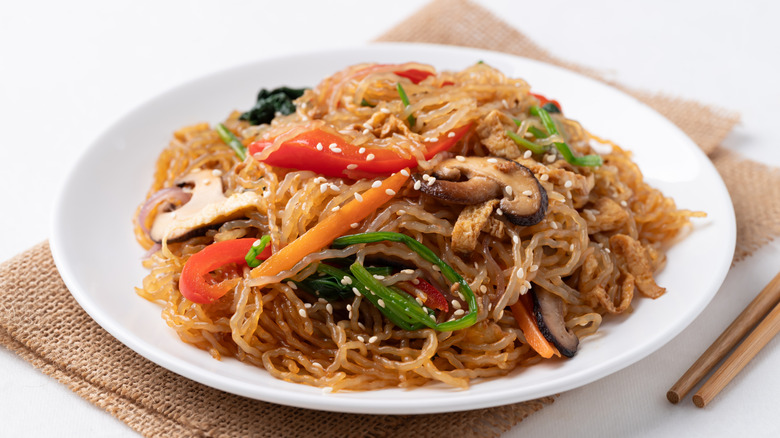
Japchae is a delicious stir-fried noodle dish made with sweet potato glass noodles, a medley of stir-fried vegetables, and thinly sliced beef, all tossed together in soy sauce, sesame oil, sugar, garlic, ginger, and scallions for a nutty, savory finish. The sweet potato glass noodles have a delectable, chewy, springy texture with a subtle sweet and starchy flavor. They act like a sponge absorbing the salty sauce and seasonings, creating a tender, savory bite that will melt right in your mouth.
Traditionally, japchae was served at royal banquets during the 17th century; however, over time, it has evolved into a staple dish for major celebrations like the Lunar New Year, Chuseok (harvest festival), birthdays, and weddings. You can also find it being served as a banchan at many Korean restaurants or even as a main dish served over rice or with BBQ, often served either warm, room temperature, or chilled.
6. Tteokguk
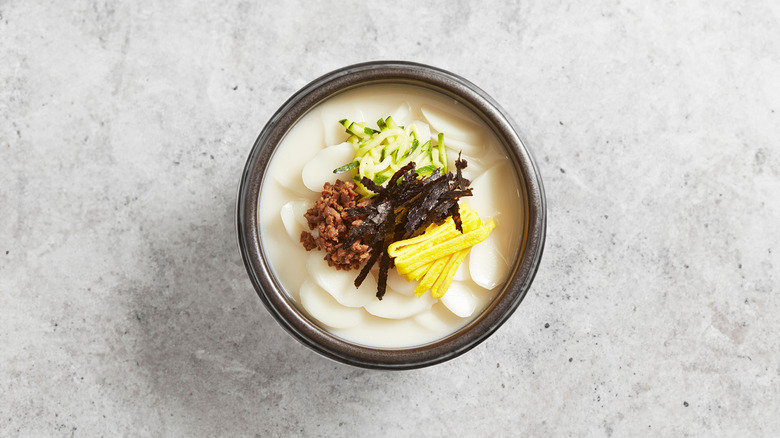
Looking for soup to curl up on the couch with while you're watching all of your favorite K-dramas? Then you should be introduced to tteokguk — a comforting soup made with chewy rice cakes submerged in savory broth. It's traditionally eaten on Lunar New Year, symbolizing gaining a year of age, good fortune, and longevity, but honestly tastes great any time you want a bowl of something warm and comforting. It's served everywhere in Korea, but most importantly at ancestral sites and at homes during the holiday season. You can also find it at traditional markets and pre-made at Asian supermarkets like H-Mart.
This mouthwatering soup is usually garnished with sliced beef, thinly sliced eggs, seaweed, scallions, and sesame seeds. It can feature either a savory beef-based broth made with slow-simmered brisket or chuck roast, or an umami, salty anchovy broth. Both options are absolutely delicious and will have you sip every last drop.
7. Bulgogi
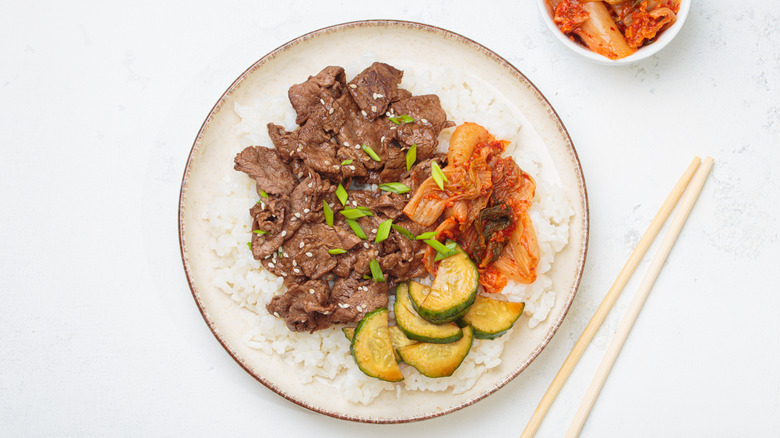
Another Korean dish that everyone needs to try at least once is bulgogi. Unarguably, one of the most popular meat dishes hailing from the Korean peninsula, bulgogi is basically thinly sliced marinated beef that is either grilled or stir-fried with onions and scallions. The best type of beef for bulgogi is a well-marbled cut like ribeye, sirloin, or strip loin that's been thinly sliced against the grain to ensure it will have a tender, melt-in-your-mouth texture. Beyond the meat, the star of the show is its delectable sweet and savory marinade, which includes a blend of soy sauce, sesame oil, sugar, garlic, ginger, and a fruit puree for tenderizing the meat. When cooked, the marinade becomes slightly caramelized and smoky, giving the dish its signature depth of flavor.
Bulgogi's versatility is part of its appeal. If you want to keep it simple, you can either throw it in a lettuce wrap, toss it over seasoned rice, or serve it on its own as the main dish. Oftentimes, it's used as the main protein in dishes like bibimbap, kimbap, and at Korean BBQ.
8. Tteokbokki
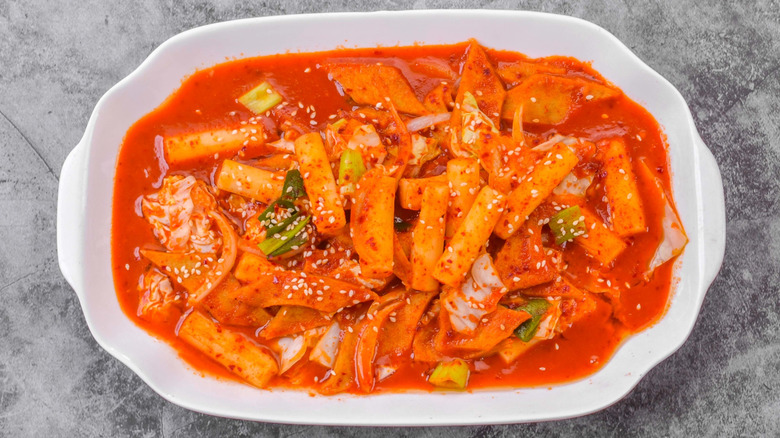
Tteokbokki is a popular street food made with chewy rice cakes coated in a thick, spicy red sauce made from gochugaru and gochujang, often featuring fish cakes, hard-boiled eggs, cheese, and thinly sliced vegetables like onions, green cabbage, carrots, and scallions. The dish's iconic red sauce offers a delicious blend of sweet, savory, and spicy flavors, while the chewy, bouncy rice cakes absorb everything like a sponge.
Tteokbokki truly is one of the pinnacle dishes of Korean street food. Walk through any food market in South Korea, whether it's Gwangjang or Namdaemun, and you'll see endless stalls with a bubbling pot of tteokbokki, filling the air with a spicy aroma that draws in crowds of hungry locals. It's one of those irresistibly delicious dishes that's nearly impossible not to order and to stop eating once you start. Give it a try next time you're craving something warm, spicy, and comforting.
9. Mandu
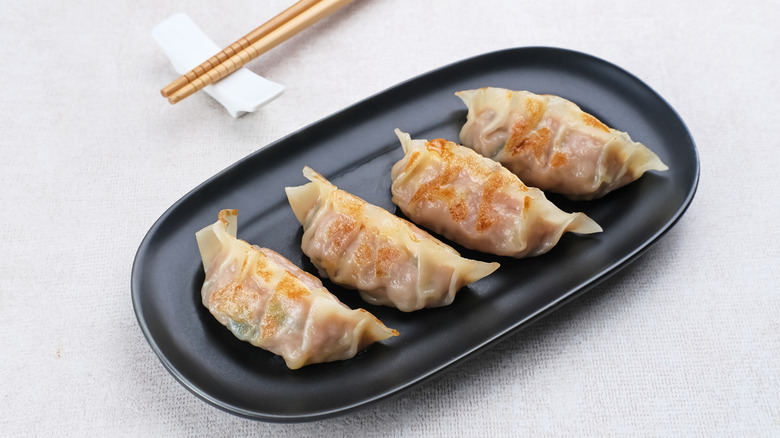
Mandu are traditional Korean dumplings featuring a delicate wheat flour wrapper and a savory filling. The filling is typically a mix of ground meat (pork or beef), tofu, glass noodles, various vegetables like green cabbage, scallions, and chives, and seasoned with garlic and sesame oil. These mouthwatering dumplings can either be steamed, boiled, deep-fried, or pan-fried until crispy. They can also be served in soups and stews in dishes like soondubu jjigae, kimchi jjigae, or tteokguk. Oftentimes, they are served with a side of soy-vinegar dipping sauce or a drizzle of spicy chili oil to cut through the richness of the filling.
You can find mandu dumplings being sold everywhere in South Korea, from high-end restaurants and family-run eateries to street food stalls and supermarkets. There are also dedicated mandu restaurants called "mandujip", often serving various types with fillings ranging from pork to seafood. Can't make it to Seoul just yet? You can find mandu being sold at the freezer section at most Asian grocery stores and occasionally at Korean restaurants here in the US.
10. Samgyeopsal
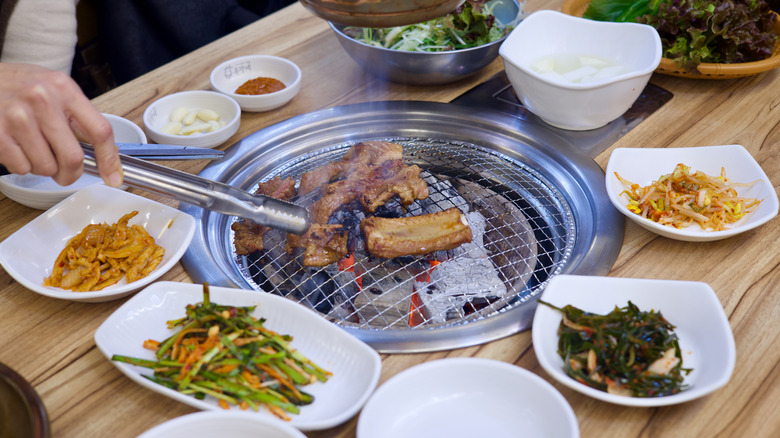
Beyond bulgogi, samgyeopsal is one of the most popular dishes to order at Korean BBQ. If you haven't tried it before, it consists of thick slices of seasoned pork belly that you grill yourself on a tabletop grill in the center of your table. It's traditionally served with lettuce leaves, sliced garlic, herbs, and various banachan, so you can wrap up the meat creating one delicious bite called a "ssam". It is essential to have a side of ssamjang (a savory blend of fermented soybean paste, doenjang, and gochujang) to dip in it. The umami flavor of the doenjang and spiciness of the gochujang pair perfectly with the rich, fattiness of the grilled pork belly. If ssamjang isn't your thing, you can also dip it in a simple mixture of sesame oil and salt for a savory, nutty kick.
Samgyeopsal is more than just a meal in Korea — it's a cherished social experience that's often enjoyed alongside friends and family, signaling connection, hospitality, and community in Korean culture. There's even a samgyeopsal day on March 3 in South Korea to celebrate and promote this delicious dish.
11. Yangnyeom chicken
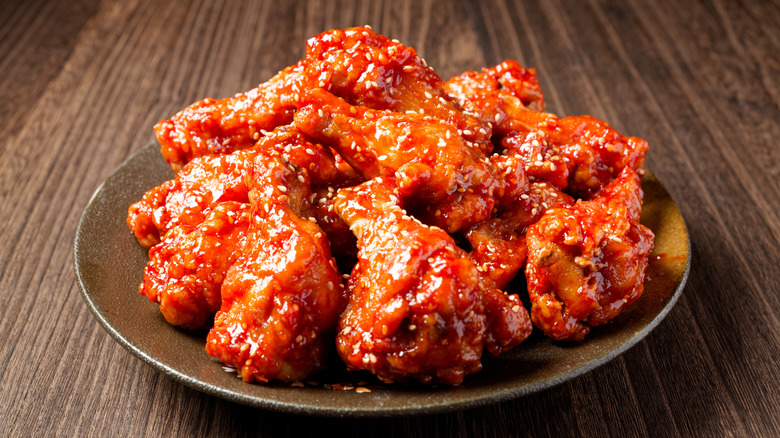
Yangnyeom chicken is a super popular spicy Korean-style fried chicken dish that you'll find everywhere in South Korea, from street food stalls to restaurants. The dish is well-known for its sweet, spicy, and tangy sauce made with gochujang, honey, vinegar, garlic, and soy sauce — a sticky, bright red glaze that perfectly coats each piece.
Its crispy, crunchy exterior is what sets it apart from other fried chicken dishes. This texture comes from double-frying each piece and its coating of all-purpose flour, baking soda, and potato starch, which gives it its scrumptious, crunchy texture. The combination of a crispy crust with the sticky, spicy, slightly sweet sauce is what makes yangnyeom chicken so irresistible. The dish is typically served with a side of pickled radishes and kimchi to balance the flavor. Definitely give it a try the next time you're craving a plate of tasty fried chicken.
12. Hotteok

Looking for something sweet, warm, and absolutely delicious while you are perusing through Myeongdong market? Well, then you should definitely pick up a tasty hotteok while you're there. For those uninformed, hotteok is a stuffed Korean pancake filled with brown sugar, cinnamon, and nuts, which is pan-fried in oil until it's crispy outside and gooey inside. The dough is made from a blend of all-purpose and glutinous rice flour, providing it with its signature soft, mochi-like interior. They are the quintessential winter snack in South Korea and are typically sold as street food at food markets and stalls; however, you can also find them at restaurants and cafes.
Beyond the classic version, you can also find them stuffed with sweetened red bean paste, vanilla custard, honey, and sometimes even cream cheese. For anyone who doesn't have a sweet tooth, there are also savory versions filled with kimchi, mozzarella cheese, and beef as well.
13. Jjajangmyeon
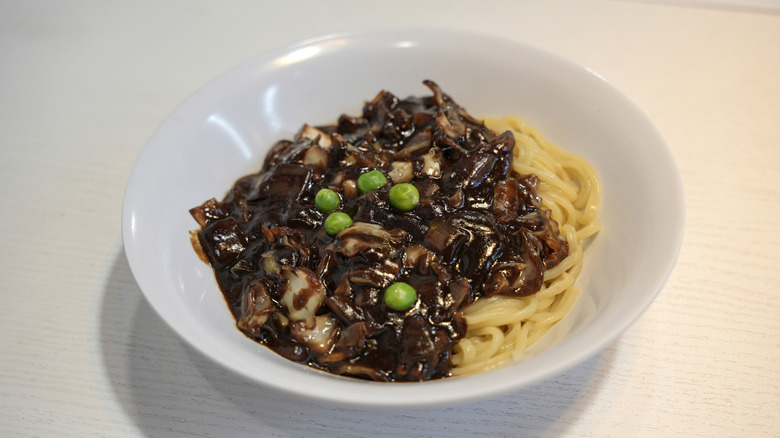
Another tasty Korean dish you need to try is jjajangmyeon. This unique dish consists of thick wheat noodles smothered in a rich, savory black bean sauce with chunks of potato, onion, zucchini, scallions, and pork belly, often served with pickled radishes and raw onion. It's an incredibly rich and comforting dish that's beloved by many, often viewed as the staple delivery food dish in South Korea. It's extremely popular in Korean-Chinese cuisine, where its roots trace back to the Chinese dish zhajiangmian. It is believed that Chinese immigrants in the early 1900s adapted zhajiangmian for Korean taste preferences, adding a bit of sweetness to the sauce and thickening it with starch.
Just like samgyeopsal, there's even a dedicated day for eating jjajangmyeon on April 14 called "Black Day". This unique holiday is primarily for single people to come together and eat a bowl of jjajangmyeon, serving as a sort of lighthearted way to embrace being single.
14. Pajeon
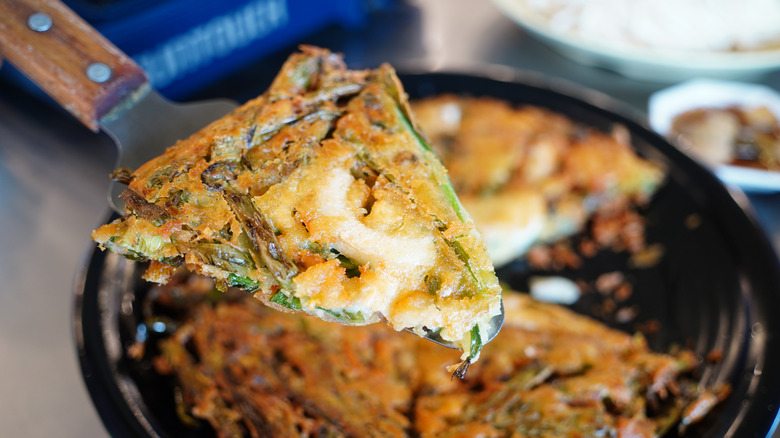
Pajeon is a savory Korean pancake, named from "pa" (scallions) and "jeon" (pancake), featuring a batter made from all-purpose flour, potato starch, eggs, and water that's loaded with sliced and whole green onions. Sometimes people add bits of seafood like fish, crab, or oyster alongside some other veggies, or kimchi into the batter, as well. It's pan-fried in oil until it's crispy and golden brown on the outside, while the interior stays soft and chewy. It is similar to Chinese scallion pancakes but has a much denser and chewier texture.
It's commonly served alongside a soy-vinegar dipping sauce as a snack, side dish, or appetizer, and it's often paired with Korean rice wine called "makgeolli". The makgeolli's sweet, creamy, and milky flavor and refreshing quality perfectly balance the savory saltiness of the pajeon. It helps to cleanse the palate between each bite, making it an essential part of eating pajeon.
15. Samgyetang
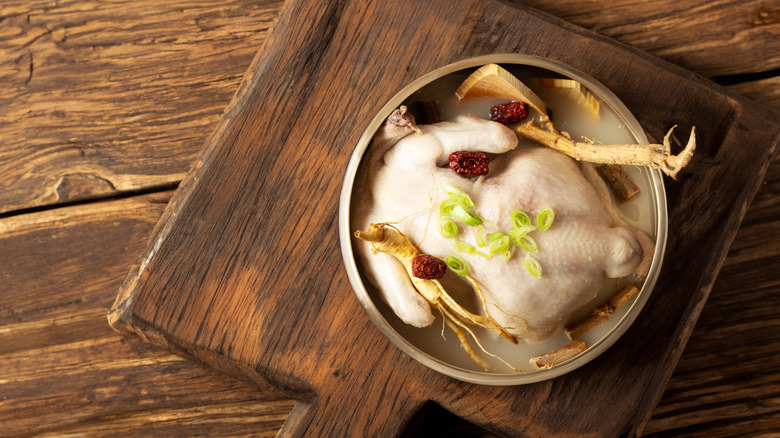
Last but not least, samgyetang is a nourishing Korean ginseng chicken soup made with a whole young chicken stuffed with ginseng, garlic cloves, jujubes (Korean dates), and glutinous rice. The chicken is simmered until it's completely fall-off-the-bone, and the broth is filled with savory, aromatic flavor. The glutinous rice in the center absorbs the broth, softening into a pillowy texture that's just packed with umami flavor from the chicken, creating a deeply nourishing and comforting bite.
It's traditionally eaten on Korea's hottest day in the summer to restore energy and balance body heat, a practice called "yi-yeol-chi-yeol", which roughly translates to "fighting fire with fire" — but honestly, it tastes amazing any time of the year. Typically, each person gets their own whole chicken, and it's eaten with a side of salt, ground black pepper, and kimchi. The salt and pepper dip allows you to adjust the seasoning to your taste, while the kimchi's spicy, tangy flavor cuts through the richness of the broth.