

18 Major Differences Between Grocery Shopping In The US Vs Europe
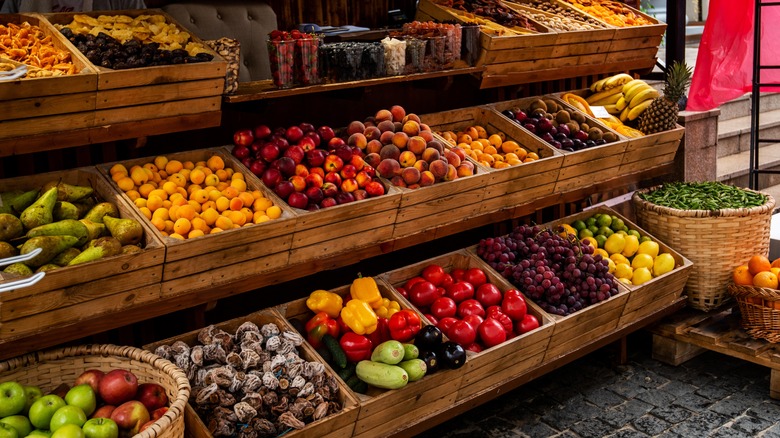
There's something surprisingly magical about grocery shopping in another country. At first glance, things feel roughly the same. The unflattering fluorescent lighting and that smell in the air — a mix of cleaning products and produce with a hint of baked goods — are still there. But once you focus in on the smaller details, major differences soon become apparent.
Over a decade ago, my husband and I moved abroad. We settled down in France for a year, and then we moved to London, where we've lived ever since. But even now, one of my favorite things is to explore a grocery store in a foreign country, and when we return to the U.S., I find this is the No. 1 spot where I have my most extreme experiences with reverse culture shock.
While the overall purpose of a grocery store visit is, of course, the same anywhere you go, there are fascinating differences when it comes to grocery shopping in Europe, the U.K., and the U.S.
1. American grocery shoppers are spoiled for choice
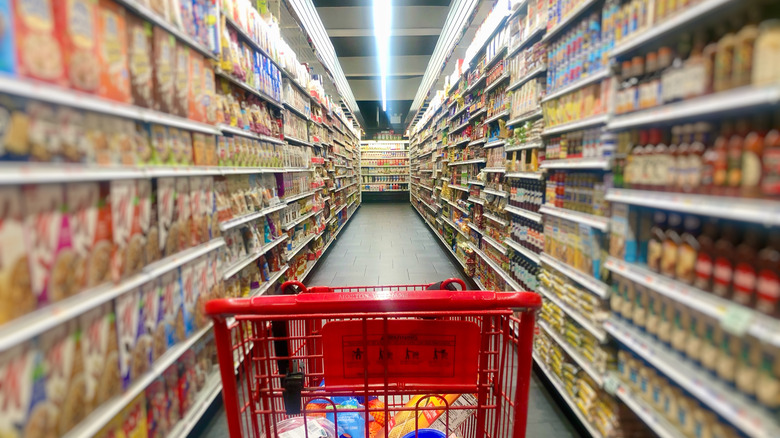
On our first grocery store visit in France, I found the lack of options to be stressful. For most categories, from cereal to snacks to condiments, there was usually only one option. Eventually, I got used to it — so used to it that when we had a baby and traveled back to the U.S., I had the opposite experience. All the choices were suddenly overwhelming.
My worst moment happened in the yogurt aisle at Target. All I wanted was plain, Greek yogurt, but all I could find was every other possible flavor because American grocery stores are massive. In the U.K., you can do a full loop through most supermarkets in about 15 minutes. This one yogurt aisle, in my mind, wouldn't even fit in our local Tesco. Of course, the smaller shopping footprint in Europe means far fewer choices, but this, I've come to realize, works well if you suffer from decision overwhelm.
2. The 'American section' at European grocery stores is worth a peek
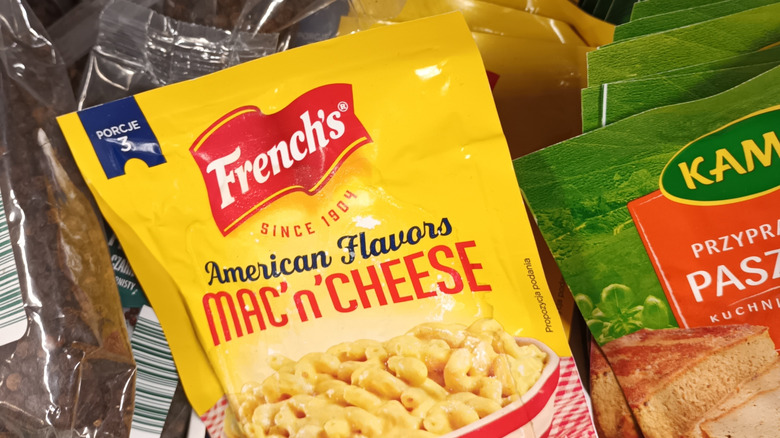
In the U.S., stores are stocked full of international offerings, and they tend to be mixed in with other foods by category. Taco seasoning and salsa, for example, aren't set off in their own Mexican section, just as pastas and sauces don't go in the Italian aisle. But in European grocery stores, there's always an American section ... and it's always slightly mortifying.
For some reason, European and British supermarkets think our cultural culinary offerings are best narrowed down to ketchup, various flavors of Flamin' Hot Cheetos, and off-brand candy corn all year long. You'll also find the occasional box of pre-made brownies, and in some places, a few boxes of instant mac and cheese might also fill the shelves. But beyond that, the U.S. doesn't get much credit for offering any delicious food to the rest of the world.
3. Bulk shopping isn't a popular option in Europe
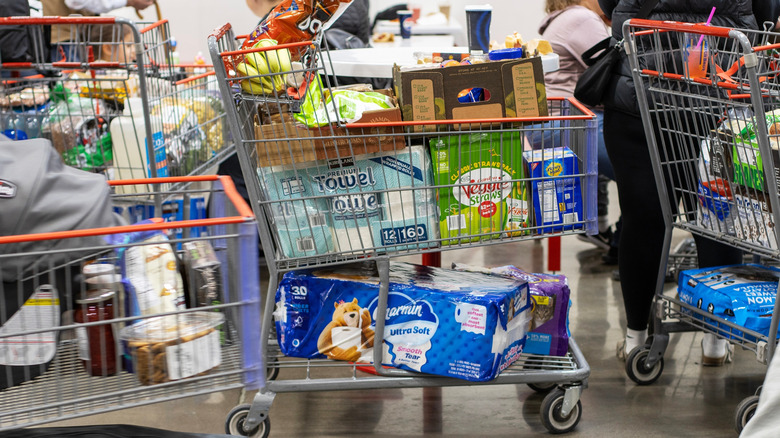
Prior to moving abroad, my husband and I lived in New York City, but even with our small kitchen, we loved a suburban trip to Costco. It's even better when you use these hacks that will change the way you shop at Costco. In Europe, though, these big bulk stores aren't as established. You might see one occasionally — there's at least one option on the outskirts of London — but we've never been compelled to go. We don't know anyone who has a membership, either.
Much like the supermarkets and grocery stores across Europe and the U.K., kitchens and closets, in general, are a lot smaller, too, and this goes beyond city living. Having a pantry isn't a given, and people mostly prefer to buy smaller amounts of food rather than do bulk shopping. Yes, this is even true of pantry staples that last longer than fresh food. There are less preservatives in food here, which means things tend to spoil faster.
4. Europeans don't often go for one-stop shopping
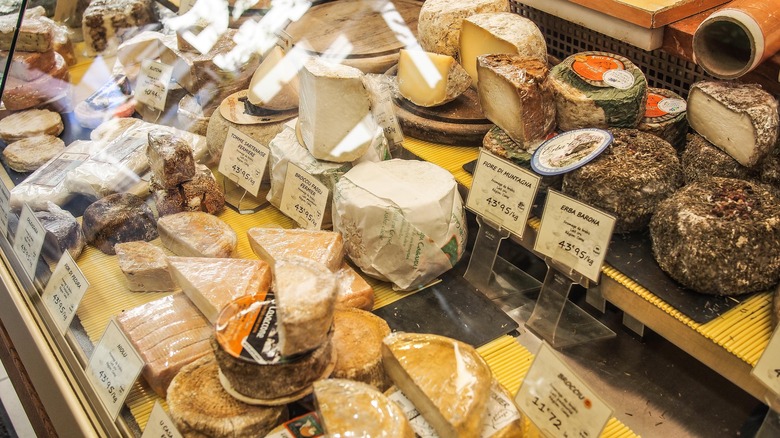
Along with bulk shopping, one-stop grocery shopping isn't the norm in Europe either. In our tiny village in France, we could rarely get everything we needed at the supermarket in town. Instead, we'd go there for our pantry items and produce. Then we visit the butcher for meat, the fromagerie for cheese, and the boulangerie for our daily bread and baked goods.
When we moved to London, this changed slightly ... but not as much as you might think. While we can get everything we need from the grocery store if we want to, we often prefer to buy certain items from specialty stores. In our neighborhood, we have a butcher and a fishmonger as well as a great cheesemonger, a bakery where we get our weekly loaf of sourdough, and an organic produce shop that always has the best seasonal fruit and vegetables.
5. Some countries require you to weigh your produce
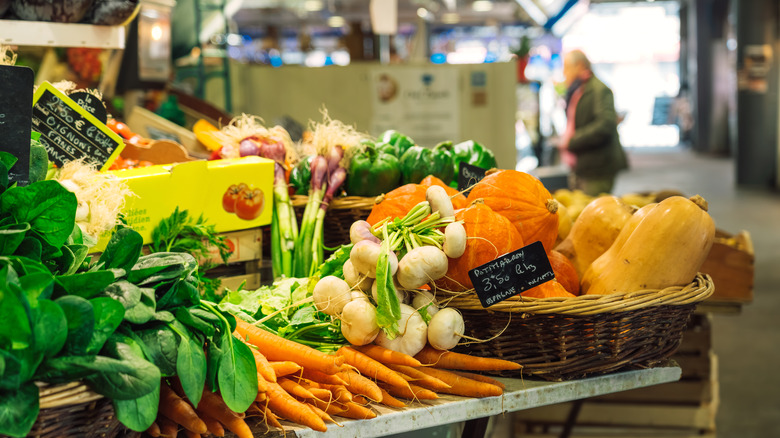
In the U.S., produce shopping is pretty much the same everywhere you go. You walk through the section, pick out your fruits and veggies of choice, and, if necessary, bag them as you shop. This is the same in the U.K., but in some European countries, France included, the process is a little different. Instead, you're expected to weigh and label your produce before you can check out — and I learned this the hard way.
On one of our first trips to our new market, I was desperate not to look like a tourist. But when I took my produce up to the checkout, the cashier started gesturing and explaining something to me. My language skills didn't extend far enough to understand they weren't banning me from shopping at their store. They were telling me I had to go back and weigh and label my produce before coming back to pay accordingly. I never made the same mistake again.
6. Herbs, spices, and vegetables often go by different names
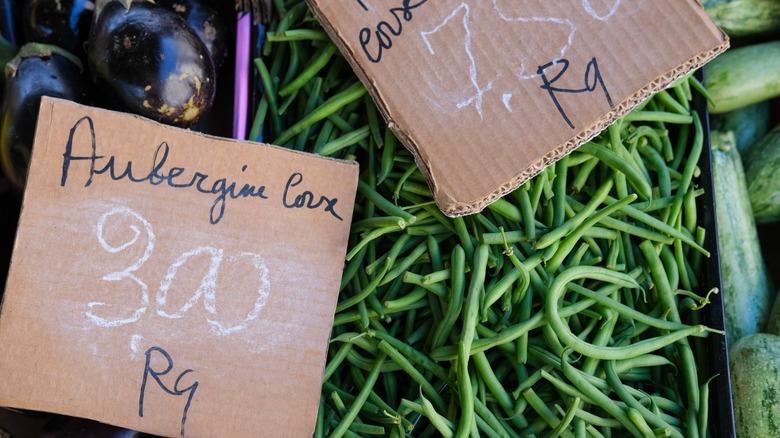
It's a given if you move abroad that you'll need to learn the local language. After a year in France, I was excited to move to London and know I would be understood again. I'd even prepared myself to adjust quickly to words like rubbish, lorry, and flat — but I didn't consider that grocery store shopping in the U.K. could have a whole different language, too. Along with adjusting to the metric system, I had to get used to the fact that certain foods have totally different names here.
This, I've noticed, is most commonly an issue in the produce department. In the U.K., eggplant is aubergine, and zucchini is courgette. Rocket or rucola is arugula, while cilantro is coriander. Beets are almost always called beetroot, mangetout refers to snow peas, and if you can't find bell peppers, try looking for capsicum.
7. Many US ingredients are banned in the EU
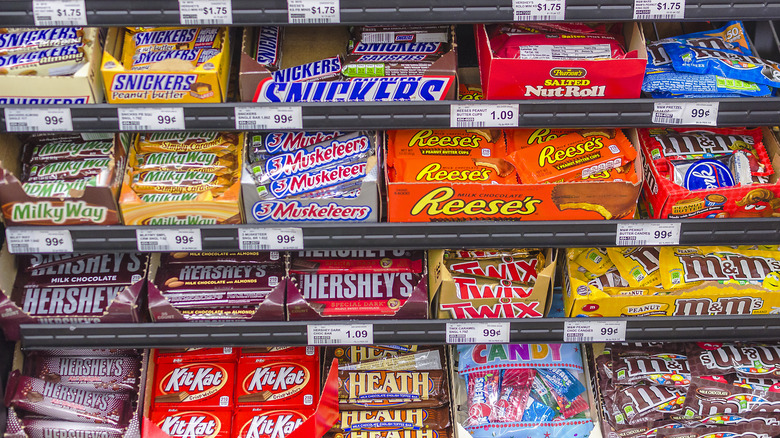
During both my pregnancies, I had what I considered to be standard junk food cravings, but I never wanted British junk food. I was tired of crisps and biscuits. I wanted Swedish Fish and mozzarella sticks and chunky, sourdough pretzels. Unfortunately, a decent amount of American foods aren't available in the U.K. and the European Union because their ingredients are banned.
This most commonly affects various American candies and snack foods. When we travel back to the U.S., my kids basically live on Cheez-It crackers, and we always smuggle back boxes of mac and cheese. But after a decade of living abroad, I'm not as bothered by it. I've mostly found alternatives, and my cravings for things like pre-made crescent dough and Twizzlers have all but evaporated — until, of course, we're back in Pennsylvania for the summer and all we want is to visit Wawa.
8. Pre-made and frozen meals are beloved in Europe
If you're based in the U.S., you probably agree that frozen foods aren't generally considered fine dining. Sure, there are a few name brands with a cult following, especially frozen dinners from Trader Joe's, and you might turn to a frozen dinner purely for nostalgia. But in general, it is a category that's treated more as an easy meal hack than a viable alternative to home cooking.
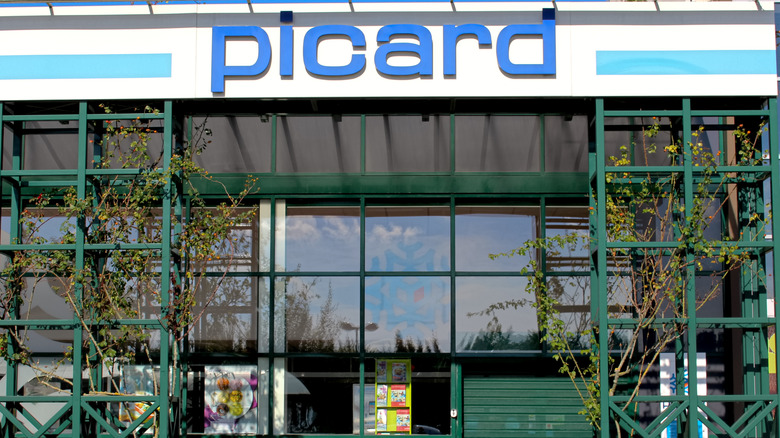
In the U.K. and Europe, though, this isn't the case. In fact, some even see these pre-made options as elevated. Beloved chain grocery stores like Waitrose and Marks & Spencer both offer a party food range of pre-made passed hors d'oeuvres that are often served at special events. There are also dedicated frozen dinner lines that are very beloved. And France has Picard — a chain store known for its upmarket and gourmet frozen food offerings.
9. Alcohol is more readily available in Europe
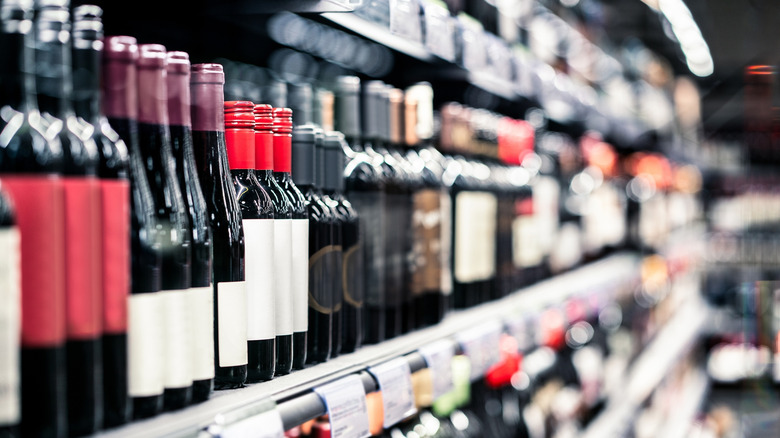
It's no surprise to hear that the drinking culture in the U.K. and Europe varies greatly from how alcohol consumption is treated in the U.S. — from the differences in drinking ages to how alcohol is bought and sold. In the U.S., some grocery stores sell alcohol and others don't. For example, I grew up in Pennsylvania, which is a blue law state. It essentially means that outside of a bar or restaurant, alcohol can only be purchased in specific wine, beer, and liquor stores and never on Sunday.
In many places abroad, however, this concept doesn't exist. Yes, a lot of shops are closed on Sundays in Europe or have limited hours of operation — but this has nothing to do with alcohol. In fact, you can buy a basic selection of wine, liquor, and beer in most grocery stores or convenience stores or even easily online.
10. Eggs abroad don't require refrigeration
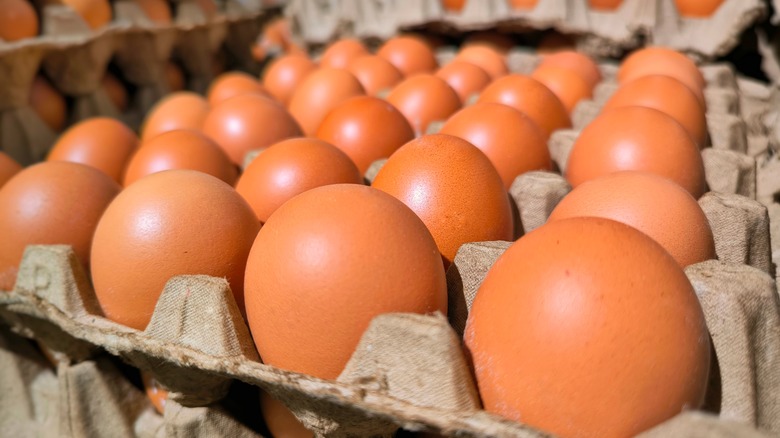
When you picture a French country kitchen, you probably imagine a lot of copper pots and creamy colored dishware. You're not far off, but do you also picture eggs stored on the counter? For as long as we've lived abroad, we've had friends ask why on earth we keep our eggs in the fridge. In Europe and the U.K., everyone stores them on the counter. Ever wonder why eggs don't go in the refrigerator here?
Unlike in the U.S., eggs abroad aren't pre-washed, which means they maintain their protective outer layer. This means you'll often open your egg cartons to find feathers and other debris still stuck to your eggs. Furthermore, in the U.K. at least, hens are vaccinated against salmonella. Thanks to this, eggs can stay at room temperature without putting anyone at risk of infection. In theory, we understand this and believe it to be true ... but in practice, it's a habit we can't break.
11. Carts are often coin-operated in the UK and Europe
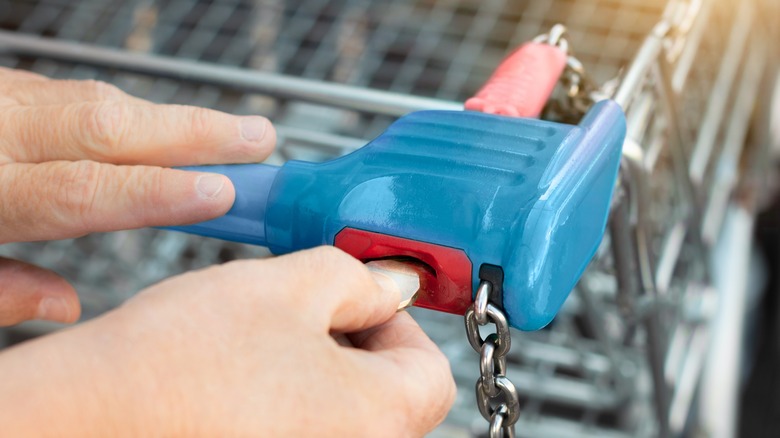
The first time we went to a large supermarket in France and needed a shopping cart, we were surprised to find it was locked in place — the only way to free it was with a coin. In smaller markets in the U.K. and Europe, this is less of an issue, of course. It's far more likely you'll use a small hand basket or rolling plastic cart. But if you're ever planning a supermarket trip where a cart is needed, don't make the same mistake.
Coin-operated carts are among the reasons people avoid shopping at Aldi in the U.S. As a general rule of thumb, you'll probably only need one euro or one pound in the U.K. Then, once you return the cart to its spot and click it back into place, the coin is released. It's a mostly convenient and understandable process ... save for the fact no one carries cash on them anymore.
12. You always have to pay for plastic bags abroad
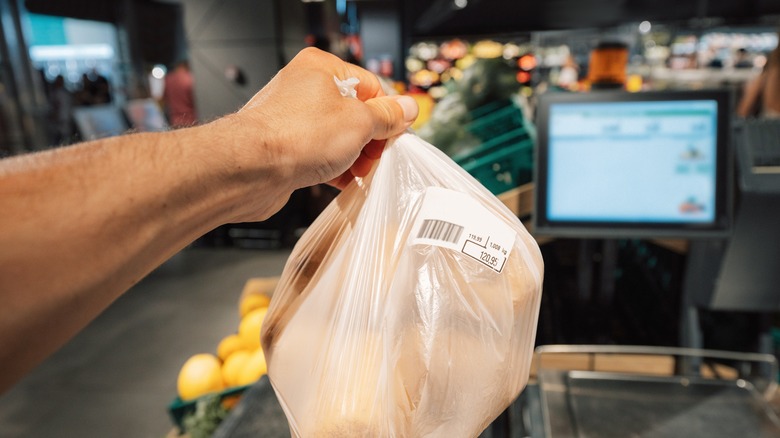
Around the time we left New York to move abroad, people were already relying more on reusable grocery bags. But once we got to France and the U.K., both countries felt miles ahead of the U.S. Most people carried their own grocery bags, and all markets had a charge in place for plastic bags.
This has caused many stores to switch to paper bags or sell their "bags for life," which are large, reusable shopping bags you can buy during checkout. Our delivery service also offers a plastic bag collection option, which is helpful, too. On top of this, it's rare that anyone will bag your groceries for you in the U.K. In fact, I'm not sure I've ever seen it — and now, when we go back to the U.S., I always laugh because my kids find the concept incredibly confusing.
13. Grocery delivery companies are on the rise in the UK
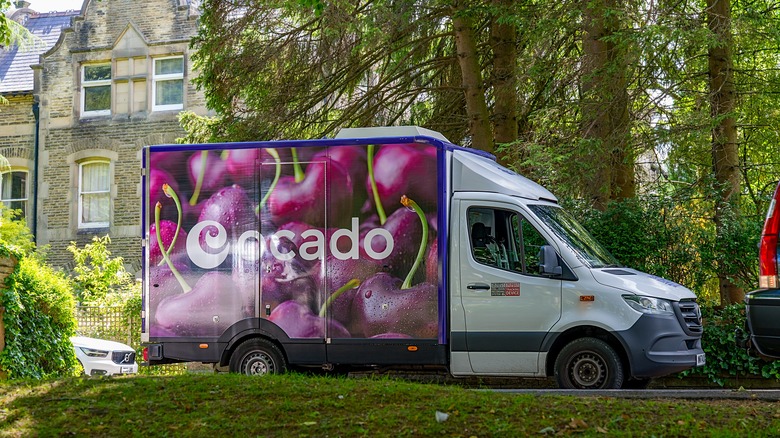
When we first moved to London, grocery home delivery was newly on the rise. We'd used similar services back in New York, but in the U.K., the concept has officially transcended city living. Now, you'll even spot delivery trucks out in the countryside, carrying groceries to homes in the tiniest of English villages. It seems to be far more of a staple here than when we're back in the U.S. to visit.
In fact, grocery delivery in the U.K. has become so popular that we get reminder emails about a month ahead of any major holidays to book our delivery slot so we don't miss out. Often, people do this by tossing a few bottles of wine into the cart to reserve their preferred window — because you can also easily order wine and alcohol online for delivery with your weekly shop.
14. Produce isn't as pretty
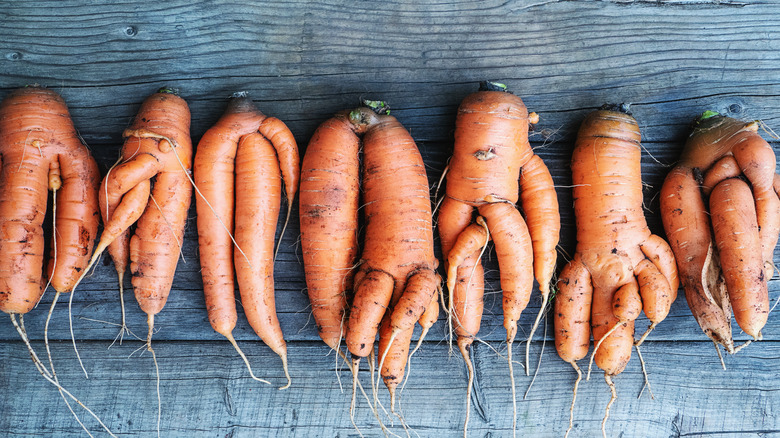
Whenever we're in the U.S., I'm taken by how large, shiny, and perfect-looking the produce is. But throughout Europe and in the U.K., you'll find it's often much less picturesque. Instead, produce is usually smaller, cheaper ... and yes, a lot more flavorful. This is mostly down to different farming practices in the U.K. and Europe, which are more regulated and focused on organic methods and smaller, more local farms than in the U.S.
Beyond differences in the agricultural industries, there's also been a large push for wonky fruit and veg, particularly in the U.K., to help reduce food waste. Sometimes, this comes in the form of produce delivery services that focus on sending odd-looking produce that's still perfectly edible. Or brands that use real fruit and veg will boast that they intentionally embrace the wonky-looking leftovers that might otherwise not sell on the shelf.
15. Meat options and prices vary by country
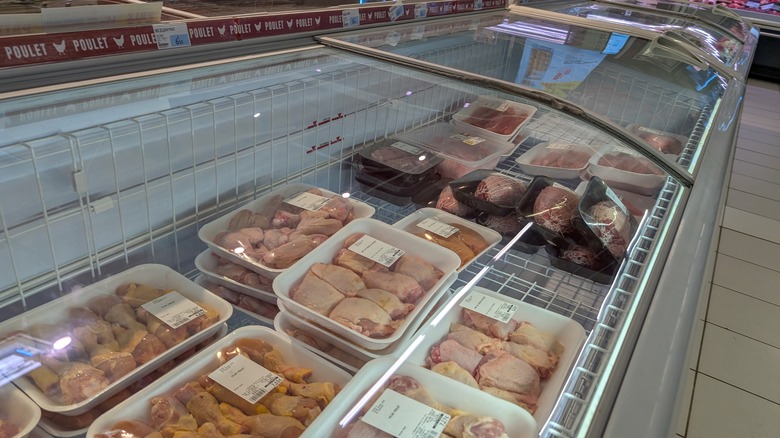
There's much to be said about the different foods you'll find when you travel to a new country — but this usually refers to restaurants. The same is true of grocery stores, of course, but it might not be what you think. For example, there are some cuts and types of meat you can get easily in the U.S. that aren't as readily available in Europe or the U.K.
On our first Thanksgiving abroad, our local butcher in France was confused by our request for a turkey. This isn't because the French don't ever eat turkey, but it's really only eaten for Christmas. Requesting one a whole month early was unusual. We've also learned that ground turkey isn't a popular choice in Europe or the U.K., although you'll find plenty of duck, pheasant, and guinea fowl all year long.
Beyond this, beef often tastes different. Unlike in the U.S. where much of the beef is grain-fed, cows in the U.K., at least, tend to be forage-fed. This results in a different flavor and can vary by country across Europe.
16. Buying milk isn't quite so straightforward
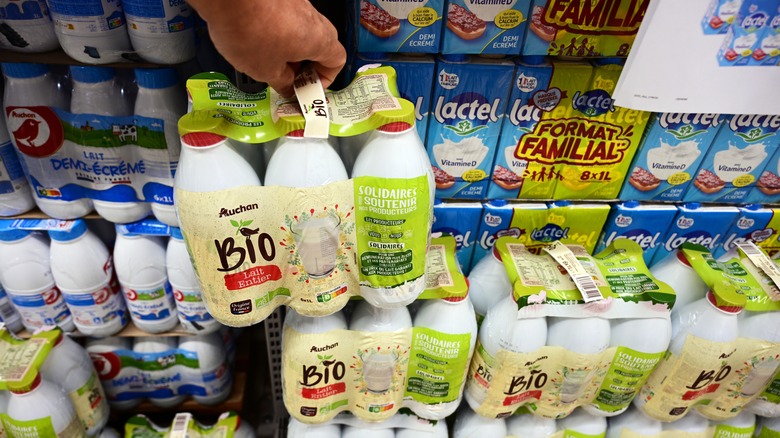
In the U.S., I grew up drinking skim milk rather than whole milk. As an adult, I switched to dairy alternatives in my coffee — which I had to give up when we moved to France because these weren't readily available at the time. I switched back once we moved to London, but then once we had babies, we needed to search for whole milk again ... in most European countries, this became a confusing endeavor.
Along with the skim versus semi-skim versus whole milk conundrum, there's a language barrier in any non-English-speaking country. We learned that milk doesn't always have a translation on the label. On top of this, some countries offer additional categories we find confusing. This includes long-life milk, which doesn't need to be refrigerated, unpasteurized milk, which is largely used to make cheese, and regional offerings, such as goat milk.
17. Prices in the EU and UK always include tax
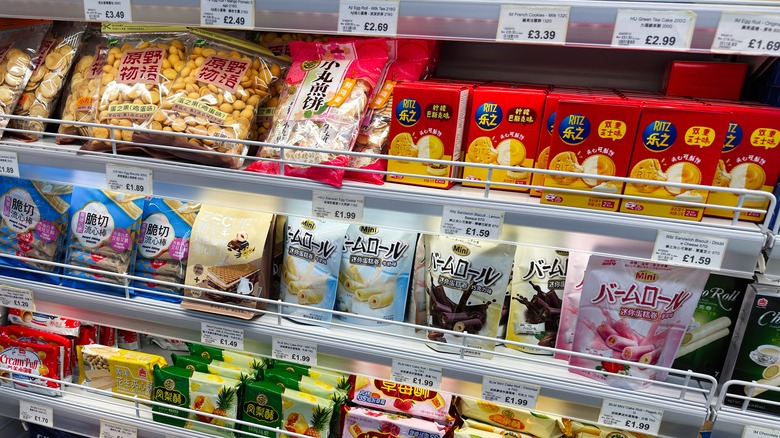
One thing I truly love about shopping in Europe and the U.K. is the fact the price on the label is the price you'll pay — tax or value added tax included. When shopping for anything in the U.S., we always experience a moment of confusion if sales tax applies. Despite growing up with the concept that sales tax is applied at the point of sale, we've gotten used to the European and British way.
This can be especially confusing whenever we pop into a store to grab something quick and plan to use cash, especially when only certain food items are taxed and others aren't. It's also why tipping can be so confusing across countries and cultures — Europeans, for the most part, are used to seeing the price they're expected to pay without doing any additional math at the end of the transaction.
18. Beauty and cleaning products are usually sold elsewhere
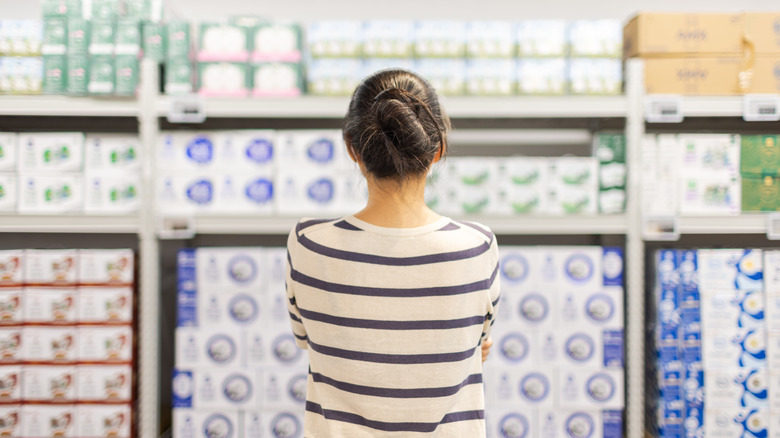
When grocery shopping in the U.K. and Europe, we learned most markets are strictly dedicated to selling food. This was confusing when we first moved to London because we assumed our local Sainsbury's would have all the same things that a city grocery store in New York would. We expected a smaller version of everything you need to fully stock your home with necessities — but this isn't the case in a British or European market.
Instead, if you need beauty products and toiletries, you're better off visiting a drug store, which are called a chemist or pharmacist abroad. And while you can usually find the basic cleaning products to wipe down your kitchen and bathroom, you're far better off going to a hardware store or shopping online for more extensive cleaning products beyond paper towels and dish soap, which are called kitchen roll and washing-up liquid in the U.K.