

8 Types Of Fish Cuts, Explained
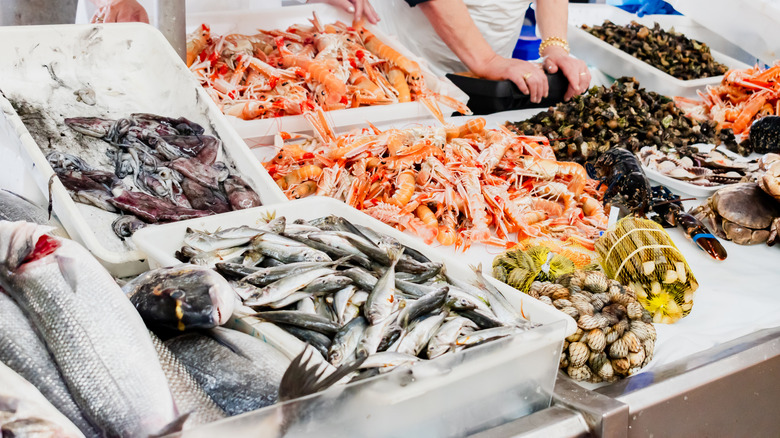
After being a chef for nearly a decade, I've seen countless home cooks and fellow chefs get overwhelmed when ordering fish at the seafood counter. Between the lobster tanks and various fish heads staring back at you, getting lost among the weeds — or rather, the seaweed — is a given. Whether it's figuring out how much to order or choosing the right cut of fish, the entire process can seem a bit intimidating.
While being a professional fisherman could definitely help you gain some wherewithal, you don't have to be a fish savant to get by. In fact, there are only nine types of fish cuts you need to know to level up your experience. Follow me as I explain these key fish cuts so you can gain confidence and leave behind any confusion. Once you understand what you're looking at, you'll be able to choose the perfect cut for any recipe and cook it with confidence.
1. Whole fish
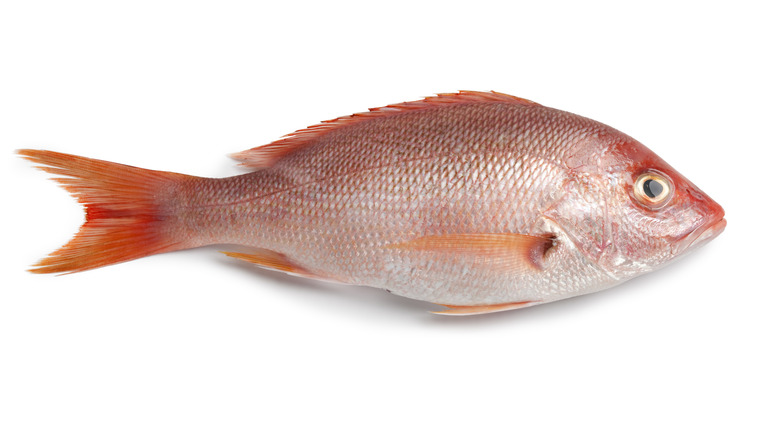
A whole fish is completely intact, with the head, tail, scales, skin, and internal organs still attached. This cut is prized by chefs (like me) for maximum flavor since the bones and organs add depth during cooking. When shopping at your local seafood store, make it easy on yourself and ask the staff to remove the scales and internal organs of the fish. This helps prevent unpleasant textures, bitter flavors, and lingering bacteria, ensuring the fish cooks evenly and tastes delicious when served. Plus, they most likely have all the tools and proper workspace behind the counter to properly dismember it, so don't be afraid to ask.
There are multiple ways you can cook a whole fish, from steaming, roasting, grilling, deep-frying, or the French way, en papillote, in which the fish is wrapped in parchment paper and baked, allowing it to steam in its own juices. Whichever cooking method you decide on, serving a whole fish always allows a dramatic tableside presentation that will impress any dinner guest.
2. Fillet
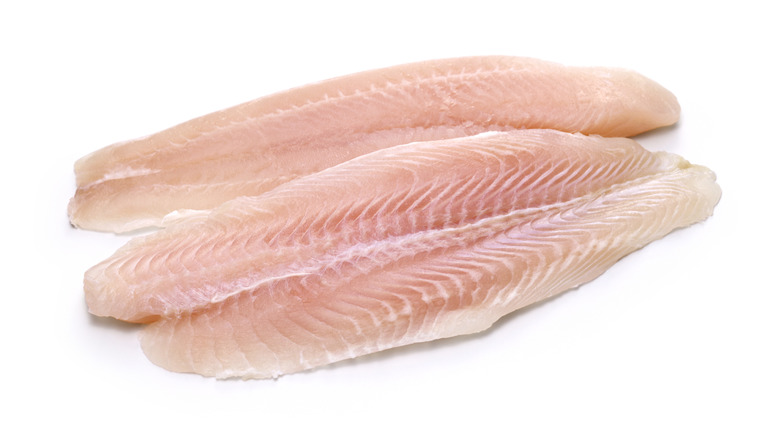
A fish fillet is a boneless strip of meat that's been cut away from the spine and ribs. This is the most popular retail cut because it's convenient, with no small bones to deal with, and it allows for minimal prep work. You'll find them sold skin-on or skinless, and it matters — most professional chefs prefer skin-on fillets because it helps retain moisture, and adds an incredible fatty flavor when crisped. However, if you want a gentler, less fatty flavor, you can opt for a skinless fillet.
Skinless fillets cook a lot quicker than skin-on fillets, making them ideal for careful preparations like steaming or poaching, where the cooking time is fairly minimal. Skin-on fillets are best reserved for preparations such as pan-searing, baking, deep-frying, or grilling, which allow the skin to crisp and develop flavor.
3. Steaks
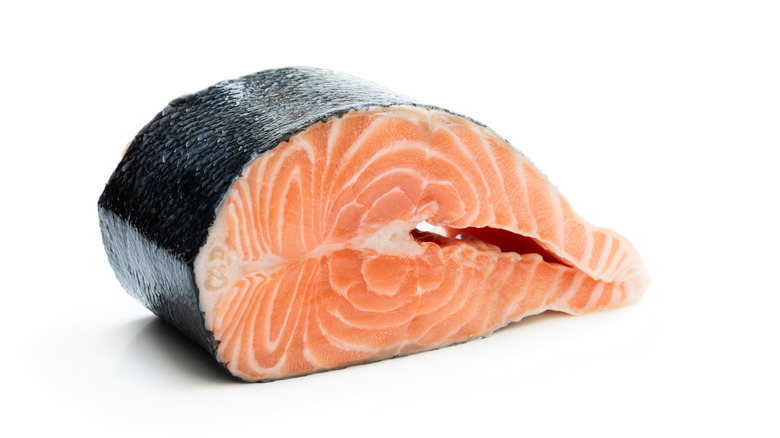
A fish steak is a cross-section cut perpendicular to the spine, which can include the backbone in the center, surrounded by muscle on both sides, and a piece of skin. Steaks are thick (typically 1 to 2 inches), making them ideal for high-heat methods like grilling or searing. If you opt for keeping the backbone attached, it'll make for a striking presentation on the plate — perfect for your next dinner party.
Fish steaks work especially well with firm, larger fish such as salmon, tuna, mahi-mahi, and swordfish because their thick, durable, and dense texture allows the cut to hold its shape during cooking and stay tender. Furthermore, most chefs recommend opting for fish steaks with a higher fat content because the fat keeps the meat during the intense heat of grilling or searing. Delicate fish steaks like flounder, haddock, sole, or hake could easily break apart, dry out, or even worse, disintegrate into your sauce.
4. Dressed fish
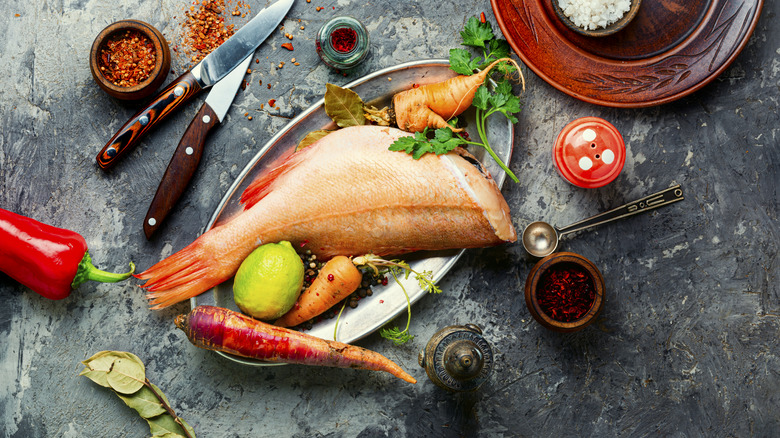
A dressed fish has been gutted and scaled, with the head, tail, and backbone remaining intact. If the fish has the head and tail removed, it is called pan-dressed. This unique fish cut is a convenient way to buy a fish since it's mostly prepared, allowing for simple seasoning and easy cooking methods like baking, broiling, or grilling the fish whole. Out of all the fish cuts on this list, it's probably one of the least common at supermarkets and seafood shops, but it's still available through specialty fishmongers. If you can't find it for sale, ask your local fishmonger to prepare it for you.
Often, people choose a dressed fish over a whole fish because its streamlined size and cut make it more practical for home kitchens with limited space. Plus, by preserving the backbone, you'll get a better depth of flavor and a more attractive presentation — and when cooked properly, the meat should separate easily without filleting.
5. Butterfly fillet
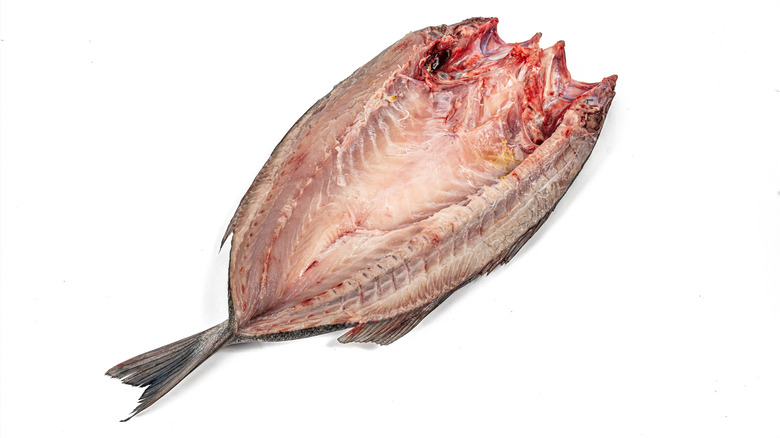
A butterflied fish fillet is created by cutting the fish in half lengthwise along the backbone, then opening it like a book so both sides remain connected at the spine. The spine, ribs, and head are completely removed, leaving a nearly boneless piece of fish. The two sides of the fillet remain attached at one point, typically under the belly or along the back. This cut is by far one of the most visually stunning on the list, resembling the open wings of a butterfly or a heart shape. The flattened, wide surface area provides excellent plate coverage, making a single portion look large and impressive when plated.
Its large, flat shape allows for even cooking, working especially well with methods such as grilling, baking, or pan-frying. You can also easily stuff and roll the fish with various fillings if you're looking to switch it up a bit. This cut is often used for smaller fish such as sea bass, trout, and mackerel because their size makes them ideal for quick cooking.
6. Collars
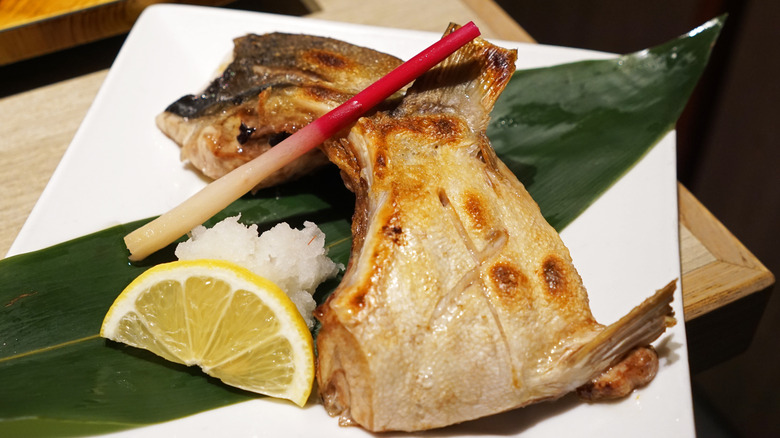
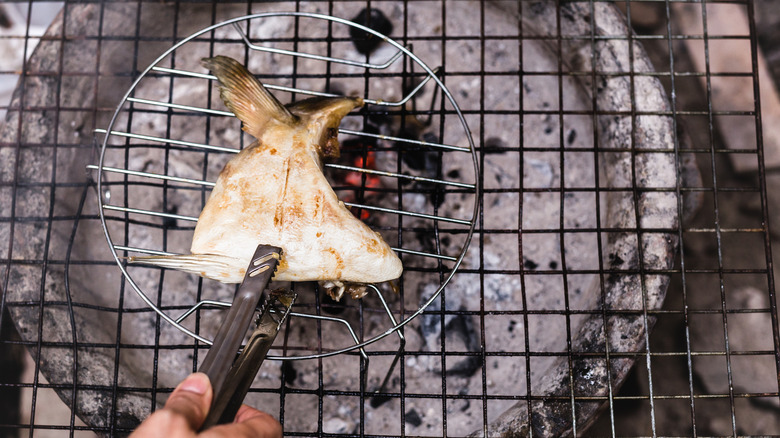
A collar is the meat from the area behind the fish's head and gills, extending to the shoulders. It is rich in omega-3s and has a similar savory, umami taste to pork shoulder. This is by far one of the most underrated cuts of fish and is often thrown away by restaurants and fishmongers, yet it's incredibly meaty and flavorful, making it a great budget-friendly option for savvy cooks. Fish with a high fat content, such as salmon, bluefin tuna, sea bass, and yellowtail, are prized by chefs for their tasty collars.
Because collars have more connective tissue and fat than fillets, they are excellent for braising, grilling, or slow cooking. At some Japanese or Korean restaurants, they serve the collars deep-fried in a light, tempura-like batter. The meat stays perfectly succulent while the skin and the exterior develop a golden, crispy crust, resulting in an irresistible bite that keeps you coming back for more.
7. Cheeks
Fish cheeks are small, delicate pieces of meat located in a small pocket just below a fish's eyes near the gills. Despite their size, they're incredibly tender and flavorful with a buttery texture, which makes them a prized ingredient in high-end cooking. Most chefs reach for either grouper, halibut, or cod due to their sweet, delicate taste and tender texture. You can often find them being used in Asian cuisine, particularly Chinese and Thai cooking, where chefs add them into dishes like curries, hot pot, and stir-fries for a bit of extra umami flavor.
Because of their small size, fish cheeks require careful extraction because they are located in a bony cavity behind the eye. You've got to use a very sharp knife and do gentle, angled cuts to separate them from the skull and membrane without tearing the succulent flesh. Once you've got them out, you'll quickly realize they are definitely worth the effort.
8. Head
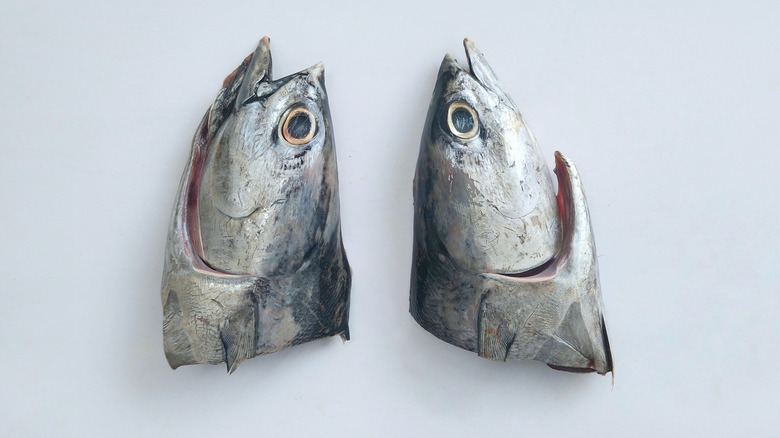
Another fish cut you should definitely incorporate into your everyday cooking is fish heads. While it might sound a bit odd to chow down on a fish head, they are actually filled with delicious flavor and often used in a wide range of cuisines around the globe. In Japan, they are typically used to make a rich stock for soups and broths or grilled whole over an open flame, a preparation known as kabuto-yaki. In the Caribbean, fish heads are used to make fish head soup known as sopa de pescado, which simmers the heads with vegetables, coconut milk, and aromatics to create a rich, hearty broth.
There are many ways to use a whole fish, from making stock, broth, or soup to roasting it whole in the oven with olive oil, salt, and pepper for a quick meal. Next time you're looking to try a different cut of fish, give a fish head a chance — you might be pleasantly surprised by how delicious and flavorful it is.