

The Main Nutritional Differences Between Sourdough And White Bread
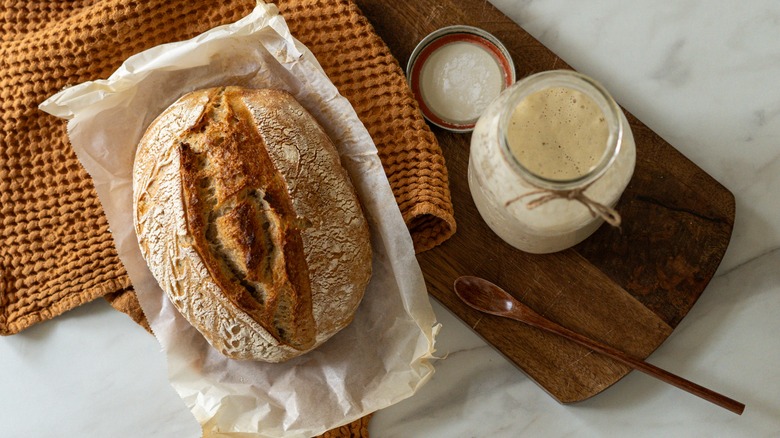
Long before Taylor Swift proudly shared that she is currently immersed in her sourdough era (what we would give for a taste of Swift's sourdough!), this specific type of bread has been a beloved staple for many. It's one of the best breads for sandwiches, open-faced toasts, and serving alongside comforting soups and stews. The signature flavor of sourdough has plenty going for it already. But beyond its taste, there is a noteworthy case for sourdough taking the center stage: its nutritional value. Let's get into what sets sourdough apart from the likes of white bread.
Making a loaf of sourdough is a craft of chemistry, beginning with a sourdough starter that sets the stage for success. The starter, when properly "ripe," kickstarts a fermentation process, which results in gut-friendly bacteria that can be an ally to your digestive system. Plus, a healthy gut microbiome is a vital support staff to one's immune system, with bodies of research also tying its impact on mental health. Unlike what it takes to make conventional white bread, the fermentation and lack of added sugars in sourdough reduce the glycemic index, meaning that the sugars are slow-releasing and won't cause spikes in blood sugar. Compared to other breads, sourdough also has fewer compounds called phytates, which are known to hinder nutrient absorption. Though sourdough might be the healthier choice when compared to the likes of white bread, does that mean we should shun white bread? What if we could put a healthier spin on it?
Ways to make white bread healthier
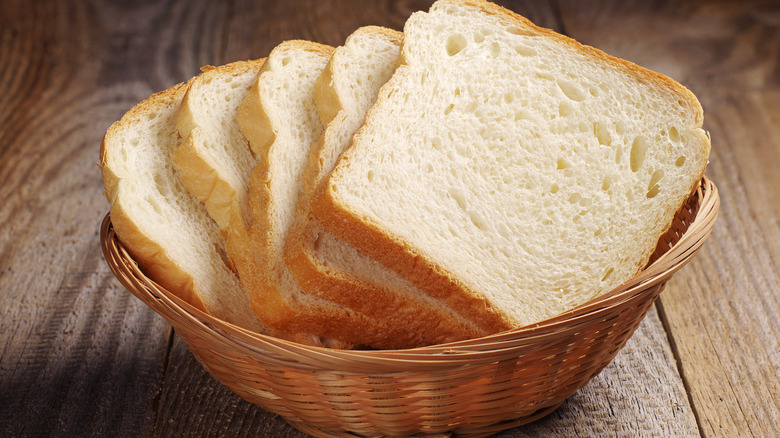
First off, white bread is not the enemy, unless your body responds otherwise. If gluten and blood sugar aren't really an issue for you, there most definitely are ways to make a typical white bread align with your health goals. For starters, go the DIY route, which means you have complete control over the ingredients and can adjust the type of sweetener, flour, or any other fixings in your bread. You can also bulk up on certain ingredients to cater to your nutritional preferences. Need more fiber? Opt for stoneground white flour, which not only has more fiber but also contains vitamin E. You can also add some nuts and seeds for healthy fats.
If you, like most, don't have time to make the bread from scratch, look for brands that incorporate whole grains into the mix, or stave off added sugars and preservatives. You can also prepare your white bread in a way that prevents blood sugar spikes. The key is to freeze it, defrost it, and toast it. This reportedly lowers the glycemic index by half and facilitates the formation of resistant starches that are better for your gut health. This is quite similar to chef Giada De Laurentiis' case for leftover pasta. The toppings and fixings are also an easy and tasty way to make a healthier serving of white bread. Swap out Nutella with nut butters and achieve the same deliciousness, boost the protein with a higher-protein hummus made from soybeans, and the possibilities are plentiful.