

7 Underrated Cuts Of Beef To Ask Your Butcher For
We may receive a commission on purchases made from links.
Grocery stores are reliable for essentials, particularly dinner staples like beef. When it comes to actually perusing the selection, we're quick to snag the pack of ground chuck week after week, and safe to say, it gets dull after a while. Assuming you'd like to branch out from the typical steaks or tenderloins, it might pay off to visit a meat market. Butcher shops can be budget-friendly by plying the least-wanted scraps, and with cast-offs ignored by the masses, they often gain a following as hidden gems more people should try.
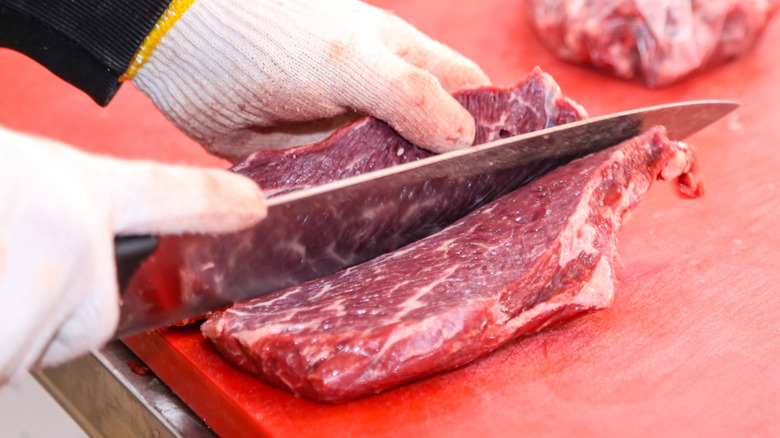
Rosangela Teodoro runs Teodora's Boucherie Gourmande, where folks in Massachusetts' Norfolk County can shop for the choicest cutlets around. In her view, staying in one's comfort zone isn't always intentional. "Many cuts are overlooked because customers are only familiar with those commonly seen on restaurant menus or at the supermarket, such as ribeye, sirloin, and filet mignon," says Teodoro. "The advantage of visiting a butcher is that we introduce customers to a variety of cuts."
In total, Chowhound got to speak with four experts about the beef cuts the think is worth asking the butcher for, and why. According to their insights, these varieties boast spectacular value and flexibility, with the potential to overshadow primer slabs available. Whip out the apron and your trusty skillet — it's grill-time.
1. Teres Major
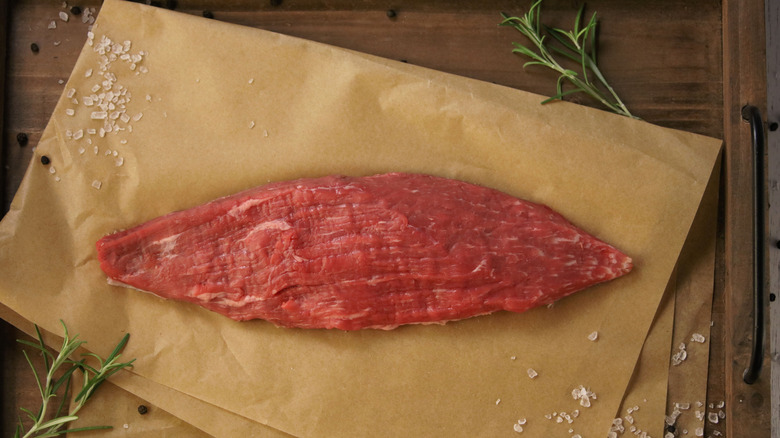
Gabriel Llaurado runs Meat N' Bone, an online store that's been doling out the highest-grade beef, pork, and chicken since 2018. Naturally, his knowledge on quality protein can be trusted. From his perspective, one cut that should be getting more attention? The Teres Major. "A chef favorite that feels luxurious without the filets' price tag" (talk about a passionate endorsement). This underrated beef cut is smaller, tucked within the shoulder of the cow (known as the chuck primal), but it's no less scrumptiously lean than its rival, the tenderloin.
The low profile, Llaurado tells us, can be credited to practical concerns — mainly, how to carve it. Detaching the Teres Major is a fussy process. Most supermarkets have moved on from manually carving individual cutlets (which is a shame) and, besides that, the portions aren't plentiful — cows only have one set of shoulders, after all. On the other hand, it's a great incentive to find a local meat market where these practices endure.
Cutlets are typically on the smaller side, weighing no more than 12 ounces, so barbecue or grilling will work like a charm. At minimum, it just takes a simple char to elevate it to the Filet Mignon alternative meat-eaters dream about. Another technique Llaurado swears by is sous vide — a method involving the protein, sealed in plastic — to cook via a boiling water bath. Definitely not the easiest to track down, but rest assured, carnivorous pleasures await.
2. Picanha (Top Sirloin Cap/Coulette)
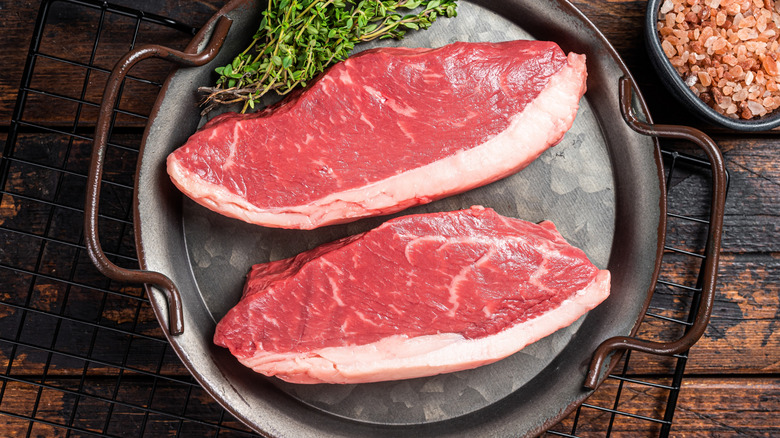
If you're into the Brazilian steakhouse experience (just avoid these rookie mistakes), it's a safe bet Picanha will delight your tastebuds at home. Simply put, it composes the upper portion of the cow's rump, or hind-end, and it's defined by a thick crowning of fat. For this reason, you'll spot it labeled the "Top Sirloin Cap" or "Coulette" interchangeably. It's quite underrated, according to chefs, since — when cooked, the beef gains a succulent, full-bodied taste that's surprising considering its economical value.
It's possible to buy a whole beef rump to slice up yourself, but many meat counters will do the chopping and carve out individual steaks, typically in the ballpark of 1 or 1.5-kilogram slabs. "Unlike other cuts that can be lean or tough, Picanha is juicy and full of character, making it a popular choice for grilling," says Rosangela Teodoro. Gabriel Llaurado seconds its promise as a great grill-it-up option, telling Chowhound about the cut blowing rival steaks out of the water when his business conducts cooking showdowns.
With preparation, there is a caveat. In many situations, cooks find fat a nuisance and will go to the trouble of scraping off any lingering bit. However, experts say it's a grave disservice. The marrow is a goldmine of flavor, and while it sizzles with the beef, it liquefies, infusing the muscle fibers with even more tenderness. "What's wonderful is the fat cap melts and bastes the meat as it cooks," notes Teodoro.
3. Flank Steak
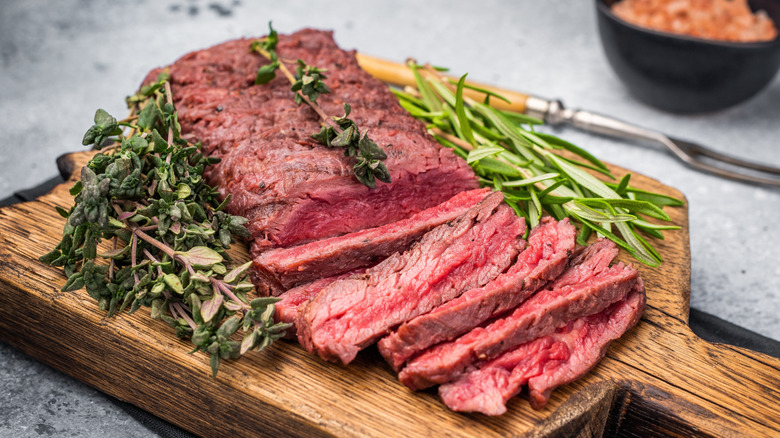
Knowing how much cooking expensive steaks add up, finding a replacement that's equally lush is a real treat. The Flank Steak sadly falls by the wayside, but listen to butchers when they tell you — it goes neck-to-neck with fancier chops. Located within the bottom of the cow's tummy (in other words, the "flank" of the animal) this muscle is well-worked and defined by coarser fibers that translate into beautifully-moist carvings from your knife.
Another reason the Flank Steak should be on your radar? Due to the lengthy shape and long, lean proportions, this piece of meat sizzles quick on just about any home barbecue or skillet — no slow-cooker or stew pot necessary. Creating the vegan-friendly butter brand, Unbutter, doesn't exclude Vivian Villa the least bit in enlightening us on this primal cut. To the pro chef, less-fatty proteins like Flank steak respond well to marinades. Simply put, the liquid soak softens the protein's fibers to a fall-off-your-fork succulence. Grill it just right without overcooking, and in no time you'll have juicy, flavorful beef to incorporate into numerous dishes. Medium-rare hunks would thrive on a classic steak plate or fajita platter.
4. Beef Cheeks
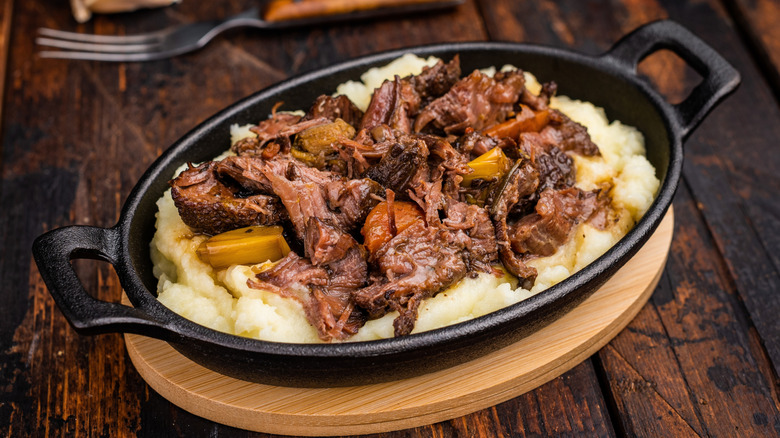
Economical and extremely savory, beef cheeks are becoming more of a household name for inventive cooks. "The reason this cut of beef is so delicious and is, in my opinion, one of the beefiest tasting cuts of beef, is because of how much work this muscle does," says Luke Shaffer, a professional chef and instructor at the Auguste Escoffier School of Culinary Arts. You notice how much cattle constantly works their jaws? This activity builds up abundant protein, Shaffer explains, which dissolves and turns any chewy fibers a marvelously moist texture.
Many overlooked beef cuts can sizzle in a jiffy. With beef cheeks, speed isn't the goal, here — it deserves to take its time and simmer in its own juices. You can take Shaffer's suggestion and cook up a hearty stew to witness its magic. Toss the meat in a Dutch oven with stock and mire poix and braise it for a spell, allowing the protein to bathe and fall apart. It definitely favors the one-pot approach, should simplification be on your radar, and we like that the prep can lead to a variety of different presentations. Brown it with vegetables for a pot roast, create a spicy taco filling, or (what Shaffer does), dump them onto a bed of mashed spuds — and the nice part is, they're incredibly easy to come across. "Beef cheeks are generally available in most grocery stores, but if not, ask the butcher, and they'll set you up," Shaffer tells Chowhound.
5. Blade Steak
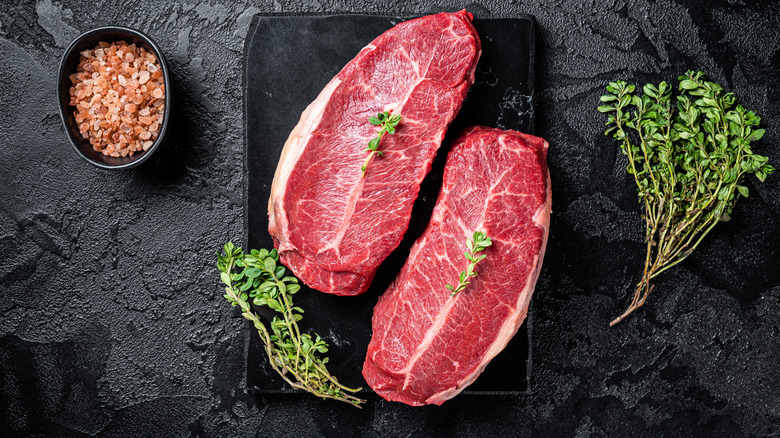
Not every cut of the cow draws a hefty lump sum, but that doesn't make them chopped liver. By contrast, the lesser-known Blade Steak, otherwise known as the Petit Steak or Oyster Steak, is relatively luxe without breaking the bank. There's a large ribbon of fat that makes carving a chore, but meat purveyors treat this shoulder slab with care, resulting in a prime cut you shouldn't overlook. It's "extremely tender and has a sweeter taste than ribeye or sirloin," according to Rosangela Teodoro.
Teodoro says "it's versatile and great for barbecues, pan-frying, or slicing thin for stir-fry," the latter being her preferred meal to show it off. The steak would benefit from a nice char on a sturdy pan, like this Lodge 12-Inch Cast Iron Skillet on Amazon. Teodoro's default tack is to sizzle it in nicely-seasoned fat: "You can also pan-sear it in a cast-iron skillet with a little oil and garlic herb butter. The Blade steak will develop a crisp crust and a moist center."
So you don't accidentally get shoe leather, aim for a lower cook time — Teodoro always shoots for a medium or medium-rare finish, or once the temperature reaches 130 to 145 F, respectively. The interior should be plump and bright pink, although a digital thermometer like this model from Alpha Grillers will get precise results for every cutlet you bring to the chopping block.
6. Top Sirloin (Butt Steak)
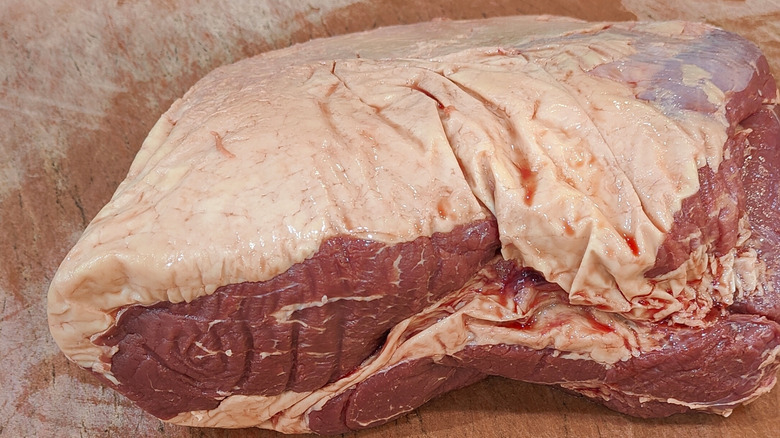
This one goes by a lot of different names, some of them goofy-sounding. However, home chefs will regret writing off the Top Sirloin, otherwise referred to as Butt Steak. It's a dream when smoked or tossed onto the barbecue, and the taste is superbly meaty — it's from a prime spot on the cow, the sirloin (towards the upper end of the muscle). It's common for butcher counters to already hawk them by the pound, and in smaller-sized filets. If you're into easy weeknight grilling, they're a super good choice to have in your rotation.
Butt Steak failing to entice foodies, at least beyond the adventurous ones, might have to do with the texture. It doesn't boast the teeth-sinking juiciness we associate with primer meats, yet a little TLC — like proper technique or an excellent dry rub — works wonders to enhance it. For this reason, Vivian Villa describes it to us as "a cut of meat that has all the characteristics and yum factor of a filet mignon without the price tag." Therefore, it's welcome to many different meal ideas. Create fine-dining elegance (on a budget) with a seared cutlet and vegetable side, divvy it up into tacos, or toss it into noodle dishes.
7. Bavette (Flap Steak)
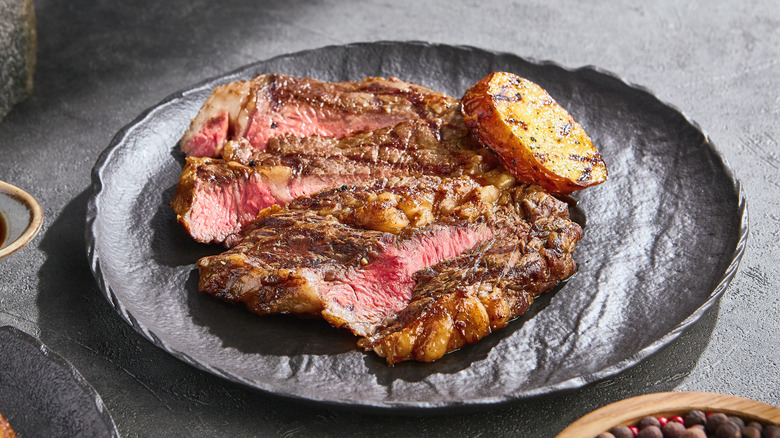
Once a delicacy cleavers stashed behind the counter, Bavette is finally getting its moment in the sun. The name translates to "bib" due to its rumpled shape, and parallels the flavor of the market's most premium steaks. "It's a tender French bistro favorite that is heavily marbled and has a deeper, richer taste than the Flank steak," says Rosangela Teodoro. "In fact, it's called the 'butcher's cut' because of its deep beefiness and loose, coarse grain." On the cow, butchers extract it from the belly area and dole it out into heftier hunks, which is what you can remember if you mix it up with its close cousin, the skirt steak.
Gabriel Llaurado champions the toothsome qualities of Bavette as well, praising the "outstanding cost-to-flavor ratio." It's in need of better marketing, as the name "flap steak" (what US grocery stores call it) could be a turn-off to some. Still, true believers can expect the cut to be mouthwatering and prone to the moistest, juiciest sensibility. Llaurado recommends searing the steak whole before carving, and to go against the grain — super-tender beef and proper technique go hand-in-hand. Both of our experts are keen on marinades to really coax out the depth from your beef. "We recommend dry brining your Bavette overnight prior to cooking, Teodoro tells Chowhound. "It will taste delicious."