

9 Store-Bought Foods You'd Never Find In A Southerner's Cart
Stereotypes about Southerners abound, and some are admittedly more true than others. One that you're not likely to hear refuted is that we take our food seriously. Food is our culture, heritage, and innovation. It's our link to one another and the resplendent landscapes that define the region, from the blue dream of misty Appalachian ridgelines to sun-decked Atlantic shores. There's twang in this stuff. Drawl. We've gathered around food at funerals and weddings. We've made enemies over blue ribbons and bragging rights. Our cuisine is our common language, our regional accent, our unity, and our competitive streak. So there are some things we just don't buy at the supermarket. Usually.
There are, however, a couple points to keep in mind here. The first is that there is a field of difference between a supermarket and a country store, the latter of which is an endangered institution of rural Southern life that historically deals in what are essentially home-cooked meals. Anything at a country store is fair game; you're really just kicking a few bucks to your neighbor for their cooking. The second is that, well, there's a difference between what we'll never buy at the grocery store, and what you'll never find in our carts because we're hiding them. Out of shame. Sometimes, you just need the quick and easy (read: unspeakable) option. We just don't tend to talk about that. We have principles, after all.
So, without further ado, here are nine foods you'll never find in any self-respecting Southerner's grocery cart. And if you do, keep it to yourself. Like Granny said, you never know what someone's going through.
1. Barbecue
In the South, "barbecue" is a noun, a very specific noun referring to meat that is smoked slow and low over an open flame. Every significant Southern sub-region has its own style of barbecue and will fiercely assert its particular variety as not only the best, but at times as the only true form of the stuff.
There are rivalries between eastern and western North Carolina over sauce ingredients. My personal barbecue mentor, the late Dan Gill of Something Different Country Store & Deli in Urbanna, Virginia, used to liken barbecue to sex, writing in one of his many musings online, "If you do it right, you don't need sauce." Those are fightin' words in some parts. There are Texans who won't even acknowledge that the Kansas City Barbeque Society (really, we can't even agree on how to spell "barbecue") tends to run some of the Lone Star State's smoked meat competitions. But even with such rabid regionalism, nobody strays from the core definition.
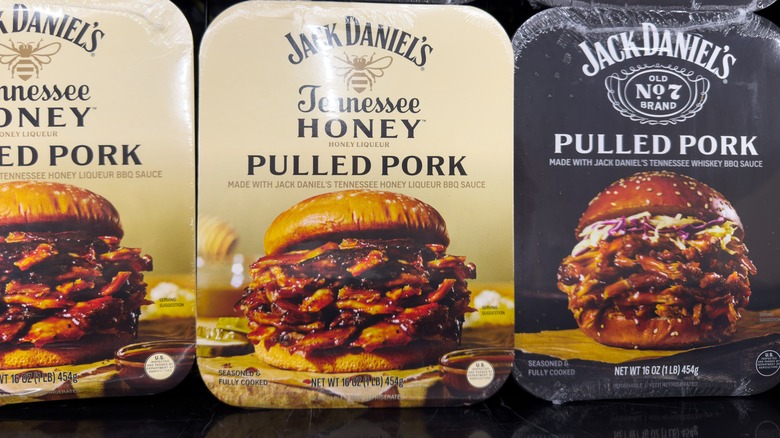
So it's questionable whether the shredded meat stocked in plastic tubs alongside shrink-wrapped sausage and cartons of mashed potatoes (more on that later) at the grocery store even qualifies as barbecue. And let's not even get started on the "pulled pork" in the prepared foods section that was cooked down in an oven with a glug of (and this is the gravest offense) liquid smoke. Blasphemy. Utter blasphemy.
2. Mashed potatoes
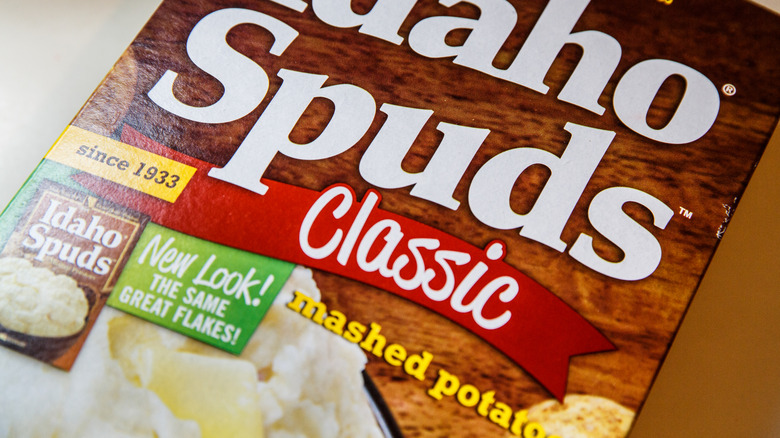
Look, if you don't know how to cook mashed potatoes, go find Granny. She doesn't even have to be your Granny — anyone's will do. If you do, in fact, know how to make mashed potatoes, why would you ever outsource the dish? Everyone has their own particular take on the stuff, and the deli counter at your local grocery store will never hit that specific nail on the head. Plus, they're probably using terrible butter. Or worse. And bless your heart if you're serving up mashed potatoes with Country Crock.
People outside of the South tend to think of the region as a sort of monolith, that there's a Southern accent, Southern music, Southern style food, and more. The truth is a bit more complex; there are many Southern accents, and there's no definitive "Southern style" mashed potatoes, despite what the cartons at the store may claim. Some use chicken stock instead of water for boiling. Some peel their Yukon Gold spuds while others leave the skins intact. Some use heavy cream, and some use buttermilk to produce amazing mashed potatoes. Apparently, there are people in Georgia who even use Miracle Whip. I'd protest this concept a bit more vocally if my father weren't from Alabama, home of mayo-based barbecue sauce (it's better than it sounds. Kind of).
So what makes mashed potatoes Southern? You do. With love. And animal fat. No grocery store product can match that.
3. Pimento cheese
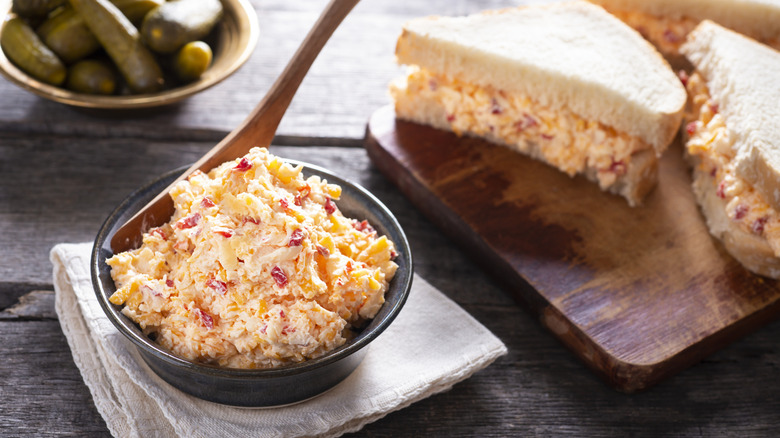
Pimento cheese is sometimes referred to as the "Caviar of the South," but I suspect whoever came up with that might have been up to their elbows in mint juleps on Derby Day. It's nothing like caviar — at all — but it is an accessible delicacy that carries with it an inexplicable sense of luxury.
The truth behind this iconic orange cheese spread is that it started out as a canned combination of ground pimentos and cream cheese up north. This was over a hundred years ago, and things have changed. Now practically unavailable outside of the South, the dish is emblematic of working class cuisine, and making it at home isn't simply a matter of taste and pride (though those are certainly motivating factors) but economics as well.
What's come to be known as the "traditional" recipe generally incorporates cream cheese, mayonnaise, diced pimentos, and shredded cheddar cheese, but this staple is a magnet for innovation, and no one seems to mind. I've seen it served with olives and onions. I've made it using goat cheese and Old Bay Seasoning. The recipe I was first taught uses Pickapeppa Sauce and a barbecue rub and is downright transcendental when applied liberally to a fried green tomato BLT. Really, the possibilities are limited only by your imagination. That's why the best pimento cheese isn't found in a supermarket tub — it comes from your own kitchen.
4. Dinner rolls and biscuits
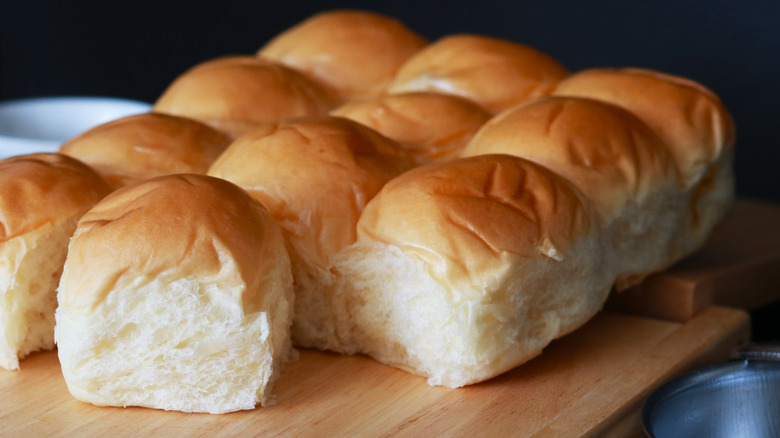
Serving-sized bread is simply a required side for any complete Southern dinner. It's as expected as sugar in iced tea, and folks get weird when it's not there. In her later years, my granny would rattle off an endless list of her favorite breads, but it was usually homemade drop biscuits or take-and-bake dinner rolls that made it to the table at her house.
Southerners take the act of breaking bread as a symbolic ritual, and it's arguably the one culinary tradition around which all others revolve. It's how we make peace, define family, and show respect. Nobody is saying you have to make your dinner rolls from scratch, but you do at least have to get the kind of dinner rolls you heat up in your oven. Because when someone inevitably burns them at Thanksgiving or Christmas, we then get to carry on the venerable tradition of throwing the resultant hockey pucks at the garage door, the neighbor kids, or each other. It's just, you know, something to talk about next year.
5. Casserole
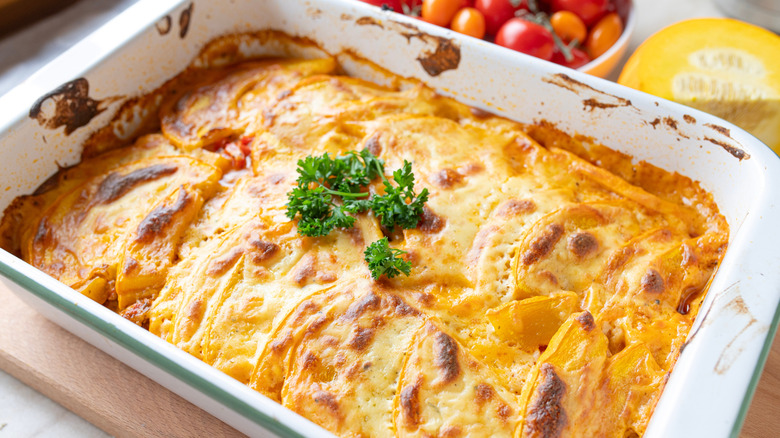
Casseroles come in many forms: broccoli, green bean, spaghetti, hash brown, sweet potato, chicken ... I'll stop here so as to avoid going full Bubba from "Forrest Gump" about it. Love them or hate them — and loving them doesn't make you Southern; having an opinion on them does — this cultural collaboration is a literal melting pot of culinary influences that stretches back centuries to create today's casseroles. It means something.
Casseroles are the first, fifth, and last thing to show up at a funeral reception; just imagine an endless train of foiled baking dishes arriving (alongside a couple hams), and you'll have a pretty solid idea of Southern funerary tradition. They're what your coworker will drop off when you're injured and what mama shoved in the oven between football practice and diaper changes. There are celebration casseroles, breakfast casseroles, and leftovers-tossed-together casseroles. They're as simple or complex as we need them to be, but regardless of sophistication, they stand for comfort. They are hospitality in stoneware and Pyrex, and the process of making them is more the point than the finished product. It's a corner you can't cut, and possibly the only dish on here I honestly can't imagine anyone south of Maryland ever buying ready-made from a grocery store.
6. Deviled eggs
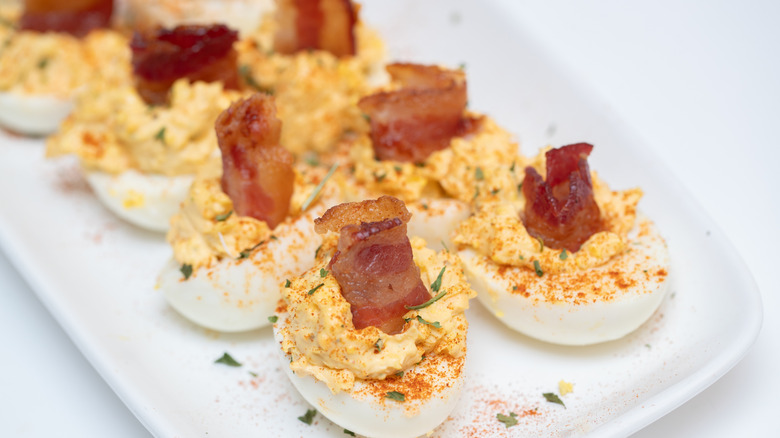
What do you mean they sell deviled eggs at the grocery store? Who decided this was okay? This is a delicacy. A county fair competition item. And they're arguably much better suited for the "Caviar of the South" moniker than pimento cheese (at least they're eggs). Every deli that sells them claims theirs is the best. Everyone who makes their own laughs at the sidewalk sandwich board boasting about it.
I'm even a little hesitant to order these from a restaurant. For one thing, they're only truly good for a few hours after they're made; they're to be cooked, cooled, and served as quickly as possible. There are no rules regarding how long they can sit out after being served, because if they haven't completely disappeared within a matter of minutes, it's certain that relationships are souring faster than the food.
It's not that they're expensive to make or that I can ever even recall meeting a deviled egg that I didn't like (though I've certainly met some I loved and some I was just sort of okay with), but they're meant to be celebratory (and apparently have been since originating in ancient Rome). Little ovoid party favors. A picnic table test of restraint and temptation, manners and tact. They're to be shared but shared with a certain level of quiet resentment; there's no better feeling than watching your fellow guests struggle to stifle their animalistic impulses over something you cooked. Why would you entrust this to the same people who stock liquid smoke on their store shelves?
7. Bacon grease
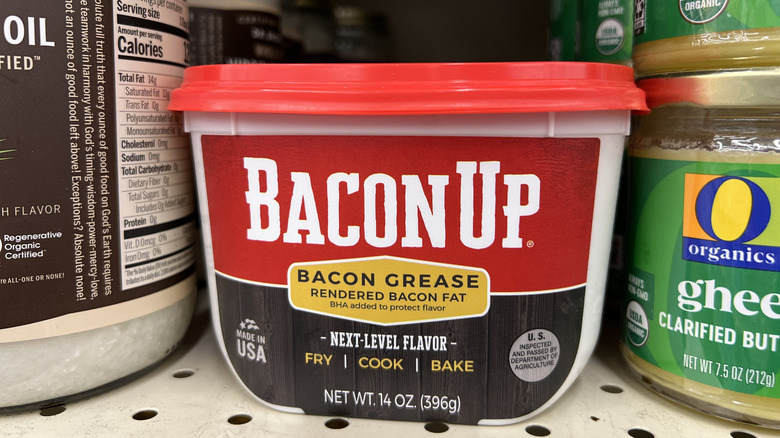
Hats off to the genius grifter who thought to jar and sell bacon fat. Yes, bacon fat, that sumptuous gift from the kitchen gods that's a natural byproduct of the bacon-cooking process. No self-respecting Southerner is pouring the contents of their skillet out in the trash. You do like the rest of us and keep a Mason jar by the stove for it. Then you spoon it back out into the skillet as needed. Basically, bacon grease should always experience a skillet twice.
This is the magical ingredient with which we are rewarded for eating bacon. It makes everything better. And it's free, y'all. Honestly, the existence of this packaged stuff from the store is insulting, and the more I think about it, the angrier I get. The fact that people buy it is nearly as infuriating as the fact that someone is selling it. Is this the answer you pre-cooked bacon eaters have been waiting for? No. No, it's not. If you're not cooking the bacon, you don't deserve the fat.
8. Ambrosia salad
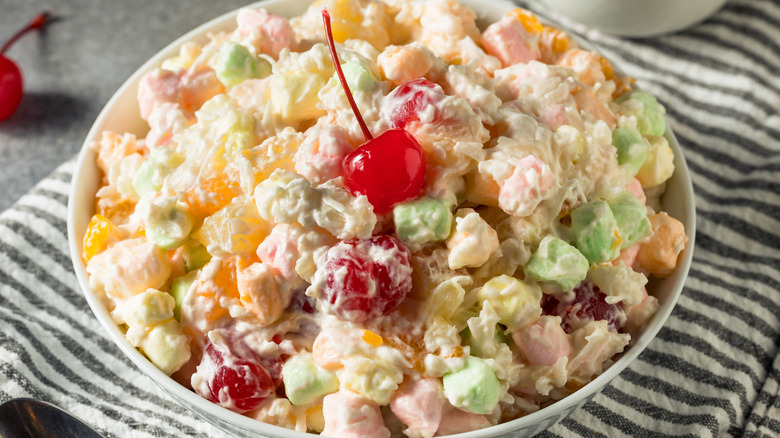
This distinctly Southern concoction of marshmallows, canned fruit, whipped cream, and coconut that is known as ambrosia salad is divisive enough as it is. The sickly sweet substance has a particular flavor that resembles nothing else, and I remember harboring a passionate enthusiasm for the stuff as a kid. I can't even imagine eating it now. So it goes. It would by no means be considered a "salad" anywhere outside the South, and it is a somewhat extreme example of the region's alternate definition of what a salad is.
There are some variations to the recipe, but in all its forms it is a simple dish that I can only assume was designed specifically so that people who don't cook would have something to bring to a party. It's cheap, it's fast, and it appeals to the lowest common denominator of taste buds. If you're going to subject folks to it, you owe them the courtesy of making it yourself rather than buying it pre-made from the store. It is, of course, better than showing up empty-handed.
9. Banana pudding
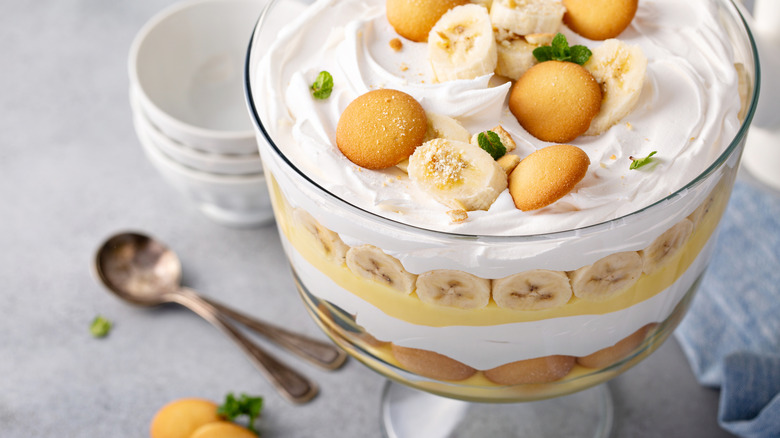
Much like pimento cheese, banana pudding wasn't born in the South, but the region has certainly claimed it. The first known recipe was a kind of trifle published in an 1888 issue of Good Housekeeping, but that version didn't even call for Nilla Wafers.
The version we know and love today consists of layered fresh bananas, pudding, Nilla Wafers, and meringue (or sometimes whipped cream). There are also some who occasionally take banana pudding to the next level, secretly, with sour cream. It became a Southern icon in part because, well, bananas arrived in the United States via southern ports. Banana pudding is a throw-together dessert, and using canned ingredients is almost universally accepted. While plenty of Southern culinary luminaries (Sean Brock, for example) have served up their own inspirations and variations on the dish, it isn't exactly haute cuisine. It only takes about half an hour. Don't disrespect your guests (or yourself) by buying it pre-made in a store. No, not even a country store (if they even have it). If you're buying dessert, just get a buttermilk pie and call it a day. Those actually take some skill, and it's perfectly acceptable to purchase one from a professional.