

The 10 Most Iconic Dishes In New Mexico
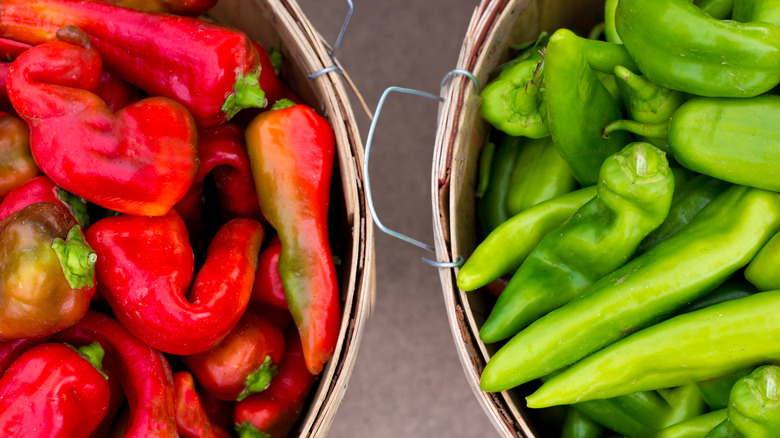
New Mexico is a U.S. state, home to some of the oldest communities and longest-standing traditions, born out of a complex mashup of Spanish colonization and Mexican presence, Indigenous and Anglo cultures, and centuries of conflict and coexistence. With its rich history comes a common misconception: New Mexican food is not the same as Mexican-American food. However, there is significant overlap, and both categories have a lot of variation within themselves.
New Mexico's unusual history has borne its own unique and hyper-regional cuisine — one that can't be found anywhere else. It also centers on a chile crop that's a darling of New Mexicans, and one that has grown there long before colonization. In fact, New Mexico is the only state allowed to grow Hatch chile peppers.
In New Mexican cooking traditions, unlike in Mexican-American food, red and green chiles are often the stars of the show in sauces that smother burritos and enchiladas, and as bases for heartier cold-weather soups and stews (yes, it does snow in New Mexico!). New Mexican food also typically incorporates less ground beef and dairy, generally skips cilantro and lime, and often features native ingredients and influences from Indigenous foodways, like blue corn, squash, and piñon (pine nuts).
1. Carne adovada
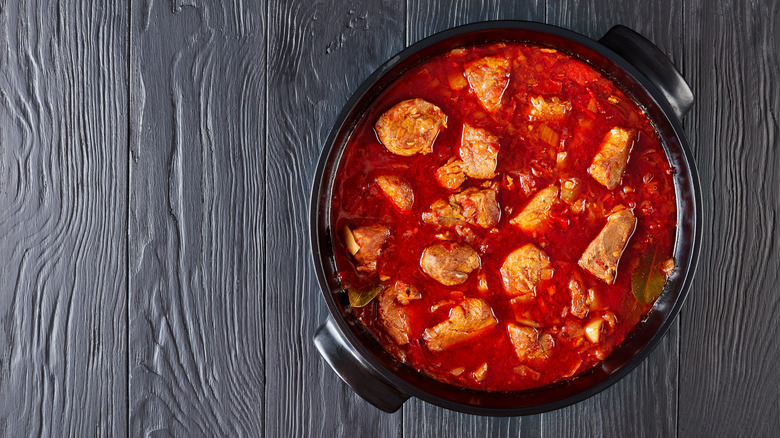
Carne adovada simply means "marinated meat" in Spanish. In New Mexico, it's a family and restaurant favorite, and it means something more specific. At its most basic level, carne adovada is pieces of pork slow simmered in rich, red chile sauce. The beauty of most regional cuisines, of course, lies in the many variations on a single dish and in recipes passed down through generations. Carne adovada is no exception: everyone will tell you their abuela's version is the best, and they're probably not wrong.
Normally, carne adovada is some version of browned pork shoulder or pork loin, cut into 1- to 2-inch cubes, and browned. New Mexico red chiles, usually dried, are rehydrated in boiling water, pulverized, and strained. Together with water or broth, the pork and chile are slow-simmered or oven-braised. Some recipes add garlic, onion, and spices to amp up the flavor. Others provide an element of extra acidity, like vinegar or citrus, umami with chicken broth, or sweetness with honey. Carne adovada is a versatile dish — it can be served with tortillas or rice, or be the star of a hearty breakfast with eggs on top, or in a breakfast burrito.
2. Chiles rellenos
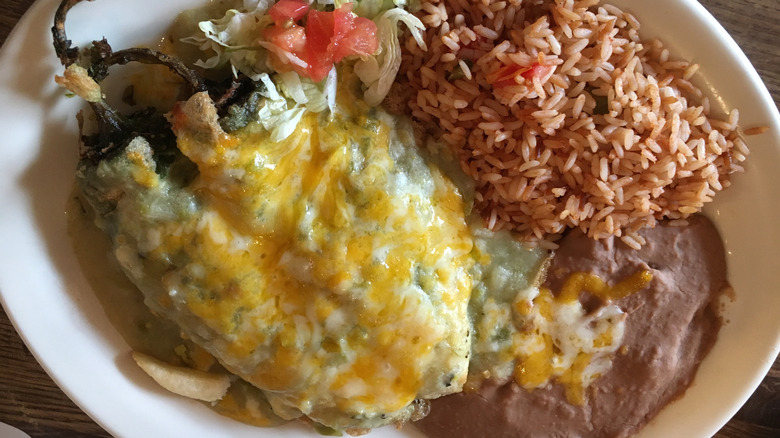
In chiles rellenos, which means "filled" or "stuffed" chiles, the official state vegetable of New Mexico takes center stage. Rather than poblano or Anaheim, Hatch green chiles are often used. After roasting and peeling, they're stuffed with a melty cheese, like cheddar, Monterey Jack, or asadero, dipped in a batter, and fried to gooey perfection. To keep the coating light and airy, egg whites are often beaten before adding the yolks and flour, and sometimes are part of a two-step process: dredging first in flour, then in egg mixture.
Chiles rellenos are an underrated vegetarian hit, and can be served with a side of beans, rice, or calabacitas, another New Mexico favorite made with squash and corn. Often, chiles rellenos are topped with more chile sauce. If you're eating out, almost every New Mexican dish will come with the question, "Red or green?" It's a difficult choice: smoky, dark red, or bright, savory green? The indecisive can always answer, "Christmas" — you'll get the best of both worlds.
3. Blue corn chicken enchiladas
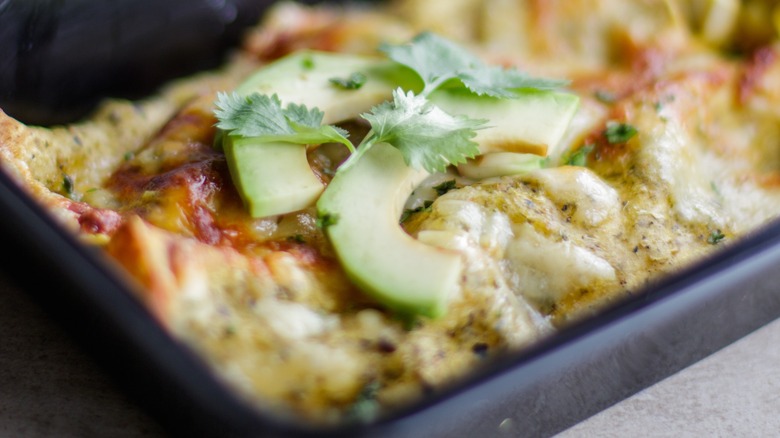
Though enchiladas aren't unique to New Mexico, most local versions use Hatch green chiles in the enchilada sauce, and they are often stacked rather than rolled. Some use blue corn tortillas when stacking, instead of yellow or white corn or flour tortillas. Blue corn, which is a beautiful, deep indigo color when on the cob, has been a staple for the Pueblo, Hopi, Navajo, and Zuni people since ancient times. It has spiritual and ceremonial significance, and is still used in weddings, coming-of-age rituals, and harvest celebrations. Today, it is most recognizable in blue corn chips sold across the U.S. as a health-food-oriented alternative to typical chips, but in New Mexico, it's not hard to find blue corn flour and fresh blue corn tortillas.
Blue corn has an earthier, heartier flavor than sweeter yellow corn. In contemporary New Mexican dishes, it can stand up to spicy green chile and other enchilada fillings, such as chicken and cheese. Stacked enchiladas, or tortillas layered with fillings and chile sauce, are a great way to feed a crowd: they're easier to assemble, less messy to eat, and often have a more even distribution of ingredients. Green chile sauce is often made with sautéed onions and a little flour to thicken it — add cream cheese into the layers or sour cream on the side for extra richness. Think of it like a spicy, planet-Earth-colored, New Mexican lasagna.
4. Navajo tacos
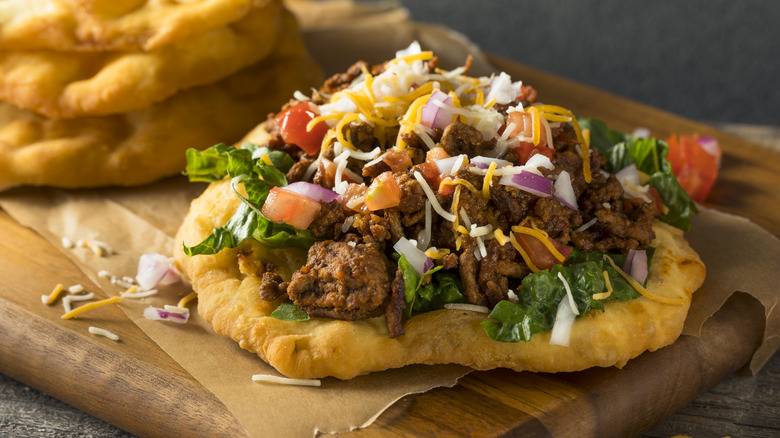
Indigenous American foods have a complex, often fraught history that combines ancient foodways with traditions forcibly shaped by colonization. Spanish and Anglo regimes wrought cultural and economic devastation on Indigenous communities. Eventually, the U.S. intervened and supplied commodity foods: government-packaged items like lard, canned meat, and cheese to supplement diets for years, which helped create new, ration-based versions of traditional dishes, such as tacos.
Navajo people call their tacos "Diné," but this food can go by a few different names, including Fry Bread Taco, Indian Taco, and Indigenous Taco — and who exactly is credited with its origins is still debated. The lard, flour, and cheese distributed to tribal members were incorporated into a dish that is now considered quintessentially New Mexican and Native American. It's also delicious.
The dough is made with flour (Bluebird is the brand of choice and comes in a beautiful, often repurposed cloth sack), water, baking soda, and lard, though sometimes oil or shortening is used. Then the dough is deep-fried and topped with a variety of taco toppings, including beans, ground beef, lettuce, tomato, onions, and cheese. These tacos are sold at countless markets, food trucks, gatherings, and roadside stands for a quick, colorful, and filling meal that, while it represents a legacy of colonization, is also understood to be a symbol of resilience and community.
5. Calabacitas
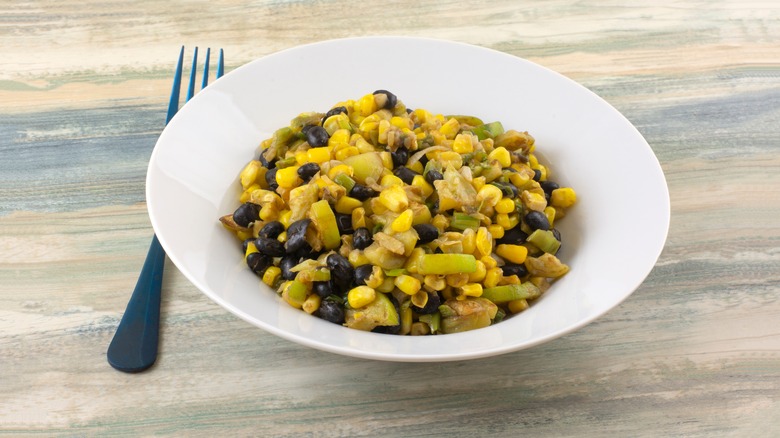
Calabacitas are a common side dish on New Mexico menus and home tables. But what are they, exactly? Literally translated to "little squashes," calabacitas in the New Mexican sense can mean a few variations on a dish that usually incorporates zucchini, corn, and (green chile) peppers. Onions, tomato, beans, and even cheese often make an appearance, but like any regional specialty, customized interpretations are what make it fun.
Calabacitas represent a dish with perhaps the deepest roots to pre-Columbian food cultivation in the Americas, where squash, corn, and beans represented the "three sisters" that together form a self-supporting agricultural system. Beans grow up the corn stalks and fix nitrogen in the soil to support squash plants, whose broad leaves provide protection from weeds and soil evaporation. It's also served in Mexico, with many regional variations. Usually, the vegetables are chopped small and sautéed, with seasonings and spices to taste. Calabacitas are often a side, but can double as a taco filling, a base for a salad, or a partner for eggs in a delicious veggie-forward breakfast.
6. Green chile stew and Mutton stew
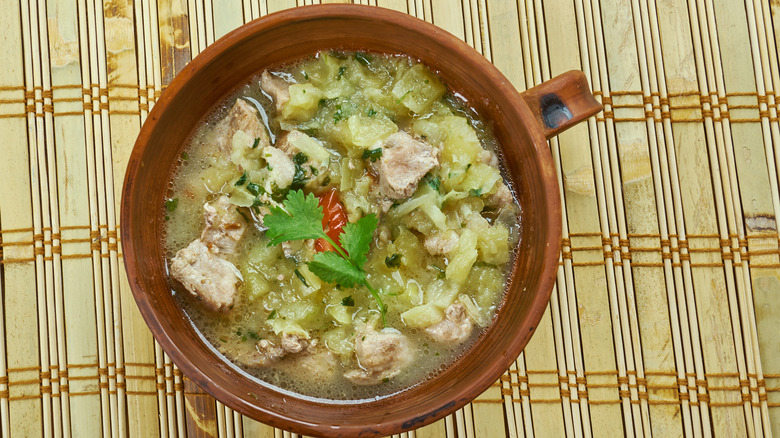
It's our friend again, the Hatch green chile. This time, making an appearance in another quintessential New Mexican dish: green chile stew. Pork is seared, and onion and garlic are sautéed, along with the roasted chiles, then mixed with broth and potato chunks for a simple but satisfying meal. Some people use chicken or beef instead, and others add bay leaf or tomato.
In mutton stew, which stems from Navajo Diné roots in sheep herding, cubed mutton is given a similar treatment, along with root vegetables, celery, and any other seasonal or local veggies, with less of a focus on green chile (though it is a common addition).
Again, these are the kinds of dishes that are endlessly riffable and only get better with a few days in the fridge. A note on New Mexican cooking: add cumin at your own risk. This spice is typically associated more with Tex-Mex cookery and is a hotly contested addition to New Mexican dishes.
7. New Mexican breakfast burritos
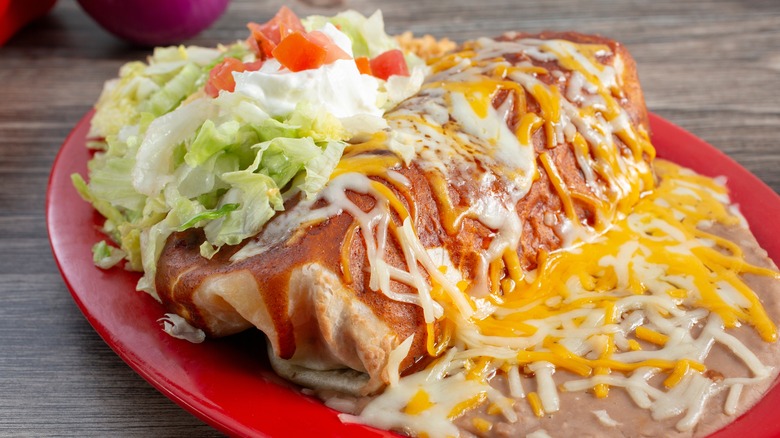
Okay, so I'm willing to bet you've had a breakfast burrito. But New Mexican breakfast burritos are in a class of their own — with a Santa Fe restaurant being the originator of the first breakfast burritos (or at least the name). A classic New Mexican breakfast burrito comes with egg, cheese, potato, and some kind of red or green chile sauce. Most come with optional meat, beans inside or on the side, or some other protein — the bacon-green chile burrito is a popular one. The most sublime take I've had is a green chile chicharron burrito, where cubes of pork belly are fried to perfection and nestled into a mess of egg, cheese, and hash browns. Notably, New Mexican breakfast burritos don't typically include avocado, pico de gallo, or other Tex-Mex additions, though a mashup of the two would be delicious.
For a weekend breakfast feast, many New Mexicans choose their burrito "smothered" (as opposed to "handheld," in a warm flour tortilla and sometimes foil for easy carrying). This just means the breakfast burrito is served on a plate, with even more chile sauce and melted cheese on top, and you'll need a fork and knife to eat it. It's a perfect opportunity to go full "Christmas" with your chile, and a killer hangover cure if I ever met one.
8. Green chile cheeseburgers
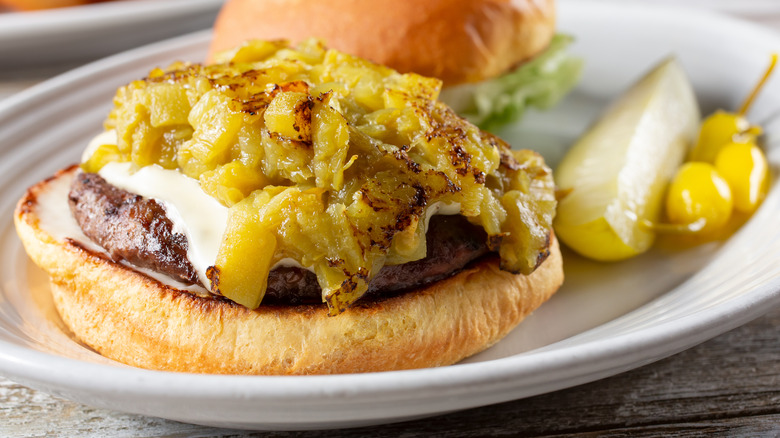
I still haven't reached this advanced level of New Mexican, but many of my fellow Nuevo Mexicanos buy all their green chile for the year, peel and chop it, and store it in a separate freezer for use throughout the year. Some likely mark the seasons by how low their green chile stores are. The minute a cool breeze kicks up in the fall, the smell of roasting chiles being tossed in mesh drums over an open flame wafts across nearly every corner of the state — it's practically synonymous with autumn in New Mexico. With it on hand year-round, topping your burger with roasted green chile isn't as labor-intensive as it might be if starting from scratch.
I can safely say that few burger toppings enhance the humble cheeseburger as much as green chile does, and I'm not even from here originally. There's something about the smoky, hot brightness of these peppers that makes the beef patty and melty cheese that much better. The birthplace of the green chile cheeseburger boasts a local chain, Blake's Lotaburger, that helped popularize early versions, but even McDonald's and Whataburgers in this part of the country carry a cheeseburger topped with green chile. It's practically mandatory when ordering a cheeseburger here — sorry, I don't make the rules.
9. Posole (New Mexican)
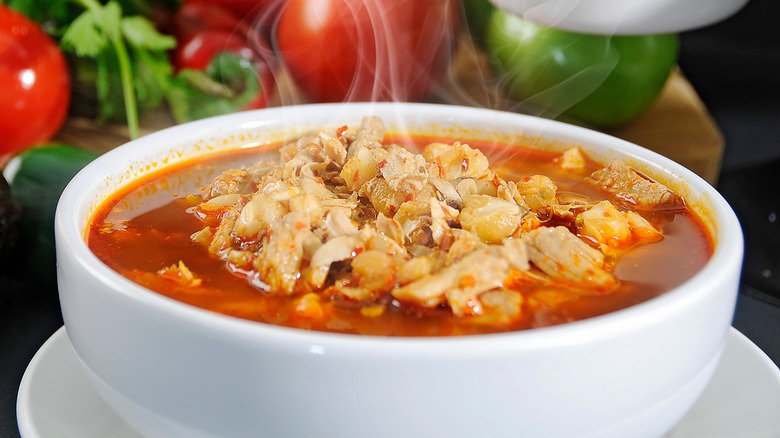
Posole is another Mexican/New Mexican favorite, and the New Mexican version of this warming stew has a few key distinctions. First, the spelling: New Mexico uses an "s" in place of the Mexican "z" in pozole, though posole can mean the grain (hominy, in English) or the dish itself. Posole or hominy are dried corn kernels that have been given an alkaline treatment (nixtamalized), which removes the skin, enhances nutrients, and makes them more digestible. When hominy grains are cooked, they swell to much larger sizes than non-treated corn kernels and have a unique chew and starchiness perfect for a rich stew. Typically, they are mixed into a base made with onion, garlic, broth, and cubes of pork, then slow-cooked with pulverized red or green chile.
Mexican versions of pozole can vary much more widely across regions, incorporate more diverse flavors, varied garnishes, and often dial back the chile. Posole is a classic New Mexican holiday tradition, served in a bowl with simple garnishes (green cabbage, maybe a lime wedge) in another version of the cheery Christmas color combo. Don't forget the warm buttered flour tortilla on the side.
10. Sopapillas
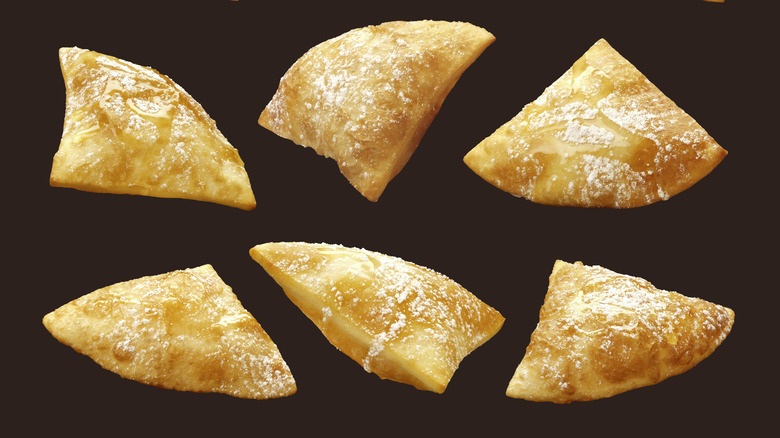
Every tradition has its version of fried dough. And really, when has a beignet, jalebi, or funnel cake dusted with powdered sugar ever not gone over well? In New Mexico, sopapillas (sometimes spelled sopaipillas) are it. They are, coincidentally, almost like what the word reminds me of: pillows. These crispy, soft dough squares (or triangles) are deep-fried to puffy perfection, with a hollow center. Sopapillas are usually made with simple ingredients: flour, baking powder, and a water or milk base. They're often served after a meal for dessert with honey to drizzle on, or on the side of a meal for scooping.
Like all of the recipes listed here, endless twists on the classic are possible. Many New Mexican restaurants offer versions of a stuffed sopapilla, filled with ground beef, carne adovada, or other savory ingredients and topped with chile sauce, of course. But trust us when we say: it's hard to beat a fresh sopapilla doused in honey. Pro tip: open the sopapilla and drop honey in the pocket to avoid a sticky mess.