

10 Tips You Need To Cook Like Anthony Bourdain

We may receive a commission on purchases made from links.
One of the many reasons so many people were drawn to Anthony Bourdain was his no-holds barred approach to talking about food. When his essay "Don't Eat Before Reading This" was published in The New Yorker in 1999, it created a huge buzz for revealing the secrets that go on behind the scenes in many restaurants. From there, Bourdain went on to publish several more books and star in food and travel shows. Throughout the rest of his career, he continued to share his insights on food and cooking.
Like many chefs, Bourdain got his start as a dishwasher, eventually moving up to line cook. After he graduated from The Culinary Institute of America in 1978, he worked at numerous restaurants in Manhattan. At the time his life-changing essay was published, he was the executive chef at the esteemed French restaurant Brasserie Les Halles. All that to say, the man knew a thing or two about food. Some of his opinions may have been a little bit controversial, but there's no disputing that they came from a wealth of experience.
Have you ever wondered how to create the perfect hamburger that not only tastes good, but is also easy to eat and texturally appealing? Anthony Bourdain had a tip for that. He also dropped plenty of knowledge about choosing the right cooking utensils, picking out the tastiest and most sustainable pieces of meat, and how to season food to make it taste restaurant-quality. If you're looking to step up your skills in the kitchen, these are some of Bourdain's top cooking tips.
1. You don't need an arsenal of fancy chef's knives
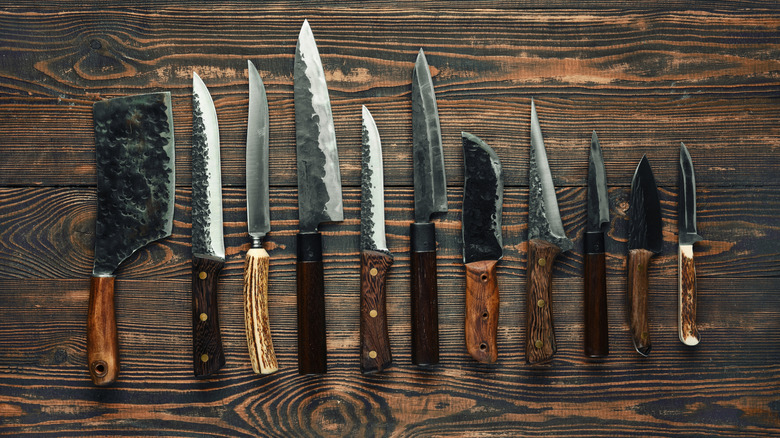
How many knives do you have in your kitchen? If you're like many avid home cooks, you probably have several, each designed for a different purpose like slicing bread, butchering meat, and filleting fish. Well, according to Anthony Bourdain, the majority are just taking up space. As he wrote in his best-selling book "Kitchen Confidential," "No con foisted on the general public is so atrocious, so wrongheaded, or so widely believed as the one that tells you that you need a full set of specialized cutlery in various sizes."
Bourdain went on to explain that so many of the kitchen knives people buy seriously lack in the design department and aren't even capable of cutting basic fruits and vegetables. He was a firm believer that all you really need is one decent chef's knife, "as large and comfortable as your hand." And it doesn't have to be top-of-the-line either. As long as it has a decent blade, is lightweight, and sharpens easily, it should do the trick.
If you're looking for a solid cutting utensil, Bourdain's favorite chef knife was from Global, a Japanese company that makes top-notch, but relatively affordable, knives made from vanadium steel. A classic chef's knife will do, but he was also a fan of an offset serrated knife. Offset means the handle is raised above the blade, which makes it safer and more comfortable to hold. In addition, the serrated blade can cut through a wide variety of foods.
2. Heavy-bottom pots and pans are key
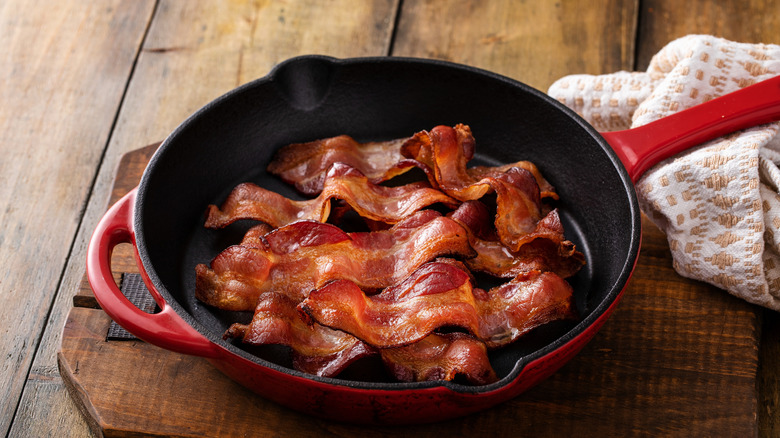
If you find that many of your dishes end up scorched or stuck to the cooking vessel, Anthony Bourdain surmised that it's probably because your pots and pans are too thin. He was a huge proponent of using heavyweight cookware. How heavy? In "Kitchen Confidential," he wrote, "A proper sauté pan, for instance, should cause serious head injury if brought down hard against someone's skull. If you have any doubts about which will dent — the victim's head or your pan — then throw that pan right in the trash."
There are a few reasons Bourdain was adamant about using heavy cookware. For one, flimsy pots and pans tend to heat up very quickly, which can end up burning your food right from the get-go. In addition, some spots may get hotter than others, and that can result in uneven cooking. Heavy-bottomed pots and pans take longer to come to full temperature, but when they do, they hold the heat better and cook more evenly. Cast iron and stainless steel vessels are usually good bets.
Bourdain also recommended investing in a good non-stick sauté pan, but "not one with a thin veneer of material that peels off after a few weeks." The only issue is that quality cookware can be costly, but Bourdain had advice for finding chef-quality pots and pans for cheap. He recommended keeping an eye out for restaurants going out of business, as many sell off their equipment for a fraction of the price it costs. The pots and pans may be second-hand, but there's a good chance they'll be top quality.
3. Misuse of garlic is a crime
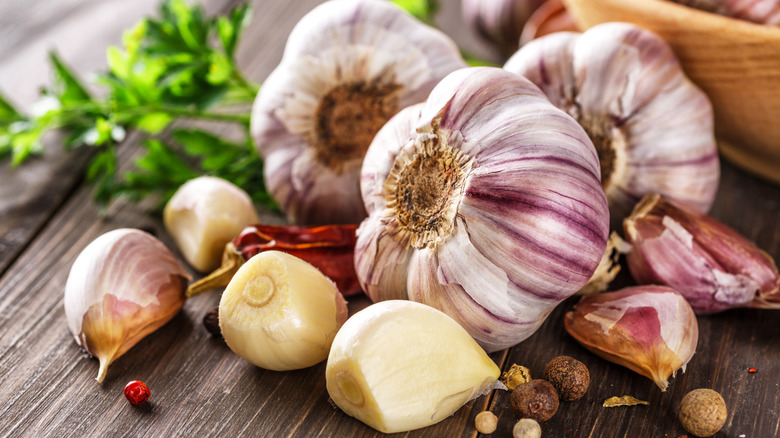
Parts of "Kitchen Confidential" read like a blueprint for home cooks with tips on the best kitchen tools to buy, as well as ingredients you need to cook like a pro. One ingredient that Anthony Bourdain thought was absolutely divine was garlic. He said, "Few food items can taste so many distinct ways, handled correctly." However, he warned, "Misuse of garlic is a crime." He insisted on using only fresh garlic (no jarred cloves), cut it properly, and cooking it gently.
If there was one kitchen tool that Anthony Bourdain despised, it was a garlic press. "I don't know what that junk is that squeezes out the end of those things, but it ain't garlic," he said. Many chefs agree that garlic presses are one of the worst ways to mince garlic because they produce tiny particles that permeate your food and create an overpowering garlic taste. They also tend to burn quickly. Bourdain suggested slivering the garlic or smashing it with the back of a knife instead.
If you want to take things to the next level, Bourdain suggested roasting whole heads of garlic to mellow it out and add a touch of sweetness. Just peel off the outer paper, cut off the heads, then place the garlic in a baking dish with a drizzle of olive oil and pop it in the oven. Once done, you can squeeze the soft garlic out and use it in a range of dishes. Bourdain was a big fan of using it in Caesar salad, along with a smattering of fresh garlic for extra layers of flavor.
4. Butter makes everything better
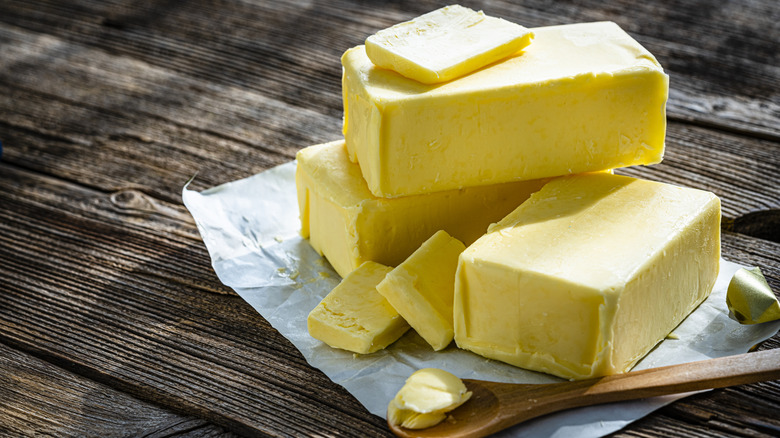
Butter often gets a bad rap for being high in saturated fat, which is why many home cooks tend to gravitate towards healthier alternatives for cooking, like olive oil. But Anthony Bourdain was adamant that if you want to create restaurant-worthy dishes, you need butter, and lots of it. In his essay "Don't Eat Before Reading This," he revealed that professional chefs put butter in pretty much everything, writing, "It's the first and last thing in almost every pan."
According to Bourdain, there are few dishes that can't benefit from butter. The rich, creaminess mellows out sauces and emulsifies them to give them a glossy sheen. Pastas come together more cohesively with a hit of the yellow stuff. It's also great for searing proteins like meats and fish, and caramelizing ingredients like onions, shallots, and chicken. In addition, butter can help offset acidity and help enhance the flavor of herbs and spices.
So how much butter are chefs actually using? Well, Bourdain wrote, "In a good restaurant, what this all adds up to is that you could be putting away almost a stick of butter with every meal." When a shocked Oprah Winfrey questioned Bourdain about that statement on an episode of "The Oprah Winfrey Show," he confirmed that it was true, but insisted that it's necessary for achieving maximum flavor. He told her, "That's why restaurant food tastes better than home food a lot of the time."
5. Don't overlook the nasty bits of meat
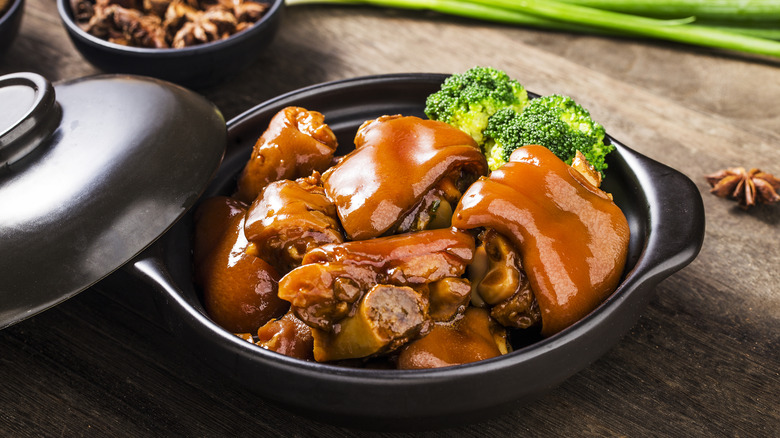
It's no secret that Anthony Bourdain was an adventurous eater. If you've watched any of the shows he hosted, like "A Cook's Tour," "No Reservations," and "Parts Unknown," you've probably seen him chow down on dishes like fermented shark, warthog, and cobra hearts. Granted, some of those dishes didn't become fast favorites, but that didn't stop the chef from encouraging others to stray from the culinary mainstream. He was particularly passionate about nose-to-tail eating and promoting off-cuts of meat.
In "Don't Eat Before Reading This," Bourdain stated that he was proud to work at Brasserie Les Halles, "where the customers eat their meat rare, vegetarians are scarce, and every part of the animal — hooves, snout, cheeks, skin, and organs — is avidly and appreciatively prepared and consumed." He was a huge fan of pig's feet, tripe, and boudin noir made with pork blood. He truly believed that America needed more of these types of meat cuts, not only because they can be delicious, but also because it makes environmental sense.
In 2017, Anthony Bourdain produced a documentary called "Wasted! The Story of Food Waste" that highlighted the massive problem of food waste and how various chefs are trying to create a more sustainable global food system. In an interview with Business Insider about the film, Bourdain encouraged people to consider foods that have fallen out of favor, like pig's tails and neck bones, to avoid waste. He also suggested returning to techniques like braising, pickling, and stewing to transform those meats into something great.
6. Take your meat off the heat, then leave it alone
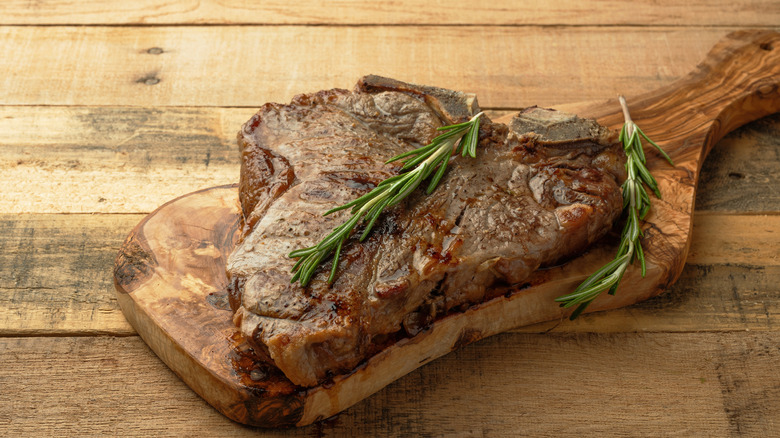
Being the hardcore carnivore that he was, Anthony Bourdain had his steak-cooking techniques down pat. In an interview with Insider Tech, he revealed that his ideal steak was a fatty, bone-in rib steak and that his preferred technique was to season it simply with salt and pepper, charcoal-grill it or pan-sear it in butter and olive oil and baste it with butter throughout, then finish it off in the oven. But the most important step of all was to let the steak rest.
According to Bourdain, the worst mistake people make with steak is cutting into it straight off the heat. That's because when the meat is cooking on a hot surface, the juices are forced into the center of the cut. If you slice into it right away, those juices will spill out. However, if you let it rest after coming off the heat, it gives the muscle fibers time to relax and the juices will be redistributed throughout the meat.
In a separate interview with Insider Tech, Bourdain expanded on what he called, "the most overlooked feature or factor in the success of a steak." He suggested letting the steak rest on a cutting board at room temperature for about five to seven minutes, during which time you should not touch it in any way. No poking or prodding, and definitely no slicing. "Don't even look at it," he said. "Just let it sit there. Leave it alone and you will be rewarded."
7. Stock is the backbone of good cooking
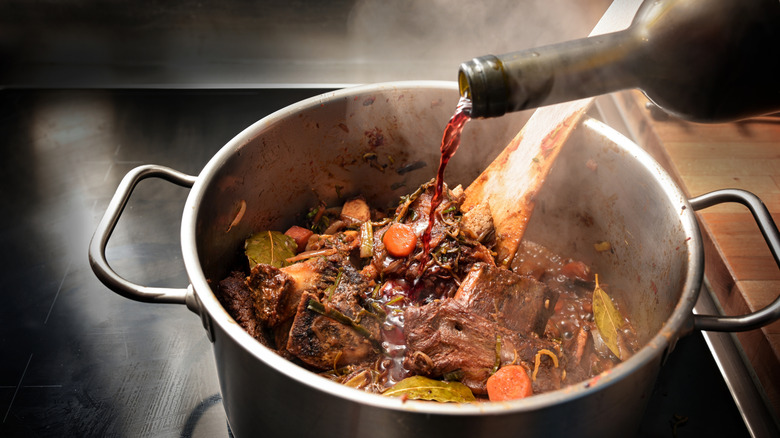
With just some butter, garlic, and meat, you can create some great meals, but if you want to add more depth to your dishes, Anthony Bourdain believed a good stock was key. In fact, he called it "the backbone of good cooking" in "Kitchen Confidential." And he wasn't talking about canned broth or the powder bases you can buy at the grocery store. For him, homemade stock was the only way to go for next-level sauces and soups, and crucial for demi-glace (an intensely flavored brown sauce often used on meats).
Many people confuse stock and broth because they're both cooking liquids that are often flavored with meat, herbs, and vegetables. However, there are some key differences. Stock is made by slowly simmering bones with veggies and herbs, while broth is typically made by simmering pieces of meat. Stock tends to be darker and richer thanks to the collagen and gelatin that are released from the bones.
Bourdain's formula for making stock was pretty simple. "Just roast some bones, roast some vegetables, put them in a big pot with water and reduce and reduce and reduce," he said. You can opt for chicken, beef, pork, or veal bones, depending on the type of stock you want to create. He also suggested making a large batch and freezing it in small portions. And for demi-glace, he suggested adding red wine, shallots, thyme, bay leaf, and peppercorns to your stock and simmering everything down until the sauce can coat the back of a spoon.
8. Fluffy scrambled eggs require a gentle hand
Anthony Bourdain was pretty vocal about the fact that brunch was the bane of his existence. In "Appetites: A Cookbook," he talked about several low points in his career when all he could get was brunch shifts, and how he hated having to get up early and sling hundreds of orders of eggs. Because of that, he said, "The smell of breakfast to me will always be the smell of defeat." The silver lining was that he managed to master several brunch dishes, including perfectly fluffy scrambled eggs.
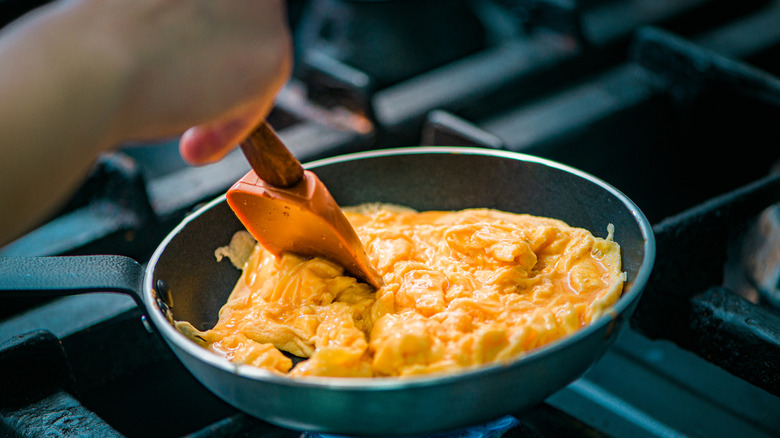
For Bourdain, the key to great scrambled eggs was treating the eggs with a light hand. He told Insider Tech that he started with a fresh egg that he beat lightly so that there was a nice mix of egg white and yolk threaded throughout. He also noted that you want to beat your eggs just prior to putting them in the pan because if you beat them and let them sit there too long, you get what he called "an odd graying stippling effect."
Bourdain didn't bother with adding water or cream to his eggs. He simply poured them into a pre-heated pan with frothy butter, then let them foam up a bit before stirring them gently in a figure-eight motion, which he described more as folding. He believed this was also the key to great texture. He said, "You don't want little bits of egg as your final product. You want something fluffy, airy, rippled, with a nice textural note when you taste the egg."
9. A good burger is all about balance
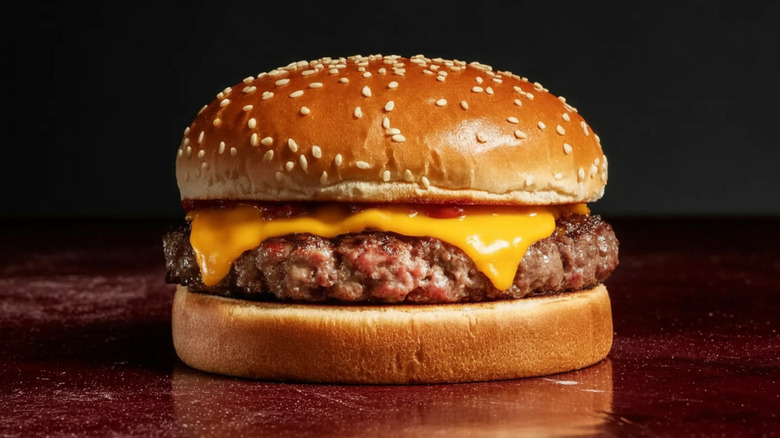
Anthony Bourdain also had strong opinions about the humble burger. For him, the classic was a classic for a reason and there was no need to mess with it too much. In fact, he once called Kobe beef sliders a "clear and present danger" because they were more about a lofty idea than any added taste or substance. He told Insider Tech that his perfect burger consisted simply of a squishy potato bun, a good quality beef patty, and a slice of melty cheese.
In terms of add-ons, Bourdain said that he wasn't opposed to lettuce, tomato, or even blue cheese, but at the end of the day, you want something that's going to be structurally easy to eat. He said, "In a perfect world, you should be able to eat a hamburger with one hand and get a representative chunk of all the elements. There's a tectonic slide that happens when you start to overcomplicate and add other products."
As for condiments, Bourdain said he approved of ketchup and mayo, but anything beyond that was questionable and begged the question of whether it was actually making the burger better or just an attempt to dazzle people. And he definitely wasn't down with fancy homemade ketchup. In an interview with Thrillist, he said, "I've never had ketchup better than, you know, the common variety. Plus, that's such a bone-deep flavor profile. Don't f*** with it, you know?"
10. Stay away from truffle oil
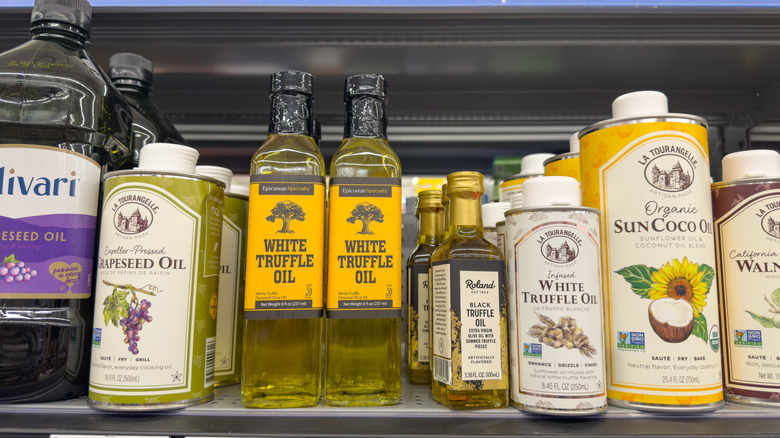
Speaking of fancy artisan foods, truffle oil was another food trend that Anthony Bourdain was vehemently opposed to. On an episode of "The Tonight Show Starring Jimmy Fallon," he called truffle oil horrible and said, "It's not even food. It's really on par with about as edible as Astroglide and made from the same stuff." In "Appetities: A Cookbook," he slammed it further in his recipe for mac and cheese, saying, "If you add truffle oil, which is made from a petroleum-based chemical additive and the crushed dreams of nineties culinary mediocrity, you should be punched in the kidneys."
It's easy to see why so many people jump on the truffle oil trend. Truffles pack a wallop of pungent, earthy, fungus flavors and aromas. Plus, they're wildly expensive because of how long it takes to them to grow and how difficult it is to cultivate them. Black truffles can sell for up to $800 a pound and white truffles can fetch a jaw-dropping $4,000 per pound. Truffle oil is considerably cheaper, but still offers that allure of luxury.
The problem that Bourdain had with truffle oil, beyond just the pretentious nature of the product, was that most truffle oil isn't actually the real deal. The market is flooded with bottles containing synthetic compounds that simply mimic the taste and aroma of truffles. In his opinion, it was better just to avoid it altogether. However, if you're dead-set on using truffle oil in your cooking, you may want to read the labels carefully to ensure actual truffles are listed in the ingredients.