

10 Tips You Need When Cooking Winter Squash
We may receive a commission on purchases made from links.
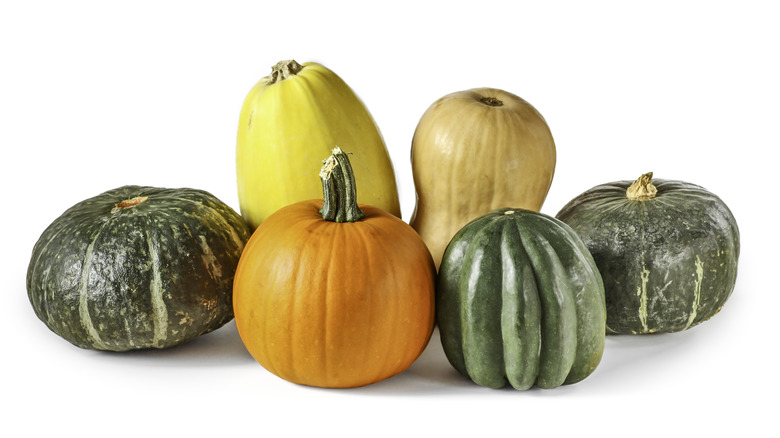
One of the best parts of the holiday season is the abundance of winter squash. Winter squash can be defined as hard-shelled squash varieties that are typically harvested in the fall and have the capacity to be stored throughout the winter months. Among the most common varieties of this type of squash are butternut, acorn, spaghetti, and kabocha squashes.
These durable squash varieties are frequently featured on dinner menus from Thanksgiving to Christmas. Recipes made with winter squash are festive, flavorful, and they are a great way of amping up the nutritional value of otherwise indulgent meals. Winter squash is known for being especially rich in antioxidants, vitamins, minerals, and fiber, all of which are important parts of a well-rounded diet this time of year.
Winter squash can be notoriously challenging to handle owing to their thick skin and hardy structure. For this reason, they require special skills and a unique set of tips and tricks to prepare efficiently and deliciously. That's where the expertise of a professional chef, like myself, comes in. The following is a collection of my top pieces of advice for the best ways to handle winter squash so that they can become a regular part of your diet during these colder months.
1. Pick the right squash for the recipe at hand
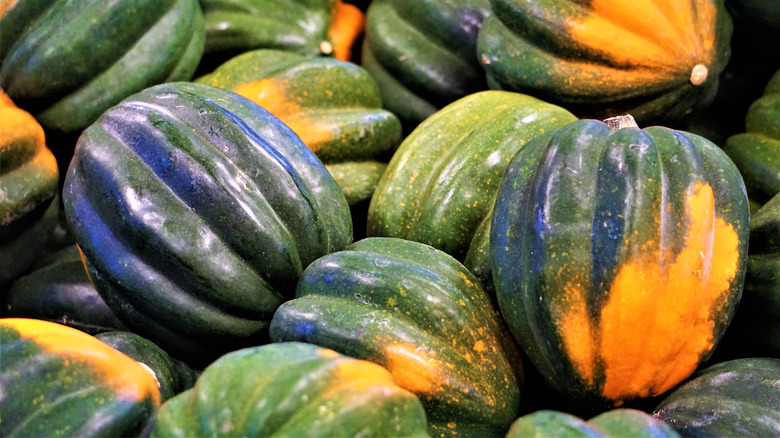
All winter squash fall under the Cucurbita species of fruits, which are indigenous to the New World. Though five different varieties have been cultivated for thousands of years, only three make a regular appearance on menus across the globe: Cucurbita maxima (which includes kabocha and turban squash), Cucurbita moschata (which includes butternut and black futsu squash), and Cucurbita pepo (which includes acorn and spaghetti squash as well as most decorative gourds).
Each squash variety has distinctive characteristics that make it more or less suitable for a particular recipe, be it a salad, soup, side dish, or dessert. For example, butternut squash has uniquely tender flesh that is ideally suited for making creamy soups, while the small size and sweet flesh of acorn squash make them perfect for stuffing and serving as a simple, elegant side dish. Knowing what type of squash to select for any given dish will not only produce the best results, but it will also streamline the preparation process.
When selecting winter squash, be sure to pick the ripest of the bunch. Ripe squash should have dense skin that is impervious to being punctured with your fingernail. The skin should be matte, not shiny, and the color should be relatively uniform, unless it is a speckled variety. Winter squash should be heavy for its size, indicating fewer seeds and more flesh, and the stem should be hard.
2. Store the squash correctly
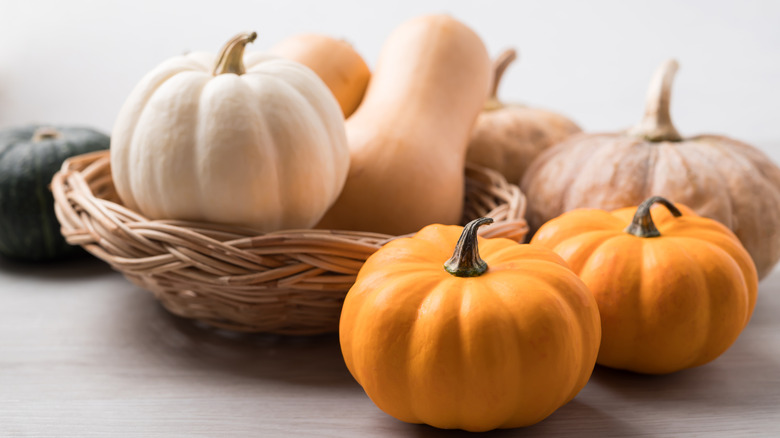
Despite the fact that winter squash are incredibly hardy and shelf-stable, they can come to an untimely demise if they aren't stored properly. Once winter squash are harvested, a majority of them undergo a curing process during which they are stored at temperatures between 80 and 85 degrees Fahrenheit in a cool, dry place for approximately 14 days. During this period, the skin of the squash hardens, and the flesh becomes even sweeter. This helps to prepare them for long-term storage.
Unlike delicate summer squash, which requires refrigeration to extend its life expectancy, cold temperatures are the enemy of winter squash. When subjected to prolonged refrigeration, the flesh of winter squash will begin to shrivel up and rot due to the inconsistent moisture and temperature, making it susceptible to microbial growth and ruining its texture.
For best outcomes, winter squash should be stored in a cool, dry place, between 50 and 60 degrees Fahrenheit, with plenty of ventilation. It can be helpful to rotate the squash periodically to prevent any one side from becoming damaged as it remains in storage. When properly kept, winter squash can survive for several weeks, even months, making them both economical and versatile.
3. Cut it safely by popping it into the microwave

Perhaps the biggest hurdle to cooking winter squash is penetrating their dense skin and cutting them up. This requires a quality set of knives, a bit of elbow grease, and some specific skills. While some squash, like smaller butternut specimens, can be relatively easily prepared using a sturdy vegetable peeler and chef's knife, others are a bit more challenging to hack into and require an extra step.
Enter the microwave. As a general rule, I seldom use the microwave to cook anything, but in this case, it can be the secret to turning that acorn or spaghetti squash into an ingredient for a recipe. Begin by cutting off the ends of the squash and piercing it all over with the tip of a knife. Place the squash in the microwave on HIGH for approximately 2 minutes or until the skin and flesh begin to soften. This will make it easier to remove and cut into smaller pieces.
For especially durable winter squash, you may need to go a step further by using an electric knife to break it down after it has been softened in the microwave. The best electric knives should fit comfortably in your hand so that they are easy to handle without accidentally losing control. Among the better brands out there is Cuisinart, though there are plenty of others that are more affordable and can do the job well.
4. Don't discard the seeds
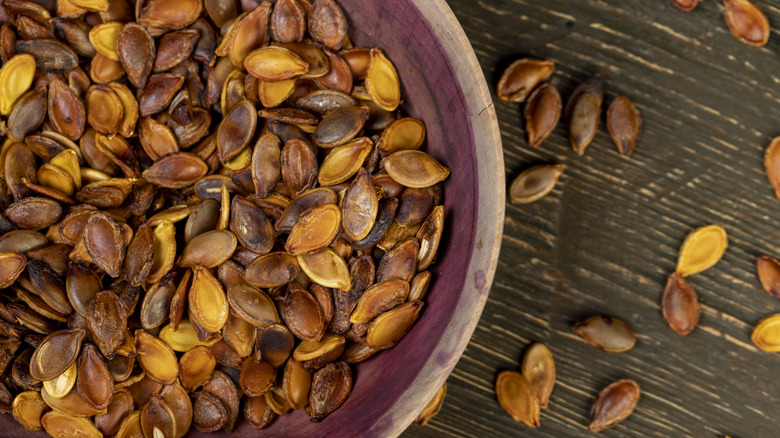
Though not all winter squash varieties have edible skin, they all have seeds that can be consumed. Eating winter squash seeds not only eliminates food waste but it is also a delectable addition to many recipes, from salads and soups to appetizers and desserts. The key is to prepare them properly before they can be eaten.
Once winter squash has been cut in half and the seeds are exposed, these can be scooped out using a spoon. The seeds then need to be cleaned before they can be cooked. The easiest way to do this is to place them in a colander and rinse them off with cold water to eliminate any residual stringy flesh that may adhere to them. Once clean, the seeds should be placed onto a baking sheet in a single layer and allowed to air dry for several days until any excess moisture has been completely eliminated.
The dried seeds can then be roasted in the oven or placed in an air fryer for 10 to 15 minutes at 350 degrees Fahrenheit until they are golden brown. Try seasoning the seeds with various spices to add a burst of flavor. Some of my personal favorites are smoked paprika, Old Bay, curry powder, and pumpkin pie spice.
5. Boil it to turn it into a luxurious purée
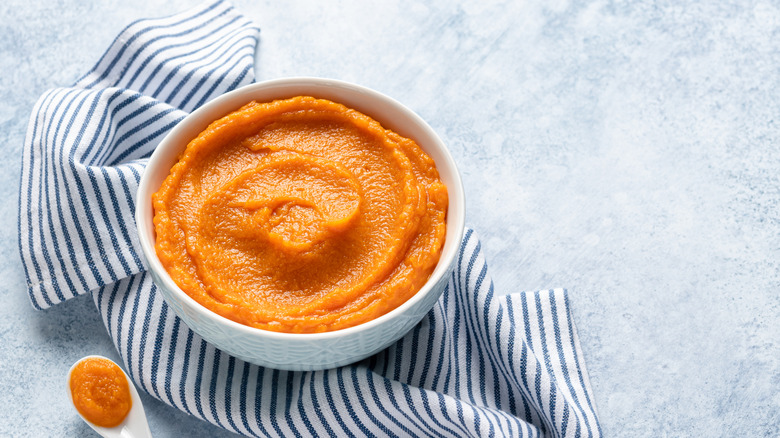
One of my favorite ways to use winter squash is to turn it into a luxurious side dish. Winter squash, especially creamier varieties like butternut, kabocha, buttercup, and hubbard, can be mashed or puréed. The best way to do this is to begin by microwaving the squash to soften it, removing the skin and seeds, and cutting the flesh into chunks. These can be boiled in water until tender. Once drained, the squash can be handled the way you would mashed potatoes. They can be pulverized with a potato masher, though an immersion blender, like the MegaWise Pro, will produce smoother and creamier results.
As with mashed potatoes, there are a number of ingredients that can instantly enhance a winter squash purée. Among these are different types of dairy, including brown butter, goat cheese or boursin, Greek yogurt, and heavy cream. Other fantastic add-ins include apple butter, maple syrup, and honey, which help to amplify the inherent sweetness of the squash. Lastly, lean on umami-rich ingredients for a sweet and savory spin, with ingredients like miso, bacon grease, and aged cheeses. These should be used sparingly, however, so that they do not overwhelm the flavor of the squash.
6. Roast it to amplify nutty flavor
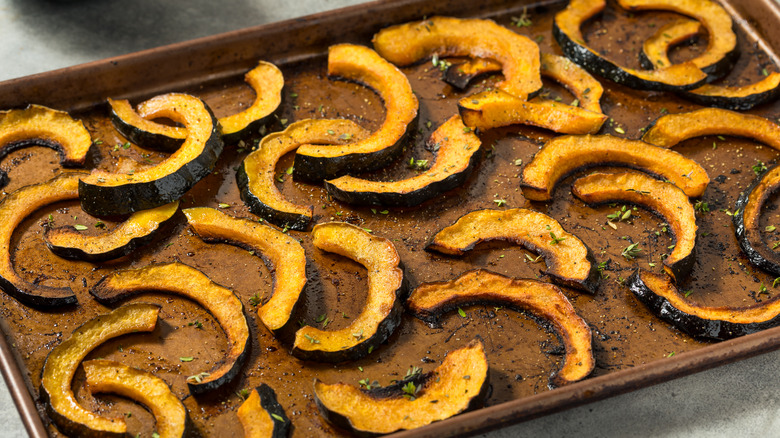
Another fantastic way of preparing winter squash is to roast it. Roasting squash accomplishes a couple of different things. First, it enhances the texture of the squash, giving it a crisp exterior and a creamy interior, which produces an exceptionally satiating mouthfeel. Secondly, and perhaps more importantly, the natural sugars within the squash will begin to caramelize, and the Maillard reaction will transform the flavor, lending deep toasty notes that are simultaneously savory and sweet.
To roast winter squash, you can either leave them in halves with the skin on or slice them into wedges. Alternatively, microwave them to soften the skin, peel, and cube them. Place the squash on a baking sheet and drizzle with olive oil. Season with salt, pepper, and any spices you prefer. I happen to enjoy savory spices over sweeter ones, but it depends on how you intend to serve them and what they will accompany. I often add smoked paprika, garlic powder, and herbes de Provence.
Leftover roasted squash can be repurposed in myriad ways. It can be added to soups and stews, quiches and frittatas, or transformed into fritters or savory pancakes. Additionally, it can serve as the base for a vegetarian lasagna, an alternative to tomato sauce for pizza, or transformed into a savory dip similar to hummus.
7. Don't forget the seasonings
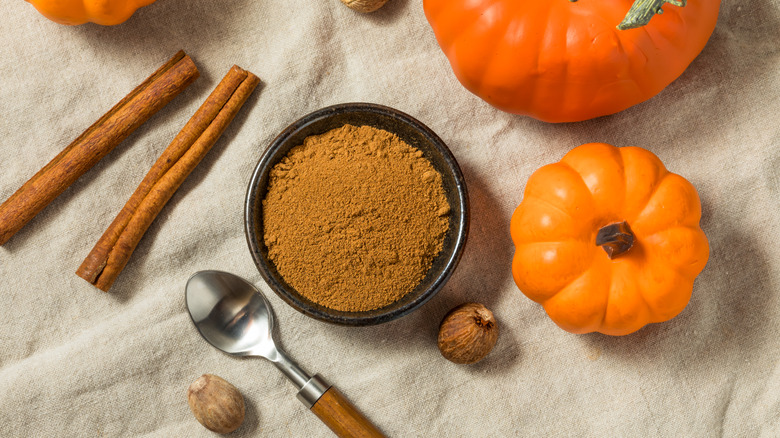
Though we have already spoken a bit about seasonings that pair well with winter squash, this is a topic that deserves more attention, as home cooks tend to be timid with adding herbs and spices to their recipes. This is especially important when it comes to cooking fruits and vegetables. Despite the fact that winter squash has plenty of inherent flavor, it can benefit from some seasoning to help transform it into something truly elegant and sophisticated.
At the very least, squash requires plenty of kosher salt to help enhance it and eliminate any residual moisture as it cooks. That said, finishing salts can also be a great secret weapon when preparing winter squash. Among the best finishing salts to stock your pantry with to transform winter squash are fleur du sel, smoked salt, garlic salt, and chili lime salt.
Another key pairing with winter squash is to add some heat. Because of the inherent sweetness of winter squash, a bit of spice can help tame these natural sugars while giving them some complexity. For example, Alton Brown swears by adding ginger to his butternut squash soup, while I will frequently use smoked paprika or chili powder to elevate it.
8. Purée it into a soup for the ultimate comfort food
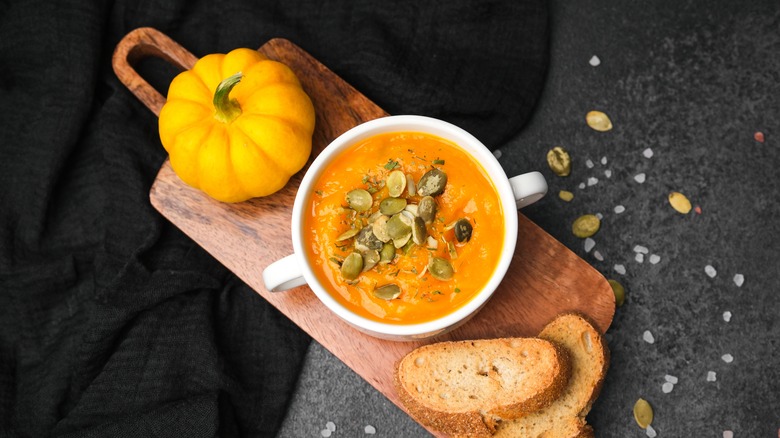
A creamy winter squash soup is one of the truly great comfort foods to eat during the cold winter months. Any type of winter squash can be turned into a soup with the right preparation and tools. The key is to build layers of flavor that can help accentuate the squash. This begins with a simple mirepoix of carrots, celery, and onions, followed by seasonings and the proper cooking liquids. I generally deglaze the pan with white wine before adding a hearty stock or broth to simmer the whole thing.
While you can use one type of squash, it can be fun to switch things up and use multiple types in concert. Each variety of squash has distinctive flavor notes that can help enhance the complexity of the soup while improving the overall texture. For example, butternut squash lends inherent nuttiness and a creamy quality, acorn squash has a buttery taste and mouthfeel, and pumpkin lends earthiness that can increase the savoriness of squash soup.
Though I like to use an immersion blender to purée a creamy winter squash soup, you can also do so using a high-speed blender à la Ina Garten. Some of the best blenders have versatile speed control and can handle larger capacities, including the Ninja Professional Blender and the BLACK+DECKER Countertop Blender. Just be sure to cool the soup slightly before transferring it to the blender to prevent the potential for a nasty burn.
9. Stuff it for a quick side dish

A simple, yet elegant side dish to serve when entertaining is a stuffed winter squash. While acorn squash is a great option because each half is an almost individual-sized portion, other varieties can work, including spaghetti, butternut, delicata, kabocha, and honeynut. The biggest consideration when stuffing squash is how to prepare them and what to put in them.
Before stuffing a winter squash, it is important to parbake it to help it soften until it is just fork-tender. Once this has been accomplished, the squash is ready for stuffing. When it comes to stuffing options for winter squash, the possibilities are virtually endless. Common fillings include grains, like rice, quinoa, barley, or couscous. These are often paired with some kind of ground meat, nuts, or vegetables.
When considering stuffings for winter squash, I pay special attention to mixing up the texture. Adding ingredients that are chewy, crunchy, and crispy will help to create a more satiating experience. I often incorporate these into toppings, using ingredients like nuts, bread crumbs, cheese, and crushed crackers or cereal. As these bake, they form a crust atop the baked squash, which not only adds texture but helps to insulate the filling, keeping the squash moist and allowing it to stay tender.
10. Swap it for spaghetti
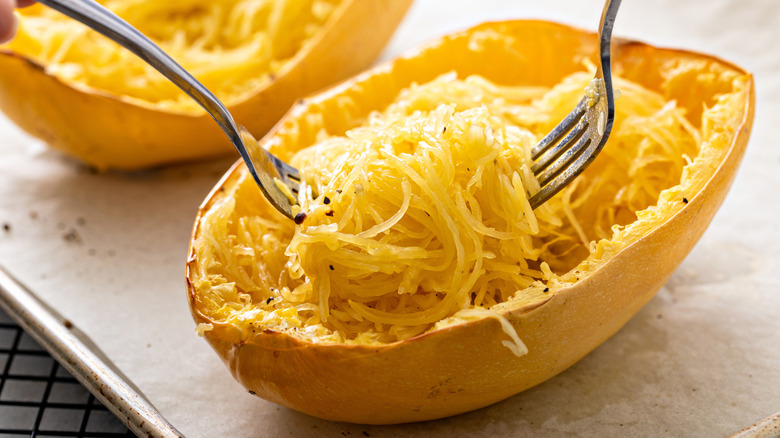
While there are many ingredients out there aspiring to be something they are not (I'm looking at you, cauliflower), when it comes to spaghetti squash, it can actually suffice as a pretty convincing stand-in to pasta in many cases. Not only does spaghetti squash develop a long, noodle-like texture when properly cooked, but it is incredibly versatile, having the capacity to absorb the flavors of virtually any ingredient with which it is prepared.
There are a number of ways to cook spaghetti squash to achieve that noodle-like texture. Spaghetti squash can be microwaved, baked, roasted, steamed, or even placed in an Instant Pot for quicker results. Once tender, the squash can be scraped using a fork to release its spaghetti-like flesh.
Though a simple tomato sauce is always a good option for spaghetti squash, I tend to lean on bolder flavors to help elevate it and give it a more robust taste. Try pairing spaghetti squash with a meat or mushroom-based sauce for a savory spin. It can also be transformed into a dessert by twice baking it using sweet components, like brown sugar, ricotta cheese, and a touch of honey or maple syrup.