

7 Rules White House Chefs Have To Strictly Follow When Serving The President
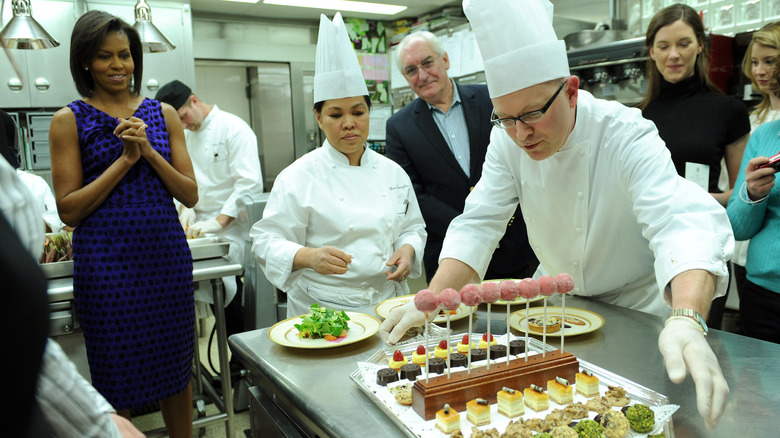
Government employees are said to serve at the pleasure of the president, and this, of course, includes the chefs who serve his food. Working in the White House kitchen may sound glamorous, but carrying heavy pots, sweating over sweltering stovetops, and the never-ending prep are the same everywhere. The fancy part is eating the food, and White House chefs don't make the State Dinner guest list.
Cooking for the leader of the free world is a hefty responsibility, and it's not for everyone. The job is all-consuming — excuse the bad pun. There's a lot to keep in mind, and the stakes are always high. For example, no matter how weird or extreme, White House chefs need to be aware of Presidential food foibles — like eating well-done steak or their favorite sandwiches. They need to keep track of First Family food allergies, not to mention the long list of potential food faux pas involved with serving foreign dignitaries or cranky domestic politicians. If that list isn't stressful enough, consider the ramifications of accidentally giving the President food poisoning.
The job of White House chef is about cooking well, sure, but there's far more to it. Even to get an interview, a chef needs a top security clearance. So, yes, it must be very cool to have "White House" embroidered on your chef's coat, but it's a whole lot of work.
1. White House chefs need to be able to work around the clock
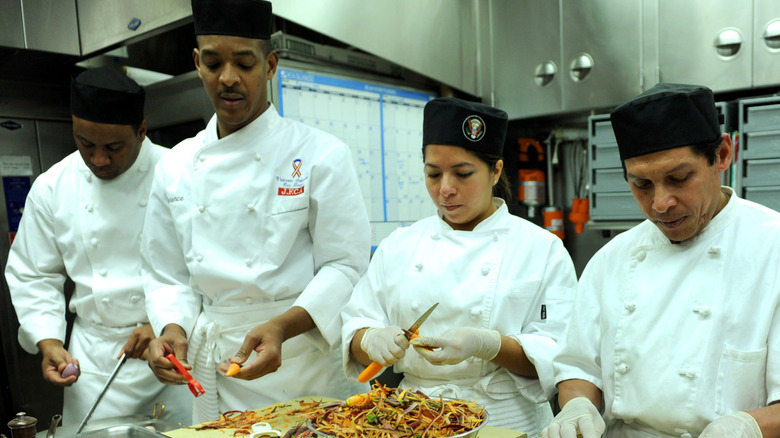
If the President is in residence, so is the White House chef. The job of POTUS is round-the-clock, and if he wants a midnight snack, someone needs to be available to make it for him, although former White House chef Walter Scheib claimed that neither President Clinton nor George W. Bush were demanding in that way. Former White House executive pastry chef Bill Yosses explained to HuffPost: "In theory, we were working 24/7. There could be a national emergency and the people involved have to get up at 3 a.m. and handle a crisis. The crises happened, but they weren't hungry." Just in case, chefs keep the First Family's pantry fully stocked with things they like. The job isn't to be a celebrity chef. It's to work quietly in the background to keep the president and his family happy, comfortable, and well-fed.
Chef Yosses described the demands of the job, saying, "It's like being a hotel chef, a private chef and a restaurant chef all in one. You're cooking breakfast, lunch and dinner for a private family. You could be doing a fine dining tasting menu with 5-6 courses, or you might have so many people coming through it's like being a banquet chef in a hotel." For all that work, Mental Floss reports that the salary is between $80,000 and $100,000, and there is no overtime pay.
2. They have to cater to the president's specific food whims
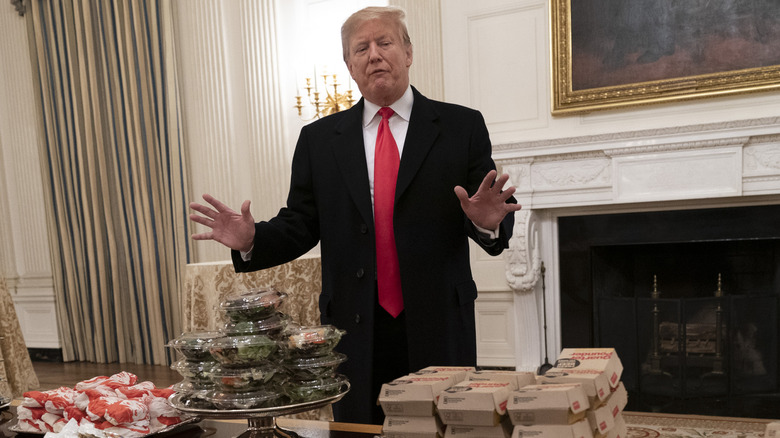
A White House chef may have a Michelin star, but when President Clinton asks for Coca-Cola salad, they'd better break out the Jell-O. A big part of the job is being a private chef to a very powerful client, and what that client wants — or doesn't want — is kitchen gospel. Take President George H.W. Bush, for instance. At a 1990 press conference, he famously declared: "I do not like broccoli, and I haven't liked it since I was a little kid and my mother made me eat it," (via YouTube). When he became the most powerful man on the planet, Bush banned the offending vegetable from the White House.
Dwight D. Eisenhower insisted on having his favorite food: prune whip. While Richard Nixon ate cottage cheese even though he couldn't stand it. He solved the problem by slathering it with ketchup, likely canceling out any health benefits in the process, but making the dairy industry happy. Nixon also liked his wife Pat's meat loaf, so the chef made sure to have it on the menu once a month. The Carters, in good Southern tradition, made grits a staple, while Ronald Reagan loved monkey bread. Finally, according to an interview with former White House Chef Walter Scheib: "President [George W.] Bush liked things simple. No soup, salad, greens or 'wet fish,' such as poached. If it wasn't baked or fried, he wasn't interested," (via The New York Times). That can't have been easy.
3. Chefs need to obtain a very high security clearance
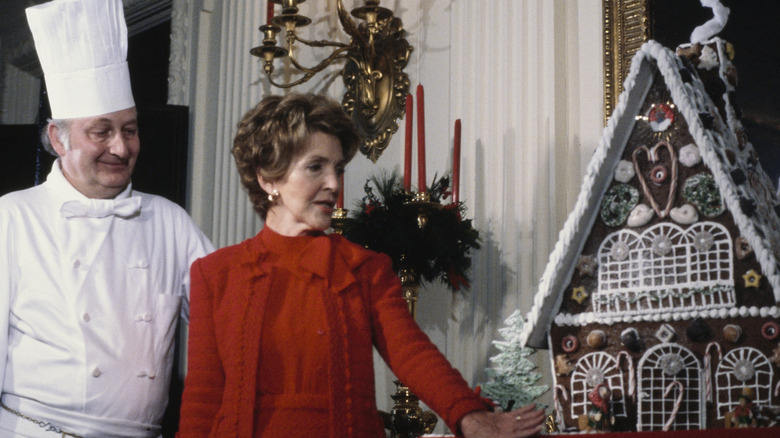
Working in the White House means there's always the possibility of seeing or overhearing something else of a highly sensitive nature. A White House chef needs to be discreet and trustworthy. These qualities are so important that a candidate is required to keep things close to the vest even if they're just being considered for the job.
Obviously, a White House chef doesn't need the same security clearance as someone sitting in the Situation Room discussing, well, anything that's discussed in there. White House chefs are vetted and assigned a special clearance called "Top Security Presidential Proximity," and the way it's done is pretty interesting. All chefs and cooks in the White House are required to apply to the United States Navy as an executive culinary specialist. They are then subjected to military-grade background checks; their financial, criminal, mental, and physical health histories are just part of the process. Once accepted, they are members of the armed services. This protects the First Family, of course, but it also helps out in the busy kitchen, because it means chefs aren't constantly being shadowed by service agents as they try to keep the sauce from breaking. If you've ever worked in a professional kitchen, you know how gnarly that could get.
4. They have to keep track of strict budgets
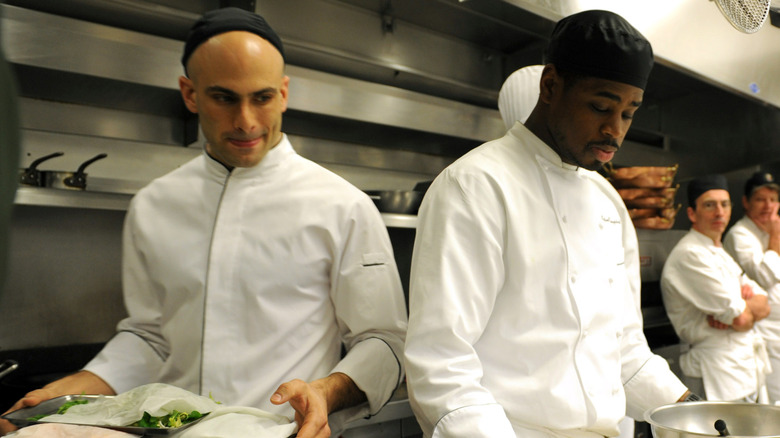
It would make sense to assume that, since the President is serving us, the people, we would pay the First Family's food bills, but not so. There are actually two separate White House kitchen budgets. Official functions like state dinners or meals for the Cabinet are taxpayer-funded, but family meals are deemed personal expenses. The First Family doesn't buy or cook their own food, but they do foot the bill, which is sent over monthly. Even former First Lady Michele Obama didn't know this before moving into the Residence. In a 2018 appearance on Jimmy Kimmel Live, she said: "They let you get whatever you want. Like if you say you want some exotic fruit — 'Yes, ma'am, we'll get that right away.' And then you get the bill," (via YouTube). The chefs, though, are paid by the government.
What happens if the First Family doesn't pay that bill on time? We'll never know, because one of the strictest rules in the White House kitchen is secrecy.
5. Chefs are meant to follow the direction of the First Spouse
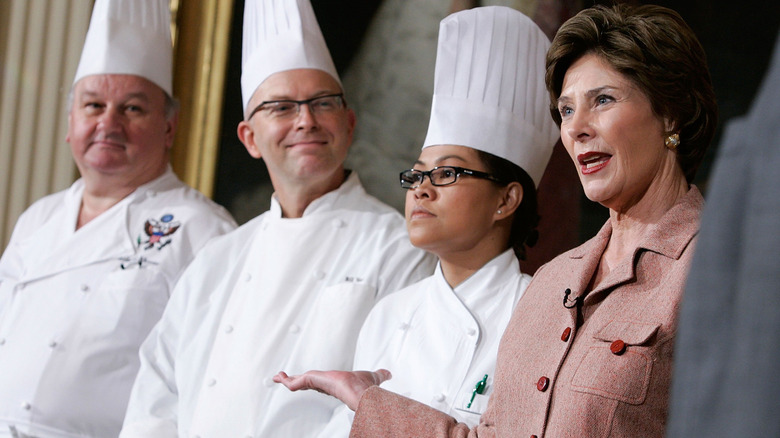
The President may sit in the Oval Office, but some areas of the White House are the First Spouse's domain, including everything that happens in the kitchen. Is this a throwback to traditional gender roles? Perhaps. We won't know for sure until we finally elect a female president and see whether or not the First Gentleman takes over the oven mitts. Not unlike the Cabinet, there can be a change in executive chef when a new administration comes in. This doesn't always happen, though. In fact, there have been 11 presidents since First Lady Jacqueline Kennedy created the position of White House Executive Chef, but only 7 chefs in all that time.
Many First Ladies put their stamp on White House dining. Laura Bush was from Austin, Texas, where Whole Foods began, and she brought her preference for organic foods to the White House. Michele Obama took the idea even further, creating the White House Kitchen Garden, and Chef Sam Kass cooked with produce grown there. Mrs. Bush was one FLOTUS who fired the previous White House chef, but the circumstances are murky. In a very diplomatic statement to SFGate, Clinton White House chef Walter Scheib walked a fine line, saying: "We've been trying to find a way to satisfy the first lady's stylistic requirements, and it has been difficult. Basically, I was not successful in my attempt." Add to that Bush 43's lengthy will-not-eat list, and you know there's a good story there.
6. They have to carefully screen food for safety
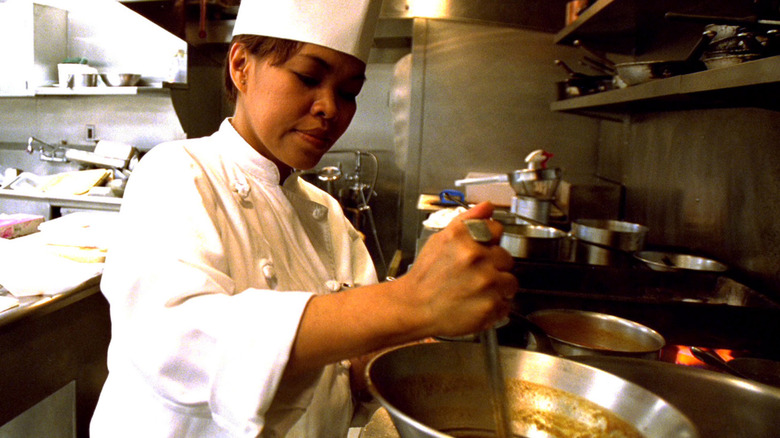
The days of the royal food taster are long past, but that doesn't mean a White House chef can just grab a handful of almonds from the bulk bin and hand them to POTUS for movie night. During the Obama administration, there was a story out there that the president refused to eat a lobster salad at a Republican-sponsored lunch because his taster wasn't there. President Obama did occasionally have a so-called food 'screener' while traveling out of the country, but the lobster story was fake news.
Obviously, there's tight security around the president's food. Chef Scheib explained it to the Washingtonian, saying: "Nothing gets to the President that hasn't fallen under somebody's jurisdiction. If the President is just grabbing a pretzel randomly at the table, it's been screened." The difference between 'screening' and 'tasting' must be another White House secret, and Scheib wasn't telling.
In addition, every ingredient that goes into a presidential dish is scrutinized before it ever hits the kitchen. The grocery shopping is done by the Presidential Food Service, who shop at different stores and at varying times during the week, so as not to fall into a predictable routine. Former White House chef Martin Mongiello told People, "We do have shoppers that would go out clandestine every day." And just to be extra safe, whenever the shoppers go out, the Secret Service goes with them.
7. Chefs have to follow extensive rules for state dinners
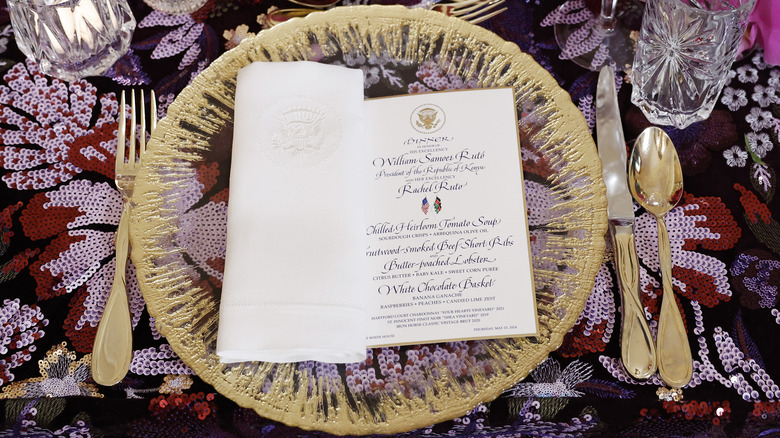
State Dinners are choreographed like a military operation. These elaborate affairs are limited to 55 minutes from first course to last, but that hour is preceded by at least six months of planning. Chef Yosses described the behind-the-scenes crush of producing a State Dinner to HuffPost, saying: "The dinners are a lot of pressure ― we can have 10 people doing one little course. We'd rather have too many people than not enough. We have a flood of people come in to make sure every avenue is taken care of."
When it comes to the menu, it's designed by committee. There are usually three savory courses followed by dessert. The First Lady, along with the Office of Protocol and various others, run point on menu selection, which tends to celebrate American cuisine with a nod to the culture and cuisine of the visiting dignitary. Chef Andre Rush told People, "There are some foods that could be insulting to other cultures. If they have a sacred animal that they cherish, you have to be cognizant of that."
As for the wine, in an NBC interview, Washington Post columnist Roxanne Roberts said, "When Jacqueline Kennedy was first lady, they served French wines, because those were the best wines. And then American vineyards were like, hey, wait a minute, what about us? Since then, pretty much, it's all been the very best that America has to offer."