

9 Best Vodka Brands For Martini Lovers, According To Experts
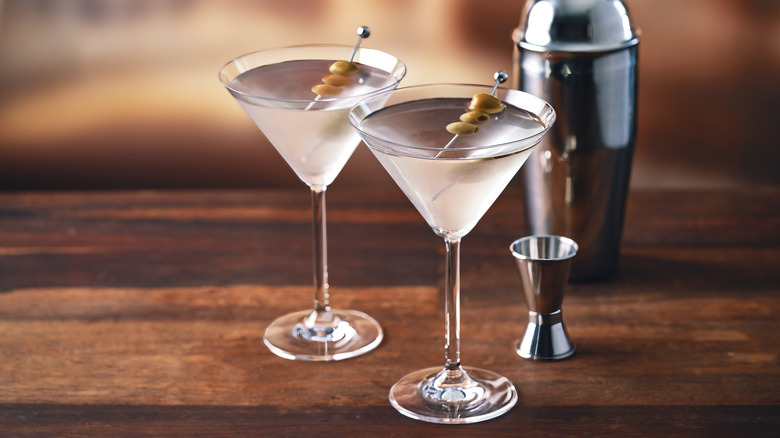
Television has often impacted the cocktails we know and enjoy. From the iconic shots of raspberry-colored cosmopolitans shared around bar tables in "Sex and the City" to scenes depicting the making of a White Russian in "The Big Lebowski," the imagery surrounding these drinks plays a role in our mindset when we order them.
Perhaps no drink is more infamous than the martini, a cocktail that is instantly associated with class, swagger, and high-end placation. There's no doubt that the James Bond movies have played a role in this reputation, along with countless other films and shows that depict the drink in its various forms, such as "The Great Gatsby," "A Simple Favor," and "The Queen's Gambit." It should come as no surprise that we give this cocktail white-collar associations, given that in all these films it's often held in the hands of suit-clad patrons attending opulent parties.
This imagery has not only made the drink popular, but it's also made common the understanding that everyone takes their martini a bit differently — and that's alright. If you prefer a gin martini, check out our list of favorite bottles to use, but if you're here for the vodka, you're in the right place. We've consulted with three cocktail experts to discuss their favorite brands to use in a cool vodka martini, so next time you're looking for a bottle to bring home or trying to order at a bar, you won't be left in the dark. From affordable and easily accessible to unique and niche, here are nine expert-recommended vodka brands for any occasion.
1. Belvedere
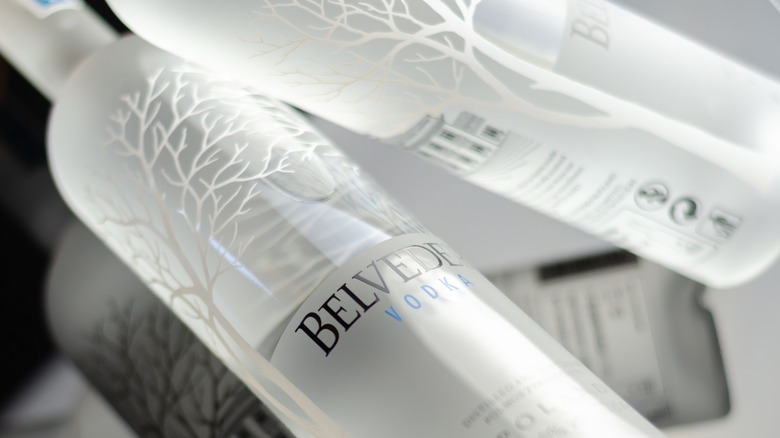
When it comes to choosing vodka over gin, the main factor really comes down to flavor. Gin is full of aromatics, which can be off-putting to some people, whereas vodka can provide a smoother, less invasive flavor. Jackie Ocampo is the founder of The Office Hour, a mixology workshop planner. She's made her fair share of martinis and typically prefers vodka for "its neutral, smoother taste."
Now, not everyone wants their drink to taste like nothing, which is why choosing the right vodka for you is so important. Belvedere is a Polish rye vodka that's crafted in a distillery that opened in 1910 — it's backed by hundreds of years of Polish vodka history that really comes through in the flavor. Ocampo says this is the vodka she reaches for when she's looking for a bit more character: "I really like Belvedere, it's smooth as well but with a hint of its rye flavor."
It won't have the aromatics of gin, but if you want to enjoy a martini that isn't totally devoid of nuance, then Belvedere is a prime choice. Che McKissic, Complex Director of Food & Beverage at the AC Hotel and Residence Inn by Marriott Reston, has been working in hospitality and beverage for over a decade, and adds, "Belvedere is always a good option since it has that slightly peppery finish."
2. Kirkland Vodka
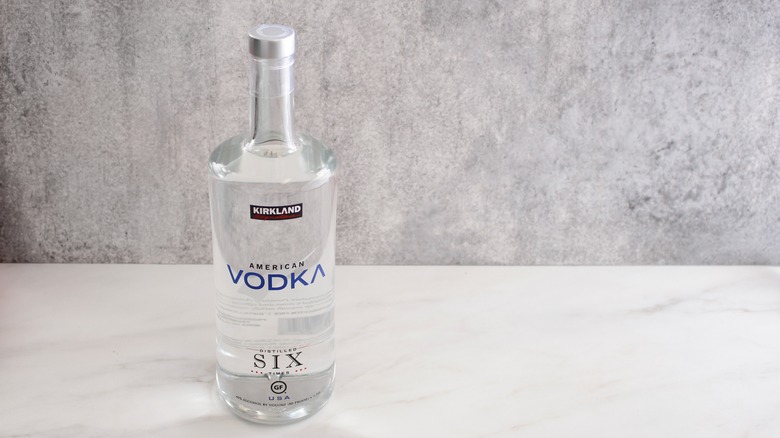
Although martinis are associated with wealth and money, you don't necessarily need an expensive vodka to make the drink enjoyable. Che McKissic, Complex Director of Food & Beverage at the AC Hotel and Residence Inn by Marriott Reston, has over a decade of experience in the hospitality and beverage industry. He's made his fair share of martinis, and although he puts more prominent brands on the shelf in his restaurants, it's Kirkland Signature vodka that he uses at home. "It stands up to the high-profile brands, and at that size it will last until the party's over," McKissic says.
There's something to be said for sticking to an affordable, yet still presentable option when hosting at home. There are minor differences between Kirkland Signature's American and French vodkas. If you're looking for a vodka that's affordable but still clean without that lighter-fluid-like burn, this is a fantastic choice.
3. Reyka
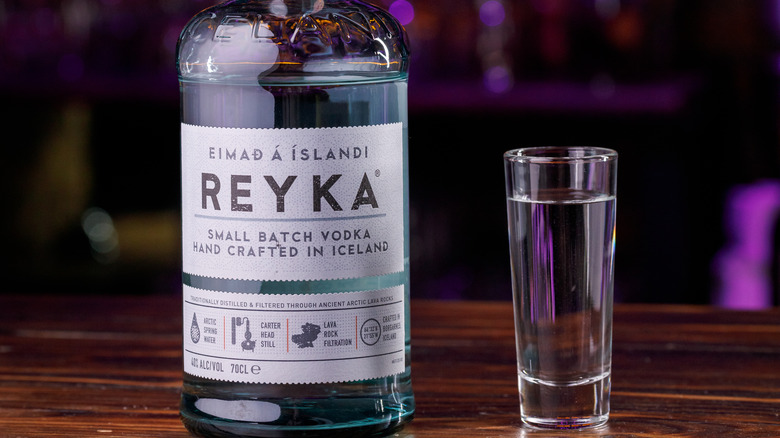
Reyka is a truly unique vodka. Made in Iceland, it uses water from glacial springs and is distilled in a Carter-Head still, a relatively rare copper contraption typically used to make gin. The copper of the still and the fact that Reyka is made in such small batches make for an incredibly pure, smooth product.
Andrew Grenville is a bartender at one of Seattle's best restaurants, Canlis. When he's making a vodka martini, there's a specific goal in mind. "Vodka, in my book, is all about cleanliness and purity. You want something smooth, clean, and crisp," Grenville shares — and Reyka's whole process is focused on precisely that.
There are many red flags at a cocktail bar, but having some unique, lesser-known spirit options on the shelf is a definite green flag that shows you it has a bartender who cares. Plus, if you're looking to inspire conversation about options available for your home bar cart, this Icelandic vodka is undoubtedly a topic. For something a little more artisanal, Grenville says Reyka is delicious and "a step above."
4. Chopin
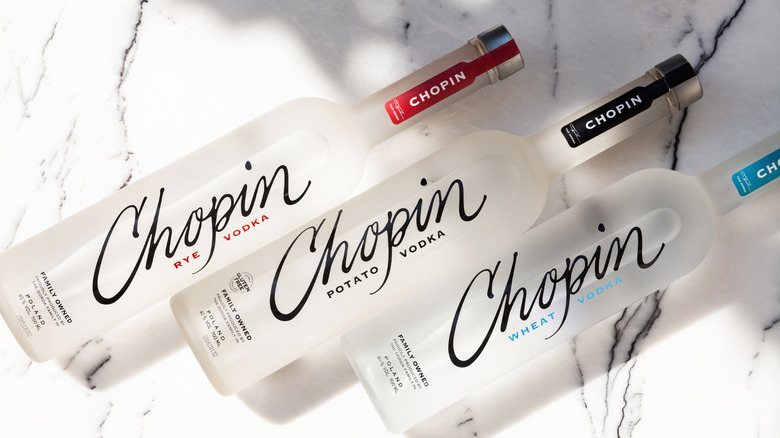
Vodka can be made from just about anything that contains starch and sugar, and the raw material used will dictate the baseline flavor. Jackie Ocampo of The Office Hour says, "I tend to gravitate toward potato-based vodkas for their creamier, fuller body, compared to corn-based ones that are a little bit more crisp." Chopin is one of her favorites, and when it comes to more affordable options, you really can't argue with the price.
At $24.99 a bottle, Chopin has a great taste to go with its affordable price tag. The flavor is on the earthier side with a full-bodied mouthfeel and smooth finish. When it comes to crafting the drink, Ocampo prefers her martini light on the vermouth. "I use just a spritz of dry vermouth, which I add directly to the glass and toss out the excess," she explains. You can, of course, experiment with your quantities and see what flavor you prefer — cocktails can always be personalized to the person ordering or making them.
For garnish, consider something that complements the earthiness of Chopin's potato base. An olive has just the right level of brininess, which Ocampo finds balances out the drink perfectly. If you want to take it up a notch, you can opt for various stuffed olives. "If I'm making a dirty martini, I still love using a goat cheese–stuffed olive for that savory touch," Ocampo adds. "Even though they're not as trendy as they were 10-15 years ago, I still find them to be a treat."
5. Haku
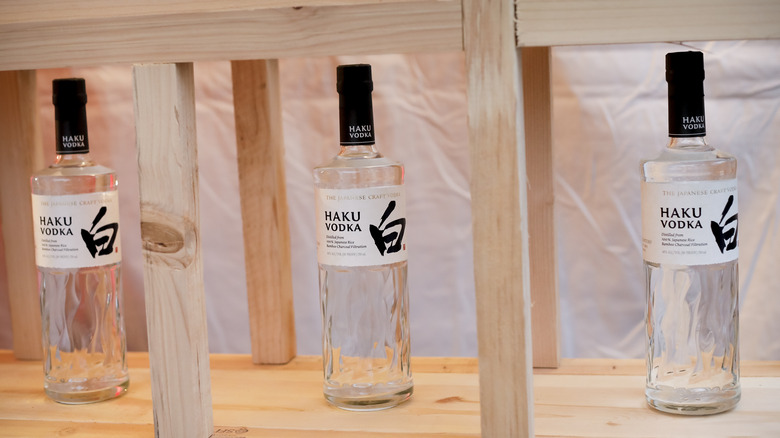
While the typical base ingredient for vodka starts with potatoes, corn, rye, or some variety of wheat, you'll also encounter brands that opt for more niche ingredients. In the case of Haku, a Japanese vodka, the process begins with white rice.
Haku is made by House of Suntory, a brand best known for its craft whiskeys, which work wonderfully in cocktails. It's also one of Andrew Grenville's go-tos in the upscale bar he tends. As the ingredient used to make the spirit plays a role in its final taste, rice makes this one of the more interesting vodkas to use in a martini. "I get almost a green tea kind of essence hidden in it," Grenville says. This spirit will have more of a soft aroma than other vodkas, and the overall flavor is a bit sweeter than a rye or corn-based drink.
The beauty of making a martini with different vodkas is the ability to customize each one to its flavor profile. You can experiment with different vermouths and garnishes, such as the lemon twist suggested on the Haku website. "There [are] no wrong answers," Grenville encourages, "Get out there, try other things, see what works for you."
6. Blue Ice
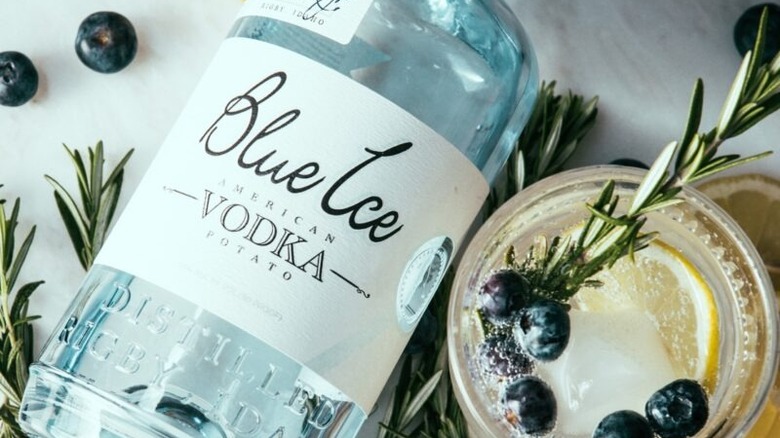
When it comes to a potato base, trust a vodka sourced from the largest growing area in the United States: Idaho. Blue Ice is a very reasonably priced product at about $20 a bottle, and it's one of Jackie Ocampo's favorite brands to use when she's leading mixology workshops.
The flavor profile is clean and smooth, with that characteristically creamy mouthfeel that comes from using potatoes. It's a fantastic bargain and a great spirit to use in your next martini.
There are countless ways to customize your martini, from Vespers to Gibsons to making it dirty. Part of the constant debate is whether to stir or shake; shaking a gin martini to some is practically a crime, as diluting the gin with ice particles detracts from its delicate flavor. But vodka is a bit more subjective. Che McKissic advises, "If you have a vodka with some extra kick to it, shaking it vigorously over ice could help soften the burn when the martini is served." At the end of the day, how you prepare your drink is really up to you. "It doesn't matter what anyone says or thinks, enjoy your drinks how you like to enjoy them!" McKissic adds.
7. Kastra Elion

The uniqueness of vodka made with different products adds a lot of individuality to each brand, a characteristic that perhaps the clear liquor doesn't receive enough credit for when it's most commonly drowned out by the potent flavors of cranberry juice or Red Bull. The only requirement for a spirit to be labeled vodka is a minimum ABV of 95%; beyond that, there's plenty of room for customization.
Kástra Elión took the possibility and ran with it, crafting its Greek-made vodka with a combination of grains and hand-picked Greek olives. As you can imagine, this makes for a spirit that is magic when used in a dirty martini and is one of Andrew Grenville's favorite recommendations at Canlis' bar in Seattle. "[It] has a wonderful, almost olive oil kind of texture to it," he venerates.
The stunning white and blue bottles can be purchased for $54.99 — hardly an unreasonable price for a special-occasion bottle. If you're a dirty-martini lover, this is just the right spirit to blend vodka, vermouth, and that rich, salty olive flavor. You can even purchase whole Greek cocktail olives and brine from the Kástra Elión website to make your drink expert-level and bar-worthy.
8. Deep Eddy
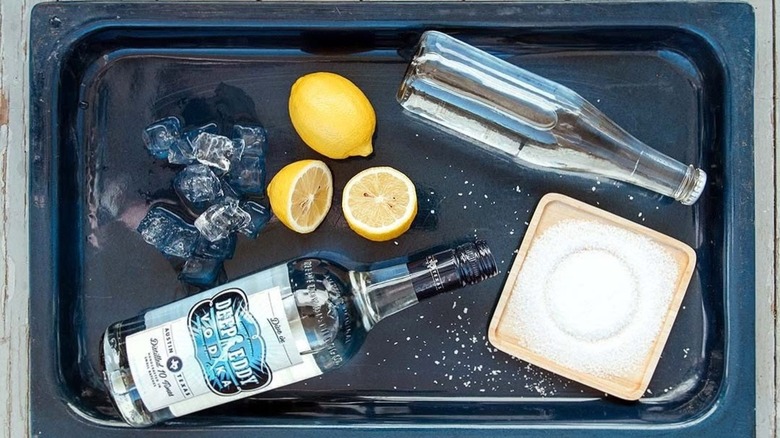
Corn is one of the more common base products used to make vodka. It's packed with starch and sugar, making it a practical ingredient that results in a slightly sweet finish. For corn-based vodkas, Jackie Ocampo of The Office Hour has another excellent, affordable recommendation: Deep Eddy. "It's smooth with a slight sweetness," she says. "Very clean and crisp."
Deep Eddy comes in a variety of juicy flavors, like peach or sweet tea (though you'll want the original for your martini). When it comes to garnish, an olive will always do the trick (especially with a dirty martini, which uses olive brine as a third ingredient). But a corn-based vodka is perhaps better complemented by a garnish that reflects its subtle sweetness. "I'll switch to a lime twist or a pearl," Ocampo advises. "They help balance the natural sweetness and add a refreshing quality."
9. Svedka
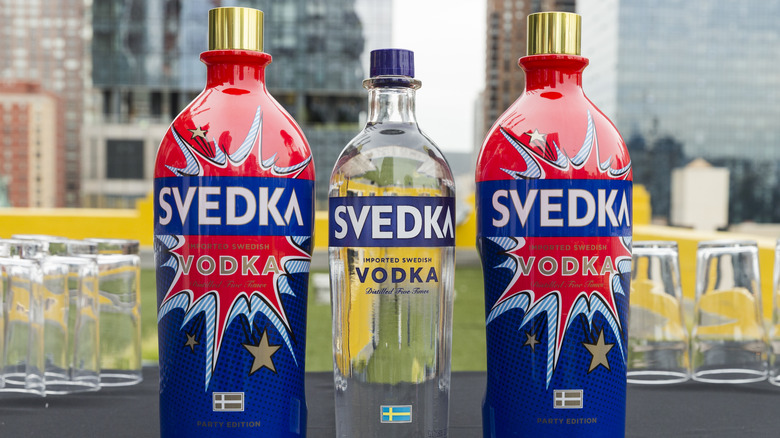
It's sometimes hard to tell with liquor which bottle is marked up to appear high-quality versus the lower-priced bottles that may spend less on marketing but actually have a pretty great product. Svedka is certainly in the latter category. It may not have the best marketing, and the neon colors of the bottles may be a bit abrasive to the eyes, but inside you'll find a surprisingly clean vodka made from a Swedish winter wheat base.
The use of wheat as a base for vodka is known to produce a crisp, light spirit with little burn and a watery forefront — although it still has to hit that 95% ABV requirement. Andrew Grenville, who's been serving and bartending at Canlis in Seattle for over 6 years, advises that you really don't need to buy the most expensive or niche vodkas to make a great martini. "I don't think you need to break the bank if you're not an aficionado," he says, noting that Svedka from Sweden is very reasonable, and usually less than $20 a bottle.