

10 Types Of Coffee Beans, Explained
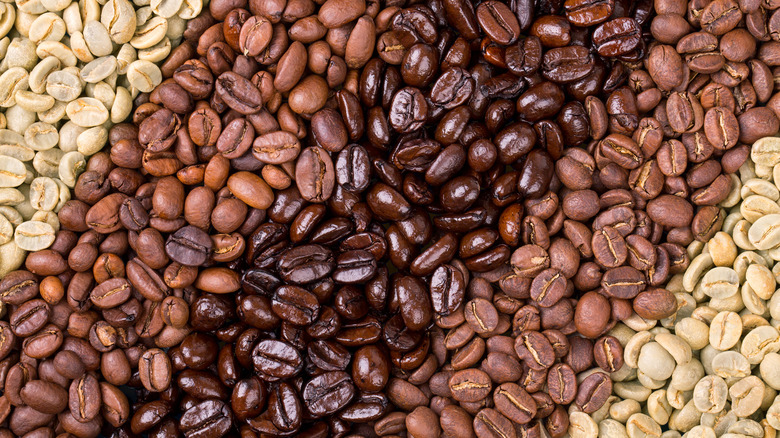
Coffee is one of the world's most beloved beverages, but behind that familiar cup lies a rich tapestry of plant varieties, histories, and flavors. While there are hundreds of coffee species, there are generally considered to be four main types of coffee beans that dominate global production: Arabica, Robusta, Liberica, and Excelsa. Each of these species brings its own unique characteristics, from growing conditions and resilience to flavor profiles and caffeine content. Understanding these differences can help you decipher coffee bean labels and tell you whether a bag of coffee beans is worthy buying.
Arabica is the most widely cultivated and consumed, prized for its smoothness, complex flavors, and bright acidity. Robusta is hardier, higher in caffeine, and more bitter, making it common in instant coffee, espresso blends, and areas where pests and heat challenge Arabica cultivation. Liberica is a rarer species with enormous beans and trees, offering bold, woody, and fruity flavors that stand out in both traditional and specialty coffee markets. Excelsa shares traits with Liberica but adds its own unique tart, fruity, and sometimes wine-like notes, making it a sought-after choice for blends or specialty cups.
Beyond these four main species, coffee enthusiasts also celebrate important varieties and cultivars, such as Typica, Bourbon, Gesha, Kona, and Blue Mountain, each with distinct flavors, histories, and growing requirements. In this guide, we'll break down each of the main types, highlight key varieties, and explore what makes them unique. Whether you're a casual coffee drinker or a budding home roaster, understanding the origins and characteristics of different coffee beans can transform the way you experience every cup.
Arabica
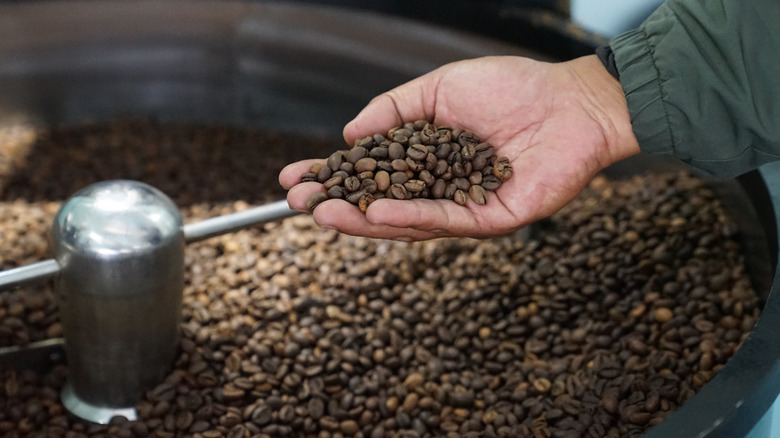
Arabica, scientifically known as Coffea arabica, is the world's most beloved and popular coffee bean. Making up around 60% of global coffee production, according to the Food and Agriculture Organization of the United Nations, it dominates both specialty cafes and your everyday morning brew. Its appeal and popularity are primarily because of its flavor, as Arabica coffee tends to be smoother, sweeter, and more nuanced than other strains, especially its main competitor, robusta. While Robusta is usually more bitter and has a higher caffeine content, Arabica is known for a broader, more robust flavor profile.
Arabica began in Ethiopia, where it's native and genetically the most diverse. From there, coffee seeds traveled to Yemen, where people first started truly cultivating the plant. Over the centuries, Arabica has spread around the globe, largely carried on by trade routes. Two major lineages, Typica and Bourbon, have formed the genetic backbone of most of the Arabica grown today. However, there are dozens of Arabica varieties, each adapted to grow in different climates and regions. As a result, there is also a huge range of flavors, from fruity to floral to chocolaty, depending on where and how the coffee is grown and processed.
The one downside to Arabica is that it's a little harder to grow. It's specific in its needs –- it prefers higher elevations and steady rainfall and is also more vulnerable to disease than other types of coffee. Even so, its rich, varied taste and complexity make it the top choice for both coffee roasters and coffee drinkers.
Typica
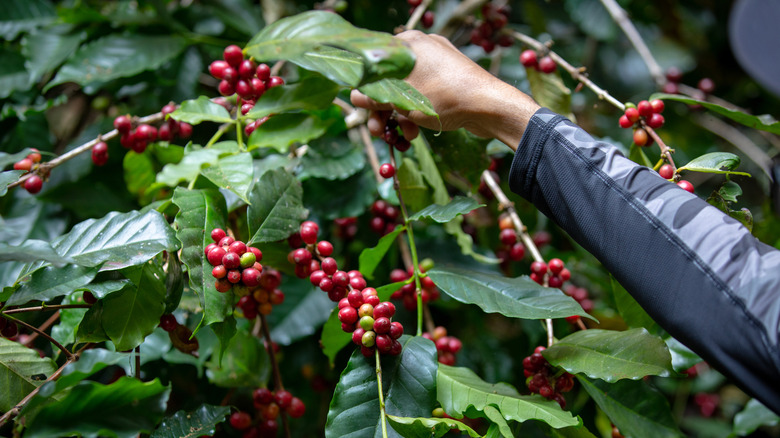
Typica is one of the foundational Arabica varieties and is hugely important both historically and genetically. The lineage of Typica coffee beans goes back to those Arabica plants that originated in Ethiopia and were later brought to Yemen. From Yemen, Typica spread via Dutch trade routes to Java in the 17th century and eventually made its way to the Americas and the Caribbean. For a long time, Typica was one of the dominant Arabica varieties planted in the Americas.
What makes Typica so cherished is its quality. Well-grown Typica coffees are often described as clean, bright, and elegant. They often provide floral aromatics, like jasmine or orange blossom, a refined sweetness, like honey or brown sugar, and a light to medium body. The acidity is often crisp and citric, sometimes with fruity notes.
Typica plants are known for being pretty, tall, with wide-spread branches. But despite their beauty, they're tough to farm. They take up a lot of space but yield less fruit than many modern hybrids and are exceptionally vulnerable to diseases like coffee leaf rust. Because of the low yield and disease issues, many farmers have switched to more resilient options. However, Typica's influence persists, with many of today's specialty coffee cultivars descending from Typica. Though not as popular as it once was, Typica remains a well-liked variety in the world of specialty coffee.
Java
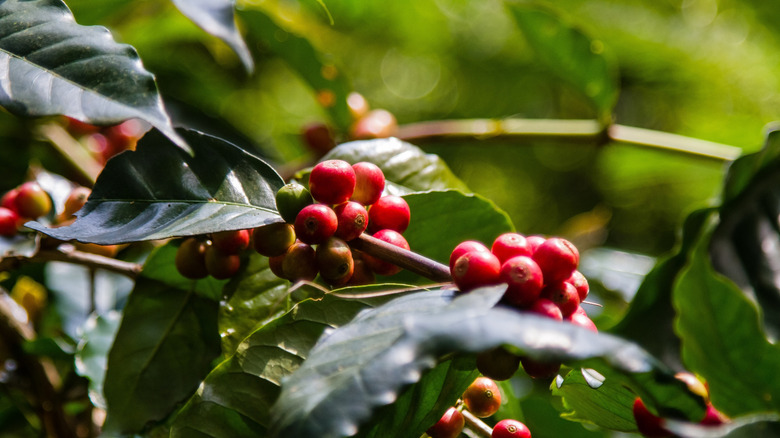
The Java coffee cultivar has a storied place in Arabica's history. It's often linked to Typica, although its roots are a bit more complex; genetically, Java traces back to an Ethiopian landrace rather than a pure Typica line. Dutch researcher P.J.S. Cramer selected a few mother trees from Ethiopia in the early 20th century, then shipped their seeds to Java, an Island in Indonesia. Here, they showed resilience against leaf rust, and further research showed resilience against coffee berry disease, something that has made this cultivar especially valuable. From Java, this cultivar was eventually brought to neighboring islands, such as Timor, and areas in eastern Africa, like Cameroon.
In terms of flavor, traditional Java coffees tend to have a rustic, smooth profile, often with an herbal or earthy aftertaste. Some producers will intentionally age their Java beans, sometimes for years, as this mellows the acidity and develops richer, almost woody or spiced notes.
The island of Java has grown coffee for centuries, has been a significant part of producing prized coffee, and continues to produce a number of coffee cultivars. In fact, at one time, Java became so synonymous with coffee that "java" became a slang word for coffee itself (and also the namesake for the Java programming language). It also spawned other names for coffee. Because of Java's historical importance, genetic resilience, and distinctive profile, this cultivar remains an influential part of coffee's global story.
Kona
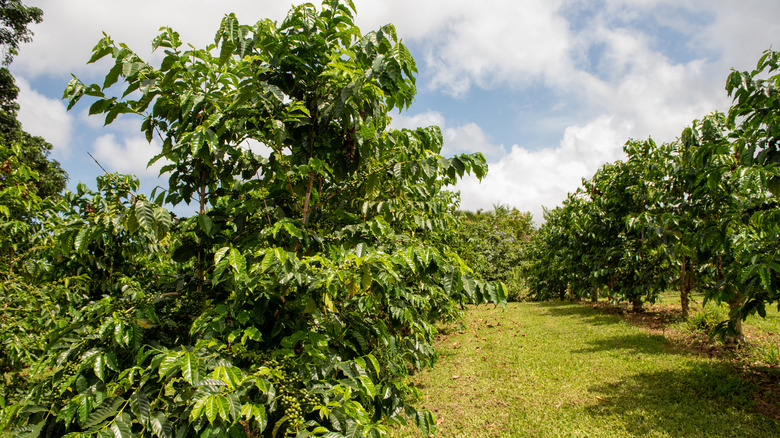
Kona coffee is one of the most iconic and exclusive Arabica cultivars. It's also one of the few truly American-grown coffees, grown on the Big Island of Hawai'i. Specifically, Kona comes from the slopes of Hualālai and Mauna Loa in the Kona districts, where volcanic soils, gentle rainfall, warm mornings, and stable night temperatures create ideal growing conditions.
These plants aren't native to Hawai'i. Cuttings from Brazil first arrived in 1825 and were planted in Honolulu's Mānoa Valley, where a coffee orchard was established. Three years later, Reverend Samuel Ruggles took some of those cuttings to plant on South Kona. Over time, Guatemalan Typica trees replaced those original Brazilian ones, and today, more than 90% of Kona coffee is "Kona Typica," according to the Hawai'i Coffee Industry. However, some Kona varieties from the Brazilian trees still exist and are referred to as "Old Hawaiian."
Kona coffee is known for being smooth, mild, and balanced. It often holds notes of chocolate or nuts and has a gentle acidity and a sweet, clean finish. You may also see it described as having floral or tropical fruit undertones, thanks, in part, to its Typica-based genetics and careful cultivation. Because Kona coffee is grown in a very small, specific area, it's quite rare. That rarity contributes to its premium reputation (and often premium price). The U.S. government even regulates the "Kona" label, so only beans from that specific region can legally bear the Kona name.
Jamaican Blue Mountain
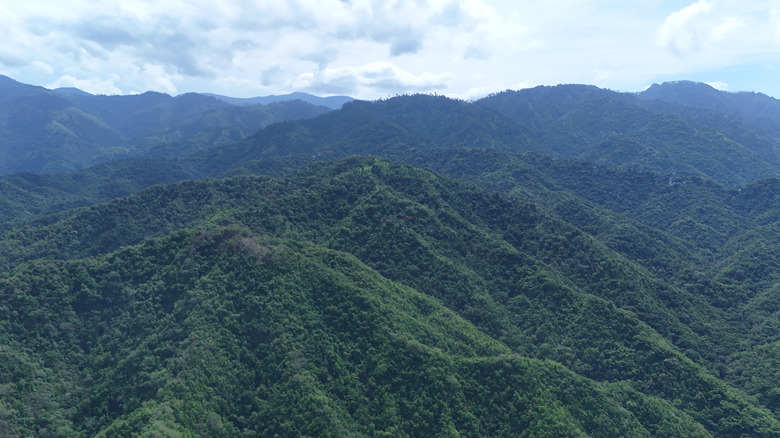
Jamaican Blue Mountain coffee is the stuff of legends. It's grown in a very specific, misty, high-altitude region in Jamaica and is known for its extraordinary smoothness, balance, and prestige. Farmers pick this Arabica cultivar by hand, and the cherries are usually wet-processed, meaning the beans are washed to remove the excess outer material before the beans are dried. This process helps preserve the coffee's clarity and brightness.
The history of coffee in Jamaica began in 1728 when the governor of Martinique gifted a coffee plant to his counterpart in Jamaica. The plant was derived from Ethiopian Typica stock, and over time, cultivation concentrated in the island's Blue Mountains. The Blue Mountains are a rugged region northeast of Kingston. The coffee grown here is highly regulated; only coffee from very specific altitudes and geographic zones can carry the "Jamaica Blue Mountain" name. The cool, foggy mountain climate, rich volcanic soil, and steady rainfall slow the beans' maturation, which contributes to their refined flavor. If you think that climate sounds similar to where Kona is grown, you're not wrong -– Blue Mountain coffee can also be grown in Hawai'i.
Blue Mountain coffee is famous for its mild acidity, silky body, and clean finish. Many people note floral or chocolate notes, but above all, there's a lack of bitterness that makes it feel very smooth and refined. Because production is limited and rigorously controlled, like with Kona, it's become one of the most expensive and exclusive coffees on the planet.
Bourbon
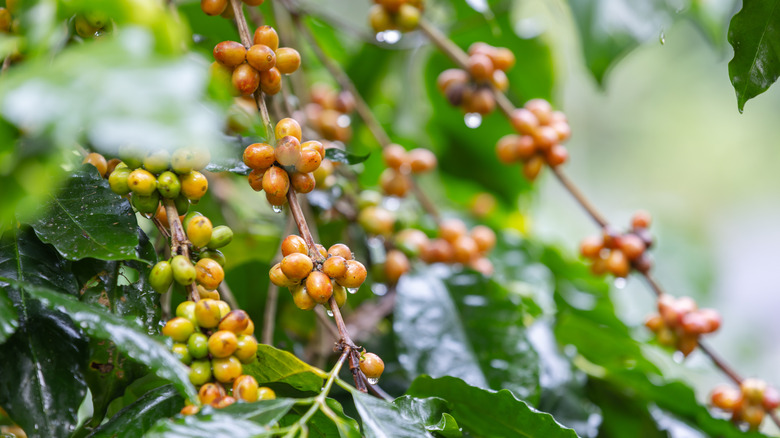
Alongside Typica, the other primary historically and genetically significant Arabica variety is Bourbon. It's believed to have first originated in Yemen. In the early 1700s it was brought to Île Bourbon (now Réunion) in the Indian Ocean, hence its name. From there, the Bourbon variety spread to Central and South America and later to East Asia.
Compared to Typica, Bourbon offers a higher yield, but it's still a relatively low-yield variety compared to modern hybrids. The trees tend to be tall, with round cherries and broader leaves than those of Typica. Unfortunately, Bourbon is also susceptible to pests and diseases, like coffee leaf rust. Like Typica, Bourbon has several sub-varieties, including Kent, Caturra, Tekisic, Villa Sarchi, and many more. These cultivars come from all over the world, including Central and South America, Africa, and even Australia.
Bourbon is highly prized for its well-balanced, sweet cup. Depending on where it's grown, you might taste notes of chocolate, fruit, floral undertones, or even caramel. It's a cultivar that shows why Arabica is so celebrated; it's complex, smooth, and refined. Despite its vulnerabilities, Bourbon remains a staple in specialty coffee because of this quality. While disease-resistant hybrids are becoming more common, Bourbon's genetic legacy lives on in many newer varieties.
Ethiopian landrace
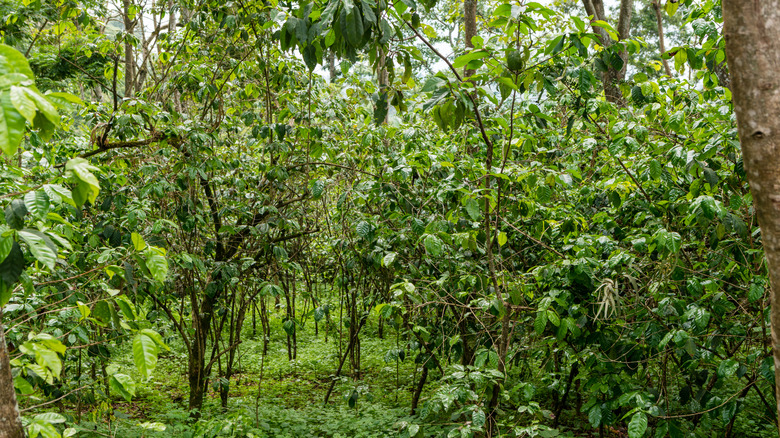
In the context of coffee, Ethiopian landrace refers to wild or semi-wild Arabica varieties that have evolved naturally in Ethiopia's forests and mountain regions over centuries. Unlike more standard cultivars like Typica and Bourbon, landraces haven't been selectively bred or commercialized on a large scale. Instead, they're locally adapted, genetically diverse, and often unnamed.
Because Ethiopia is coffee's ancestral homeland, these landrace varieties represent the largest store of Arabica genetic diversity in the world. Typica and Bourbon, on the other hand, come from more constrained genetic lines that have been introduced outside of Ethiopia and represent only a fraction of what Ethiopia has to offer.
One of the most famous Ethiopian landrace varieties is Gesha (also spelled Geisha). Originally collected in the Gori Gesha forest in southwestern Ethiopia, Geisha later gained popularity through its cultivation in places like Panama. Its cup profile is delicate and tea-like, with floral notes like jasmine, citrus and tropical fruit tones, and a gentle sweetness. Beyond Gesha, there are hundreds, likely thousands, of distinct Ethiopian landrace varieties, many of which have only local or regional names. These cultivars are the genetic soul of Arabica, and their diverse family allows them to be complex, unpredictable, vibrant, and naturally rich.
Robusta
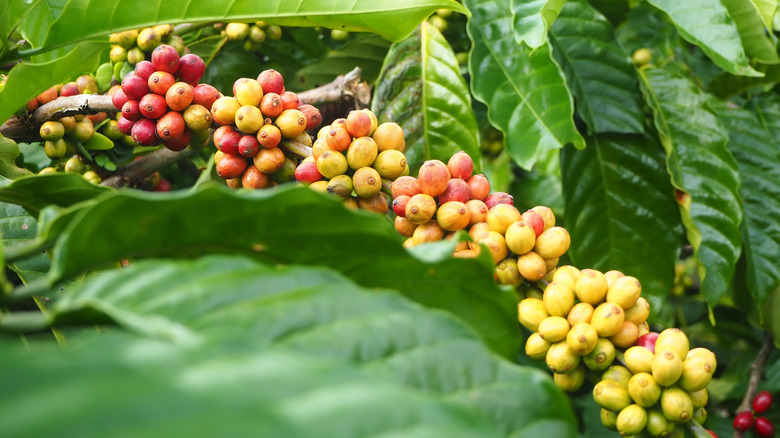
Robusta, or Coffea canephora, is the hardier, more resilient counterpart to Arabica, and the second-most common species of coffee in the world. Native to the forests of Central and Western Africa, Robusta was first described in the late 19th century. It then spread through Southeast Asia, particularly Vietnam and Indonesia, where its disease resistance and high yield made it very attractive to coffee growers. Robusta thrives in the types of environments where Arabica usually struggles, like lower altitudes, higher temperatures, and more humid conditions. Its plants are vigorous, tend to cross-pollinate, and are more resistant to pests and diseases, all traits that make production more reliable and cost-effective.
There are other differences between the two as well. Robusta generally has more caffeine, about twice as much, and a bolder, more bitter flavor. It also has less acidity and more earthy or woody tones, rather than the fruity or floral complexity of Arabica. Because of its robustness and lower cost, Robusta is commonly used in instant coffees, commercial blends, and espresso to provide body and crema. However, when roasted well, good-quality Robusta can deliver surprisingly rich flavors, including chocolate, nuts, and even floral or fruity undertones.
While not as popular as Arabica, Robusta plays a critical role in global coffee production. It's cheaper to grow, more resilient to climate stress and disease, and helps stabilize the supply chain. As demand for coffee increases, Robusta's importance will likely continue to increase along with it.
Liberica
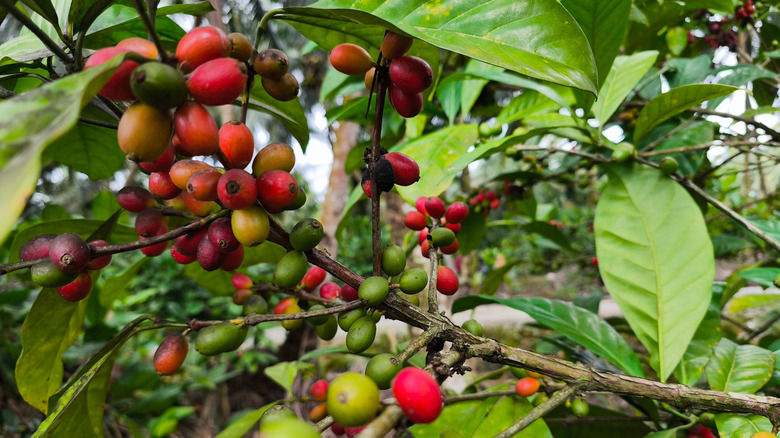
Liberica coffee (Coffea liberica) is one of the lesser-known but fascinating commercial species, making up only about 1%-2% of global coffee production, according to Coffee-Dictionary.com. Liberica is native to West and Central Africa, from Liberia to Uganda and Angola. Later, it was introduced to Southeast Asia, particularly the Philippines, Malaysia, and Indonesia. Unlike Arabica and Robusta, Liberica trees are massive, around 55 feet (17 meters) tall, and their cherries, leaves, and beans are among the largest in the coffee world. Liberica thrives in low to mid-altitude tropical zones with high heat and humidity, showing strong resistance to pests and diseases.
Liberica's cup is bold, deep, and complex. Typical tasting notes include floral and fruity aromas, plus woody, smoky, and nutty undertones. It tends to have a full, syrupy body and relatively low acidity. Some roasts can even bring out nuances of dark chocolate or spices.
Because of its resilience, most significantly heat- and disease-tolerance, and genetic uniqueness, Liberica is increasingly interesting to specialty coffee producers, especially in a changing climate. And while harvest and processing are more labor-intensive thanks to the height and big fruit, its unusual cup profile has earned it a small but devoted following.
Excelsa
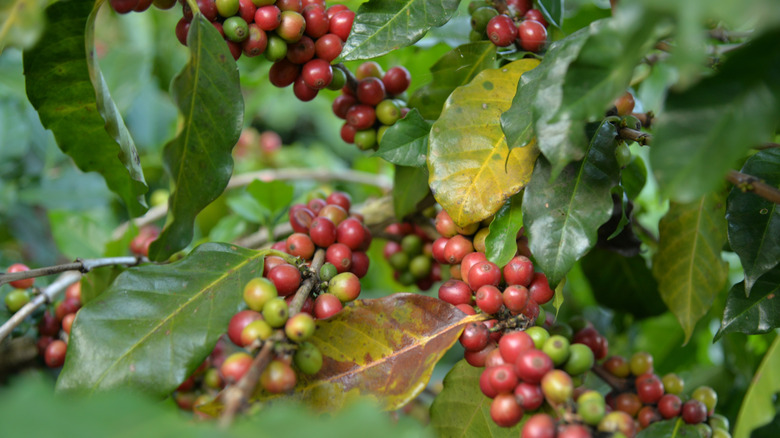
Considered the fourth and final type of coffee bean, Excelsa coffee, often labeled Coffea excelsa, but more precisely classified as Coffea liberica var. Dewevrei, is something of a hidden gem in the coffee world. It was first discovered in Central Africa, around Lake Chad, in the early 1900s. For a long time, botanists considered it a distinct species, but in 2006, it was reclassified as a variety of Liberica.
The trees of the Excelsa plants are also tall, though not quite as tall as pure Liberica trees. They thrive in warm, tropical climates and are remarkably resilient. Their resistance to pests, drought, and diseases makes them an ideal choice for regions where coffee growth is more challenging. Today, Excelsa is mostly grown in Southeast Asia, primarily Vietnam, the Philippines, and Indonesia, as well as parts of India, though there are some wild populations that remain in Africa.
What makes Excelsa particularly interesting is its flavor. It sits somewhere between a light and dark roast, bringing a tarty, fruity acidity with floral, woody, and even spiced notes. You may also notice smoky or wine‑like undertones and a syrupy body that gives it richness without feeling overly heavy. It also has a relatively low caffeine content, certainly lower than Robusta's and even lower than Arabica's. Thanks to its resilience and unique taste, Excelsa has started to gain attention in the specialty coffee world as a climate-resilient alternative. While it remains rare, making up only a small fraction of global production, its complexity makes it extremely valuable in blends or as a specialty single-origin bean.