

10 Old-School Cookie Flavors Your Grandma Grew Up On
The weather outside starts getting colder and Black Friday shopping lists get longer, signaling that the best time of the year is fast approaching: cookie-baking season. Whether you're baking them as gifts for friends and family or to win some award at your office's annual cookie swap, there is a lot to love about these little, sweet bites. One of my favorite parts about baking cookies during the holiday season is that the old recipe books tend to make their annual trip from the back of the cabinet onto the countertop, acting as a conduit for stories of Christmases and holidays from long ago and a starting point for new memories made around the mixing bowl. While these vintage cookie recipes may not appear in more contemporary recipe books or be featured at local bakeries, whether it's the holiday season or not, they are still delicious.
If your older relative is visiting you this holiday season, whip out one of these old-school recipes and watch your kitchen transform into one from the past. While these grandma-approved cookie recipes may bring back childhood memories, rest assured that they can always be given new life with the help of modern ingredients and fun recipe modifications.
Thumbprint cookies
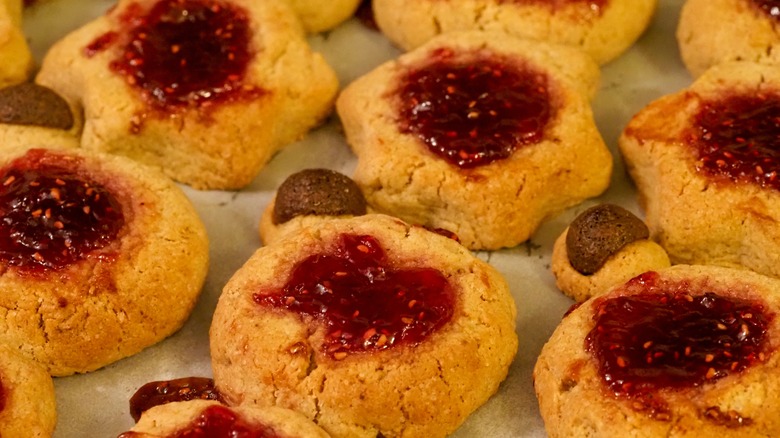
Thumbprint cookies are easily one of the most underrated types out there (not to mention, one of the most beginner-friendly cookies to bake). They also may just happen to be your grandma's childhood favorite. These cookies are typically round in shape with a thumbprint-sized depression in the middle of them. The thumbprint can be filled with an array of flavors, but most classic recipes will use some sort of jam or preserve. The cookie base is buttery and deliciously soft, yet slightly grainy — making it the perfect complement to the filling.
There are many countries that lay claim to the original thumbprint cookie recipe. For one, the cookies were published in Magdalena Dobromila Rettigová's 1826 Czech text "A Household Cookery Book" as důlkové koláčky ("dimple cookies"). The original recipe used both clarified and softened butter for the cookie base, though modern iterations call for a simple sugar cookie dough. There's also a similar cookie from Sweden called hallongrotta, or "raspberry cave," which can be traced back to the 1800s. The butter for these recipes was creamed with sugar until fluffy and light, and the pockets were often adorned with its namesake raspberry jam.
These simple cookies are a favorite among sweets lovers, and you may see some recipes crop up nowadays, especially during the holiday season. Our pro tip? Always add the jam to the center of the cookies before baking them, as this allows the flavor to caramelize just slightly and better fuse with the cookie. We love serving them with coffee, tea, or hot chocolate.
Peanut butter blossoms
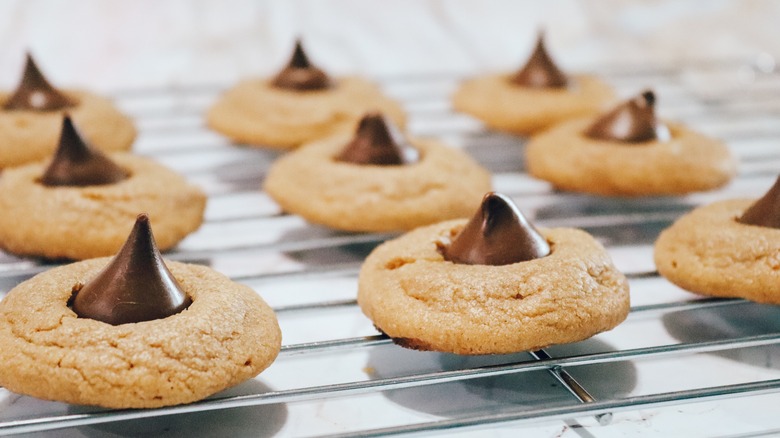
Peanut butter blossoms are much older than many of the other cookie recipes on this list, though they are still certainly a "Boomer cookie." They are easily identifiable by their towering Hershey's Kiss center. This candy addition was first introduced in 1907, but the cookie didn't come until much later. In fact, the history of the peanut butter blossom actually intertwines closely with another brand: Pillsbury. The cookies were first entered in a Pillsbury Bake-Off Contest by Freda Smith in 1957 as chocolate candy-topped peanut butter cookies (what a mouthful!). Betty Crocker featured the recipe in cookbooks for years after that, most notably in 2008, and these cookies have remained a timeless staple for audiences everywhere.
This cookie offers an excellent fusion of a soft, plush buttery cookie flavored with just enough peanut butter and the soft, melty Hershey's Kiss on top. I have fond memories as a child baking peanut butter blossoms with my family, including my grandmas and aunts — especially unwrapping the candies intently and sneaking a few Kisses for myself when they weren't looking. Considering the number of Hershey's Kiss flavors that have been introduced since Smith graced us with this recipe, you have no shortage of different peanut butter blossom iterations to try.
Benne wafers
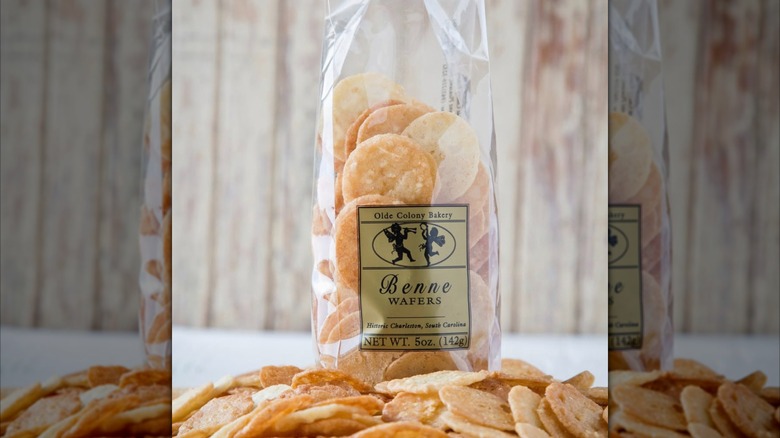
One of our favorite things about this list of grandma-approved cookies is that there are preparations for grandmas around the country (and world). Southern grannies may be familiar with benne wafers — nutty, sesame cookies that have taken hold in port cities like Charleston. "Benne" is the Bantu word for "sesame," a plant that was brought to the coasts of the Lowcountry by enslaved Africans. Some sources credit the Williams family, owners of Onslow's Candy Store in Charleston, as being the creators and first people to sell wafer cookies made with the seeds, though the rise of traffic to Charleston following the First World War also helped more and more people fall in love with these cookies.
If you don't have a Southern grandma, you may have never been able to try these cookies — though they are worth experimenting with if you are a fan of sweet and savory bakes. They're delectably snappy and light, and their paper-thinness makes them easier to eat.
Kourabiedes
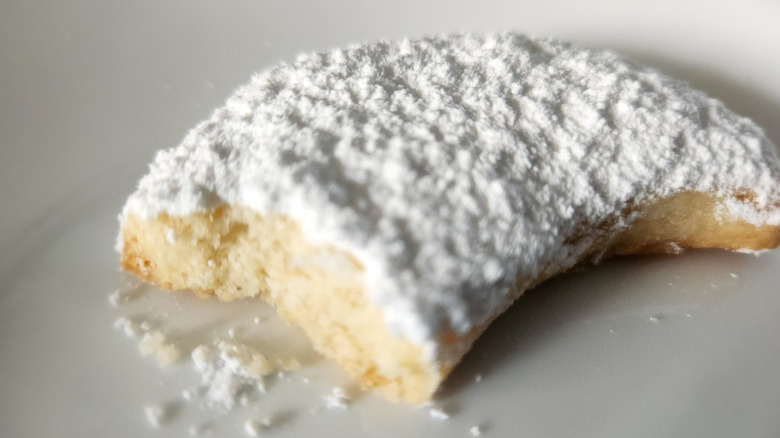
We're on the move from the Lowcountry to Greece. While many of the cookies on this list are popular during the holiday season, kourabiedes — Greek walnut sugar cookies — are also a popular sweet served at Greek weddings. Traditionally, the Christmastime variation comes with whole cloves nestled inside of the cookies to signify the gifts of the Wise Men. However, clove is far from the only flavor used in the recipe; you'll also see them studded with chopped nuts and flavored with fragrant ingredients like orange flower water.
It's difficult to nail down when exactly these cookies made their way across the Atlantic and into American home kitchens. A recipe for them was shared in a 1958 publication of Yankee magazine, during a time when immigrants from countries such as Greece were settling in a foreign land. It would appear that many other cultures also have their own variations of this cookie as well, including Russian tea cakes and Mexican wedding cookies. They're short and buttery and leave a trail of powdered sugar behind with every bite.
Pecan sandies
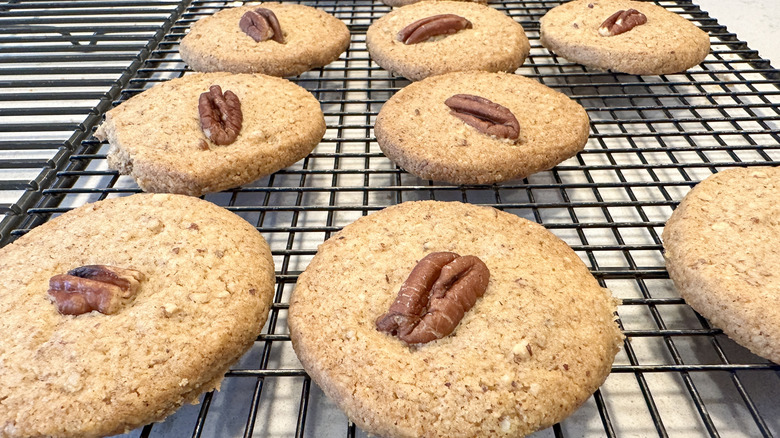
You may only know pecan sandies as the cheap, not-so-great bagged cookies found in vending machines or in grocery stores. But there once was a time when people did, in fact, bake their own pecan sandies — and they were downright delicious.
For the uninitiated, pecan sandies typically feature a shortbread or vanilla sugar cookie base, studded with (and often topped with) pecans. They're short and buttery, and the nutty pecans are the perfect complement to the relatively bland dough. Traditional recipes will require rolling the dough into a log before slicing it into smaller pieces, though some folks will also make drop cookies with the dough or bar-shaped treats, perfect for dipping into a cup of coffee.
Pecan sandies were a cookie that I have memories of making with my parents and grandparents. The cookies have a very classic and basic flavor, and I think that the emphasis on old-reliable recipes is a must for the Boomer generation. Plus, Keebler initially trademarked "Sandies" in 1956 around the same time that many Boomers were growing up. Pecan sandies may not be as punchy and boldly flavored as other cookies, but that shouldn't make them any less beloved.
Lace cookies
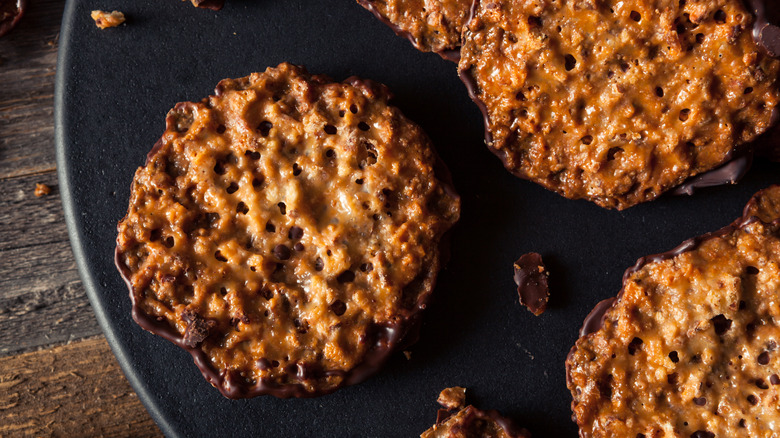
The first time I saw a lace cookie, I thought it was a batch that someone had messed up. They are about as paper-thin as a cookie can get and often go by the name "Florentine" — though "lace" pretty accurately describes their appearance. As their name would suggest, these crispy cookies are the product of Italy. They're prepared by beating a softened butter dough (with a very low ratio of flour) with sugar and other standard cookie ingredients before baking. The softened butter and minimal amount of flour are what causes them to spread so quickly. Traditional Italian recipes are made with regional ingredients like ground almonds and orange, though other regions will incorporate chopped pecans, oatmeal, and even shredded coconut.
Countless home cookbooks have published recipes for lace cookies over the years, and many folks have fond memories of baking these treats with their family. While they are a tricky recipe to get right — especially when you're trying your hardest not to let other types of cookies spread as they bake – the caramelized, toffee-like flavor makes them a must.
Anzac biscuits
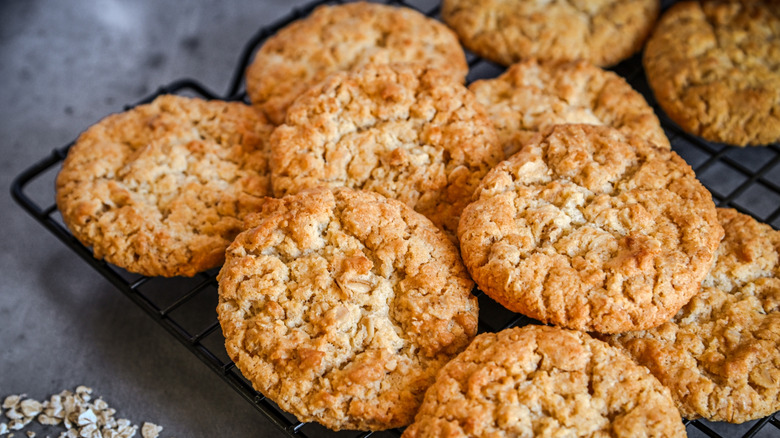
We're taking a big jump across the globe (might need a plane for this one) to Australia and New Zealand for Anzac biscuits. Their name is actually an acronym: Australian and New Zealand Army Corps. It was these individuals who may have received the cookies in care packages sent during World War I — though, some sources say that the cookies were not made until after the war, around 1927. That said, a recipe for the cookie base — a mixture of golden syrup and rolled oats — was first published in 1920. The other flavorful ingredients that make an Anzac biscuit — including coconut — weren't added until later. Though the coconut may have degraded over time, the fact that these biscuits weren't made with eggs made them a more affordable and shelf-stable treat, and their delicious flavor allowed them to be sold en masse as a fundraiser for the war effort.
Anzac biscuits are definitely not as popular in America as they are in their home countries, but some Americans have taken to making them at home — swapping out the golden syrup for a more widely accessible maple syrup alternative. Regardless, they have been a cookie born from thriftiness, as many of the classic Boomer recipes are.
Hermit cookies
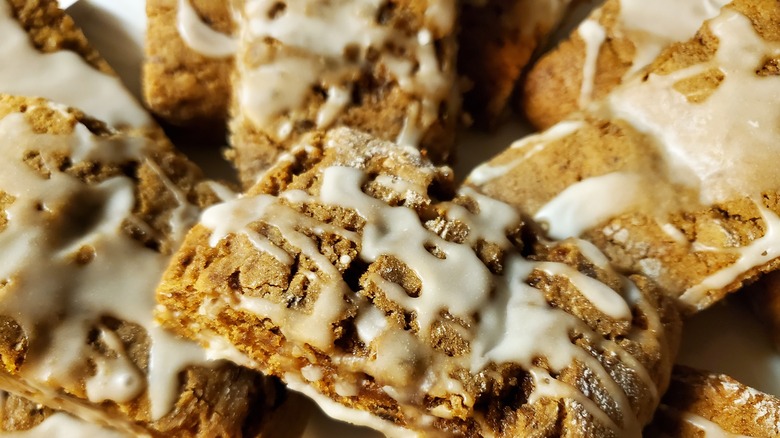
If you rifle through your old family cookbooks, you may come across a recipe for hermit cookies. They're a distinctly New England treat — in Maine specifically — that traces back to the 1800s. The recipes for these cookies were passed down from family to family and occasionally through church and community cookbooks. Every recipe is different. Some will incorporate dates, while others will stick to raisins, currants, cranberries, and nuts. Besides these add-ins, another defining feature of these cookies is that they're spiced with cinnamon, allspice, and cloves. Besides the round cookies, you'll also see a more bar-like form of these cookies crop up, though these are made with molasses so they have a sticky, toffee-like quality to them — kind of like if Boston brown bread were a cookie.
These cookies certainly aren't as popular as other New England and Downeast sweets like whoopie pies, though they are still delicious. If you find a recipe for them, just know that you may have to make some substitutions — like buttermilk for sour milk. Just make sure to pass the recipe down to someone else so they too can enjoy them.
Linzer cookies
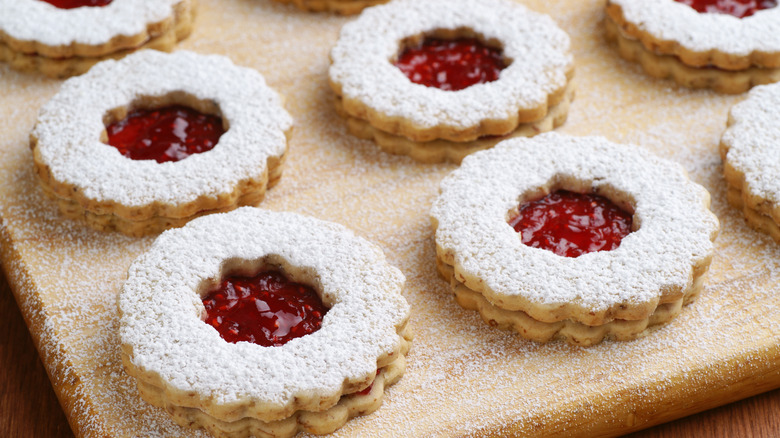
You may not know them by their name, but you have probably seen Linzer cookies before. They're popular ones at cookie swaps (often brought by grandmas, or at least the ones I've had are), but aside from that, they don't crop up all too often. Their name is a nod to their origin: Linz, Austria. They're like the miniature version of the Linzer torte — a pie-like concoction made with a nutty pastry base and sweet jammy filling. As such, the base of the Linzer cookies is often made with almond flour. Their nutty flavor contrasts the buttery, crumbly shortbread well, and draws attention to the sweet yet tart jam left open-faced in the center. Some recipes will fill the center with raspberry or strawberry jam, while others will use curd for a creamier and more decadent twist. The cookies are also often dusted with powdered sugar, which gives them a freshly fallen snow vibe.
Now, if you've eaten a handful of Linzer cookies at family gatherings, you may be scratching your head trying to remember if you could actually taste the almond in the recipe. If you can't recall, you may have had a variation called Jammy Dodgers, a U.K.-based cookie that has a similar ingredient list and shape, sans the nuts.
Kolackys
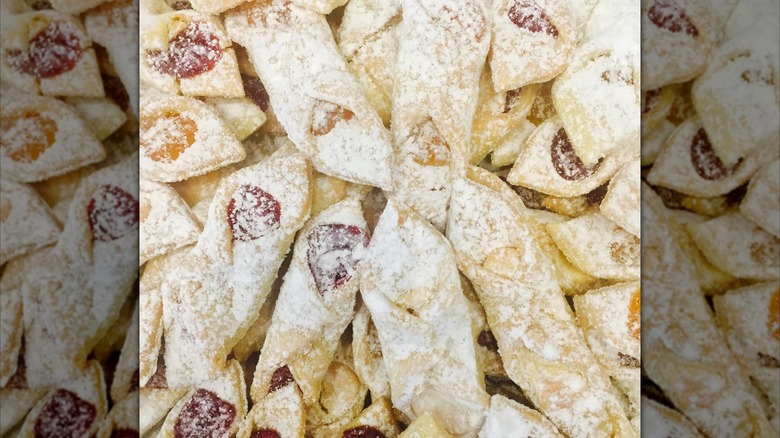
Kolackys are another grandma-approved treat that resembles some of the other jammy sweets on this list. Kolackys are a uniquely shaped treat that is often stuffed with cream cheese and jam or preserves. They have ties specifically to Czech, Polish, and other Central European countries and may be spelled "kolace" or "kolache." Despite the similar spelling, there is a difference between these cookies and Texas kolaches, which are made with a yeasted dough and resemble buns more than cookies (though they are both Czech in origin — I never said this whole cookie ordeal wasn't complicated).
Semantics aside, the kolackys I'm talking about here are made with a piece of dough that's been pinched together in the center. They're almost cylindrical in shape and are made by spooning a log of jam onto a flat, diamond-shaped piece of dough. The middle corners are folded in to give the cookie its unique design. Modern iterations include cream cheese-based doughs (which help keep the dough pliable and easy to mold) and even ones made with softened ice cream. Granted, your grandma's kolackys recipe probably didn't have any of these newfangled ingredients in it, but it was probably just as good.