

18 Types Of Pickles, Explained
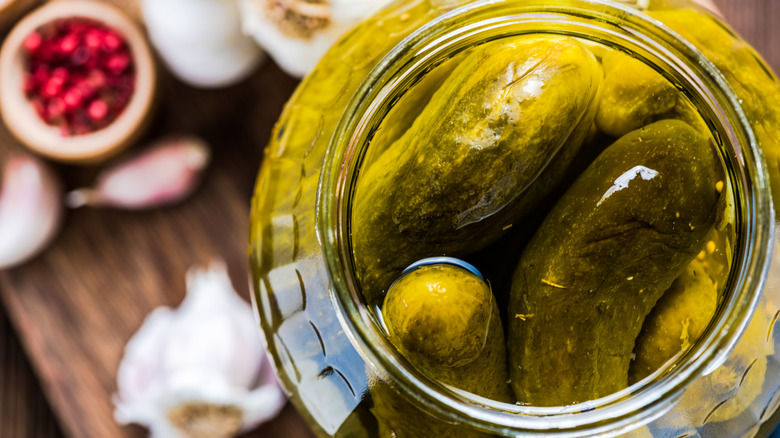
Pickles are having a pop culture moment right now. The proliferation of pickle-flavored things, including pickle milkshakes, pickle sorbet from brands like Salt & Straw, pickle seasoning, and even pickle candles have all hit the market. People can't seem to get enough of pickles, and though it's easy to see why this food is popular today, the truth is that pickles go way back. Preserving fresh produce by shoving it in an acidic and/or salty bath is hardly a novel concept. It's believed that the earliest instance of pickles occurred in India's Tigris River region in 2030 B.C. The word, "pickle," is of European descent, which translates to "salt" and "brine" in German and Dutch. Since their inception, pickles have allowed countless societies around the world to enjoy produce well past the growing season, or whenever the craving for a tart, snappy snack beckons.
All pickle recipes follow a similar scientific process, but there are some key differences that set different varieties apart. This field guide to all things pickle will give you the lay of the land when it comes to this tart, salty, and occasionally sweet food.
1. Bread and butter pickles
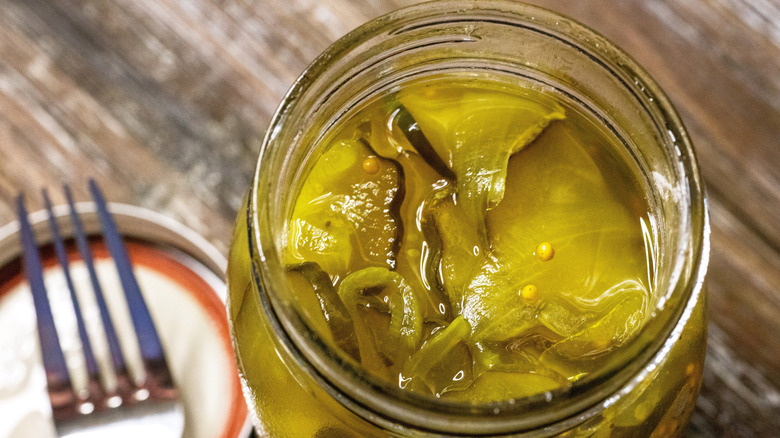
Bread and butter pickles are one of the more unique varieties in that their flavor is both sweet and tart. If you bite into them expecting something salty, you might be barking up the wrong tree (or eating from the wrong pickle jar). Instead, these pickles have a very sweet flavor, thanks to the addition of ingredients like sugar or corn syrup and sweet onions. The brine often features the same ingredients as "normal" pickles — including vinegar, mustard seeds, and salt. As such, you get a perfect medley of sweet and savory, though some folks think that they are a little too sweet.
That being said, their unique profile makes them a popular addition to sandwiches and charcuterie boards. Their unique name is believed to have come from the folks who create them, who traded the pickles for ingredients like bread and butter — though how neat would it be if there was a pickle that tasted like freshly buttered toast?
2. Dill pickles
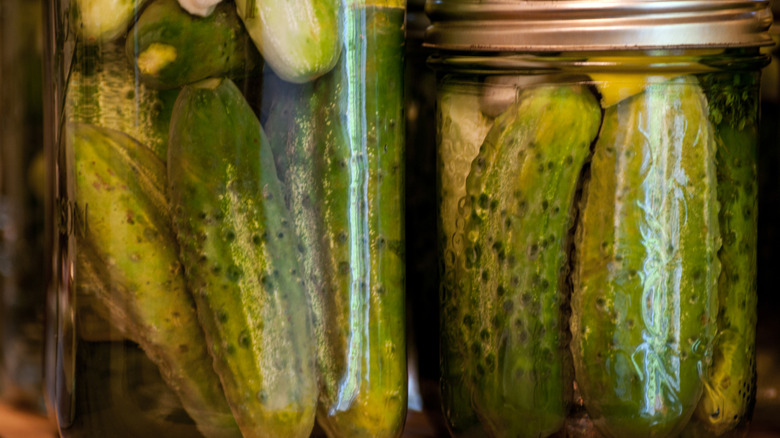
Dill pickles are what many folks associate with the word "pickles." As you can probably guess, they get their name from the inclusion of a particular fresh herb — dill — in their recipe, alongside other ingredients like mustard seeds, peppercorn, vinegar, and salt. As the pickles sit, they soak up the herbaceous flavor of the brine, and when you get a bite with a little sprig of dill still sticking to it, it's nothing but heavenly. You'll see a range of dill pickle variations out there, including refrigerated ones in saltier brine and those preserved with vinegar.
There are many different dill pickle brands to choose from, and it's one of the most ubiquitous varieties on store shelves. Pickle them yourself if you have a bumper crop of cukes and herbs, or pick up a brand that speaks to you.
3. Half-sour pickles
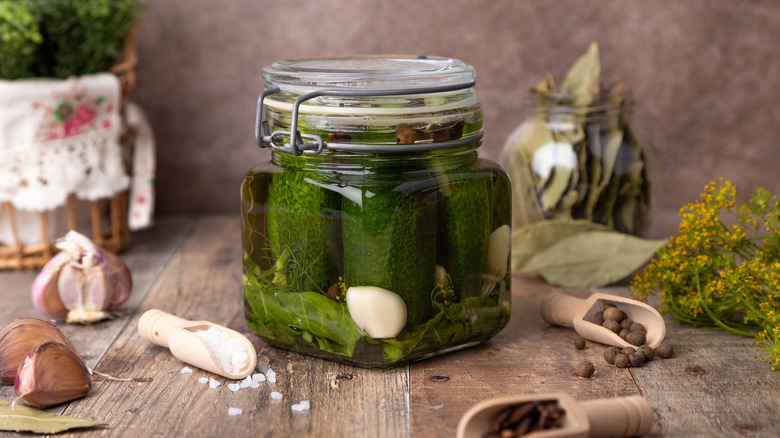
Some like it tangy, and for them, there are half-sour pickles. As the name suggests, they are not as sour as other pickle varieties, though, there are a few things that make the half-sours' recipe unique. Half-sours swap the classic vinegar brine for one made with salt water, which helps the pickle keep its natural firmness and crunchiness. They also aren't fermented for as long as full-sour pickles. The amount of time that elapses here is really dependent on who's making them, though many recipes will call for letting the pickles sit in the brine for about a week until their flavor changes and the bitterness dissipates.
Besides the salt, you also get the flavor from other ingredients like garlic, mustard seeds, bay leaves, and coriander. They're a punchy and light pickle, making them an excellent fit for sandwiches and snacking.
4. Kosher pickles
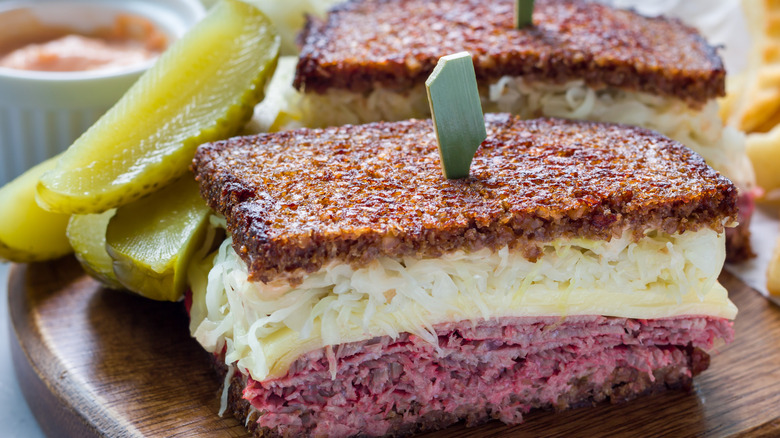
There are a lot of questions you may have about kosher pickles based on their name. Are they made with kosher salt? Are they certified kosher? Well, the name "kosher" is more of a nod to the Jewish folks that first made and popularized these pickles. These pickles allegedly have Biblical origins, and early Jewish populations were said to have eaten them. Eventually, through immigration, diasporas, and more, Jewish populations started selling pickles in America as "kosher pickles" or "kosher dills."
Classic kosher pickles contain one vital ingredient — garlic — and are fermented in a salt brine. Vinegar was not used in the original recipes because wine-based vinegars were prohibited due to kosher laws. However, modern renditions often use vinegar, and can use as much or as little garlic as they see fit.
5. Kool-Aid pickles
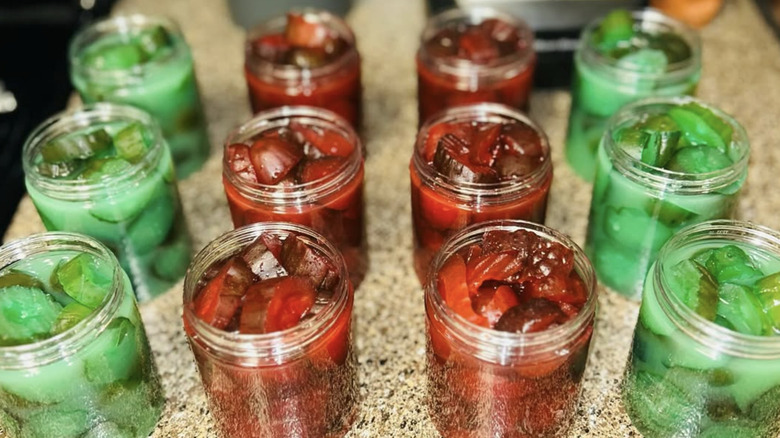
Surprisingly, Kool-Aid pickles are not something out of a state fair, though we wouldn't be surprised to see them at one served on a stick — likely fried. Kool-Aid pickles, sometimes called Koolickles, are exactly what they sound like: cucumbers that have been left to soak in a brine made with Kool-Aid powder. They're very popular in the South, especially around the Mississippi Delta region. At first glance, this popular drink mix may sound like a peculiar addition to pickles, but when you consider that many other types of pickles use a sweetener anyway, it makes a little more sense.
Many recipes will utilize unsweetened Kool-Aid powder, since adding your own sugar allows you to control the flavor a bit more. Stir the packet with dill pickle brine and any add-in ingredients (like the sugar) and submerge the cukes in it. In a matter of days, you'll have brightly colored, sweet, and funky-flavored pickles to enjoy.
6. Gherkins
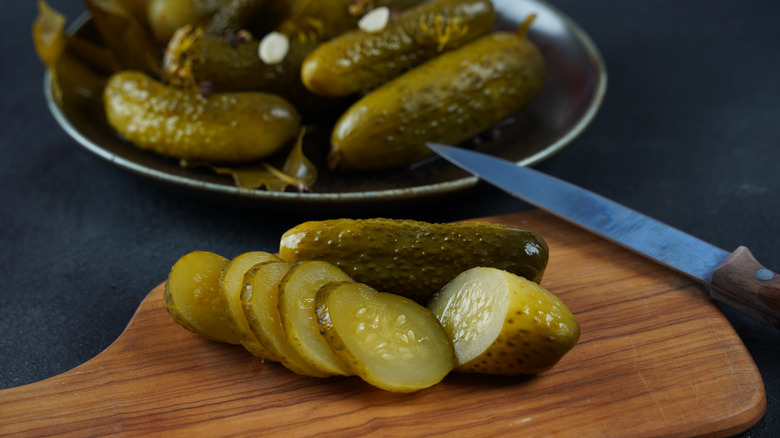
We would be remiss not to mention the tiny pickles of the world, including the beloved gherkin. Unlike the other types of pickles, gherkins are a type of cucumber that's typically used for pickling. The cucumbers are smaller in size than the ones you'd often see used for dill or kosher pickles and are typically crunchier and have less smooth skin.
Since gherkins refer more to a type of cucumber rather than a pickle, the recipe for pickling them can vary. You can add vinegar to your brine, play with different seasonings and herbs, or try adding garlic for an extra punchy flavor. You can also can them for extended periods or turn them into a quick pickle recipe for near-immediate snacking. Their small size and dainty appearance make them excellent additions to snacking and charcuterie boards, paired with salty meats and fatty cheeses to counteract their piquant, acidic flavor.
7. Cornichons
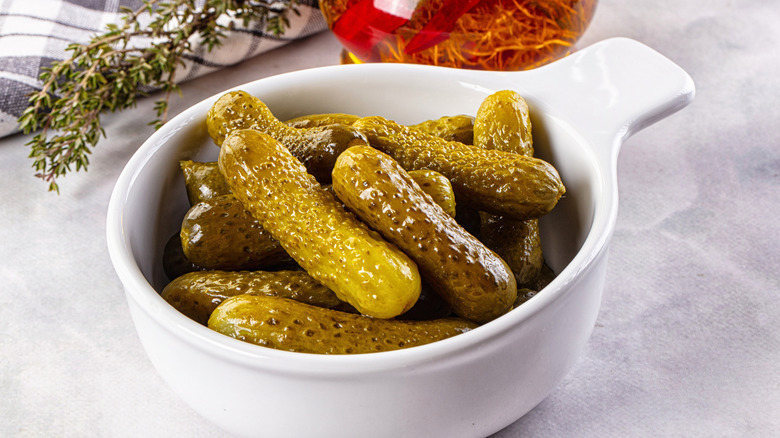
Cornichons — oh là là! These French gherkins are another common addition on charcuterie boards because of their small size, though Julia Child was also partial to them in her tuna salad, alongside lemons and capers. Based on their size and appearance, you may just think these are very fancy gherkins, but they are actually different. All cornichons are technically gherkins (small pickles), though not all gherkins are cornichons.
Cornichons tap out at just a few inches long and tend to have a tarter flavor than their pint-sized cousins. Cornichons, while they can be pickled with any array of ingredients, are often paired with tarragon and pepper. Despite their small size, they don't sacrifice flavor in any way.
8. Full-sour pickles
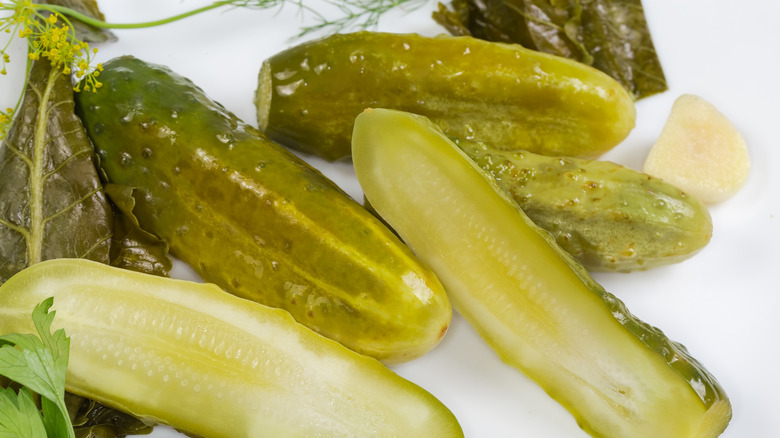
The existence of half-sour pickles implies the existence of full-sour pickles. While you can have half-sour pickles ready to eat in a matter of days, full-sour pickles take several weeks to properly lacto-ferment and develop their full depth of flavor. Most recipes will require you to let your full-sour pickles ferment for upwards of three weeks, and once opened, they should be enjoyed within three months. As expected, the longer preservation time on these pickles cultivates a bolder flavor — perfectly salty and tangy, flavored by tasty additions like grape leaves, garlic, and herbs.
Besides the pickle itself, many folks also use the pickle brine for other purposes, including pickle shots. Pickle novices may not like their strong flavor, but folks who like to get hit over the head with tanginess certainly will.
9. Pickled peppers
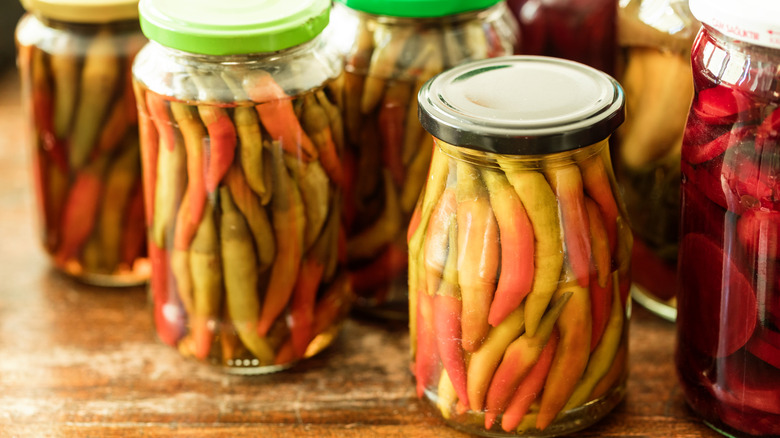
When talking about pickled things, pickled cucumbers usually take up the lion's share of people's attention. However, there are many other pickled foods that are equally worthy of your attention, including pickled peppers. Cucumbers tend to lack flavor, which is what makes them such a great canvas for pickling in the first place. Chiles and peppers, on the other hand, can have their piquancy neutralized by the acidic and salty brine, making them easier to enjoy.
You may have pickled peppers before and not even known it. Take jalapeños, for example, which can really benefit from the flavor nuances of a high-quality brine. Besides taming the heat, a good pickled jalapeño brine introduces aromatics and classic pickle flavors, like mustard seeds, bay leaves, and pepper. Another popular type of pepper to pickle is the banana pepper, which maintains its happy yellow color after sitting in the brine. You can also pickle spicier peppers, including Fresno chilis, serranos, and Scotch Bonnets — perfect for when your garden has a bumper crop of them.
10. Refrigerated or quick pickles
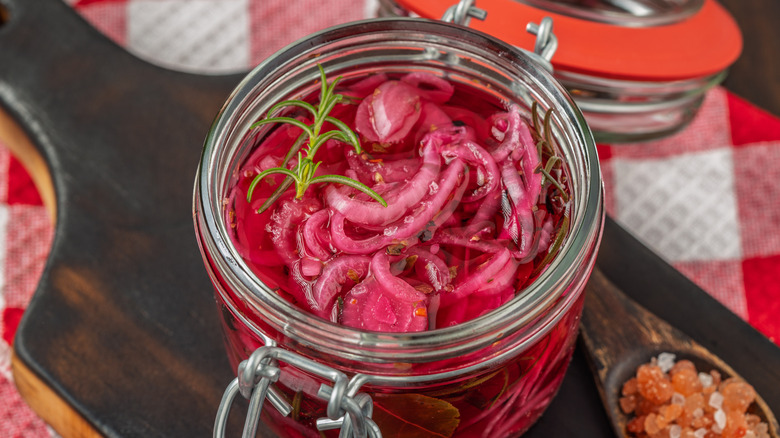
One of the downsides to pickles is that they often take a very long time to ferment. However, refrigerator pickles — also called quick pickles — allow you to have a snappy, vinegary, and fresh tasting condiment for your burgers and sandwiches in no time at all. As the name suggests, quick pickles are pickled for a very short amount of time (sometimes as little as 10 minutes). That being said, the flavor of these pickles improves dramatically if they're allowed to sit for up to a day. Many recipes recommend that, after the pickles sit in the hot brine, they be stuck in the fridge to cool for about two hours before eating. As you can probably assume, quick pickles are not made to sit around for a very long time, so be sure to eat them up relatively quickly.
The good news is that there is a litany of vegetables that you can quick pickle besides cucumbers. One of our favorites is pickled red onions, which can be used for everything from nachos to sandos. While you can pickle them by placing them in cold brine, using a hot brine will expedite the process. You can also quick pickle cauliflower, green beans, fruits, and watermelon rind, among others.
11. Candied and sweet pickles
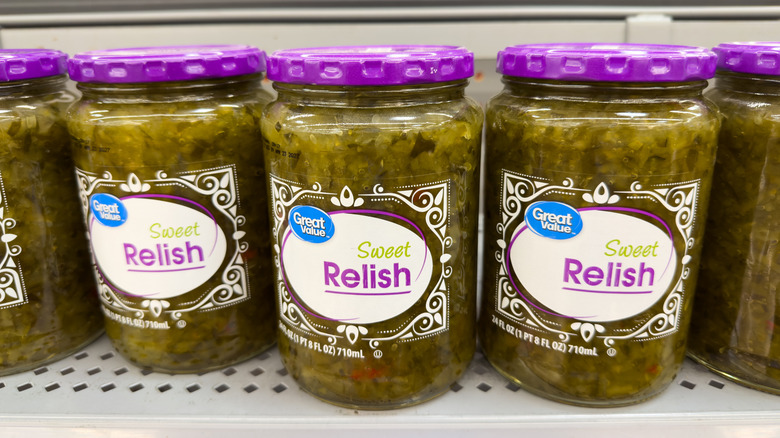
Pickles that taste like candy? What more could you want? Although there are some similarities between sweet pickles and bread and butter pickles, they aren't the same thing. Sweet pickles can come in many different shapes or be made into relish; they tend to have a sweeter, less acidic flavor than bread and butter pickles. Sweet pickles are sweetened with sugar, corn syrup, or a sugar-free substitute (like Splenda) and tend to be on offer at barbecues, where their sweetness elevates classic grilled meats.
Besides the sweetener, sweet pickles are also often adorned with spices and seasonings like turmeric, celery seed, and mustard seeds. Some recipes will also play off the sweetness and call for sweet-leaning spices like cinnamon and cloves.
Another variation of the sweet pickles is the candied pickle, which features an even more syrupy brine. Some candied pickle recipes will call for using a container of dill pickles, loading them up with sugar and just a little vinegar, and letting the up-cycled pickles sit and soak up all that flavor.
12. Polish dill pickles
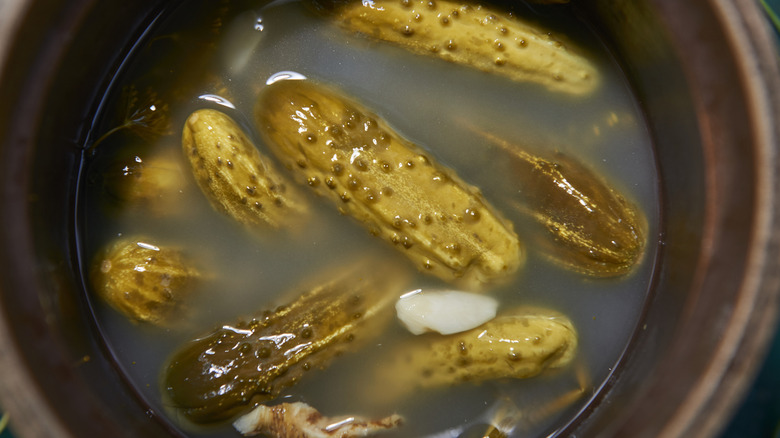
Ogórki kiszone, a.k.a., Polish pickles, are brine-cured pickles flavored with punchy regional ingredients like garlic, flowering dill, horseradish, and various leaves (cherry, black currant, raspberry, oak, grape, horseradish, or mustard). The primary reason why these leaves are added to the brine is because they contain tannins, which may help the cucumbers stay crispy and crunchy as they cure. The cucumbers used for these recipes vary, but one popular variety in Poland is the kruszewskie, which grows in the Northwest region of the country. Once the jars are packed with leaves, cucumbers, and brine, they are left to sit for between one and three weeks, though for the fullest flavor, you may want to wait up to five weeks.
Polish pickles are often served with an array of regional dishes, including kielbasa or potato pancakes. Some folks will also use the brine as a vodka chaser, called zagrycha.
13. Hungarian pickles
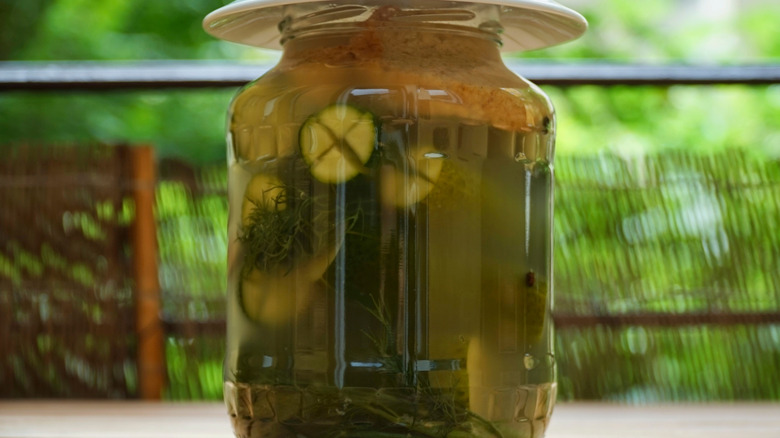
Hungarian pickles are yet another international variation of the beloved pickle. However, one ingredient pops up in the recipe that you may not have expected: bread. A slice of sourdough is placed in the jar, which helps feed the microbes and accelerates the rate of fermentation. The cucumbers are then filled with saltwater brine and left to sit out in the sun for several days. The brine is usually also flavored with garlic, dill, and mustard seeds, giving it a bright, unique, and punchy flavor.
Another type of Hungarian-style pickle worth noting is csalamádé, which is made with vinegar, cabbage, onions, carrots, peppers, and other summer vegetables. The addition of salt and sugar completes the flavor, churning out a tasty side dish that is reminiscent of slaw.
14. Cinnamon pickles
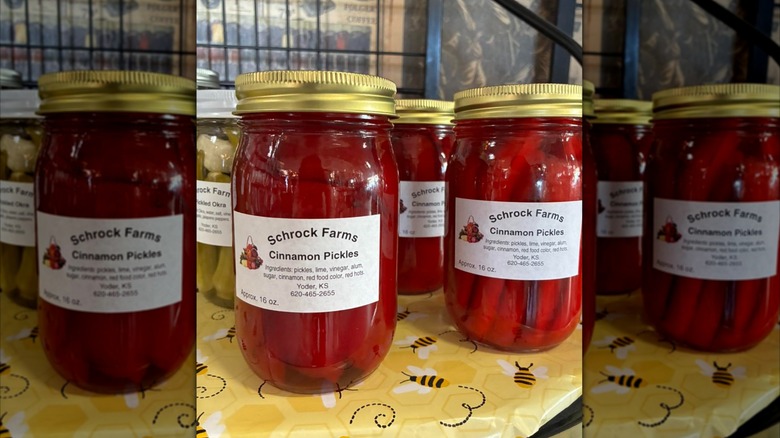
Although their color might be reminiscent of the aforementioned Kool-Aid pickles, cinnamon pickles are not made with drink powder. They are, instead, made with cinnamon candies — like Hot Tamales. To prepare, the cucumbers have their seeds removed and are sliced up before they're left to soak in pickling lime. On the second day, the softened cucumbers are immersed in vinegar and a sugary syrup made with vinegar, water, granulated sugar, and cinnamon hard candy. Some recipes will also add red food coloring to the mixture to give the pickles a brighter color, though this can likely be omitted if you just want the color from the spicy candies. Cinnamon and allspice can also be added to the jars, and many canned recipes will use alum to keep the veggies crisp.
Cinnamon pickles can be eaten straight from the jar, or chopped up and used in recipes like chicken salad. Their bright color and zingy, sweet flavor make them an exciting member of the pickle family.
15. Lime pickles
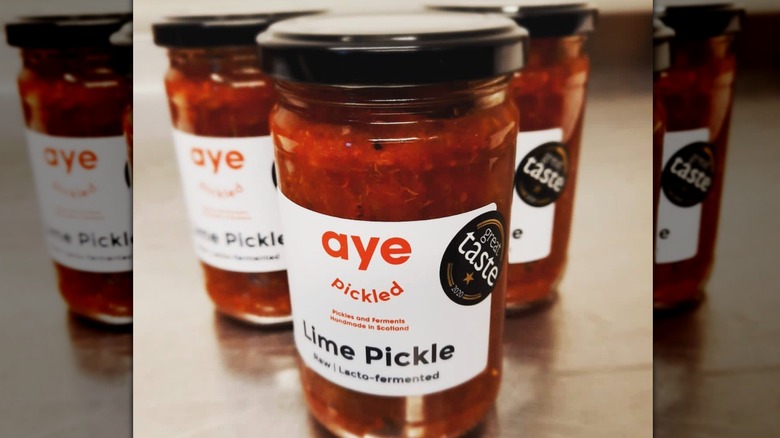
The name "lime pickle" is a little deceiving, as it doesn't mean that any limes (like the citrus fruit) were used. It means that the recipe is made with pickling lime, an alkaline substance that can be found at hardware stores. The calcium hydroxide (limestone) is processed and turned into a fine calcium powder, and when added to the pickling liquid, it helps the veggies keep their shape and firmness. You can also find pickle crisp granules (which is calcium hydroxide); a small pinch is added to the jars.
It's important to note that pickling in just lime is not suitable nor safe, as it's alkaline (basic). You need ample acidic ingredients, like vinegar, to create an environment inhospitable to foodborne pathogens. Instead, the pickles are often soaked in a lime-water mixture for a day before the lime is drained and rinsed off and the pickles can be processed. Many recipes will also employ a higher quantity of vinegar than a recipe made without pickling lime to ensure that the contents are safe to eat.
16. Salt brine pickles
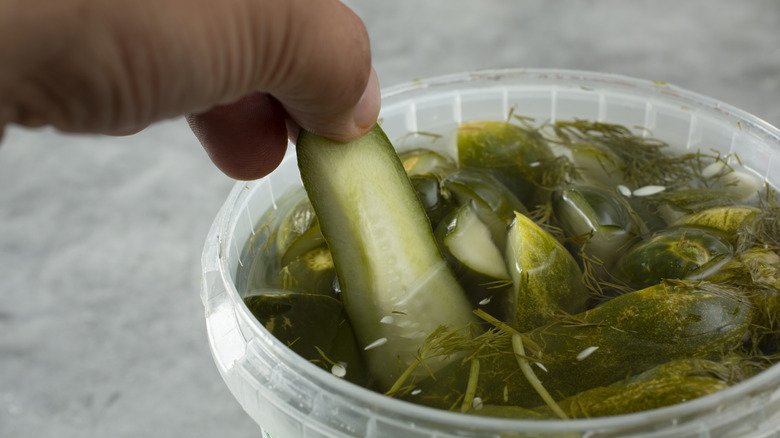
Salt brine pickles are just as their name suggests: They're made in a salt and water mixture rather than one flavored with vinegar. Since they aren't encased in acidic vinegar, they tend to be eaten relatively soon after they're prepared — which is why salt brine is the base of most refrigerated or quick pickle recipes.
The amount of salt used in the recipe will depend on your preference, though it's recommended that you start at no less than a 3% brine — or about 7 grams of salt per cup of water. Pickles made using this ratio can be eaten within the three- to five-day span. If you want to make half-sour pickles, you'd need to use a higher ratio of salt; a 4.5% solution should suffice. Getting the right balance here is crucial, as too little salt won't kill off the harmful pathogens, while too much salt will halt fermentation altogether.
17. German mustard pickles
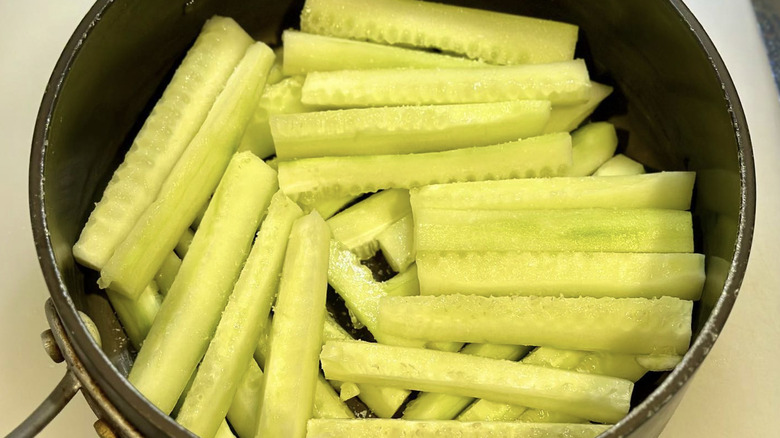
Hungary, Poland, and now Germany! We're taking you on a Tour de Pickle here. German mustard pickles look a little different from the rest as they are peeled and have the seeds removed before they're left to sit in a saltwater brine. On the second day, they're mixed with a syrupy vinegar solution before being sealed in jars with mustard seeds.
The fact that the pickles don't have skins allows them to soak up that delicious brine and strong mustard flavor. Other recipes will add other aromatics to the recipe, including dill, to transform the pickles into spreewälder gurken — a pickle popular in Berlin.
18. Specialty pickles
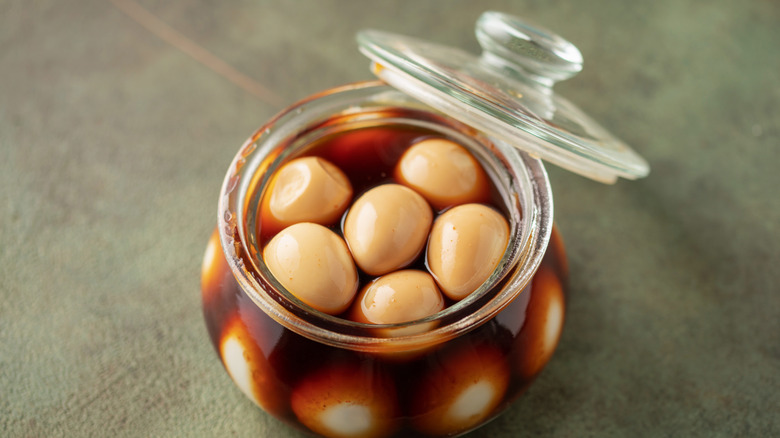
As you can probably guess, you can pickle more than just cucumbers. As such, there is an umbrella category that we'd like to recognize: specialty pickles. Think pickled eggs, which are hard-boiled and peeled before being submerged in a tart, salty brine seasoned with aromatics. In about three days time, you'll have the secret ingredient to a delicious egg salad. Another pickle product worthy of note is pickled peaches — a great treat to make when you have a ton of the fruit on hand. There are also many pickled condiments worth experimenting with, including homemade kimchi. Even corned beef is technically a pickle, as it's cured in salt and seasoned with pickling spices.
What can't be pickled? Well, for the most part, anything — with the exception of dairy products, which can curdle when mixed with vinegar. If you're trying your hand at specialty pickles, be sure to read up on proper canning technique and follow sanitizing directions to a tee to prevent foodborne illnesses, like botulism.