

This Depression-Era Salad Is The Definition Of Resourceful
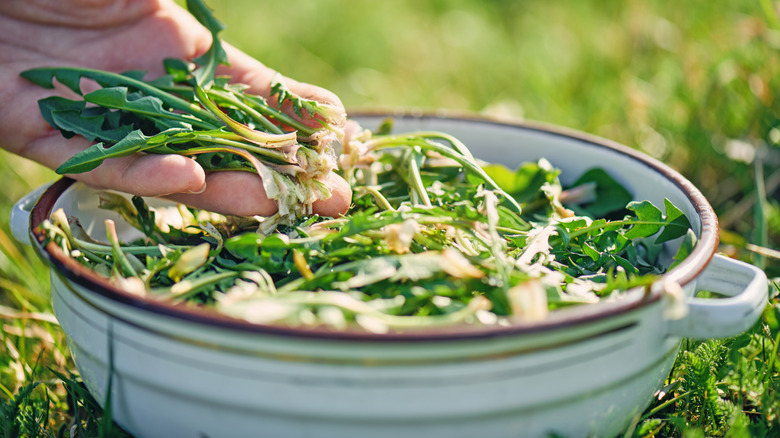
The Great Depression is marked by a period of crashing stock prices and job losses en masse. It was a pivotal moment when society deeply experienced the profound interconnectedness of our economic functions with the day-to-day necessities of life — a connection that, under normal circumstances, many may take for granted. Bare necessities like food are one such example. Folks who were already savvy about money and budgeting had to go the extra mile to make every cent count, and still make meals that would satiate and nourish. One of many dishes that was a key source of nutrients during this dire time in history was, in fact, a salad that relied on one of the most nutritious leafy greens out there: dandelion leaves.
In addition to dandelions being an edible flower worth growing in your home garden, dandelion leaves are one among several salad greens with the most nutritious value, packing a hearty dose of calcium, iron, potassium, and vitamins A, C, and K, among other essential nutrients. As a forageable food, dandelions were incredibly affordable and accessible, making them an optimal inclusion in Depression-era meals. Many homes even had dandelions growing in abundance in their yards, so people could harvest them and whip up a nutritious meal in a pinch.
Dandelion salads could be as simple as tossing the washed greens in salt and a simple lemon and olive oil dressing. Or, it could include other greens and fresh seasonal vegetables like lettuce, crisp cucumbers, asparagus, or radishes, to name a few; dandelion flowers for a pop of color; sugar snap peas for a protein boost and added texture; and a simple salad dressing to bring it all together.
Other thrifty Depression-era meals
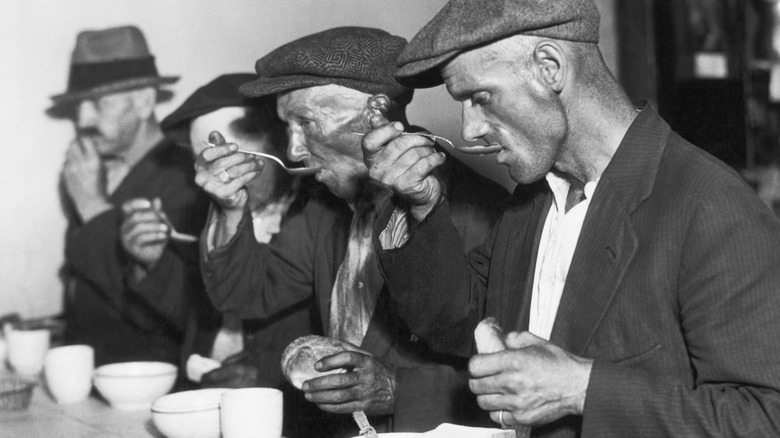
People often assume that plant-based eating means an increase in your regular grocery bills, but when you focus on centering whole ingredients, this assumption couldn't be further from the truth. As a matter of fact, a number of survival foods from the Great Depression have now achieved a status as a type of modern-day food trend, and many of them are actually free from any animal-derived ingredients. A banana sandwich, for instance, was an old-school Depression-era sandwich that stood the test of time. Traditional meals of Native Americans like cornmeal mush also made a comeback during this time, as these recipes typically feature a handful of cost-effective ingredients, are easy to prepare, and can make large batches at once.
In general, the early 1930s witnessed a number of fascinating foods that demonstrated how creativity in the kitchen can flourish under tough circumstances. Another popular recipe was peanut butter bread, made without common animal-based baking ingredients like butter and eggs. Some recipes would also swap out the milk with water when milk wasn't available. A go-to side, or even a full meal, was baked beans. Being readily available and at a low cost, baked beans were found in many a home kitchen pantry. Hearty soups and stews made with lentils were other excellent choices for flavorful, nutrient-rich, protein-packed meals. To satisfy the sweet tooth, the Depression cake, also known as the wacky cake, was made with no milk or eggs. With only flour, sugar, cocoa powder, baking soda, oil, vinegar, and water, you could treat yourself to a frugal indulgence.