

How Hamburgers Look In 14 Different Countries
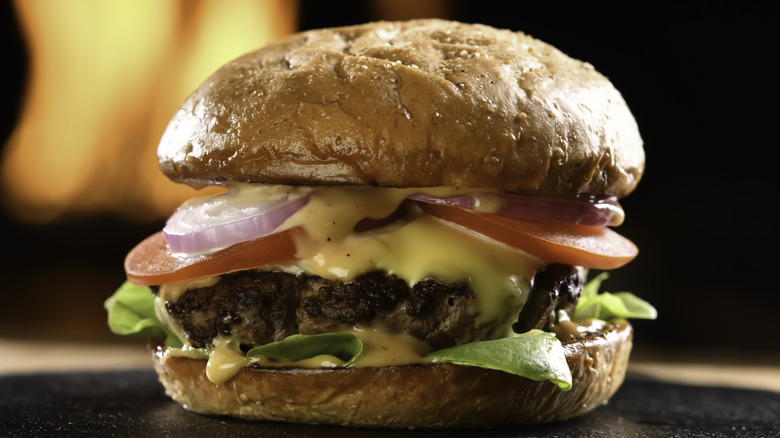
Burgers have become one of the most adaptable and widely enjoyed foods on the planet, shaped by local tastes, ingredients, and culinary traditions. The U.S. helped popularize the modern hamburger. The concept of placing a patty between bread now appears in many cultures, each offering its own interpretation. Today, burgers range from simple street snacks to elaborate creations served in high end restaurants, reflecting regional preferences, distinct ingredients, and creative approaches to cooking and eating.
The global variety demonstrates how flexible the burger format can be. Some countries highlight fresh vegetables or high quality meat, while others emphasize spices and condiments. Many incorporate inventive textures and unique ingredients that speak to local histories and evolving culinary trends. Burgers can be casual or celebratory, comforting or adventurous, depending on the setting and the imagination of the cook. The result is a constantly expanding world of flavors that reimagines what a burger can be and how it can fit into a community's daily routines. This list looks at 14 examples that illustrate how eaters across the globe interpret this familiar food.
1. The United States: Smash burgers and Steak burgers
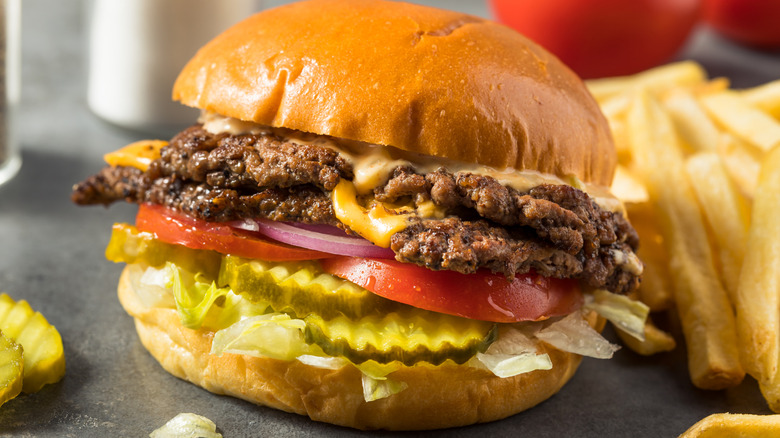
The United States is the country most responsible for popularizing the hamburger worldwide. The concept of a mass-produced fast food burger is an unmistakably American export, and every state seems to have an independent burger joint worth its salt. Within the U.S., craft burger culture tends to span two major styles that sit at opposite ends of a wide spectrum.
On one side is the classic smash burger, a thin ball of ground beef pressed onto a hot griddle until the edges develop a crisp crust. It cooks quickly, stays juicy, and pairs easily with simple toppings like lettuce, tomato, onion, pickles, and American cheese. On the other side is the steak burger, which features a thicker patty shaped more deliberately and cooked to well-done. These burgers often use higher quality beef blends and are served with more substantial toppings, such as sharp cheeses, caramelized onions, sautéed mushrooms, or specialty sauces. Together, the smash burger and the steak burger illustrate the range of American burger preferences.
2. The United Kingdom: Pub burger
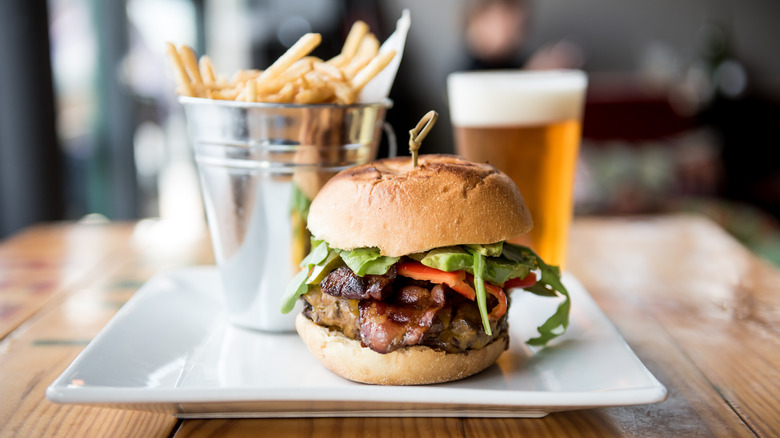
The UK's pub burger reflects the country's broader pub culture, which values hearty, comforting food served in a relaxed communal setting. The British pub burger tends to emphasize a dense, well seasoned patty that holds its shape and offers a substantial chew. Many pubs use blends of beef with a slightly coarse grind, which gives the patty a rustic texture that pairs well with bold toppings. Mature cheddar cheese is the most common cheese, especially sharp varieties that stand up to the richness of the beef.
The bun is usually fluffy in texture. Accompaniments include bacon, caramelized onions, and the usual: pickles, lettuce, tomato. Pub burgers are often served with thick cut chips or onion rings, creating a full plate that fits naturally within the tradition of British comfort cooking. The result is a satisfying, unfussy burger that complements a pint of ale and the warmth of a neighborhood pub.
3. Canada: Banquet burger
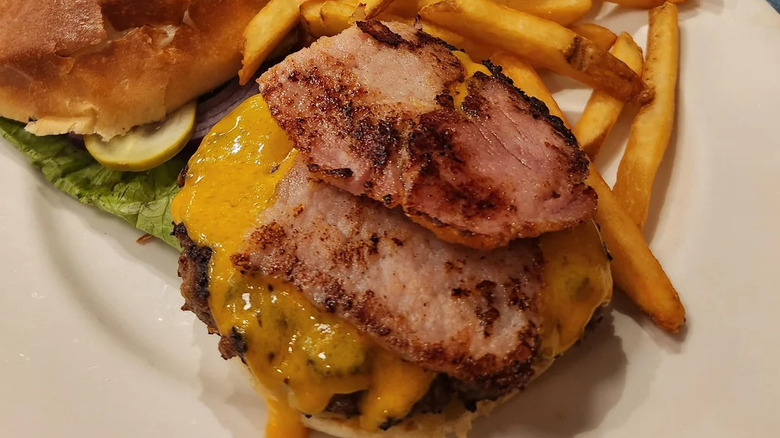
Canada's banquet burger is a distinctive style that originally appeared in Toronto around 1968 when it was first described in a newspaper ad, and it remains a recognizable part of the country's diner and pub culture. The defining feature is its generous combination of ingredients, which traditionally include a thick beef patty, sliced (Canadian) bacon, and melted cheese.
Many banquet burgers are served open-faced, allowing diners to see the layers of toppings before adding the top bun. This presentation style emphasizes abundance and makes the burger feel like a complete plated meal rather than a quick handheld snack. Variations often include tomato, lettuce, sautéed onions, or house-made sauces, but bacon and cheese are always central to the identity of the dish. The banquet burger reflects Canada's comfort food traditions and highlights the influence of mid-century North American diner cooking. Its longevity also speaks to Toronto's role as an early innovator in Canadian fast-casual cuisine.
4. Denmark: Bøfsandwich
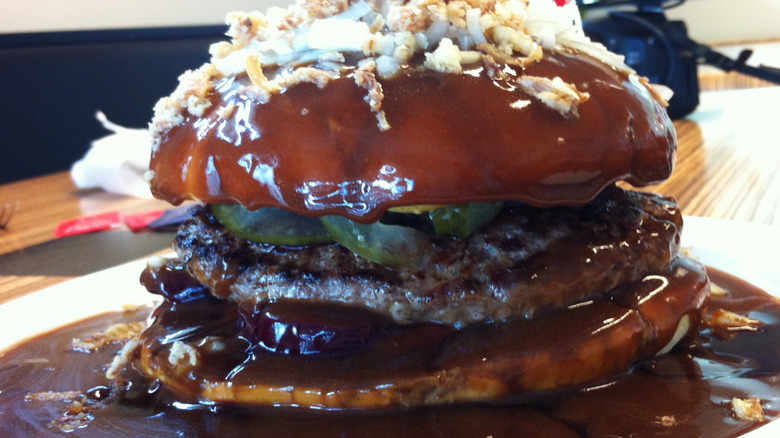
Denmark's bøfsandwich is a hearty, old-fashioned dish that initially debuted in 1949. However, it didn't grow in popularity in Copenhagen until the 2010s, originally considered to be somewhat vulgar in its appearance. At its core, it features a seasoned beef patty cooked directly in a rich brown gravy, which gives the meat a tender texture and savory depth. The patty is placed on a soft bun and then topped with more gravy, creating a filling and slightly messy meal that Danes often describe with affection.
Traditional versions include cooked onions — sometimes caramelized and sometimes stewed — as well as potatoes served on the side or incorporated directly into the dish. Pickled vegetables, especially beets and cucumbers, are common accompaniments that cut through the richness. Some stalls and diners also offer spicy pickled mixes inspired by classic Scandinavian preserving traditions. The bøfsandwich captures the essence of Danish homestyle cooking and remains a nostalgic favorite, even if it is a little sloppy to eat.
5. Brazil: X-Tudo
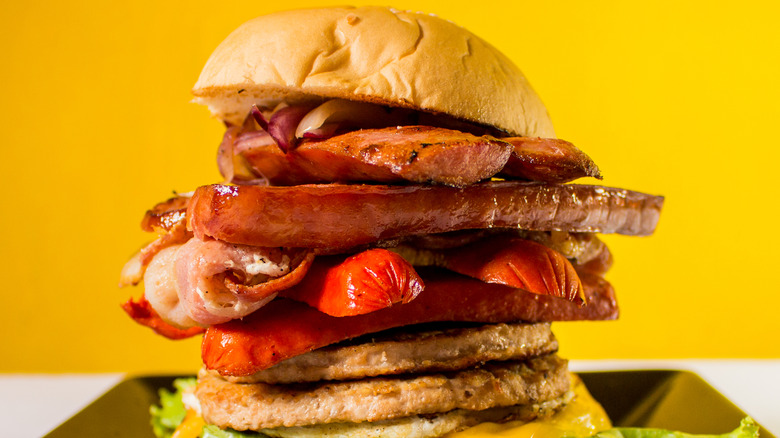
Brazil is another beef-eating mecca, and its burger doesn't fall behind. The X-Tudo is a towering, indulgent burger that lives up to its name, which translates to "with everything." This exuberant favorite — found in street stalls and snack bars alike — stacks multiple ingredients to create a layered, flavorful meal. A typical X-Tudo begins with a grilled beef patty, but it rarely stops there. Many versions include sliced sausage, bacon, ham, melted cheese, lettuce, tomato, and a fried egg.
Sweet corn and crunchy potato sticks add texture and reflect Brazilian preferences for mixing soft and crisp elements in a single bite. The result is a visually striking and deeply satisfying burger that celebrates abundance rather than restraint. X-Tudo burgers are widely available at lanchonetes, Brazil's ubiquitous casual eateries, and often appear alongside zany reinterpretations of the hot dog. Iconically playful and customizable, the X-Tudo demonstrates Brazil's approach to comfort food and its enthusiasm for bold, generous combinations.
6. Mexico: Hamburguesas al carbón
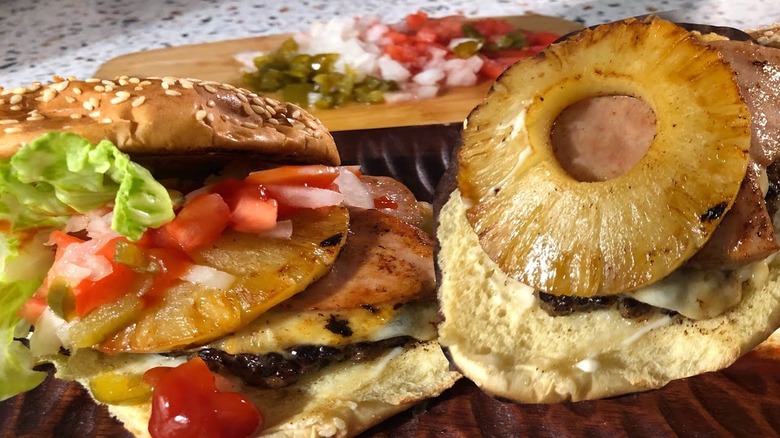
Across Mexico, the hamburguesa al carbón is a beloved late night staple found at corner stalls, informal eateries, and outdoor street fairs. Its defining feature is the patty, which is cooked over charcoal rather than on a griddle. This method infuses the meat with a smoky flavor that recalls regional grilling traditions. The patties are usually thin and cook quickly, making them ideal for piling with bold toppings.
Common additions include sliced ham, melted cheese, pickled jalapeños, chipotles in adobo, grilled onions, pineapple, and fried egg. Some vendors also add crumbled chicharrones or potato chips for extra texture or avocado for creaminess. The final burger is often served on a toasted sesame bun with a spread of ketchup and mayonnaise. In a country renowned for street foods that are popular among foodies, the hamburguesa al carbón reflects Mexico's enthusiasm for layering heat, acidity, and richness in satisfying combinations.
7. Japan: Rice burger
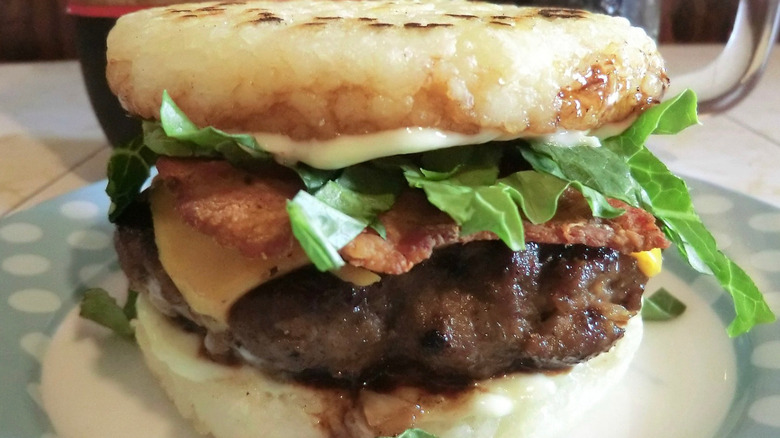
Japan is a country full of innovative sandwiches. Unsurprisingly, Japan's rice burger showcases the country's creativity with familiar ingredients and its ability to re-imagine global dishes through local techniques. Rather than using bread, this burger replaces the bun with compacted rice patties that are shaped, lightly pan-fried, and sometimes brushed with soy sauce for extra flavor. The rice is often held together with a small amount of potato starch, which allows the patties to remain firm while still tasting soft and sticky, much like freshly cooked Japanese rice.
The most common filling is thinly sliced beef marinated in a yakiniku-style sauce made from soy, sugar, garlic, and sesame, though sometimes a standard burger patty is used. Some versions use grilled chicken, pickled vegetables, or mixed mushrooms, reflecting the versatility of the format. Popularized by Japanese fast-food chains, the rice burger illustrates how local culinary traditions can transform a global classic without losing its essential spirit.
8. China: Rou jia mo
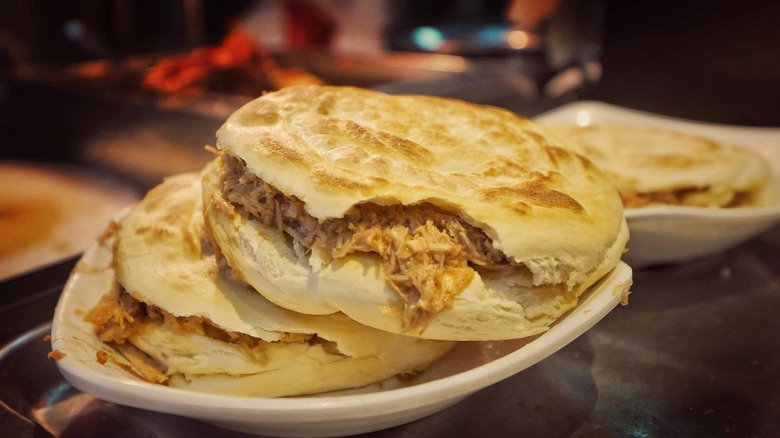
China's Rou Jia Mo is often compared to a hamburger, although it predates the modern burger by centuries and comes from a distinct culinary lineage. The name translates to "meat in a bun," which captures the simplicity and appeal of the dish. At its core, Rou Jia Mo features tender stewed or braised meat tucked inside a round, griddled wheat bun that is crisp on the outside and soft within.
In Shaanxi Province, where the dish is especially well known, the filling is usually pork cooked with spices that create a rich, savory flavor. In other regions and many contemporary food stalls, cumin-spiced lamb is a popular style, offering an aromatic, tangy, and slightly fiery profile that reflects Northwestern Chinese flavors. The meat is chopped rather than ground, which gives the sandwich a hearty texture. The juices soak into the bun to create a satisfying balance of softness and crunch. Rou Jia Mo is widely sold by street vendors, markets, and small eateries throughout China, and its portability and simplicity have helped it become a beloved everyday snack.
9. Turkey: Islak burger
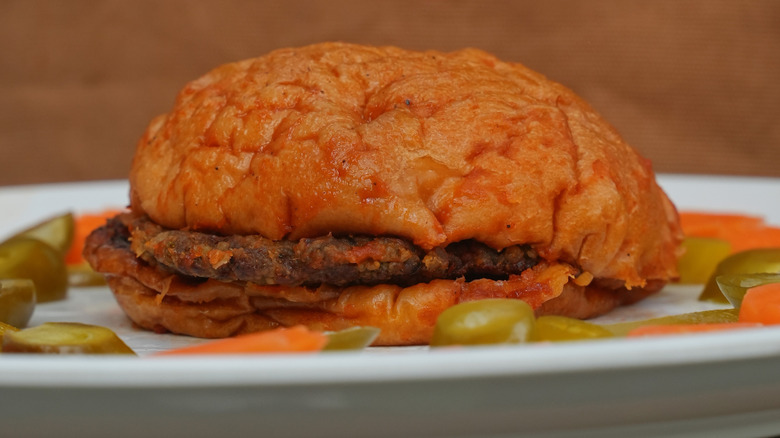
Turkey's islak burger, known in English as the "wet burger," is one of Istanbul's most iconic late night street foods. The concept is simple, but memorable: a soft white bun holds a thin beef patty, and the entire assembled burger is dipped or brushed repeatedly with a garlicky tomato sauce before being placed in a steam-filled case. This treatment gives the bun a tender, almost pillowy texture while infusing every bite with the flavors of the sauce.
Despite its messy appearance, the islak burger is incredibly popular among night owls who flock to Istanbul's busy food streets after an evening out. The burgers are small enough to eat quickly yet flavorful enough to linger in the memory. Vendors often line their steam cases with rows of identical orange-tinted burgers, creating an immediately recognizable visual signature. The appeal lies in its comforting warmth, its soft texture, and the satisfying combination of sweet tomato, mild spice, and savory beef. The islak burger offers a unique example of how a simple technique can redefine a familiar food.
10. Colombia and Venezuela: Arepa burger
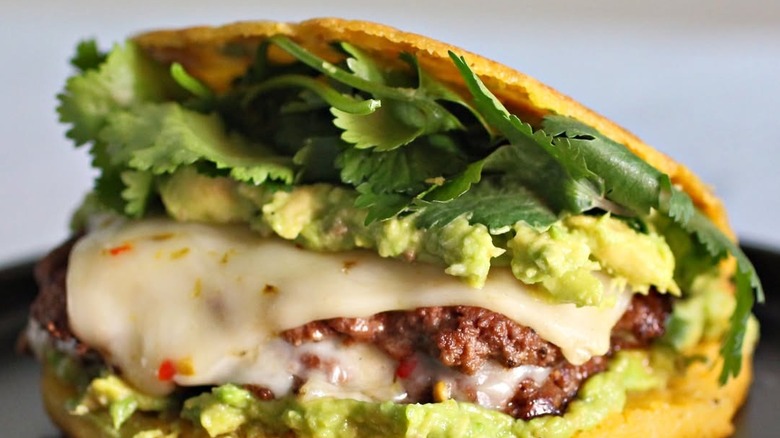
The arepa burger, a staple in Venezuelan and Colombian cuisine, is a creative hybrid that brings together two beloved street food traditions. The arepa, a griddled corn cake with ancient Indigenous roots, is central to both Colombian and Venezuelan daily eating. It can be thick or thin, plain or stuffed, and it appears in countless regional styles. In the case of the arepa burger, the corn cake replaces the traditional wheat bun, creating a gluten-free alternative that feels both familiar and distinctly Colombian. The burger patty is usually seasoned simply so that its flavor pairs well with the lightly charred corn cakes.
Toppings vary widely but often include melted cheese, tomato, lettuce, sautéed onions, avocado, or house made sauces that add creaminess or heat. The combination of a juicy patty with the toasty, slightly sweet arepa produces a satisfying contrast of textures. It captures the spirit of Colombian street food, which values portability, bold flavors, and adaptability, and it continues to be a fixture in Venezuelan cuisine.
11. Pakistan: Bun kebab
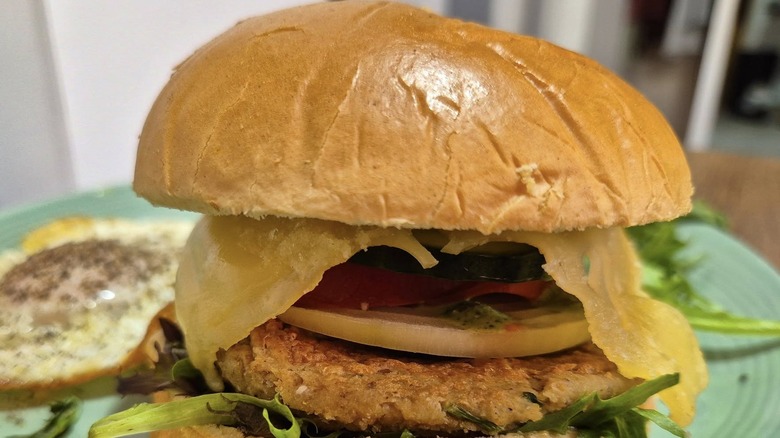
Pakistan's bun kebab is a beloved street food that reflects the country's rich tradition of spiced patties, chutneys, and griddle cooking. Although it resembles a small hamburger, it carries its own identity shaped by the flavors of Karachi, Pakistan's megalopolis. A bun kebab typically features a patty made either from ground beef or from a vegetarian blend of mashed potatoes and lentils. The mixture is seasoned with spices such as cumin, coriander, turmeric, and green chili, which give the patty a fragrant, savory character.
After being shallow fried on a hot tawa, the patty is placed in a steamed burger bun that absorbs the surrounding flavors. Many versions include a fried egg, sliced onions, and a spicy, slightly acidic sauce that adds brightness to the dish. Vendors often prepare bun kebabs to order, creating a fresh, made to order feel. The result is a compact slider that captures the energy of Pakistan's bustling street stalls and the country's talent for combining spice, texture, and comfort in a single bite.
12. France: Bistro burger
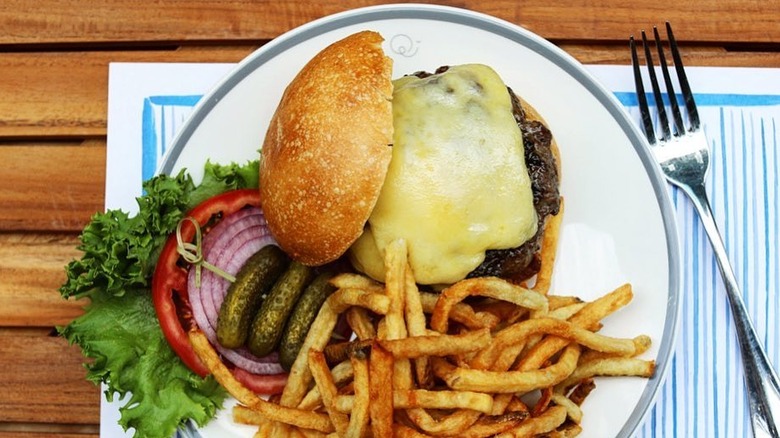
France's bistro burger made a splash overseas in the U.S. in the 1960s. New York City-based writer Tania Gomez introduced her iteration of the burger featuring pickles and American cheese, topped off with bacon. However, a traditional version that you might find at a bistro in France may be a bit fancier. Though bistros themselves are typically informal in terms of service style, the quality of ingredients used in dishes is anything but low-brow.
Instead of iceberg lettuce or pickles, bistro burgers may feature peppery arugula or slow cooked onions to add sweetness and depth. Homemade mayonnaise or aioli brings richness and ties the components together. The result is a burger that feels elegant without being fussy, as the high quality ingredients can speak for themselves.
13. The Dominican Republic: Chimi
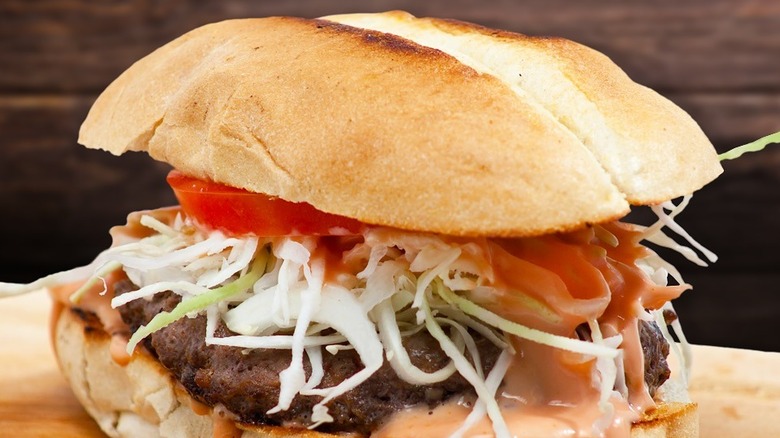
The Dominican chimi is one of the Caribbean's most distinctive street burgers, known for its bold flavors, sizzling griddle technique, and unmistakable aroma that fills the streets of Santo Domingo after dark. Although its name references chimichurri, the South American herb sauce, the chimi does not traditionally include it. Instead, the name has become a local shorthand for a tropical smash burger.
The patty is usually made from a beef and pork blend, shaped thin to develop crisp edges as it cooks. A generous mound of finely shredded cabbage is placed directly on the griddle beside the meat, absorbing the juices and heat until it becomes slightly wilted. The burger is assembled on a pan de agua (a soft bread roll) with tomato slices and a signature pink sauce made by blending ketchup with mayonnaise, sometimes with black pepper or citrus for brightness. Street vendors often season the cabbage and sauce to personal taste, which means every chimi stand has its own recognizable character. The result is a juicy, messy, highly craveable burger that captures the energy of Dominican nightlife.
14. India: Vada pav
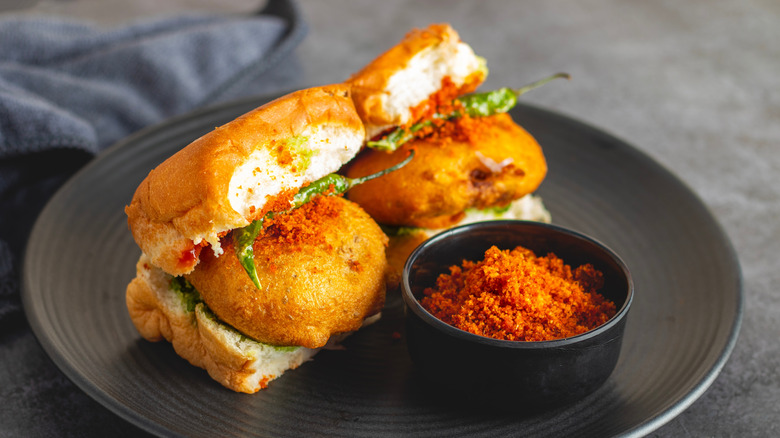
India's vada pav is one of Mumbai's most cherished street foods and a powerful example of how a burger like structure can thrive without meat. At the center of the dish is the vada, a deep fried potato fritter that is seasoned with key Indian spices such as turmeric, mustard seeds, green chili, and garlic. The mixture is shaped into a ball, coated lightly in gram flour batter, and fried until crisp on the outside and soft inside.
The pav, a fluffy bread roll with Portuguese roots, is sliced open and spread with vibrant chutneys. These can include sweet tamarind, spicy green chili, and dry garlic peanut chutney, each contributing a layer of complexity. A few slices of fresh green chili may be added for extra heat. Although inexpensive and easy to assemble, vada pav delivers bold, memorable flavor that has made it a symbol of everyday Mumbai cooking. It is portable, satisfying, and deeply tied to the rhythms of the city, where commuters and workers grab it from crowded stalls throughout the day.