

The Best Use For 11 Different Kinds Of Cooking Fats, According To Chefs
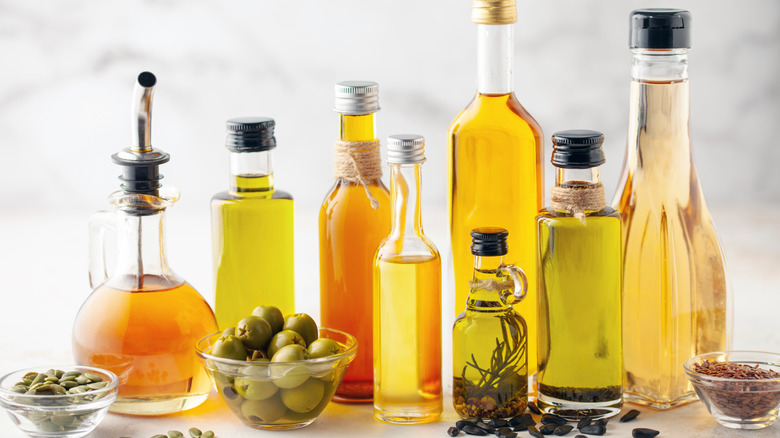
It seems like in the past couple of years, the conversation around cooking fats has hit a fever pitch. Social media trends push certain oils while the health and wellness hamster wheel constantly spins new narratives — it can be daunting. Some oils get demonized, others remain in the good books, and the science seems to be at odds, too. Meanwhile, many chefs and foodies simply continue on with the cooking fats they know and love, prioritizing functionality and, above all, flavor, over fads. Whether choosing an oil for shallow frying or opting to use animal-based fats like beef tallow, each type has its pros and cons. But there are quite a few different fats to consider, from pantry staples like corn and coconut oil, to things your grandparents used like lard and schmaltz (chicken fat).
This can leave new home cooks getting lost in the sauce, not knowing which fat is best to use in certain applications. But we've got your back. To find out some tips and tricks on how to best use different cooking fats, we tapped a few experts. We were lucky enough to get advice from Auguste Escoffier School of Culinary Arts chef instructor August Ench, based in Austin, and Chef Donald (Don) Doubek, Culinary Advisor at Cargill (an American multinational food corporation), based in Minnetonka, Minnesota. Read on for some great tips and forget what the influencers and podcasters say about these fats — they're all great!
1. Butter
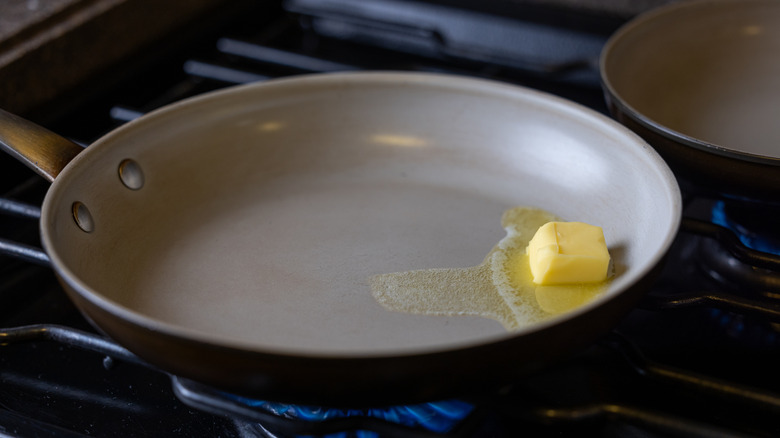
Of all the cooking fats in our list, butter might be the most beloved by both chefs and home cooks alike. Renowned Michelin star Chef Marco Pierre White is famously fond of the stuff, recently saying in a BBC Maestro cooking video, "If you're going to use butter, then use it, don't play with it — it's not a toy. It's to make everything taste more delicious." In another, he lays it all out, telling viewers, "If it weren't for butter, we would never have won three [Michelin] stars," which speaks volumes. Sure, this is no secret — butter does indeed tend to make most things taste incredible. Then there are different types: salted, unsalted, cultured, whipped, ghee, compound butters, and yes, even plant-based.
Essentially, not all butters are created the same, and some are better than others for certain tasks. As an example, you wouldn't want to use a super expensive imported Irish or French butter for cooking — save this for smearing on a muffin or slice of bread, so you can taste it in all its glory. For higher-heat cooking, it is best to use clarified butter, as it won't smoke as much as regular butter. It also works well when cooking seafood. "For fish, my go-to is clarified butter; it pairs well with most seafood," Chef August says. There's really not much butter can't do, which Chef Don attests to: "Whole butter would be my fat of choice as a one-stop shop," he tells us. Enough said.
2. Extra-virgin olive oil
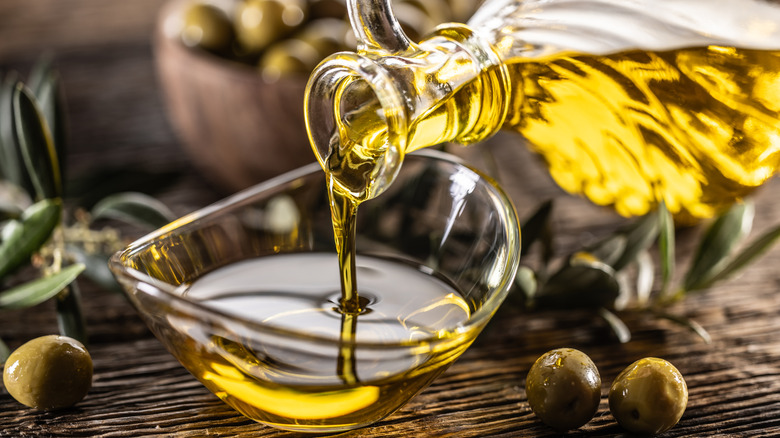
Olive oil does some serious heavy lifting. It tastes incredible on its own, allowing food fanatics a chance to savor its complexity. It can be fruity, spicy, buttery, grassy/herbaceous, and pleasantly bitter. It's amazing with greens as the base for a vinaigrette, and it adds a subtle yet delicious base when used for frying and sautéing. Just like extra virgin olive oil has a wide range of tasting notes, there is an even wider spectrum of brands and types, leaving some in need of a buying guide to help navigate. What's more, you may splurge on a nice bottle of finishing oil that isn't to be heated, while using a cheaper everyday brand for sautéing and frying. Another consideration is the harvest date, as olive oil — unlike wine — does not get better with age.
Chef August and Chef Don advise us on some ideal scenarios for using this Mediterranean liquid gold: "If I had to pick one fat that could handle roasting, frying, and finishing, I would have to choose olive oil," Chef August says. "A big plus is that it comes in a variety of strengths of flavor from more neutral to very strong," he adds. Chef Don shares similar views: "A light olive oil drizzle over grilled veg or a spoon of rendered fat on steak creates sheen, roundness, and aromatic depth," he tells us. All in all, this oil is very versatile for cooking, but for finishing dishes, it really shines.
3. Avocado oil
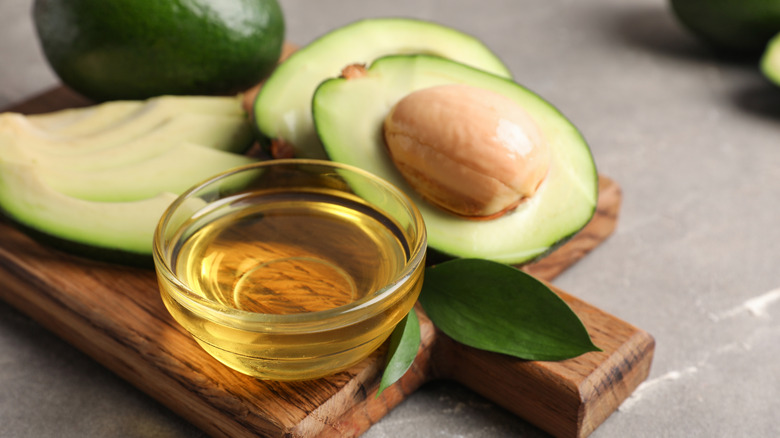
This oil, extracted from those dimpled, black fruits we all love, is a great option for home cooks to explore. Avocado oil offers high-heat searing capabilities with a smoke point of 518 degrees Fahrenheit (if using a refined oil; unrefined oils smoke at around 482 degrees). "For high-heat searing, I use beef tallow, refined avocado oil, or ghee — all have high smoke points and lend subtle complexity without bitterness," Chef Don tells us. Chef August also espouses this cooking fat for the same application, telling us, "For a high-heat sear, I would go for a truly neutral oil like avocado oil."
If you're looking to blast a strip loin or some chicken thighs in a ripping-hot pan for some caramelization and searing, home cooks might consider this resilient oil. Chef August also tells us that it can work when you need a mellow oil flavor profile that won't overpower. "As a general rule, the lighter [the] flavor [of] the main item, the lighter your fat flavor — think about a chicken breast," he says. "Using a very neutral fat like avocado oil will give you something more versatile." He also thinks it's a must-have oil, telling us, "I would include avocado oil as a pantry staple — it is probably the most versatile vegetable-based fat I can think of." Lastly, in addition to that crust from a sear we all love on proteins, this oil can also work well for shallow frying.
4. Beef tallow
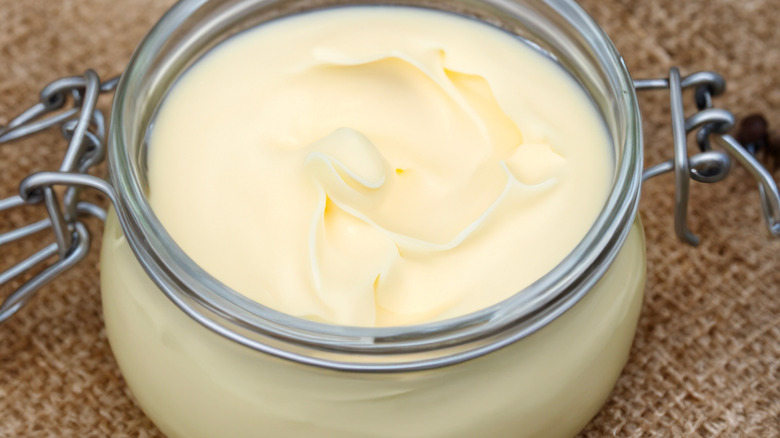
Beef tallow seems to be making a comeback, and we're here for it. This cooking fat, to those unfamiliar, is the rendered fat from beef trimmings that is filtered and then sold in jars as a room-temperature solid, like coconut oil. It then quickly melts when heated up, providing an incredibly deep and rich flavor of, you guessed it, beef. Though it won't necessarily taste exactly like a steak, it will give you that super savory umami richness we all love.
Beef tallow also provides home cooks with confidence during high-heat cooking, where it is less likely to set off smoke alarms. Heck, McDonald's used to use the stuff to cook its French fries before sadly switching to vegetable oil. To this end, Chef August champions tallow as a fat that can go the distance when you want to break out the deep fryer. "[...] For a longer cook or repetitive deep frying, I would stick with tallow or duck fat, they hold up well to longer cooking times," he says. Chef Don says you can use tallow for high-heat searing as well, but also posits that it pairs well with bold-flavored meats and game, too. "I turn to beef tallow, duck fat, or bacon fat," he says. "They anchor intense proteins, reinforcing umami and depth while complementing Maillard reactions." If you're new to the world of animal-based cooking fats, give beef tallow a try!
5. Duck fat
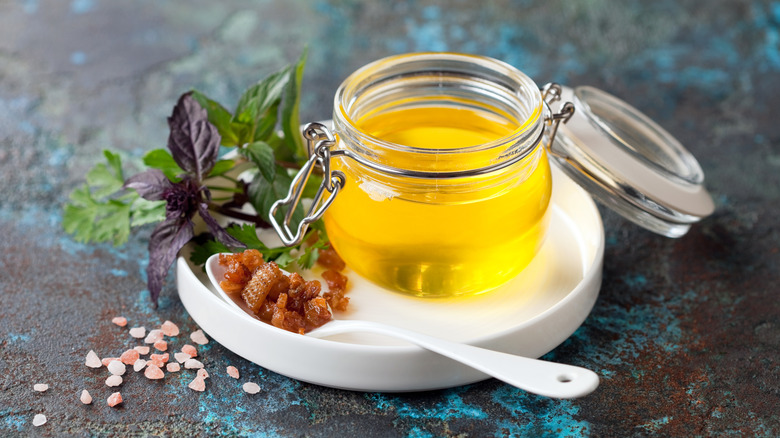
Using duck fat in your cooking is like a cheat code. It can make something you're frying become the star of the show, with a simple swap from say, canola oil, to the chef's favorite duck fat. While it may be harder to come by than most plant-based cooking fats like olive or corn oil, charismatic home cooks might want to put in the extra work to source it, to later benefit from its powerful flavor. Some readers may have had it before, when dining out, in the context of French fries, as duck fat fries were all the rage for a time. But it can be used in a wide range of cooking applications.
"When choosing fats, I consider [...] smoke point (for searing) — how much heat the fat can take before breaking down," Chef Don tells us. "For low-and-slow braising, I lean toward olive oil, duck fat, or butter, depending on cuisine," he says. "These contribute roundness and body to the sauce as they slowly emulsify, enhancing mouthfeel and aroma." Yum. Chef August tells us that while delicious and rich, duck fat can be heavy, but it will stand up to scorching heat when used to shallow or deep fry. Rendered and filtered duck fat is sometimes sold frozen, but also jarred like beef tallow — try a gourmet grocery store or ask your butcher if you can't find it locally.
6. Schmaltz (rendered chicken fat)
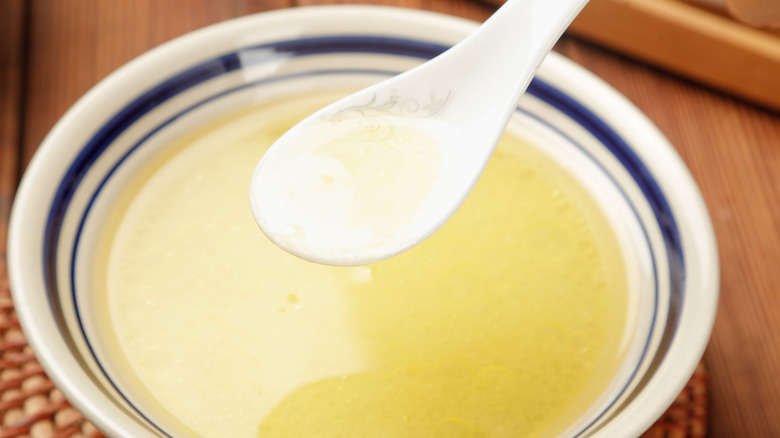
Schmaltz is the old-school term for rendered chicken fat, and like many of the cooking fats in our list here, it is indeed also liquid gold. Its inherent and obvious chicken flavor is concentrated and rich, and one that real poultry lovers appreciate. It's also one of the few fats in our list that you can actually gather on your own when cooking any skin-on chicken, especially thighs and legs, which will yield more than the breast. And if you're cooking a whole chicken, you can benefit from the rendered schmaltz that will accumulate over the hour-or-so cooking time, saving it for later.
You can then use it to enhance roasted potatoes, where it won't overshadow your spuds. "Fats act like amplifiers — they either enhance or soften flavors," Chef Don says. "Chicken schmaltz or lard bridge the gap beautifully — savory but not overpowering." Chef August recommends chicken fat to punch up the flavor in your next stew or goulash. "For a slow braise, the options are more open," he states. "You can go for olive oil or a flavored animal fat like schmaltz for increased flavor," adding that he likes to pick those that pair well with other ingredients like "olive oil with a Mediterranean dish or schmaltz with a poultry item." Using the fat from the animal you're cooking to cook it with is a one-way shortcut to amping up flavor and richness in an uncomplicated way.
7. Lard
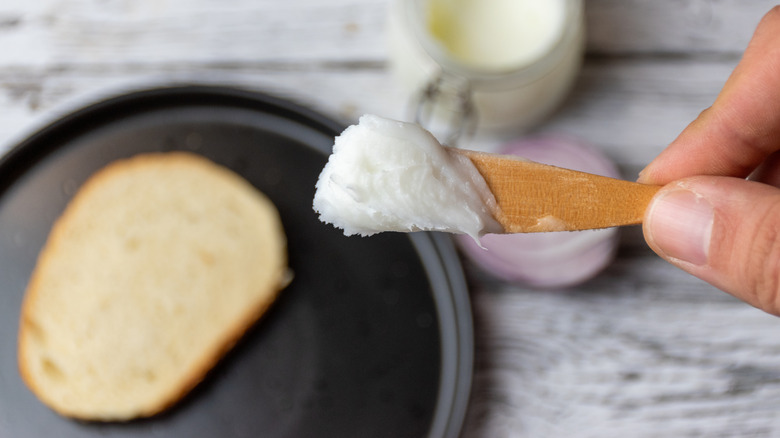
Lard has it rough. It's not as sexy as duck fat, hasn't caught on among the health and wellness crowd as the be-all-end-all like tallow, and just sounds unappealing somehow. Yet this insanely delicious cooking fat is used in some of the most flavourful cuisines around the globe, like Mexican, Chinese, Italian, Eastern European, and stateside, in the South. Much like beef tallow, it usually presents as a white or off-white solid when at room temperature, melting very fast once it hits heat. But how do you use it, you say? It can end up in not just savory dinners, but also it is known to add wonderful texture and depth of flavor to baked goods like biscuits and cakes, as well as tortillas.
Chef Don tells us that lard can be put into the camp of savory, yet not overly intense in flavor to the point that it will overpower dishes. When it comes to following tradition, especially if you want to get as close as possible to the authentic regional flavor, you sometimes need to go the extra distance. The next time you want to make some utterly delicious black beans, take note from Rick Bayless, who believes that lard is essential for cooking them.
8. Bacon grease
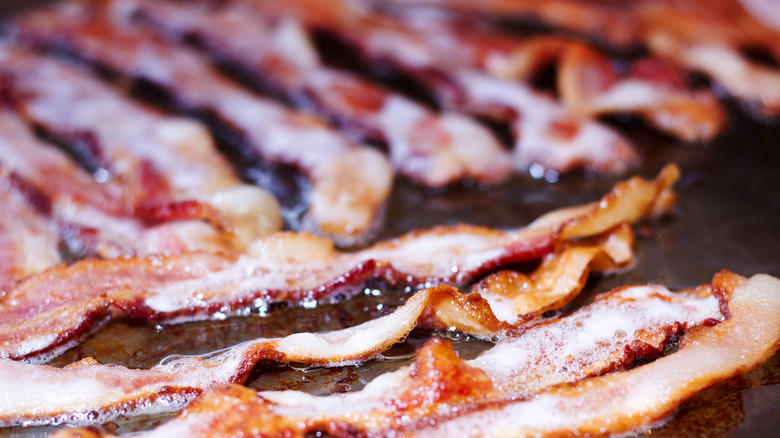
Is it OK to pity someone who doesn't like bacon? It's just one of those foods that is so universally loved, it's hard to imagine someone not being on board. But we don't judge — bacon has enough support, anyway. When it comes to using the drippings from your next Sunday morning bacon-filled skillet to cook with, it couldn't be simpler. Before the fat solidifies — especially a concern for those living in colder climes, or in the winter — you'll want to filter it through some cheesecloth to remove the solid bits of meat suspended in the oil. Store it in a clean jar in the fridge, and break it out next time you want to make a grilled cheese — thank us later.
But what does Chef Don advise when it comes to this addictive and tasty cooking fat? He tells Chowhound that bacon fat will be able to stand up to intensely flavored game meats, working with its inherent taste profile and not against it, in a complementary way. Think of pairing the cooking fat with the food you're cooking in the same way you might do so with wine. You wouldn't pair a wimpy and light-bodied Pinot Noir with a super-rich and hearty steak; a Cab would be the better choice, so as not to get bullied by the meaty flavors. Being intentional with how you match your cooking fats to your proteins is never a bad idea — we think most food obsessives would agree.
9. Coconut oil
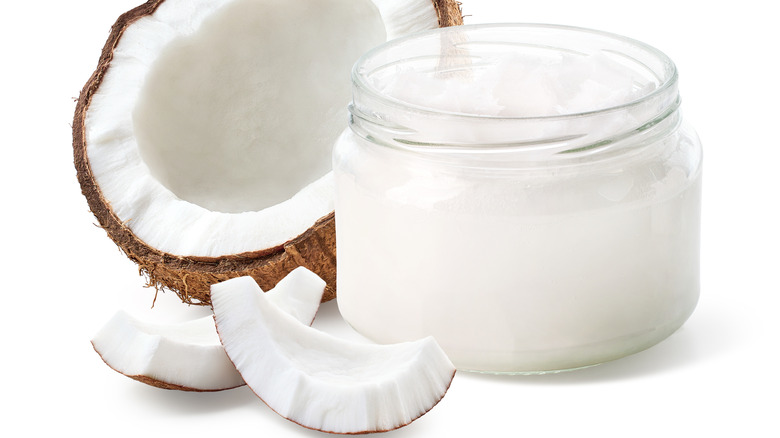
Remember that health craze era of bulletproof coffee, where people would add coconut oil and MCT oils to their morning brew? Well, that is one tip you won't find our expert chefs dishing out! Instead, Chef August has a very simple suggestion for using coconut oils: substitution. With so many people choosing vegan lifestyles these days, while seeking to retain the tastes and textures associated with animal-based dishes they once loved, you need to have a decent array of substitute ingredients on hand. Things like ground flax seeds and aquafaba (chickpea brine) being used in the place of eggs are common ones, but when it comes to specific pastries that require animal fats, you might turn to coconut oil.
"Coconut oil is also a good alternative to butter or lard when making pastry specialties like pies or biscuits," Chef August tells us. He notes that a vegan lifestyle can drive some people to certain cooking fats, as well as health and wellness concerns. "Health can be a priority when talking about fats," he says. Regardless of your diet, another benefit to using coconut oil is its distinct flavor that can pair really well in curries, adding an unmistakable tropical aroma and taste to your dishes. The only thing to note is that it has a relatively low smoke point, so keep that in mind if you're looking to crank up the heat.
10. Toasted sesame oil
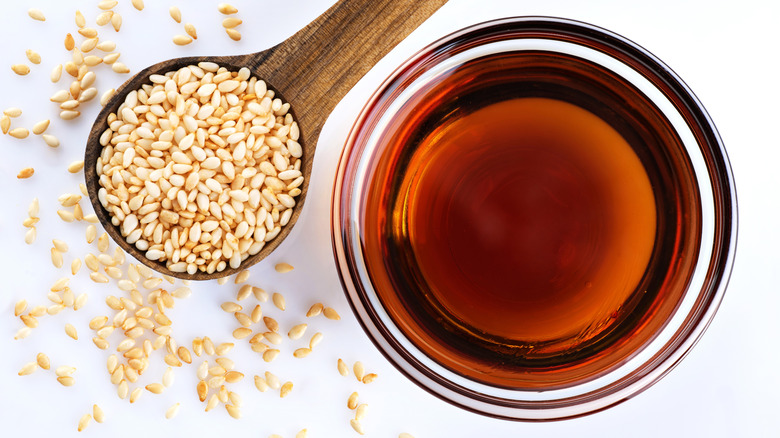
Just like olive oil, coconut oil, and duck fat, sesame oil is one of those punchy and unmistakable flavors that's easy to identify in a dish. Toasted sesame oil is powerful and pungent, and should be used sparingly to avoid overwhelming your main course. It is often associated with the wide-ranging and eminent cuisines of Asia — specifically Chinese, Korean, and Japanese cooking. Though many progressive chefs in small plates-type places might endeavor to use it in non-traditional ways, it tends to work best when added at the end.
Much like a very assertive and pricey finishing olive oil, you'd never want to cook with it at the beginning stages because all of those wonderful complex aromatic compounds will simply get lost and cooked out as they heat. Toasted sesame oil is no different and will benefit dishes when drizzled to finish, after adding your garnishes. "Finishing oils are a great way to add an aromatic quality to dishes," Chef August tells us. "Sesame oil can bring a nutty, ethereal quality to Asian dishes," he says. Chef Don is simpatico with Chef August, reaffirming sesame oil's best uses being drizzles and vinaigrette, telling us that it also adds a nutty warmth to food.
11. Neutral refined vegetable oils
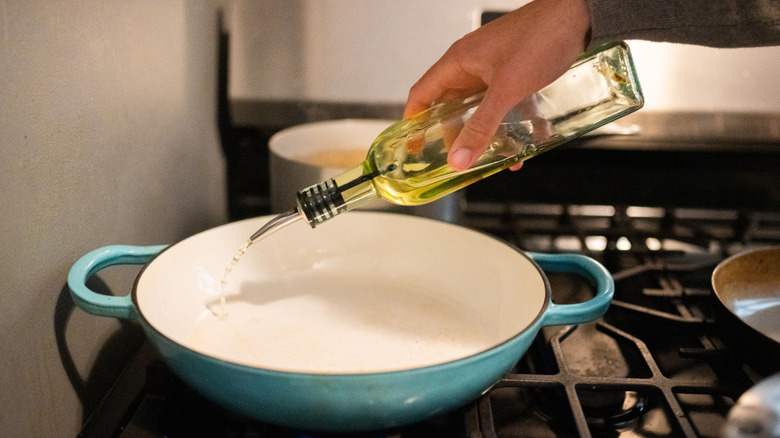
Looks like we've saved what is arguably the most boring oils for the end! But, truth be told, vegetable oils are indispensable tools for the modern cook, with a million uses and ultra-affordability on their side. Grapeseed, sunflower, canola, and corn oils are neutral-flavored workhorses, used in kitchens all over the world, whether for deep frying, sautéing, BBQ'ing, or searing — you name it. Chef August tells us that he usually goes with a neutral vegetable oil for searing because of their relatively high smoke points, with safflower, soybean, and canola oil topping out as some of the most resilient.
We can't forget about salad dressings, which are inextricably linked to oils as an emulsifier and carrier of flavor. Chef Don offers a non-heated option to use your vegetable oil here, with clever dressing advice. "When making an emulsified salad dressing as an example, Caesar dressing, if you only use extra virgin olive oil, the flavor overpowers the other ingredients," he tells us. "A solve is to use 75% vegetable oil and 25% extra virgin olive oil — this will bring out the other ingredient flavors while also reducing cost," he affirms. Though neutral vegetable oils may not be delicious on their own or have any refined gourmet applications, they have their place in the kitchen and can help those on a budget get dinner to the table affordably.