

5 Reasons You Should Never Cook With Your Dishwasher (Even If The Internet Says It's OK)

We may receive a commission on purchases made from links.
People have been tossing around the idea of cooking in the dishwasher for years, but it's come into the spotlight recently. On a September 2025 episode of the "How to Do Everything" podcast from NPR, the hosts tried (and succeeded, somewhat) to cook lasagna in a dishwasher. And this isn't the first time NPR put the idea of cooking in the dishwasher into the public sphere. The organization also published a dishwasher cooking article in 2013.
And it isn't just NPR. The hack has recently taken the social media world by storm, but it isn't the smart solution TikTok would have you believe. Kantha Shelke, Ph.D., founder and principal of Corvus Blue LLC and senior food safety regulations lecturer at Johns Hopkins University, spoke exclusively to Chowhound about why cooking in your dishwasher is never (ever) a smart idea, despite people singing the practice's praises on social media. "While I appreciate NPR's curiosity about unconventional cooking methods, this article represents a fundamental misunderstanding of food safety principles that major media outlets should not be promoting," she says. But that's not all Shelke had to say about why it's such a bad idea to cook in the dishwasher, no matter what advice you're finding to the contrary in podcasts and on social media.
Dishwashers don't distribute heat evenly, increasing the risk of foodborne pathogens like Salmonella
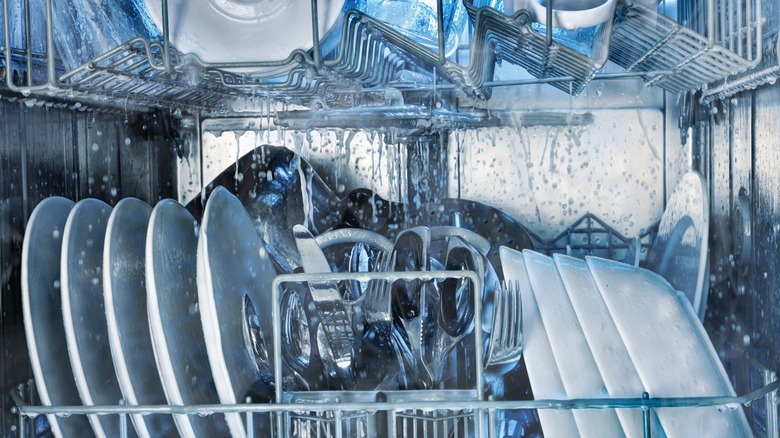
Your dishwasher doesn't distribute heat evenly throughout the cooking process, according to Kantha Shelke, Ph.D. That makes it impossible to tell whether your food was cooked at the right temperature for the right amount of time. "Dishwashers are designed for cleaning with variable temperatures and have uneven heat distribution, creating perfect conditions for pathogen survival in the cooler spots," says Shelke.
Killing pathogens is a function of both time and temperature. That is, the food must reach a specified temperature and stay there for a minimum amount of time. The lower the temperature, the longer you must maintain it, and some temperatures are just too low to work for any length of time. Even if your dishwasher reaches what would otherwise be pathogen-killing temperatures, there's no way to know whether it maintains that temperature long enough and reliably enough to ensure your food is safe.
If pathogens that can cause foodborne illnesses thrive, you can potentially get sick. "This trend is dangerous misinformation that puts people at serious risk for foodborne illness," says Shelke. "Salmonella, Listeria, and E. coli are equal-opportunity, disease-causing microbes and do not care how 'clever' or 'viral' the hack may seem."
Exposure to high heat can make sealed containers less reliable
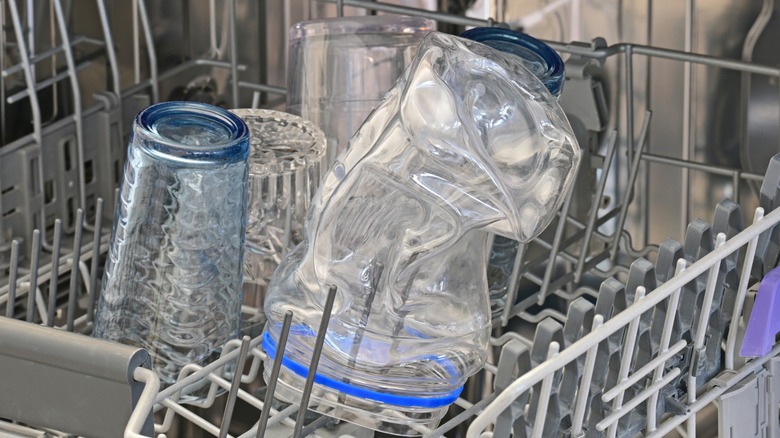
Most of us have experienced the surprise of opening the dishwasher to find that a valued container is warped, melted, or cracked. Even if you have a trusty sealable container that never opens when you tote it to and from work in your lunch bag, there's no way to know how it will perform once it hits the intense environment inside your dishwasher, even if it has worked before.
"'Sealed' containers are far from foolproof in the dishwasher," says Kantha Shelke, Ph.D. "Steam pressure, heat cycling, and imperfect seals can allow detergent residues and vapors to seep into the container and contaminate the food." This means that no matter how tightly you seal the container you're using for dishwasher cooking, you could still get trace amounts of detergent added to your food — which can carry serious health consequences, including digestive issues and worse. "Dishwasher detergents contain caustic chemicals, enzymes, and surfactants that are not intended for ingestion," says Shelke. You wouldn't eat off a detergent-covered dish, and you shouldn't eat something that was cooked in a detergent-covered environment, like your dishwasher.
Avoiding detergent isn't enough to prevent contamination
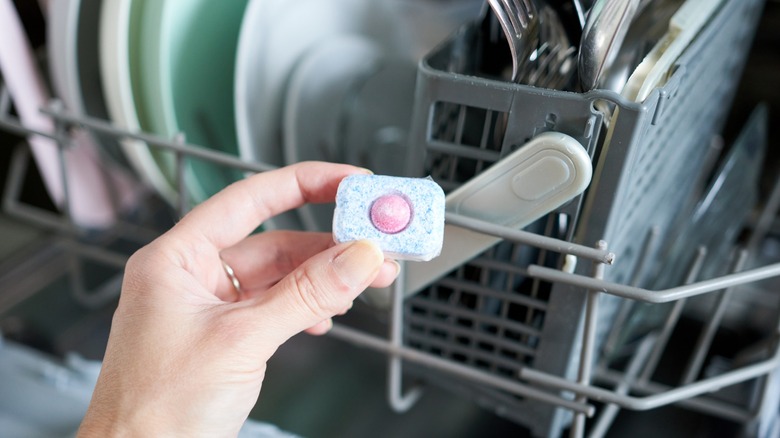
While the risk of contaminating your food with detergent is higher if you try to cook in the dishwasher during a normal wash cycle, you're still running the risk of detergent getting into your food, even if you don't add detergent, as remnants of detergent particles from previous cycles may still be present in your dishwasher.
"Even trace amounts pose health risks — especially to children and immune-compromised people — that no clever cooking hack can justify," says Kantha Shelke, Ph.D. Ingesting detergent can result in chemical burns, gastrointestinal distress, and toxic reactions, according to Shelke. While detergents tend to be rinsed away from dishes at the end of the cycle, it's impossible to rinse detergents away from food that's been cooked in the dishwasher.
Cooking in your dishwasher carries serious cross-contamination risks
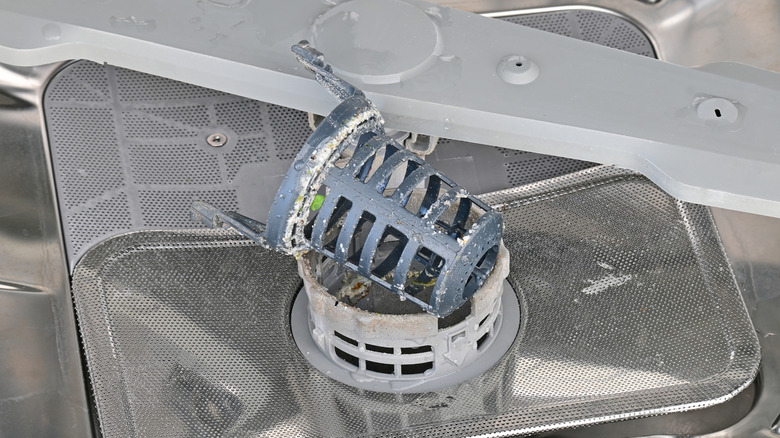
If you're already in the habit of cleaning your dishwasher's filter every couple of months, you know that even when your dishwasher seems super clean, there are areas that are loaded with, for lack of a better term, gunk. "Beyond the risk of pathogens and dangerous chemicals, this practice guarantees cross-contamination," says Kantha Shelke, Ph.D. "The same machine washing and storing dirty dishes (sometimes for a long time), contaminated dishes, and 'cooking' food is a recipe for disaster."
Your dishwasher may be able to sanitize your dishes, but that doesn't mean food cooked within the same space as your dishes is sanitary. While the high temperatures of a dishwasher may kill most of the bacteria on the surface of a dish, it doesn't work quite the same way for food. When you run your dishwasher, you're starting a virtual storm of bacteria — the contaminants that have sat for hours (or days) on dirty dishes are flying around the interior of your dishwasher as jets work to remove food and sanitize dishes. If (or when) the seal of your container fails, it's possible that pathogen-carrying water will hit your food — and there's no guarantee your dishwasher will be able to get rid of those pathogens, either.
Want to cook low and slow? Try these options instead of cooking in your dishwasher
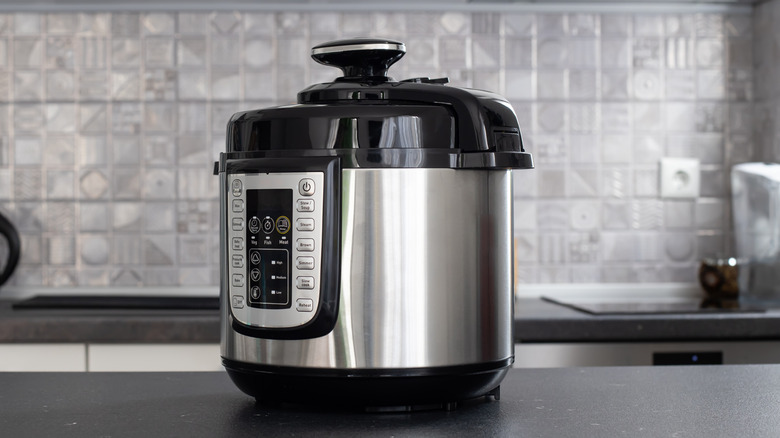
There are plenty of safer ways to cook low and slow. You probably already know how to use a slow cooker. Toss in your ingredients before you leave for work, and you'll come home to a delicious meal. And a relatively large 7-quart stainless steel Crock-Pot retails for only around $60 on Amazon — when it's not on sale.
You can also try a sous vide machine, which uses precise temperature control to slowly, evenly, and safely cook. And don't be intimidated. Using a sous vide machine is easier than you might think. You just seal your food in a watertight bag and pop it into the water. This option is a bit more expensive, however. You can get an immersion circulator as low as $40 for the lower-end (but well-reviewed) Wancle sous vide cooker to as much as $200 for a high-end, Wi-Fi-compatible Anova Precision Cooker. It's best if you also have a vacuum sealer, though you can sous vide without the vacuum sealer if you have to. But you need a suitable cooking container. Fortunately, you can use just about anything big enough, including the third slow-cooking option.
Newer models of pressure cookers — like the Instant Pot — get the thumbs-up from Kantha Shelke, Ph.D., who notes you can program them for slow cooking with guaranteed safety. An Instant Pot is only around $100 on Amazon, and it's one of the more versatile kitchen products on the market today, allowing you to make everything from perfectly tender salmon to dried beans with ease.