

Andrew Zimmern's 8 Best Tips For Buying Fish At The Grocery Store
We may receive a commission on purchases made from links.
What makes a good grocery store? Affordable prices, a decent selection, and maybe the occasional sale or two help. But in our minds, the hallmark of a great grocery store is its seafood counter. There is something very stimulating to the senses about seeing whole fish packed onto pellet ice, live lobsters crawling around a tank, and staff members handing over parchment paper-wrapped filets to customers like they're Christmas packages. The process of buying seafood from one of these counters can be daunting and, frankly, overwhelming. Savvy seafood shoppers know exactly what to look for at a store's seafood counter to ensure that they're getting a top-notch cut of fish, but do you? How can you tell if a seafood counter is up to some fishy business (not in a good way), or if you're better off buying your filets elsewhere?
We got the chance to speak to Mr. Bizarre Foods himself, Andrew Zimmern, and get his recommendations and top tips for buying high-quality fish from the grocery store. Zimmern is one of the co-authors of "The Blue Food Cookbook," which he wrote with seafood expert Barton Seaver in collaboration with Fed by Blue. The cookbook, set to be released on October 28, features 145 seafood recipes through the lens of sustainability and smart sourcing. His tips are perfect for any seafood shopper — whether you are trying to hone your eye for quality or just want to become a more well-informed shopper all around.
1. Rethink your definition of 'freshness'
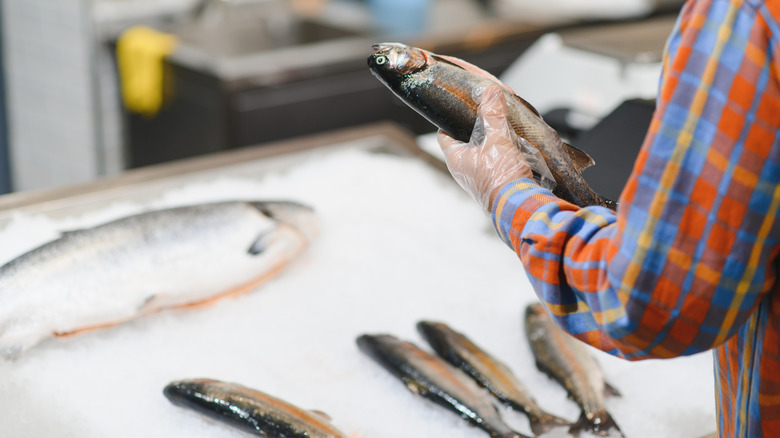
There are a lot of words thrown around seemingly very arbitrarily in the food world, and "freshness" is one of them. "'Fresh fish,' like youth or democracy, is one of those phrases people love to use without understanding how fragile it really is," says chef Andrew Zimmern. "Fresh isn't about how long ago the fish died, it's about how well it lived and how it was treated from that moment onward." While yes, it's important to look for signs that a fish is fresh by examining its color or filet quality, Zimmern notes that the hours and days since the fish was caught shouldn't be the real focus; it should be about the care of the fish at every step of the process. "The moment that chain breaks, sitting warm in the sun, stored on melting ice, or manhandled, it's no longer fresh, it's simply recently deceased," he says.
All this is to say that customers should look beyond whether their fish fits their definition of freshness. Learning more about its origin, how it was caught, and how it was preserved to maintain its texture and flavor helps you better understand what "freshness" truly means. Zimmern explains that this goes beyond just fresh fish. "The point isn't fresh or frozen, wild or farmed, people should buy fish from a responsible, sustainable source in its best condition," he says.
2. Don't discount frozen seafood
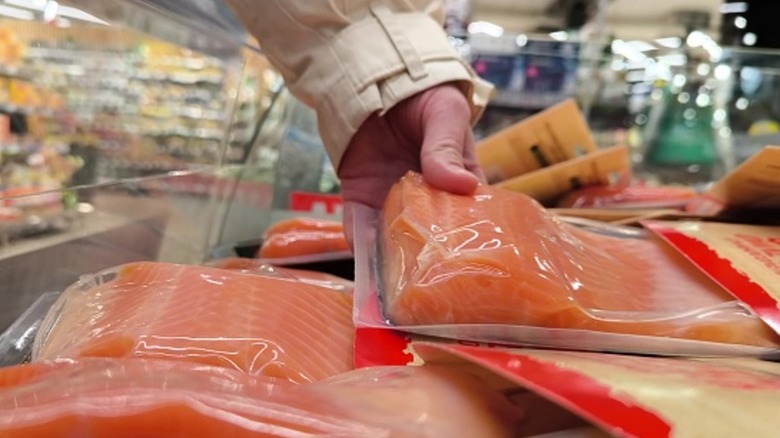
One common myth in the world of fish-buying is that fresh is best. But Andrew Zimmern spins this narrative on its head. He shares that he would rather take frozen fish over fish that has been, as he calls it, "poorly handled." As Zimmern says: "Frozen isn't a dirty word, it's often the smartest one."
Frozen fish can actually be preferable to fresh for many reasons. If the fish is frozen immediately after it's caught, it can help preserve its flavor and texture. The flash-freezing process can also halt bacterial growth, as pesky parasites cannot survive at such low temperatures. It's important to note that there is a difference between flash-frozen and frozen fish; the former is used for both fish and crustaceans and exposes the product to a very low temperature for a short amount of time, while regular freezing brings the product down to frozen slowly, which can cause ice crystals to build up and the texture to change. If you're opting for frozen fish, flash-freezing may be a great option.
In fact, some of the fish that you may buy from the grocery store is already frozen before it reaches the seafood counter, meaning you may already be buying pre-frozen fish and not even know it. In an interview with Epicurious, Gavin Gibbons, spokesperson for the National Fisheries Institute, claims that 70% of the seafood consumed has been frozen at some point in the supply chain process — which makes sense, seeing that most of the fish we eat is imported. If you are unsure whether your seafood is under this umbrella, ask your fishmonger or seafood counter staff.
3. Know the basic freshness indicators based on species
One of the most important things that any consumer can be is aware. When you go to the grocery store, regardless of what you're shopping for, you should always pay attention to visual and sensory cues that tell you whether something is at peak freshness. If you are looking in the produce section, you might pick up a piece of fruit, prodding and looking for soft spots. Gray-colored meat? Skip it. But what about seafood?
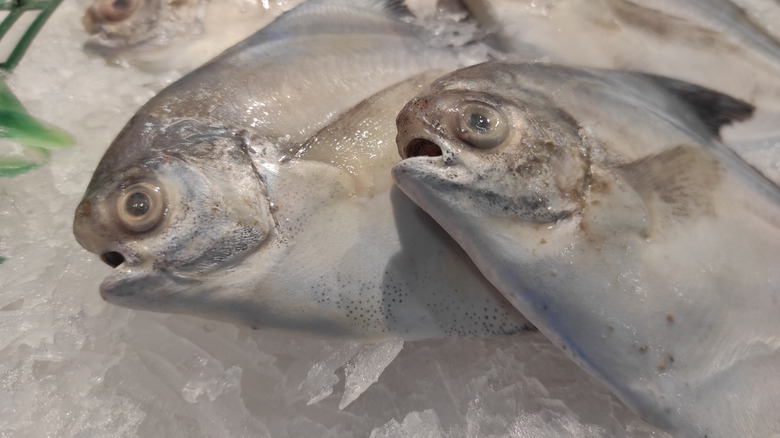
Andrew Zimmern notes that there are numerous ways to tell whether a fish is fresh, but many of these cues depend on the type of fish. "Each species tells its own truth," he says, offering some popular examples, including salmon and snapper. He explains that salmon should be vibrant, with shiny flesh and white fat lines rather than dull ones. As for snapper, "The skin and eyes are your guide, the color should be electric, like a new sports car, and the eyes should be as clear as an October sky in Minnesota." Haddock's freshness, meanwhile, is showcased by its odor. "If it smells like anything other than seawater, you're one step away from a vinegar wash and chowder territory," Zimmern says.
Zimmern offers some general pointers on what to look for when deciding whether to buy fresh fish. Vibrant skin, a filet that bounces back when you touch it, and more are good indicators to look for when shopping.
4. Visit a specialty store for certain fish and shellfish varieties
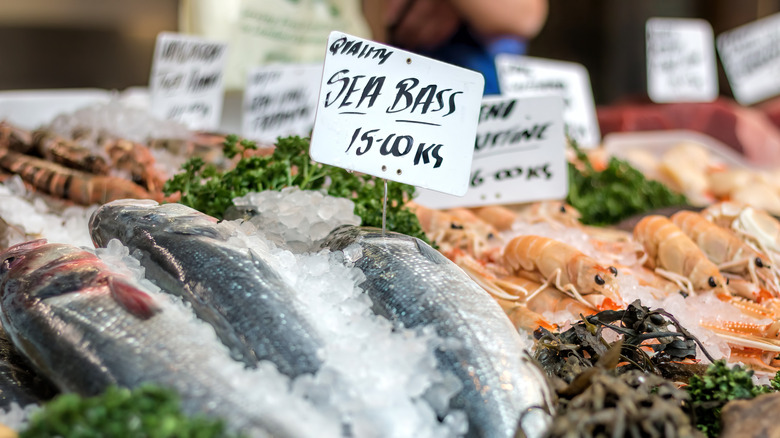
The supermarket fish counter is where most people buy their fish, but it may not always be the best place to shop, depending on what you're buying. A good rule of thumb Andrew Zimmern shares with us is "the more perishable the species, the more you need a specialist." He gives the example of some types of shellfish, flatfish, and delicate reef fish, all of which, as he says, "benefit from the touch of someone who actually cares." Fishmongers may know more about the nuances of how the fish was caught than a supermarket buyer, who may be focused only on the financial aspects.
While cod, halibut, and salmon could be purchased anywhere, if you're opting for things like sea urchins, scallops-in-the-shell, or wild-caught snapper, you may be better off paying a visit to a specialty fishmonger. They may be able to get you a better, fresher product and also provide more insight into whether the fish was responsibly caught.
5. Ask all the right questions to determine your fish's freshness

One of the best things that any fish shopper can be is curious. Regardless of whether you're shopping at Shaw's or a specialty fishmonger, you should be able to ask questions about where your seafood came from and how it was caught. Andrew Zimmern offers some starting questions: "'When did this arrive?' 'Was it previously frozen?' 'Where was it caught and how?' If they can't answer those, they don't deserve your dollars," he says. Zimmern notes that fishmongers, specifically, like answering these questions, because "it's their chance to brag."
He also recommends taking things a step further and asking a knowledgeable staff member how best to use the fish. Not only does this show that your fishmonger has both culinary and product know-how, but it can also be advantageous for you as a customer. "You'll learn tricks no cookbook will tell you, like why tilefish is better roasted than seared, or that mackerel sings when paired with vinegar and mustard," Zimmern says.
6. Look at the labels on your seafood
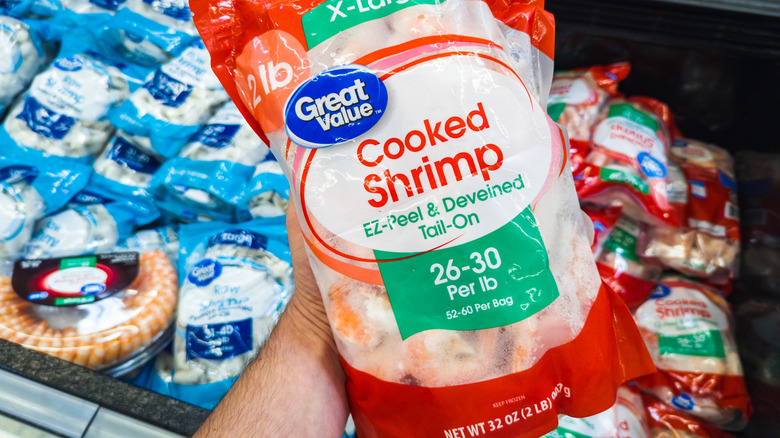
Besides being able to ask questions, a wary consumer also knows how to translate the meaning behind food labels. Knowing the difference between wild-caught and farm-raised (or aquacultured) fish is the first step. You may also want to keep your eyes peeled for third-party labels, including the blue Marine Stewardship Council (MSC) label, which is printed on everything from canned tuna to frozen fish. MSC upholds a set of sourcing and product standards that assess the environmental and population-level impact of fisheries through third-party auditing. If you're buying farm-raised fish, keep your eyes peeled for the Aquaculture Stewardship Council (ASC) label, which sets its own standards for aquaculture facilities. Being able to understand these labels and the standards or processes behind them will make you a more informed consumer and allow you to select a fish that supports your environmental ethos.
If you're buying frozen fish, Andrew Zimmern recommends looking for two labels in particular — frozen at-sea or flash-frozen — which he describes as "Michelin-level handling." If you don't see a label on frozen fish, give it a once-over, checking for ice crystals and overall color before adding the seafood to your cart.
7. Be on the lookout for seafood counter red flags
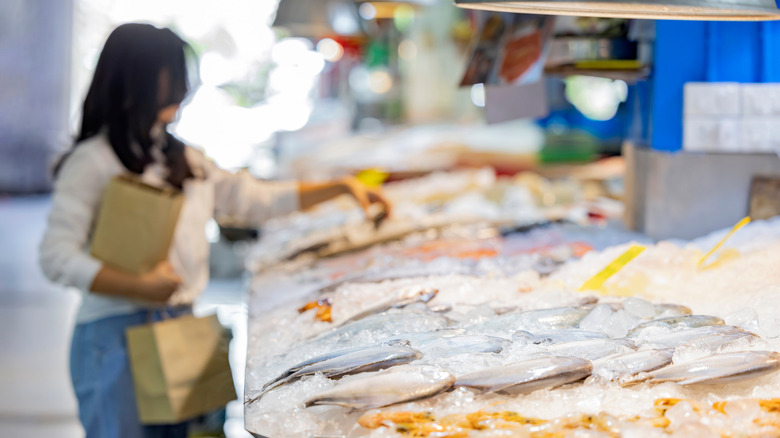
Not only should you carefully inspect each seafood product before adding it to your cart, but Andrew Zimmern also recommends paying attention to important red flags at the place you purchase it. "If the fish counter looks like a graveyard at noon, walk away," says Zimmern. In other words, if other shoppers are skipping over the fish section entirely, you may want to take the hint and shop elsewhere. "Avoid any seafood swimming in its own meltwater, or with a 'previously frozen' sign scrawled in pen like a confession," he continues. These signs can indicate whether a store is following proper sanitation protocol and genuinely cares about selling its customers a decent piece of seafood — all red flags shoppers should note.
He also notes that the staff should be able to answer your questions fully, and points to several chains, including Kroger, HEB, Hy-Vee, and Whole Foods, that he describes as having "incredible commitments to sourcing and selling sustainable seafood, farmed and wild, fresh and frozen."
8. If you buy fish that isn't high-quality, get creative with it
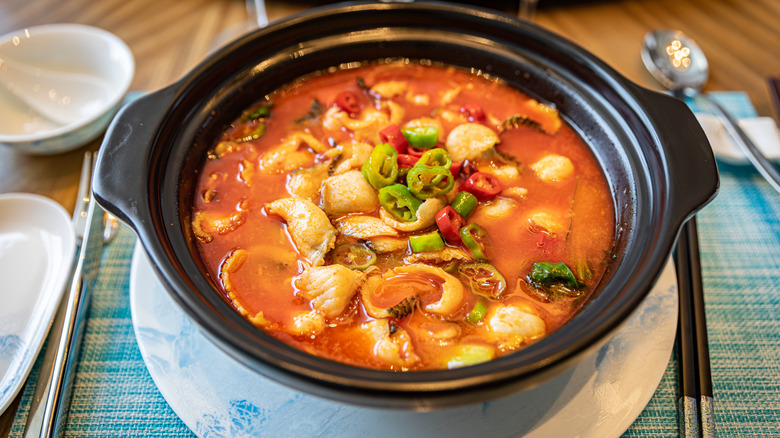
We've all had buyer's remorse when it comes to food. If you fail to inspect it carefully, you may end up with a fish that is too waterlogged to grill or that tastes a little too "fishy" for your liking. But you don't have to throw it in the trash and go back to the store with your tail between your legs.
Andrew Zimmern says that "acid, spice, and fat are your allies" when transforming lackluster fish into something that tastes fantastic. "A squeeze of lime and a spoonful of coconut milk can turn the mediocre into the marvelous," he says. He also suggests poaching it with flavorful saffron, grinding it up into Thai-style fish cakes, or "[frying] it hard in a batter that knows how to lie." All of these methods will mask impurities or textural issues in the fish. "In other words, don't waste it, redeem it," Zimmern says. "As I like to remind people: the line between 'fresh' and 'fishy' is about one meal's worth of imagination."