

10 Underrated Ways To Reuse Bacon Grease

Believe it or not, it is a scientifically proven fact that bacon makes everything taste better, owing to its unique combination of salty, savory, and smoky flavor notes. While there are a number of ways to include this meaty gold into recipes, many of us discard the fat that is rendered from bacon when it cooks. This isn't just a darn shame; it is a culinary crime of epic proportions.
Bacon grease can be used in countless ways to elevate sweet and savory dishes alike. The key is properly straining and storing it so that it is readily accessible. A jar of bacon grease in the refrigerator can replace butter, olive oil, lard, and virtually every other kind of fat in many of your favorite recipes, so long as you know the correct ratios and how to incorporate it for the best results.
That's where I come in. As a chef with almost two decades of experience working at a restaurant and inn, I am not exaggerating when I say I have cooked hundreds of pounds of bacon over the course of my career, and I was always keen on salvaging that delectable grease for my culinary masterpieces. From soups to salads to meat marinades to baked goods, read on to discover the most underrated, chef-approved ways of reusing bacon grease.
1. Pop your popcorn in it
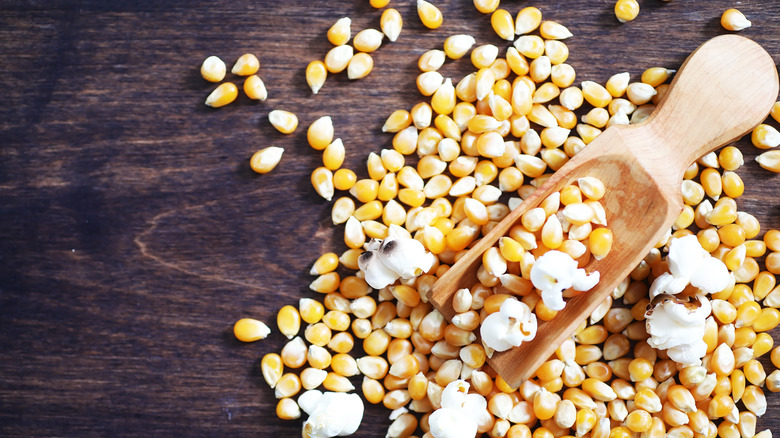
While many of us rely on microwave popcorn for a quick snack fix, if you are seeking to elevate your midday craving satiations, popping your own kernels on the stovetop is a superior way to prepare this savory treat. Most stovetop popcorn recipes rely on a neutral-flavored fat, like grapeseed, avocado, or safflower oils. Though these work well, they don't offer much by way of taste. Swapping these with bacon grease can completely revolutionize your popcorn game.
A basic rule of thumb for making popcorn with bacon grease is to use 2 tablespoons of fat for every ½ cup of popcorn kernels. Cook these over medium heat in a heavy-bottomed pan, shaking occasionally, until all the kernels pop. The bacon grease will impart a hint of smokiness and savoriness that will make the popcorn infinitely more satisfying.
But don't stop there. Consider enhancing the bacon grease with other ingredients, like brown sugar or maple syrup for a sweet and savory flavor combination, crushed red pepper flakes or chili powder for a spicy kick, or the powder packet from a box of store-bought mac and cheese for a highly addictive, fromage-coated snack that you won't be able to put down.
2. Use it for frying chicken
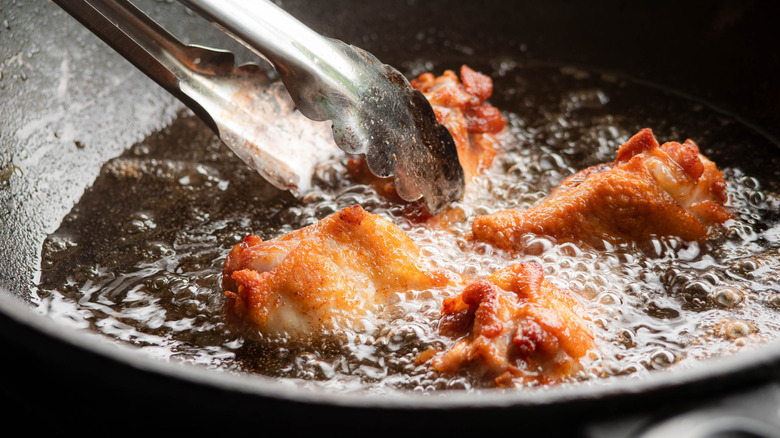
Fried chicken, fish, or battered vegetables are not-so-guilty pleasures that many of us delight in. When it comes to frying food, the key to developing a crisp crust that isn't greasy or soggy is to use a fat with a high smoke point. Among the most common fats used for frying are canola, corn, and peanut oils. Though these can be effective, a more flavorful option for this cooking technique is to repurpose bacon grease.
Your leftover bacon grease technically has a medium smoke point, owing to its high fat content. This means it can easily burn at temperatures above 370 degrees Fahrenheit, making it unsuitable for high-heat cooking techniques. The solution is to combine it with an oil that has a high smoke point, thereby infusing this with the smoky, savory flavor of bacon, without allowing the fat to burn.
When adding bacon fat to traditional frying oils, make sure you have properly strained it to prevent any residual bacon particles from burning. As little as 2 to 3 tablespoons of bacon fat added to corn or peanut oil can completely transform the flavor, lending those rich umami elements to fried green tomatoes, okra, chicken, and more.
3. Add it to salad dressing
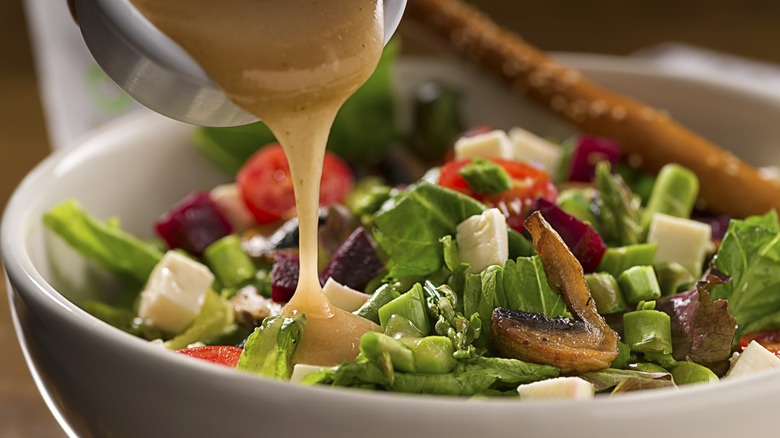
If you have ever eaten a spinach salad with warm bacon vinaigrette, you are already a step ahead with this one. Bacon grease can be the thing that takes you from being a salad skeptic to becoming a lettuce lover. It can replace the oil in any salad dressing, amplifying flavor and adding a luxurious mouthfeel that can enhance even plain iceberg lettuce.
When using bacon grease for salad dressing, you will need to add it in its liquid form, meaning, just after rendering it, but after it has cooled to room temperature. For a basic vinaigrette, a traditional ratio of three parts fat to one part acid is a good rule of thumb to stick with. Like with oil, bacon fat will require an emulsifier to coax it into commingling with vinegar or lemon juice. Among the best emulsifiers to use for this purpose is Dijon or stone-ground mustard.
Once these are whisked together, you can add any flavorings you might enjoy to complement the other ingredients in the salad. Consider a dash of honey or maple syrup for a sweet element to offset salty cheese or briny olives. You can also toss in some roasted garlic or freshly chopped herbs to incorporate aromatics that will help brighten up and enrich the texture of the dressing. Lastly, try using a dash of vanilla extract for the ultimate sweet and savory mash-up that will transform bitter greens, like arugula or radicchio.
4. Roast or sauté vegetables in it
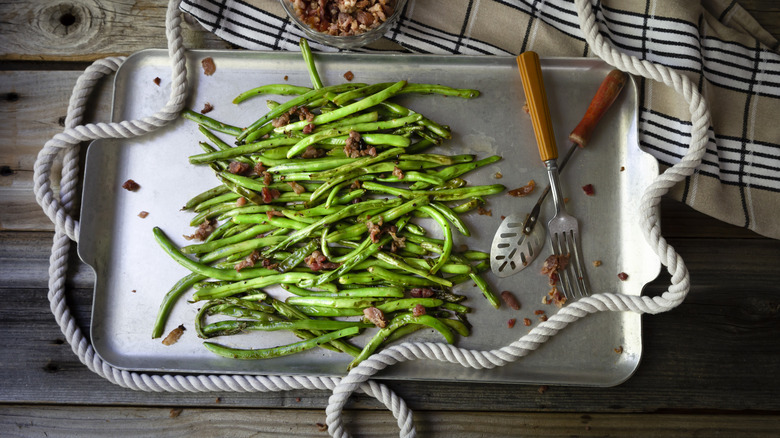
Let's be honest, steamed or boiled vegetables are pretty uninspiring, even if we know we should eat more of them. When it comes to elevating the taste of fresh or canned vegetables, sautéeing or roasting them can preserve their texture and coax more flavor out of them by caramelizing their natural sugars. Even with these cooking techniques, some vegetables need a little help in the flavor department. Few things can make green beans, Brussels sprouts, or carrots more palatable than bacon grease.
While you can use bacon fat that has been freshly rendered, you can also rely on that refrigerated jar of reserved grease when cooking vegetables. The key is heating the grease before using it so that it has become liquefied. This is especially important when you are roasting vegetables. Simply coat the vegetables generously with the melted bacon fat and season with your favorite herbs and spices to taste. Though you will need to add some salt to the mix, do so with discernment, as bacon fat can be inherently salty.
5. Add it to baked goods
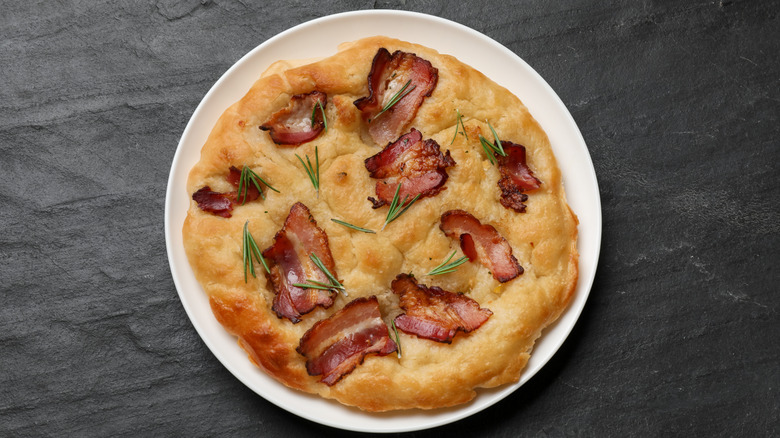
When it comes to baking, bacon fat can be a multi-faceted secret weapon. Not only does it add salty and savory flavor notes to cookies, cakes, biscuits, and more, but it can also transform the texture of these baked goods, lending much-needed tenderness and a velvety mouthfeel.
Bacon grease can factor into baking recipes in its liquid or solid form. Liquefied bacon grease can be swapped for olive oil in a basic focaccia recipe or added to pancake batter instead of melted butter or oil. Solid bacon grease can easily replace softened butter, shortening, or lard in any recipe, particularly scones, croissants, or any baked good prepared using a laminated dough.
When substituting bacon grease in a baked good recipe, it is important to control for the additional salt that is contained in the fat. Failing to do so can result in baked goods that not only taste overly salty, but it can also affect their texture by slowing yeast fermentation, denaturing gluten proteins, and producing dough that has a heavy crumb, instead of one that's light and airy.
6. Turn it into mayonnaise
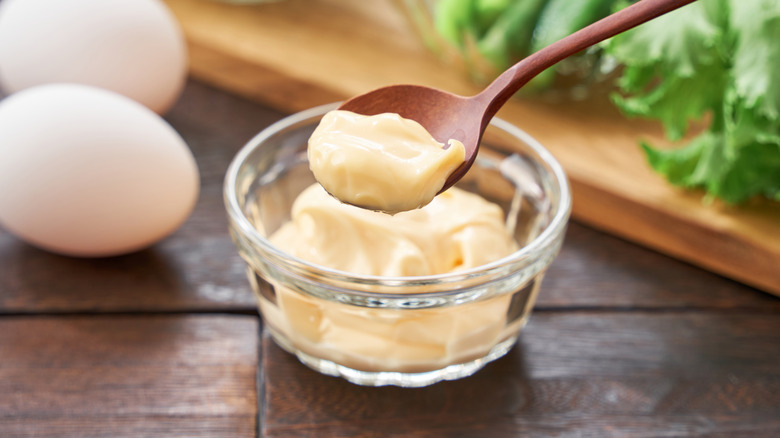
When it comes to condiments, few are as versatile and useful as mayonnaise. While we could debate the merits of Hellmann's versus Miracle Whip until the cows come home, there's another contender that is sure to knock either of these out of contention — baconnaise. Baconnaise is exactly what it sounds like: Mayonnaise made with bacon grease. The process is fairly simple, but the results are nothing short of magical.
Mayonnaise is made by combining egg yolks, Dijon mustard, lemon juice, salt, and pepper with a neutral-flavored oil. In this case, the oil is replaced with liquefied bacon grease that has been strained. The key is thoroughly emulsifying the ingredients until they become thick and creamy, which is best done using a food processor or an immersion blender.
The finished baconnaise can be used in any recipe you would usually add mayonnaise to, including tuna and chicken salads, sandwiches, and as a binder for crab cakes. It is also a fantastic way to incorporate creaminess and smoky flavor into a batch of baked mac and cheese. Lastly, you can swap it for oil or melted butter in baked goods. It adds tenderness to cakes and quick breads while also encouraging leavening for a light, fluffy texture.
7. Cook eggs in it
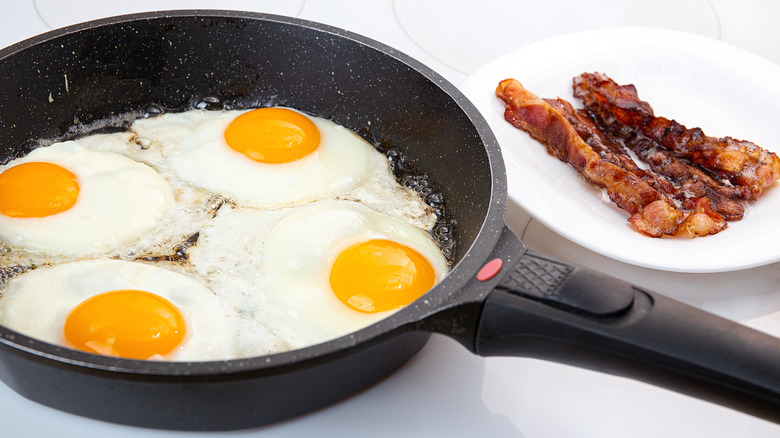
We know that bacon and eggs are a match made in culinary heaven, but some of us aren't taking full advantage of this harmonious marriage. Once we finish cooking bacon, we typically toss the grease before we cook up the eggs. However, bacon grease is ideal for cooking eggs for a number of reasons. Not only does it have a higher smoke point than butter or olive oil, which means you can cook eggs at a higher temperature more rapidly, thereby giving them a crisp exterior while maintaining a supple yolk, but it also infuses the eggs with that hint of salt, smoke, and savoriness that enhances them without adding anything else to the pan.
That said, scrambled, fried, or over-easy eggs aren't the only ovum that benefit from taking a hot bath in bacon grease. Consider adding it to your favorite frittata, quiche, strata, or soufflé recipe. Fat is always used in these recipes to prevent sticking and to encourage flavor development. It acts as the proverbial glue that binds the eggs to the remaining ingredients.
Though you can certainly use bacon grease straight from the pan, if you are concerned with leaving any bacon particles behind that may give the egg dish a murky look, you might want to strain it through a cheese cloth first to eliminate these. Alternatively, simply use the stash of jarred grease you have been keeping in the refrigerator.
8. Transform mashed potatoes
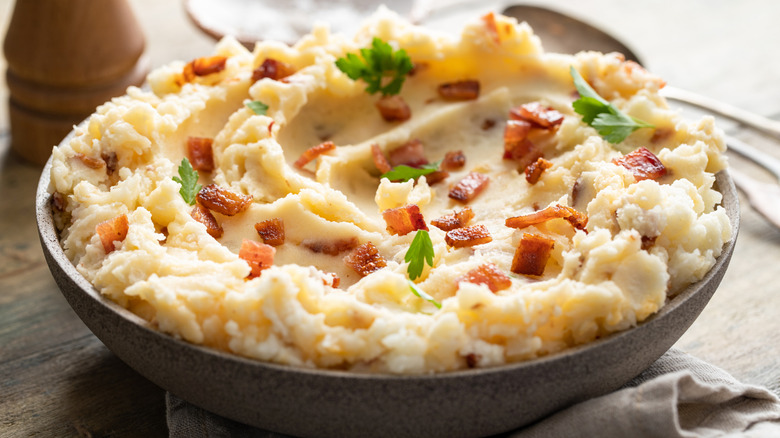
Mashed potatoes are arguably one of the most perfect side dishes ever invented by man. When executed properly, they can be light, fluffy, velvety, and impossibly luxurious. One of the key components to a heavenly batch of mashed potatoes is fat, typically butter. When added to the hot potatoes, the butter prevents them from becoming gummy and infuses them with richness that lends both flavor and a delicate texture.
While there's certainly nothing wrong with butter, bacon grease can take your mashed potatoes to new heights. Again, the process is relatively simple. You can either cook bacon from scratch while the potatoes are boiling, or simply use the stash of grease you have reserved in the refrigerator. Before adding the bacon, be sure to remove any solid particles from the grease that might prevent the mashed potatoes from becoming smooth and silky.
When using bacon grease to make mashed potatoes, try adding other ingredients that you might use on top of a baked potato. These could include sour cream, green onions, or cheddar cheese. And, try cooking up different types of bacon, such as applewood-smoked or maple-infused varieties. These will each have distinctly flavored grease that can totally change the overall flavor profile of the mashed potatoes, giving them even more complexity.
9. Level up pizza

If you have ever made homemade pizza or have attempted to doctor up a store-bought frozen pie, you may have used a simple technique to help give the crust that extra layer of crispness, namely brushing it with oil or melted butter before baking the pie. When used with discernment, adding a layer of fat to the crust not only helps with texture, but it can also help it brown, giving it that caramelized flavor that imparts a savory richness to the pizza.
Again, if melted butter or olive oil works well for this, imagine what some bacon grease could add to the mix. Simply spread a thin layer of liquefied bacon grease along the edges of the pie and across the top of the crust with a pastry brush before adding any toppings. Keep in mind, you may need to adjust the amount of sauce and cheese added to prevent the pie from becoming too greasy or soggy. You may also want to limit the number of salty components used as toppings so that the pie isn't dominated by salinity, particularly salt-cured meats and briny ingredients, like olives.
10. Sear scallops with it
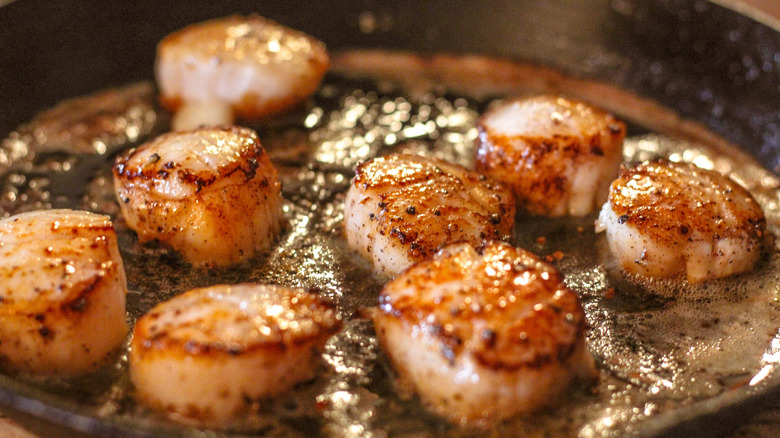
Watch any cooking competition show on television, and you will quickly discover that among the most difficult ingredients to prepare with finesse are scallops. While there are a number of things to consider when it comes to cooking scallops to perfection, including opting for dry-packed ones and ensuring they are completely dry before they are added to the pan, the type and quantity of fat used to prepare them are of key importance.
Scallops must be cooked at a high temperature quickly, which means they benefit from being cooked in an oil with a high smoke point, such as avocado or canola. And, while some prefer the neutral flavor of these oils, they could be doing so much more. This is where bacon grease comes into play. Adding a tablespoon of bacon grease to the pan in conjunction with another oil that has a high smoke point will infuse the scallops with a smoky, savory flavor that perfectly complements the inherent sweetness that makes these mollusks so delicious.
It is important to use bacon grease that has been completely strained of any solid particles so the scallops cook evenly. It is also important to make sure the grease is thoroughly heated before the scallops are added to the pan so that they begin to cook immediately. Lastly, don't crowd the pan. Adding too many scallops at once will lower the temperature of the pan and prevent them from searing, which can cause them to become overcooked.