

10 Simple Tips For Better Banana Bread
We may receive a commission on purchases made from links.
Banana bread is a fan favorite in pretty much any household where baking takes place, so it's no surprise that the web abounds with advice for keeping your banana bread moist, choosing the right mix-ins, or using a bit less flour. There are so many tips for banana bread, in fact, that it's hard to know where to start. Luckily, there are some simple hacks that anyone can master.
Baking is just tasty chemistry. Ultimately, you have to know "how ingredients interact with each other and what chemical reactions they create," explains Jessie-Sierra Ross, author of Seasons Around the Table. "Combining the proper amount of each ingredient in a baked good is as important as measuring the amount of each chemical in rocket fuel. Get the ratios wrong, and it doesn't rise." Get them right, though, and the results will wow you.
The same goes for temperature. "Batter temperature controls how fast ... gases form, when eggs and gluten set, when starches gelatinize, and how sugars brown," Foodess founder and recipe developer Jennifer Pallian says. "Too cold and you get tunneling, a dense middle, or a sunken top; too hot and the crust sets before the center cooks." The goal is to make sure it's hot enough to rise without causing burning or dryness, says Trung Vu, chef-instructor of Pastry & Baking Arts at the Institute of Culinary Education's New York City campus. The 10 simple hacks that follow help achieve the same goal: A perfect bake, no culinary expertise needed.
1. Use very ripe bananas
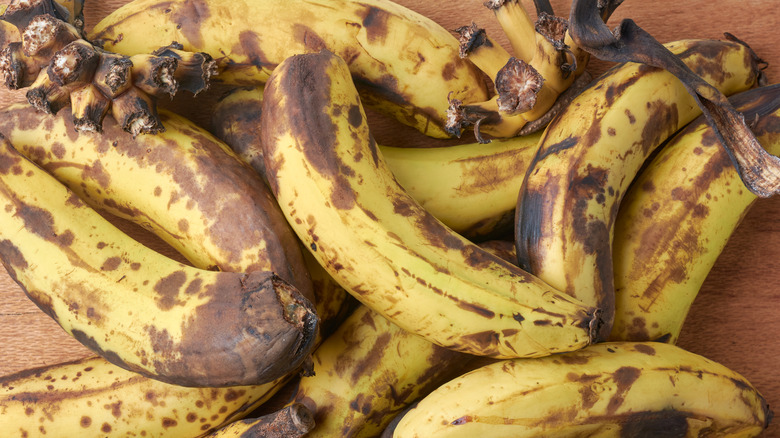
One common banana bread mistake is using underripe bananas. If you fail to ripen yours thoroughly, you'll get subpar results, because you haven't given the bananas enough time to convert their starches into sugars. "Very ripe bananas act as a sweetener, are easy to mash, and bring the kind of moisture you just won't get from firm bananas," says Marissa Stevens, founder and recipe developer at Pinch and Swirl.
Jessie-Sierra Ross agrees. Ripe bananas are her secret weapon in the kitchen because they keep breads moist and flavorful due to their intense sweetness and custardy texture. Don't be afraid to let them go nearly black, Ross says — it can only help. And if they get all the way brown or black and you don't have time to use them yet, just stick them in the fridge or freezer. You can pull them out a few hours before you're ready to bake with them and let them defrost on the counter. Just make sure they come to room temperature before using them (more on that later).
If you don't happen to have brown bananas on hand when you're ready to make banana bread, there's actually a hack to ripen them quickly: Just put them in the oven. The heat will help develop the sugars that form naturally as they sit on the counter, but in a fraction of the time. The result is a sweeter, more tender banana bread without having to wait for days.
2. Let ingredients come to room temperature
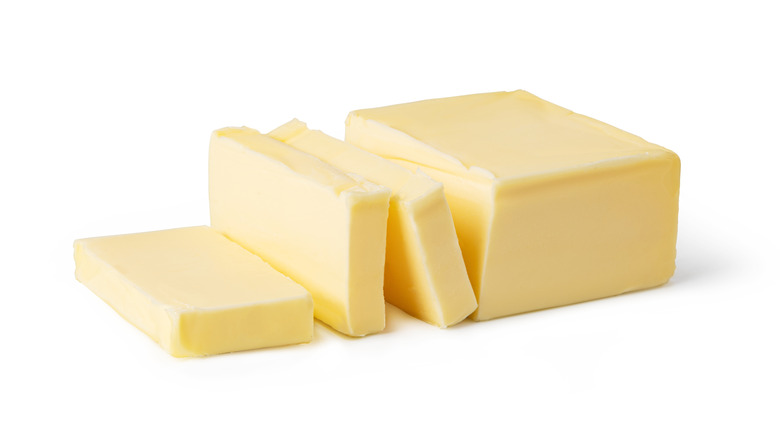
This tip is an oldie, but a goodie. And by "goodie," the experts mean you should take it seriously because it really affects the outcome of your bake. In general, room temperature ingredients allow your batter to emulsify more easily and keep things like butter from seizing or re-solidifying. This can lead to large holes in the crumb, which are created when lumps of butter melt away while cooking. While air pockets are great in sourdough, they're not usually appreciated in quick breads. Plus, Trung Vu adds, "The decreased butter absorption would also affect the overall texture of the bread."
Therefore, the right approach is to let bananas come to room temperature just like everything else, especially if they were sitting in the refrigerator or freezer for a while. "Cold [banana] purée slows the rise and can cause a gummy line," Jennifer Pallian says. Once you thaw them, she adds, make sure to drain away excess liquid, which can also affect the consistency of your batter.
Conversely, if you heat ingredients (such as melting butter), you should likewise let them cool to room temperature. That way, hot ingredients don't scramble eggs or pre-thicken batter, Pallian says. If you're the type who likes specific instructions, she advises you shoot for 68 to 72 degrees Fahrenheit.
3. Use a variety of fats
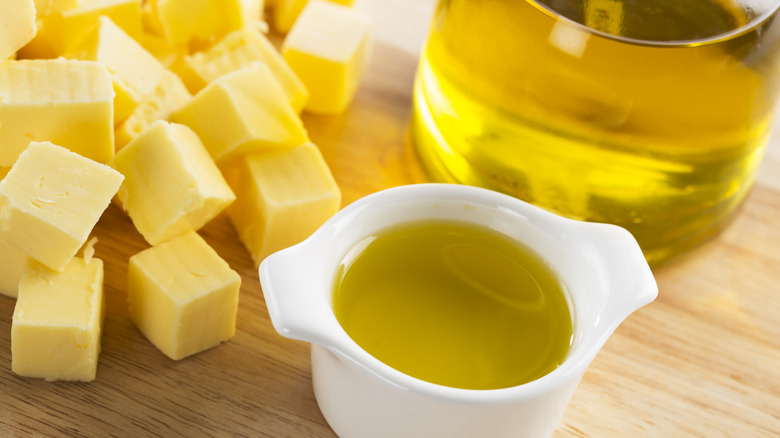
Playing around with fats is a great way to tailor your banana bread closer to the dietary specifications and flavor profiles that fit your home. One simple hack to improve your recipe is to use more than one, as a combination of fats can make for a better result. Jessie-Sierra Ross reminds us that combining two types of fats, one for texture and the other for flavor, will ensure that your recipe tastes the best. Her personal favorite combination is sour cream and melted butter. "The tangy sour cream helps to offset the sweetness of the ripe bananas, and the melted butter helps to flavor the banana bread as well," she says.
If you're vegan, Ross adds, reach for avocado oil. While many plant-based butters might sound appealing, their moisture and fat content vary so much that they might not play nicely with your recipe. Instead of gambling, reach for avocado oil so that your bread remains tender with a neutral flavor.
That's not to say you're strictly required to use more than one fat, though. "If the ratios are right, one fat is enough," Marissa Stevens says. While it's a good idea to vary your fats and see which ones you like best, you can also play with other ingredients to achieve the same ends. She enjoys, for instance, shredded zucchini, honey, and milk.
4. Don't scoop your dry goods
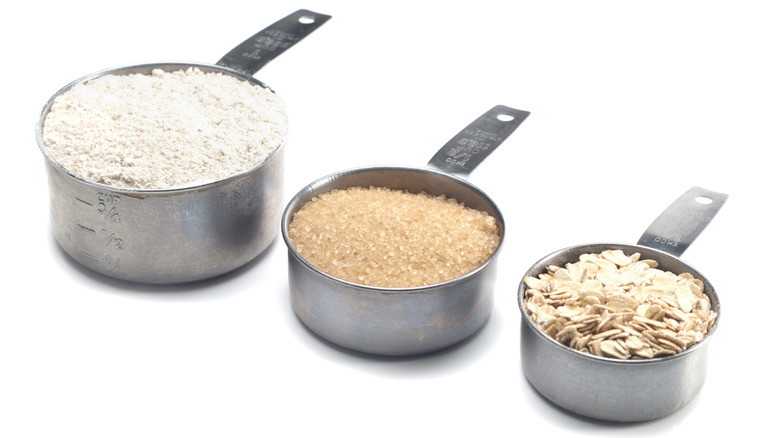
Scooping is the easiest route to measuring out a specific amount of dry goods, but try to resist the temptation with banana bread — and any other kind of baked good, frankly. "Scooping flour straight from the bag adds a lot more volume than you might think," Marissa Stevens says. Don't believe her? She invites you to partake in a little challenge: Scoop a cup directly from the bag, then dump it in a bowl and weigh it. Set that bowl aside, then weigh out the same amount by first scooping flour into the measuring cup with a spoon. Weigh the second one and you'll realize how much extra flour you've been putting in your bread, and thus unintentionally drying it out.
The takeaway? The best bet is to weigh your dry goods, especially flour and oats. The second-best approach is to use a spoon to fill up your measuring cup to avoid compacting the ingredients. On a final note, scooping isn't necessarily evil. But, explains Jessie-Sierra Ross, it's a confounding factor. Did the recipe author likewise scoop? If not, you're almost certainly using more flour than they did.
Most blog recipes these days will include weighted measurements, though, so it's best to follow them. "Using a digital scale takes the guesswork out of measuring, whether it's rocket fuel or granulated sugar," Ross says. Inexpensive but reliable gadgets such as the Amazon Basics Digital Kitchen Scale with LCD Display are a good place to start.
5. Use that salt!
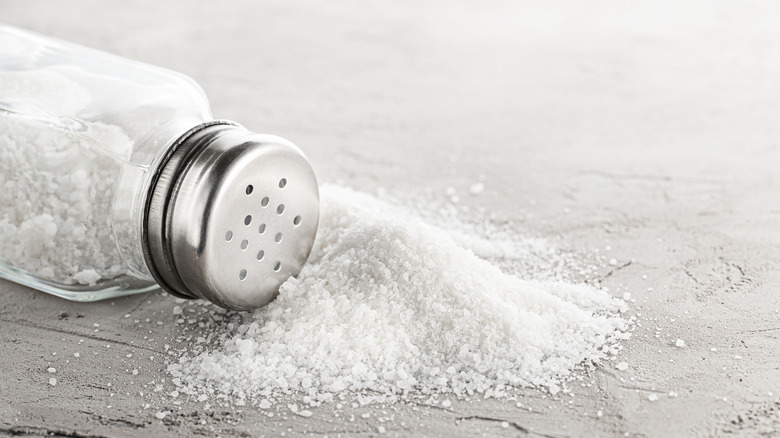
Salty and sweet might seem like a weird combo if you're just starting out on your baking journey. Some people assume you should eschew sodium in sweet recipes unless you're really going for that effect — say, salted caramels or pretzel cookies. In fact, though, all baked goods benefit from salt, and that includes banana bread. It's an essential ingredient that not only enhances the sweetness of the bread but also helps to create an overall more dynamic, well-rounded dish.
Not only that, but salt is also an important structural ingredient. "Besides enhancing the flavor, it is an activator for your rising agents," Jessie-Sierra Ross says. Without the salt, your bread might turn out flat and dense like a pancake instead of light and airy.
If you choose to use sea salt for its trace mineral value, just make sure to use a finely ground version, such as this Amazon Grocery Fine Ground Sea Salt. That way, it will dissolve into your baked goods rather than remaining chunky, which isn't necessarily the effect you're looking for in banana bread. Many sources advise pure, non-iodized salt for baking, which is likely what you already have on hand. If you really love sea salt and feel compelled to try it, consider using it as a garnish in banana bread recipes that include chocolate for a more exciting, flavorful element.
6. Embrace some lumps
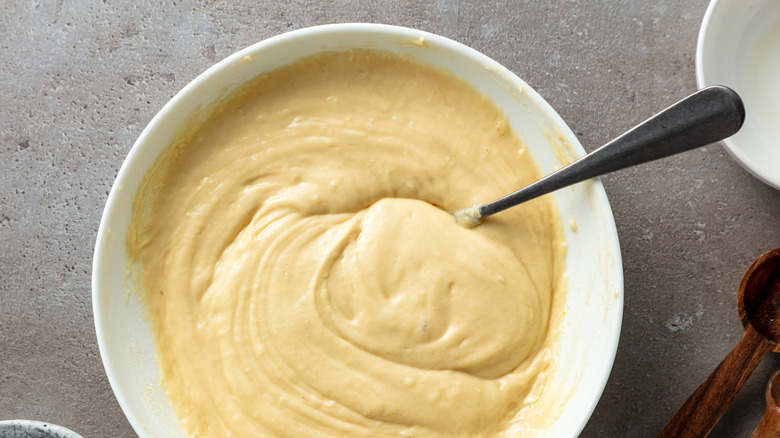
Lumpiness might seem like the enemy of good batter, but it really isn't. In actuality, many recipes direct you to stir wet and dry ingredients together until "just combined," but what does that mean? As soon as the flour disappears, you stop, Marissa Stevens says. "A few lumps are not just okay, they're preferable."
When you keep mixing in an effort to defeat those lumps, you end up causing a cascading chemical reaction that transforms your banana bread (which is really supposed to be a light and delicate cake) into actual bread, which has a denser bite and tougher chew. "Overworking dough ... makes a very tight network of gluten strands, which 'fights back' at both your efforts to mix it and your efforts to eat it later on," Jessie-Sierra Ross says. Thus, you should mix until everything is just combined, with some small pockets of flour still visible. "Those bits will melt into the final loaf, and your quick bread will be nice and tender," she concludes.
So show those lumps acceptance because they're meant to be there. As for tools, a basic whisk, such as the OXO Good Grips 11-Inch Balloon Whisk, will work fine. If you tend to go too hard, you can stick to rubber spatulas instead. Lots of home bakers love to have them on hand, and we can attest to the value and quality of this ChefAide Food Grade Rubber Spatula Set.
7. Mix up your mix-ins
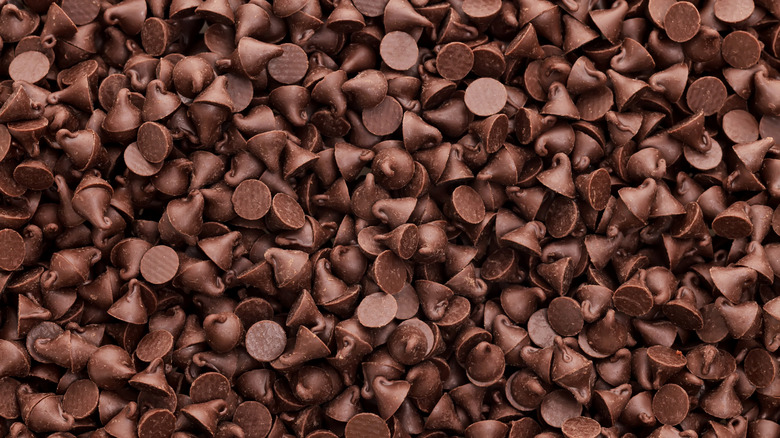
Good banana bread is delicious no matter what, but some zingy mix-ins really take things to the next level. Chopped nuts and dried fruits are pretty popular elements to stir into a batter, and you can get pretty creative with your choices.
You've got to be careful what you add, though, because that exacting mistress, Lady Chemistry, is always lurking, waiting to ruin the unwary baker's loaf. "If you want a chocolate banana bread and you add a sizeable amount of cocoa powder, its acidity can end up neutralizing the baking soda or baking powder of your quickbread, and the powder will soak up your water, leaving less for the flour," Jessie-Sierra Ross says. Similarly, she says, coconut flakes can dry out your cake, dried fruits can soak up moisture, and fresh strawberries can add too much of it. Again, it's better to look for a recipe that tells you exactly how to use such mix-ins instead of trying to wing it.
Two accessible exceptions include chocolate chips and nuts, she says. Putting these in a loaf of banana bread should be fine, as long as you use a tried-and-true ratio (which you could find in a recipe that uses them). Options such as 365 by Whole Foods Market Semi-Sweet Chocolate Baking Chips (or 365 by Whole Foods Market Organic Semi-Sweet Chocolate Chips if you prefer) and Fisher Chef's Naturals Chopped Walnuts are both reliable and easy to find.
8. Don't substitute ingredients willy-nilly
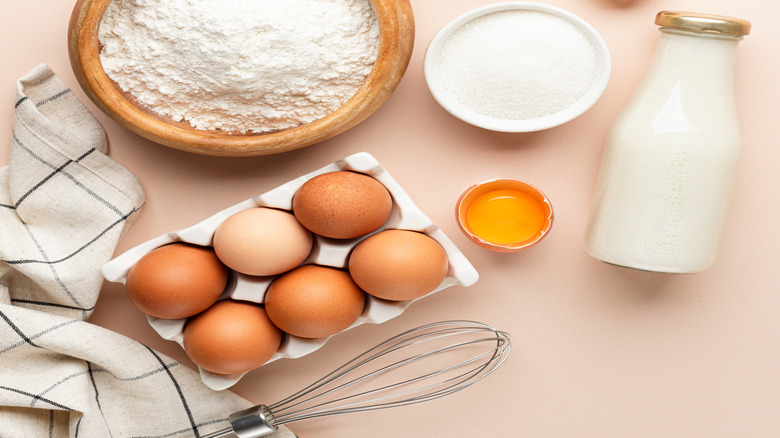
As this writer can attest, substituting ingredients with wild abandon rarely works out well. Unless you're designing your own recipe and willing to do five or 10 rounds, approach banana bread substitutions with caution. Baking is chemistry and easily disturbed. Marissa Stevens, as a recipe developer, does routinely experiment. However, she has to test several times to get the ratios right when subbing in ingredients such as oat flour or vegan butter, both of which require multiple adjustments to other ingredients, mixing style, and cooking times. Starting with a recipe that already calls for the specialty ingredients you plan to use is definitely preferred over trying to force them into a standard recipe.
Jessie-Sierra Ross agrees. Ingredients such as almond meal, cassava, and other non-wheat flours cannot be treated like one-to-one substitutions, she says. But if you have a gluten intolerance, she says, you can pretty reliably use King Arthur Measure for Measure Gluten-Free Flour. "It bakes up almost identically to the regular version," she says.
For instance, if you're going to try a banana bread sandwich and want a slightly less sweet recipe, make sure to look up a low-sugar variety rather than just cutting out sweeteners altogether, which can change the outcome significantly, beyond simple sweetness. That's because sugar does much more than impact flavor: It also lends structural integrity, helps with the rise, causes browning and caramelization, and keeps your baked goods tender and moist.
9. Pay attention to temperature
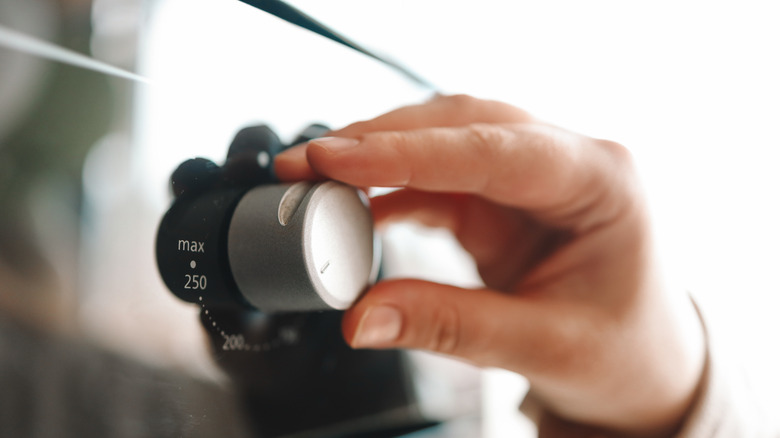
In general, you can take your cue about banana bread baking temperature from the recipe, but there are a few things to know before going in. Make sure the oven has fully preheated and stabilized (at least 10 minutes after the beep) with the oven rack in the center so you don't lose heat trying to adjust it later.
Next, the pan type matters. While shiny aluminum usually bakes as the recipe is written, dark nonstick pans run hot, and glass pans take longer. Both require a 25-degree Fahrenheit reduction and a longer bake, with glass pans giving the most disappointing results: overbaked edges and an underdone middle. In general, a USA Pan 1-Pound Aluminized Steel Nonstick Standard Bread Loaf Pan works well.
Trung Vu finds thermometers to be a critical tool in the kitchen. Not only should you use one to ensure the inside of your oven is actually the temperature it says it is, but they're also important for testing the internal temperature of your bread before you pull it out. "Pull the bread out when it's between 190 to 200 degrees Fahrenheit," she advises. "Any lower and it may have a soggy underbaked center, and any higher than this temperature range can lead to unnecessary moisture loss and dryness." The ThermoPro TP03B Digital Meat Thermometer is a safe bet. Once you cool your bread for 15 minutes in the pan, you can then turn it out onto a rack to prevent sogginess.
10. Slice with a serrated knife
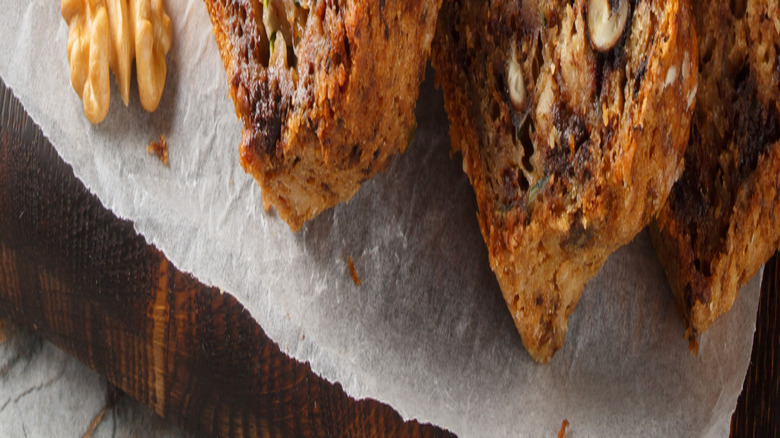
You've followed all the steps and baked up a lovely loaf of banana bread. So why would you ruin it by mashing pieces apart with any old knife? Instead, use a gentle hand. "A serrated knife gives you a clean slice," Marissa Stevens says. Why? As Jessie-Sierra Ross explains, a serrated knife is best thought of as a collection of many smaller knives, giving you more precision. It lets you get through the tougher exterior without mashing the tender interior. "If you instead use a regular knife for this, unless it's sharp enough to be a straight razor, dragging your blade on the outer layer will often squish the inside at the same time," she says.
Letting the loaf cool all the way will also make it easier to slice. "Sometimes the allure of that first warm slice wins," Stevens acknowledges, but try to do your best. Either way, a high-quality knife such as a Mercer Culinary 10-Inch Wide Wavy Edge Bread Knife will help you get the best result. Using it makes for a much better presentation and eating experience, especially for a party or when giving a gift.
Make sure not to slice up more than you're going to eat, though, since that dries out the bread and causes it to become crusty (and not in the yummy-French-bread kind of way). Instead, cut slices as you consume them, then store the banana bread properly until you want it next.