

One Of The Biggest Canned Bean Recalls Impacted Over 31,000 Pounds Of This Product
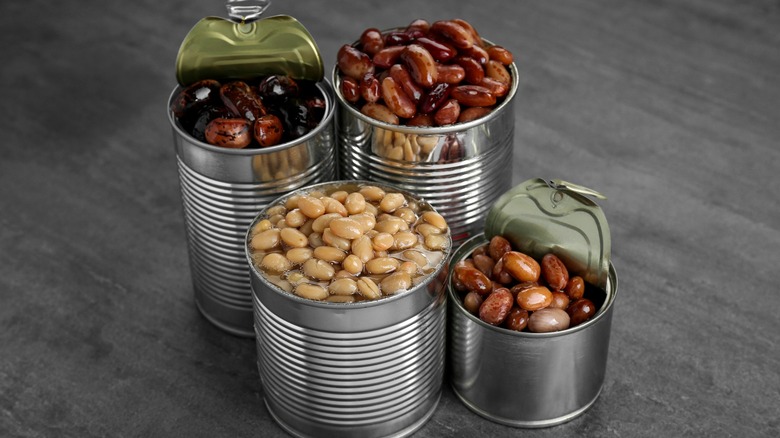
Of the many canned goods to keep stocked in your pantry, beans are among the most versatile. They're great in all sorts of comfort staples like red beans and rice, and you can jazz up canned beans pretty easily with a few simple ingredients. One thing you might want to know, however, is that a particular type of beans was at the center of one of the largest canned food recalls in American history — one that remains active to this day for cans dated with an expiration of March 4, 2029.
In 2024, Goya recalled just over 31,364 pounds of its canned red kidney beans that had already made it to store shelves. An FDA inspection of one of Goya's warehouses led to the discovery of swollen, leaking cans, which suggested the beans might have been contaminated with harmful bacteria. The metabolic activity of these microorganisms produces gas that causes cans to swell, which in turn can damage the metal enough to cause leaks. These leaks then leave an opening for even more microbes to enter, making the cans found in the Goya warehouse particularly risky.
What makes swollen, leaking food cans so dangerous
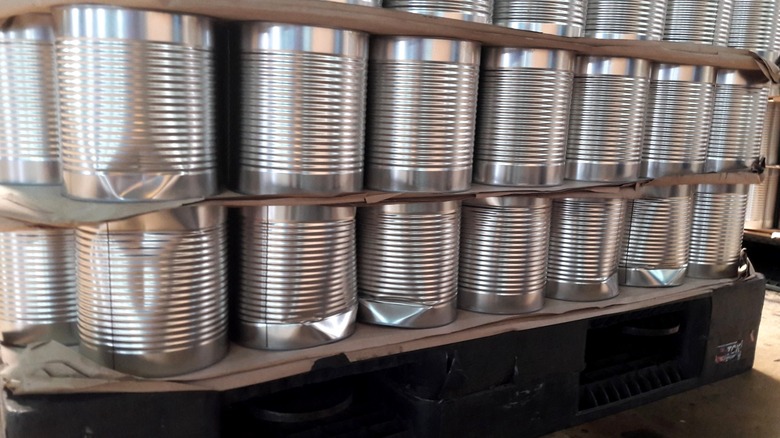
Leaking is one of the biggest red flags for canned goods, since bacteria — most notably Clostridium botulinum — may have contaminated the food. This bacterium produces botulinum toxins, which are widely recognized as among the most lethal known neurotoxins in the world. While the condition caused by ingesting these toxins, foodborne botulism, is relatively rare — the CDC reported only 21 cases in 2019 — the condition can lead to paralysis or death. Roughly 5% to 10% of foodborne botulism cases are fatal.
This is why there are a few rules you really should follow when storing canned food. Improper storage can lead to damage that creates openings for possible contamination. In that same vein, it's also best to toss out any leaky or swollen cans you find in your pantry. As for dented cans being safe or not, it depends on the type of dent and whether it led to any sort of exposure; rusty canned goods require similar case-to-case evaluation. Either way, a good rule to follow: When in doubt, throw it out — some things just aren't worth the risk. In the case of Goya red kidney beans, there's an entire batch you should be on the lookout for.
How to find out if you have one of the recalled cans
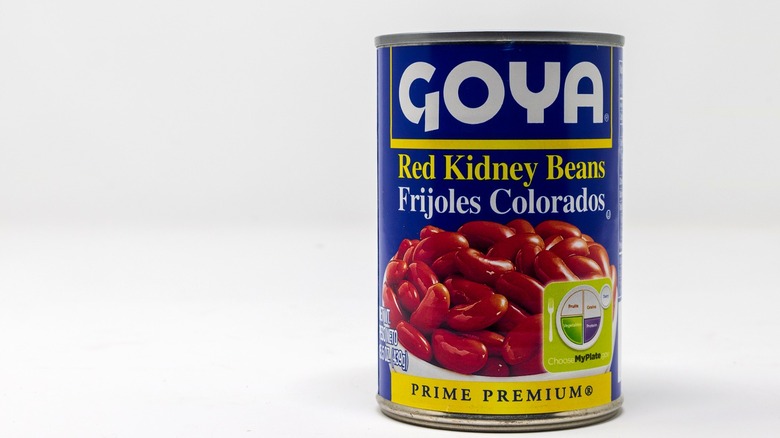
There are several ways to tell if a can of Goya Red Kidney Beans belongs to the recalled batch. All the compromised cans have the same batch code, A2402-8BB, which you can find stamped on either the top or bottom of the can, or printed on the label. If you can't find it, check the expiration date. As previously mentioned, the recalled cans expire on March 4, 2029. This specific batch consisted of only 15.5-ounce cans, so other sizes should be safe.
Because these canned beans were distributed in Puerto Rico and St. Croix, it isn't likely that cans you bought elsewhere belong to this recalled batch. However, given the size of the recall — a total of 1,349 cases, each containing 24 cans — there may be a chance that one of them found its way to your area. If you have a can of Goya Red Kidney Beans sitting in your pantry, it's best to check it anyway. Given the health risks involved with contaminated canned food, it's always a good idea to play it safe.
If you do find a can from this batch in your pantry, dispose of it immediately. Botulinum can cause harm by entering through cuts or other openings in your skin, so wear gloves when handling and dispose of the can inside a sealed container. Decontaminate the area with a solution of one part bleach to five parts water.