

10 Chef-Recommended Sauces Every Home Cook Should Master
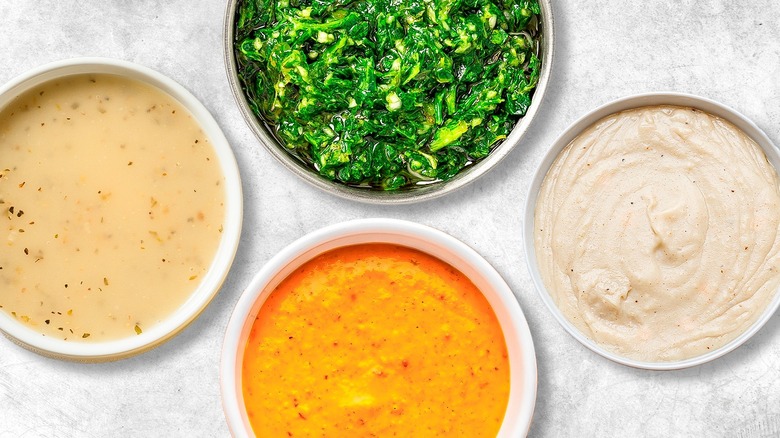
Sometimes all it takes to turn an ordinary meal into something out of this world is a great sauce. A well-executed sauce can deliver major flavor, add extra depth, and provide a nice mouthfeel. It also helps bring everything together into one cohesive dish. For example, a glossy pan sauce can enhance the flavors of meat, a swipe of tomato sauce adds richness and moisture to pizza, and a drizzle of bright chimichurri can make vegetables really pop.
Yet for many home cooks, sauces are one of the most intimidating parts of cooking. It may seem too time-consuming or technically challenging to master precise proportions and complicated emulsions. But for those who tend to turn to store-bought sauces more often than not, you should know that many seemingly complicated sauces are a lot simpler to make at home than you think. Some can actually be whipped up in just a few minutes with basic ingredients you probably already have on hand.
To find out which sauces are truly worth learning, we asked chefs from different culinary backgrounds to share their favorite sauces and the ones they think every home cook should be able to perfect. They filled us in on the five French mother sauces that you can use on their own or as bases to make a wide range of other sauces. In addition, they recommended several vibrant sauces from around the world that can seriously elevate your cooking. Even better, each of these sauces is easy enough for even novice cooks to manage.
1. Béchamel
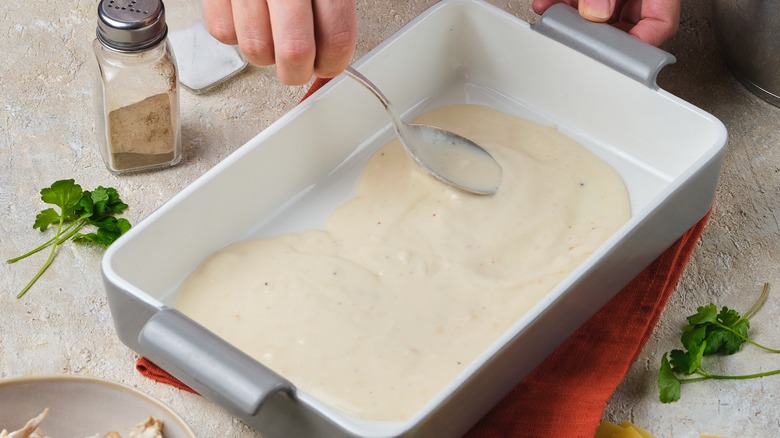
Many of the chefs we spoke to told us that if you want to up your game, the five French mother sauces are key. They include béchamel, velouté, espagnole, hollandaise, and tomato sauce, and they form the core of classical French cooking. Chef James Galbraith, chef-owner of PostBoy, told us, "Once you get those down, you can riff endlessly." And many chefs agree that one of the easiest of the five mother sauces to master is béchamel (aka white sauce).
To make béchamel sauce, you simply whisk milk into a roux of flour and butter, simmer until thickened, and season with salt, pepper, and nutmeg. Some people also add onion, cloves, or a bay leaf. Michael Handal, chef at the Institute of Culinary Education, pointed out that part of béchamel's appeal is its versatility in a wide range of dishes, such as lasagna, casseroles, sandwiches like the Croque Monsieur, and croquettes. He also said, "It is the jumping-off point for so many other preparations."
Part of the reason the five mother sauces are considered essential knowledge for any chef is that they form the basis for other "small sauces." One particularly luxurious (but also easy) sauce you can make from béchamel is Mornay sauce. Just whisk in some Gruyère and Parmesan cheese, and you have what Galbraith calls a "total crowd-pleaser." He said, "It's super easy but feels elevated. You can toss it on veggies, pasta, anything really, and people think you spent hours on it."
2. Espagnole sauce
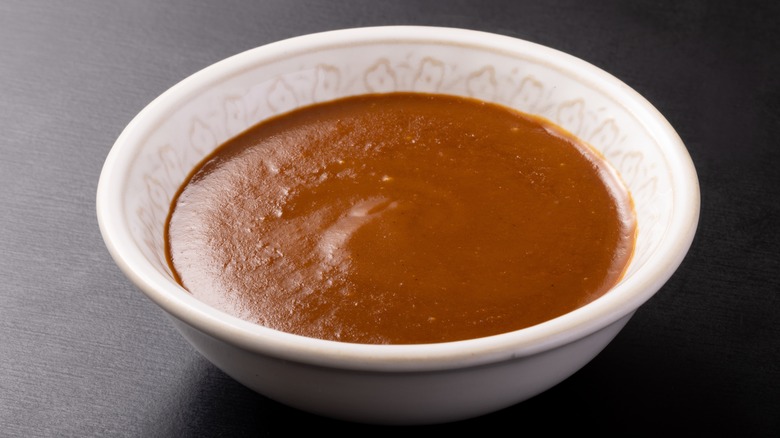
As the executive chef of French restaurant Grand Brasserie in New York City, Guillaume Thivet knows a thing or two about the five mother sauces. One of the essential sauces that he thinks every home cook should have in their repertoire is espagnole, a savory brown sauce that has rich, meaty flavors. He described it as "the gateway to classic steak sauces," and told us it's a great way to hone your skills at deglazing and reduction.
Espagnole sauce requires a few more steps than béchamel, but many chefs will tell you it's well worth the effort. It typically starts by sautéing a mirepoix of carrots, onions, and celery in a pan with butter. Add flour to create a roux, stir in some tomato paste, then add some veal or beef stock and simmer until it's reduced to a dark brown sauce. You can also add herbs and spices to amp up the flavor. If you want an easy shortcut, Thivet recommends reducing good-quality beef stock until it's syrupy and then finishing it with butter.
Some dishes that espagnole sauce works beautifully with include steaks, short ribs, mushrooms, and roasted root vegetables. You can also use espagnole sauce to create a number of other sauces. For example, you can simmer it with an equal amount of brown stock until it's reduced by about half to make a demi-glace. Add some red wine and herbs to that, and you have a Bordelaise sauce. Alternatively, you can add shallots, mushrooms, and sherry to your demi-glace to create a classic mushroom sauce.
3. Chimichurri
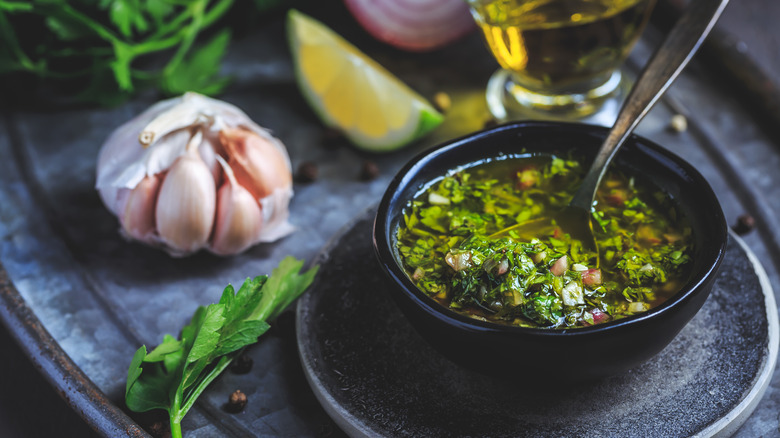
Beyond the five French mother sauces, there are plenty of other sauces that can add pizazz to your meals. One sauce that Michael Handal thinks is often overlooked but deserves way more hype is chimichurri. He said, "An uncooked sauce originating from Argentina, chimichurri can add a sharp, piquant flavor to almost any type of meat or poultry (most especially those that are grilled), as well as shrimp and scallops."
Vividly green and bursting with vibrant flavors, chimichurri is all about fresh herbs. It typically features plenty of finely chopped fresh parsley and oregano mixed with minced garlic, chili flakes or minced fresh chiles, red wine vinegar, and oil. The result is a zippy sauce that packs freshness, a bit of spice, and a good dose of acidity. In Argentina, it's often slathered on barbecued meats to add flavor and help cut through the fat, but you can also drizzle chimichurri on eggs, vegetables, potatoes, seafood, and bread.
One of the great things about chimichurri is that it's very adaptable. You can use whatever fresh, leafy herbs you have on hand, like mint, parsley, or basil. Handal also suggests adding dried spices like smoked paprika to give it earthy, smoky flavors. In addition, you can take inspiration from Italian salsa verde and add briny goodness like capers and a splash or two of citrus juice. Then again, why not put a Mexican twist on it and throw in some chopped tomatillos and jalapeños? Furthermore, you can blend it to make it smooth and spreadable or leave it chunky.
4. Beurre blanc
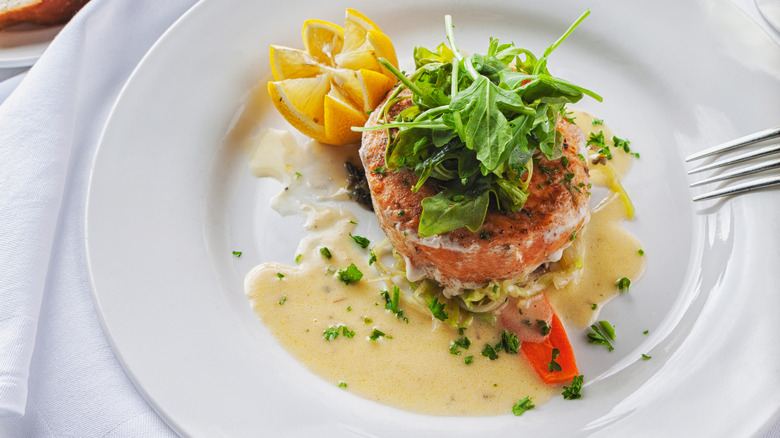
Looking for a sauce that tastes utterly decadent, but requires minimal effort? Anthony Spizale, executive chef at Sodexo at Nicholls State University, recommends beurre blanc. He says it is "silky, tangy, and instantly elevates a dish." It may sound fancy, but Spizale assured us that it's easy to make, taking only about 10 minutes to come together, and that it works on everything from fish to chicken and vegetables.
Also called buerre nantais after its birthplace of Nantes in France, buerre blanc is an emulsified butter sauce. It's made by simmering dry white wine with minced shallots and white wine vinegar, then whisking in cold butter until the sauce emulsifies and becomes thick and velvety. Think of it like hollandaise, but without the egg yolks. The key to getting that luscious mouthfeel is keeping the heat low so that the sauce doesn't break. That, and constantly whisking.
There are a few different things you can do to jazz up buerre blanc sauce, although many would argue that it's pretty amazing all on its own. Many people splash lemon juice in at the end to add a touch more acidity. Others add fresh herbs for pops of color or pepper for a bit of heat. Guillaume Thivet told us you can also add a spoonful of cream to give it more stability. In addition, he said, "I love to mix the beurre blanc with some basil oil and stir a bit. The result is stunning."
5. Teriyaki sauce
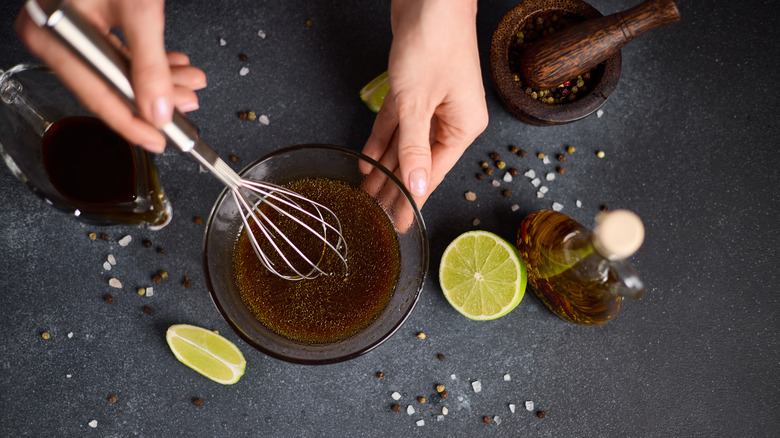
Maricel Gentile is the owner of Maricel's Kitchen, where she teaches cooking classes focused largely on Asian dishes. She told us that while Western cooking has its French "mother sauces," Asian cuisines also have foundational bases. She said, "There are core sauces and pastes that everything else grows from, making them the 'mothers' of Asian cuisine." For Japan, that base is soy sauce, and it can be used to create a wide range of sauces. One sauce that's particularly popular in Japan and abroad is sweet and savory teriyaki sauce.
Teriyaki dates back to the 17th century in Japan, when it was a cooking style that involved glazing meat with layers of soy sauce, sake, and mirin. The name can be broken down into "teri," meaning "shiny or glossy," and "yaki," which means "grilled." When Japanese people migrated to Hawaii in the late 1800s and early 1900s, they began adding ingredients like sugar, pineapple juice, and ginger to the sauce. Eventually, Americans came to know teriyaki as the sauce rather than the cooking method.
Today, it's pretty easy to find teriyaki sauce at most grocery stores, but you can also make it at home by simmering equal parts soy sauce, water, sake, and mirin. If you don't have access to the latter two ingredients, you can make a simple teriyaki sauce with just two ingredients: equal parts soy sauce and brown sugar. And don't be afraid to experiment with additional ingredients. As Gentile said, "From teriyaki, you can branch into glazes for grilled fish, marinades for chicken, or dipping sauces for vegetables."
6. Adobo sauce
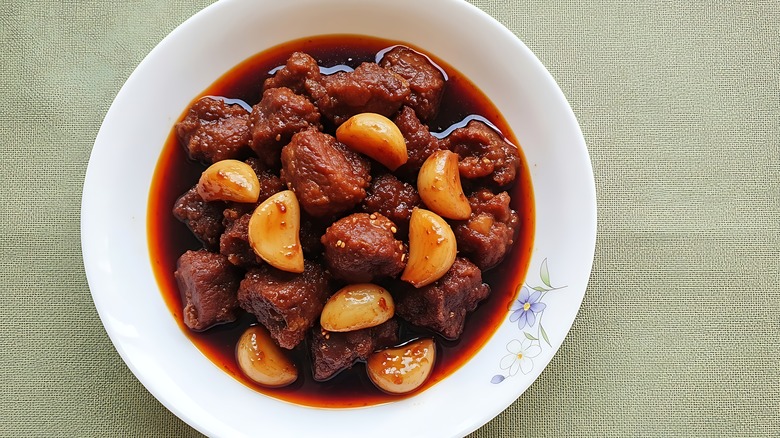
While Maricel Gentile is well-versed in a wide range of Asian cuisines, she's particularly fond of sharing dishes she grew up eating in the Philippines. One of those is adobo, which is a stewed meat dish that features a rich, piquant sauce. She said, "I believe it is one of the most underrated sauces in the world because it surprises anyone tasting it for the first time." The key ingredient that gives the sauce its distinctive taste is vinegar.
Gentile explained, "Where much of Asia is soy-centric, the Philippines is vinegar-centric because, as a tropical island nation, we needed vinegar to preserve food in the heat long before refrigeration. That need became identity — vinegar is not only practical, it defines our flavor." At its most basic, adobo sauce can simply be a mix of vinegar and soy sauce, although most people also add ingredients like garlic, bay leaves, and peppercorns to add more depth and flavor.
Adobo is also the name of the cooking method, and that's part of what makes the sauce so good. It's typically made by simmering pieces of pork or chicken in the vinegar-soy mix until tender. This allows the sour notes of the vinegar to mellow and the flavors to deepen. As the dish cooks, the braising liquid reduces into a glossy coating that clings to the meat. The end result is a dish that's layered with zesty flavors. It's best served with rice to help soak up the sauce.
7. Romesco
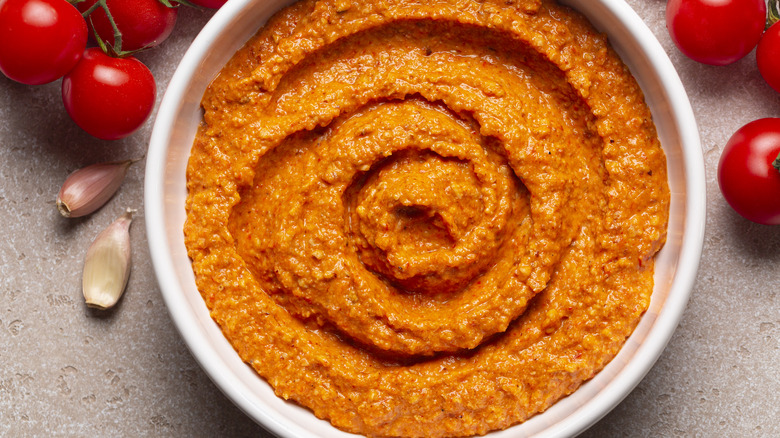
When we asked Chef Joseph VanWagner of Echelon Kitchen & Bar which sauces can instantly elevate a meal, he pointed to one that's both easy and impressive. "I think one really simple sauce that can make anyone look like a pro is a proper romesco or muhammara," he said. "It seems like every culture has its own version of roasted peppers, toasted nuts, and good acid, so most people connect with the comfort these sauces bring."
Romesco comes from the Catalonia region of Spain, and it typically includes roasted red peppers, tomatoes, nuts like almonds or hazelnuts, garlic, bread, sherry vinegar, olive oil, paprika, and red pepper flakes. Everything is blended together to create a vibrant red sauce. Muhammara hails from Syria, and it has similar ingredients — except the nuts are often walnuts, and the acidity comes from lemon juice. Some people also add cumin and pomegranate molasses.
Both sauces are fantastic to have in your wheelhouse because they're incredibly versatile. You can use them on meats and seafood or in soups, pastas, and sandwiches. They also make great dips and unique sauces for pizza. You can also swap some of the ingredients for whatever you have on hand. VanWagner told us he likes to use toasted cashews in his muhammara, and that he'll often puree it smooth for composed plates and leave it chunky for dips. "Regardless of how you prepare it, it is a low lift in the kitchen and creates a big applause when served at the table," he said.
8. Pan sauce
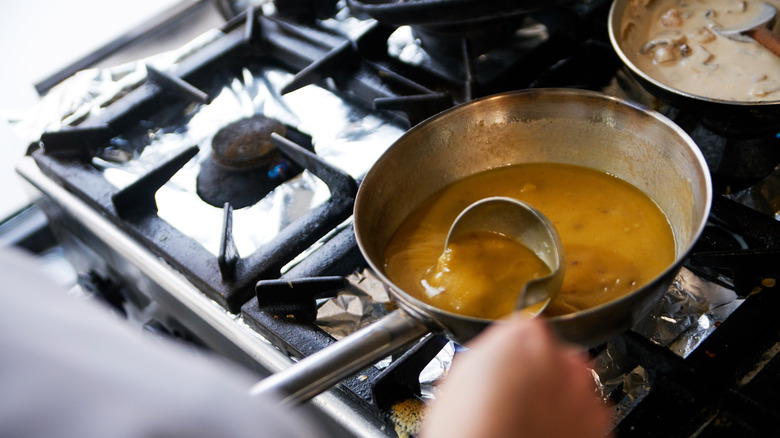
After searing a steak or chicken breast, you might be inclined to throw the pan in the sink, but those browned bits left behind are pure gold. Michael Handal told us they're actually the foundation for one of the most versatile sauces you can make: a classic pan sauce. "Chicken, beef, pork, lamb, and some seafood and shellfish will shine on the plate when paired with a well-made pan sauce," he said.
Those crispy caramelized bits are called the fond, and all you need to do to make a pan sauce is add liquid to the fond and finish with some butter. Water will work, but many people prefer to use wine and stock to add more flavor. Stir and simmer everything to reduce, and you should be left with a beautifully glossy sauce that pairs perfectly with whatever protein you're serving.
The beauty of pan sauces is that they're simple to make and can provide loads of flavor and extra moisture to your main dish. And as Handal said, "Pan sauces are tailored to the protein that they will accompany and can still be as versatile as the cook preparing them wants them to be." You can go simple with just some stock and butter for a mostly meat-flavored sauce, or make your pan sauce even better by adding aromatics like shallots, garlic, and fresh herbs. You can also thicken up your sauce by stirring some flour into the fond before adding your liquid or adding a splash of cream at the end.
9. Vinaigrette
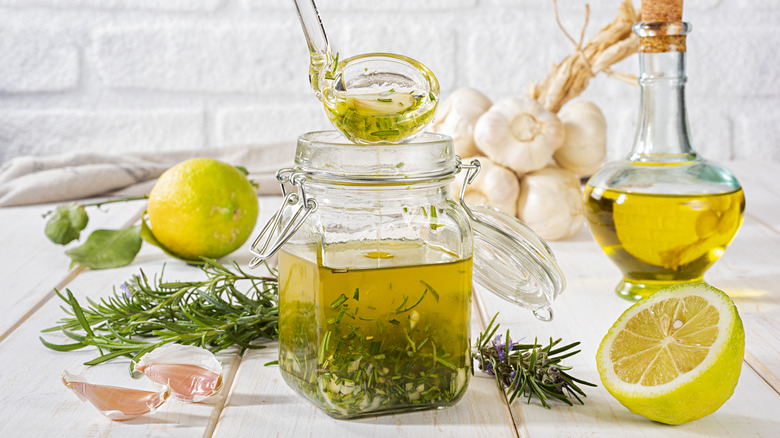
It doesn't take fancy equipment or a long list of ingredients to make a great sauce. Sometimes all you need is a jar, a splash of vinegar, and a drizzle of oil. That's the great thing about a vinaigrette. It's simple to shake up, very adaptable, and can give a huge lift to a variety of dishes. As Guillame Thivet told us, "The addition of any light vinaigrette that adds both acid and salinity to a dish could be the difference between a bland dish and a standout one that packs a punch."
A vinaigrette is a cold sauce made by emulsifying oil and some form of acid, like vinegar or lemon juice. Some people also like to add a binder like Dijon mustard and seasonings like fresh or dried herbs. It's pretty easy to make, as all you have to do is combine your ingredients and shake everything up. However, the biggest mistake people make with homemade vinaigrette is getting the ratio wrong. Generally speaking, you want about three parts oil to one part vinegar.
Once you know the basic formula for vinaigrette, you can get really creative with it. As Michael Handal told us, "Acids can be any type of vinegar or citrus juice, oils may be neutral or can have the fruitiness of a nice olive oil, and herbs can be anything you like that will complement whatever is going to be dressed or marinated." Try mixing and matching flavors to see how a few small tweaks can completely change the sauce.
10. Tomato-based red gravy
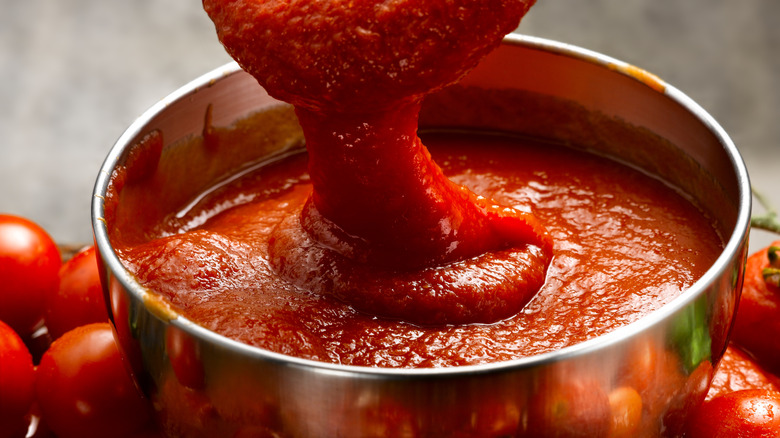
Every chef has a sauce that they go back to time after time, and for Anthony Spizale, that's red gravy. He described it as a "rich, slow-simmered tomato sauce with aromatics and a touch of spice, rooted in my Italian heritage." The chef uses it on everything from pasta to stuffed shells, meatballs, and roasted vegetables. "It's comforting, versatile, and carries the flavors and traditions passed down through generations in my family kitchen," he said.
You don't need Italian roots to make a great red gravy. All it really takes is good canned tomatoes, some garlic and onions, stock, and a bit of patience while it simmers away on the stove. Of course, every chef adds their own special touches. Some start with a mirepoix (aka the holy trinity) of onion, celery, and carrot and add herbs like bay leaves and thyme. A pinch of sugar can balance the acidity of the tomatoes, and salt and pepper can pull everything together.
The most obvious uses for homemade red gravy are pastas and pizzas. However, you can also incorporate it into a wide variety of dishes. Why not start the day with some eggs simmered in tomato sauce, shakshuka style? You can also spoon the tomato sauce over crispy cutlets or a meatball sub, or use it as braising liquid for stuffed peppers or beans. It can also double as a dip for snacks like mozzarella sticks, arancini, or even grilled cheese sandwiches.