

The Easy Way To Make Turmeric Tea A Bit Tastier
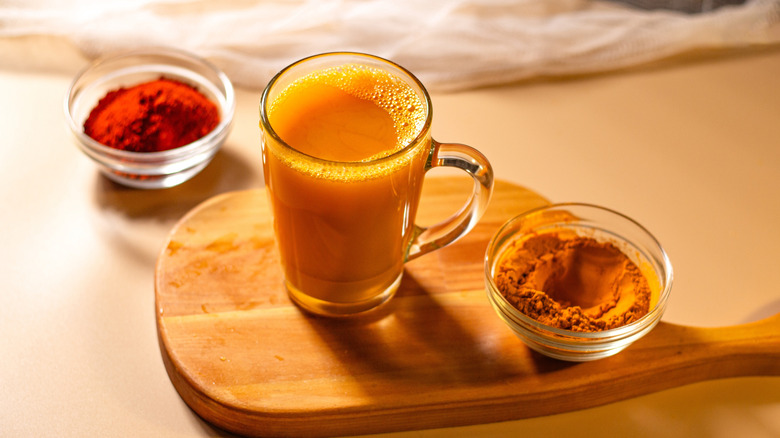
Turmeric is a root vegetable that is prized not only for its diverse uses in the kitchen, but also for its impressive list of health benefits. When cooking with turmeric, whether you're using it in a spice combo for better vegan scrambled eggs or as a key spice for whipping up flavorful Indian-inspired eats, you typically don't usually taste the turmeric because of the cooking process. The taste of raw turmeric, both in its fresh and powdered form, is not for everybody. It's distinctly earthy with bitter undertones, and chances are that it might not suit your taste preferences. However, since the cooking process diminishes some of turmeric's health-supporting properties, your taste buds may need to take an unpleasant hit if you want to gain the most out of the vegetable from a health standpoint, like in a warming turmeric tea. So, while its standout flavors might not be your cup of tea, there are ways to make a tastier beverage so that you can reap the nutritional rewards while enjoying the taste (at least, more than you otherwise would have). For helpful hacks for better-tasting turmeric tea, Chowhound turned to Bala Sarda, the founder of VAHDAM, a destination for "India's Finest Teas, Spices, & Herbs."
"The key to a balanced, non-bitter turmeric tea is counteracting bitterness with complementary flavors and using the right preparation technique," he exclusively told us. Sarda recommends using natural sweeteners to "soften the edges," and incorporating warming spices like cinnamon, ginger, and a pinch of black pepper. These ingredients not only add depth in flavor, but also boost the aroma and health benefits of your tea.
How to make turmeric tea
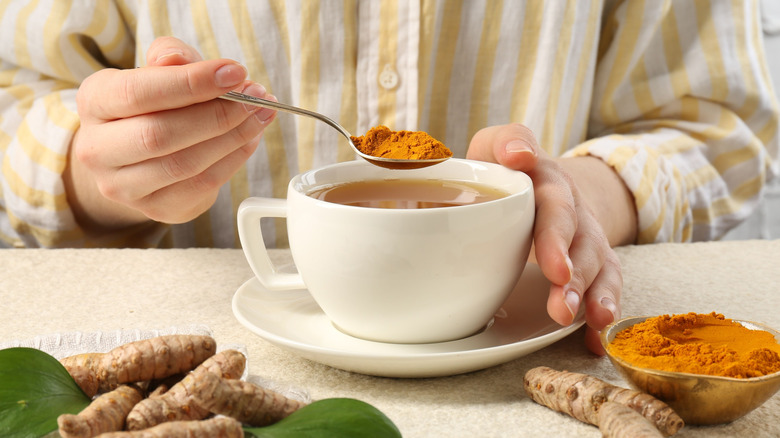
Anything that has to do with taste is subjective, and the palatability of turmeric's taste can vary from person to person. But when following a set of guidelines for preparing turmeric tea, you can easily customize the proportion of ingredients to cater to your taste. Since turmeric is available as a fresh root and in powdered form, we asked Bala Sarda about using either type when making tea. "Turmeric powder provides a faster, stronger, and more direct hit of earthy turmeric flavor," he said. "Turmeric root offers a slower, smoother, and more refined infusion."
He advises that simmering turmeric tea yields a richer, more robust flavor, while a quick steep affords a lighter and more subtle profile. When in a pinch, Sarda also suggests vigorously stirring turmeric powder in hot water so it completely dissolves. With a sprinkle of black pepper and your choice of sweetener, you'll be good to go. Black pepper is often added to turmeric teas because it not only makes it tastier, but the compound piperine in black pepper enhances the body's absorption of turmeric's key active compound curcumin, enhancing the overall benefits of the tea.
If you fancy a touch of creaminess, consider making a turmeric latte with your choice of milk for a rejuvenating, caffeine-free beverage to kickstart your day. Alternatively, if you enjoy the added flavors from complementing spices like cinnamon and ginger, you can make the traditional Ayurvedic golden milk drink that is quite literally comfort in a cup.