

The Hidden Buffet Tactics That Cut Costs For Restaurants Without You Noticing
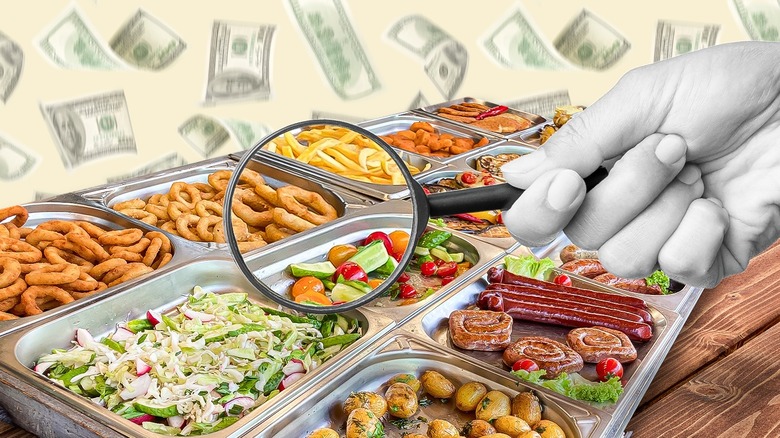
Buffets are part dining experience and part stomach-stretching dare, but almost everyone who eats at one has this thought at least once between walking in the door and walking out again: How can I get my money's worth? Any business that asks the 5-foot retiree and the 6-foot college student to pay the same flat fee for "all you can eat" already feels a bit like a racket before you find out what's simmering behind those sneeze guards.
If a buffet seems a bit like a war of wills between you and the proprietors, that's because it absolutely is. While you're trying to make sure you get your money's worth, the people who run the place are trying to make sure you don't. Try not to judge them too harshly; running a buffet is a gamble, and restaurants that don't do it strategically don't stay in business for long. That's partly because buffets spend up to 6% more on food than regular restaurants do, largely due to the massive quantities of uneaten leftovers that end up in the trash. And that's before including the cost of all the specialty equipment buffets have to purchase before they can open for business.
Even after hearing that, though, most people do still want to feel like they're getting good value when they eat out. If that's you, here are the tricks buffets use to keep you from achieving that goal and how you might be able to circumvent them.
They provide lots of filling, inexpensive items
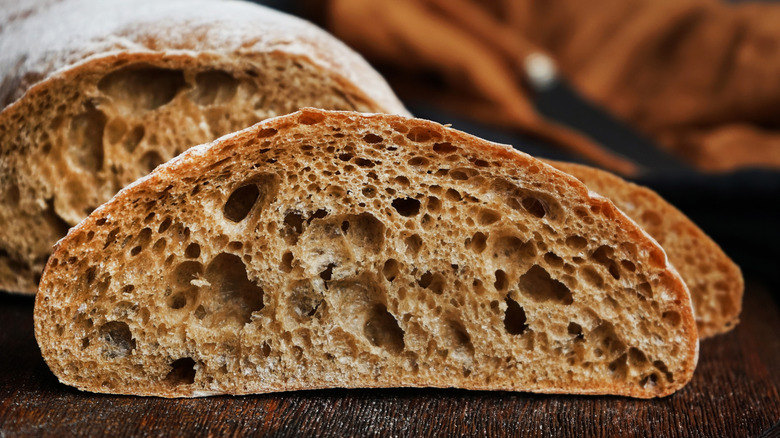
Stop gushing about the generosity of those huge soda cups and all that free bread, because they're actually the opposite of generous. Huge sodas and free bread are basically the buffet equivalent of clickbait: You fill up on cheap stuff and leave feeling unsatisfied.
There's even some science behind this. If you drink a full glass of anything right before you eat, you're probably not going to be as hungry as you would be if your stomach was completely empty. Now add some free carbs to that equation, slather them with salty butter, and you'll be tempted to drink even more liquid, since sodium tends to increase your short-term craving for water. So a very clever buffet owner will make sure you've got access to the trifecta of early satiety, meaning you'll approach the real food with a lot less eager enthusiasm than you would have if the restaurant hadn't been so generous with the cheap stuff.
In a way, this makes it a little self-defeating to arrive at the buffet when you're hungry. Very hungry people tend to overeat the free stuff because the brain just wants to put food in the stomach quickly, without having to stop and think about value for money or whether you're going to want a slice of roast beef after you've eaten 17 pieces of sourdough.
They goad you into filling your plate up with the cheap foods
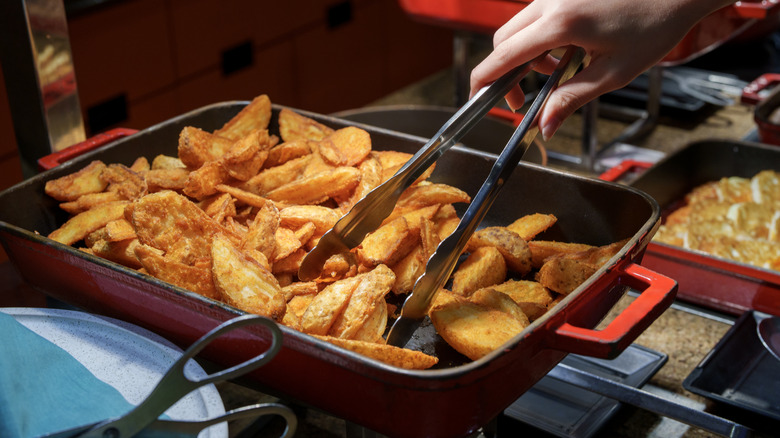
Skipping the bread and sipping your soda is only the first battle you must win before you can emerge victorious in the war between you and the people who own and operate the buffet. If the buffet's first attempt at making you bloated and disinterested in the barbecued ribs didn't succeed, there's a clever second line of defense: Starch and vegetables. This is why you will always see lettuce, vegetarian stir-fries, potato dishes, more potato dishes, and even more bread before you get anywhere near the protein.
In other words, the people who just took your 20 bucks with a smile and an "all you can eat" promise are secretly hoping you won't have any room left on your plate for a slice of ham or a salmon fillet. And though you may run out of room before you get halfway down the line and promise yourself that you'll return for the good stuff once you've cleared your plate, let's be honest: you won't, because you'll be too stuffed. Even if you do pretend you're not full-bordering-on comatose, you'll probably opt for a much smaller piece of ham or a fraction of the salmon filet you would have taken if it had been the first dish in the line.
The dinnerware is strategically sized
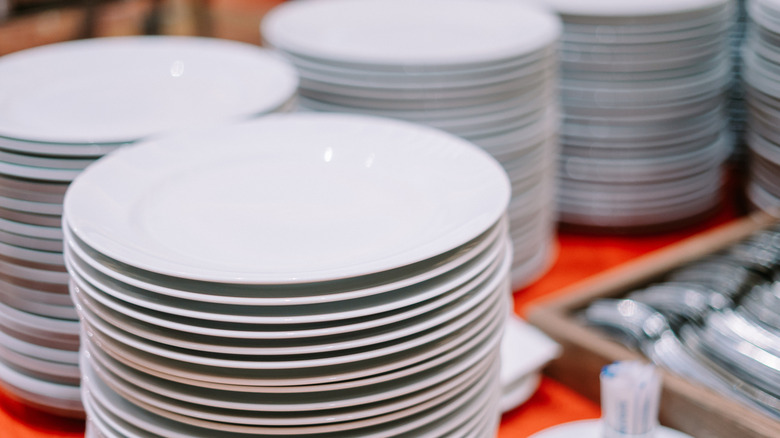
If those buffet plates look kinda small to you, it's because they are. They're small by design for a very, very simple reason: Small plates hold less food. There's some solid science behind this, too. Research has found astonishing reductions in food waste corresponding directly to reductions in plate size. Do you remember your grandma telling you that your eyes are bigger than your stomach? That's more than just a really overused adage. We like to fill our plates up, even when it's obvious that those plates will hold a lot more food than our stomachs will.
But your behind-the-scenes nemesis at the all-you-can-eat buffet doesn't just do this with the plates. They also put big spoons in the cheap dishes and small spoons in the expensive dishes, so you will automatically take a gigantic portion of plain white rice and top it with an infinitesimally pathetic scoop of Kung Pao shrimp without even noticing.
You can avoid this maniacally clever ruse by training yourself to take half a scoop of the offerings on the first half of the line, and two scoops once you get to the good stuff. Better still, gaze disinterestedly at the side dishes, pile on the Kung Pao shrimp, and if you still have room on your plate, loop back around and fill in the gaps with fried rice or vegetable chow or lo mien.
They misdirect you with garnishes and bad lighting
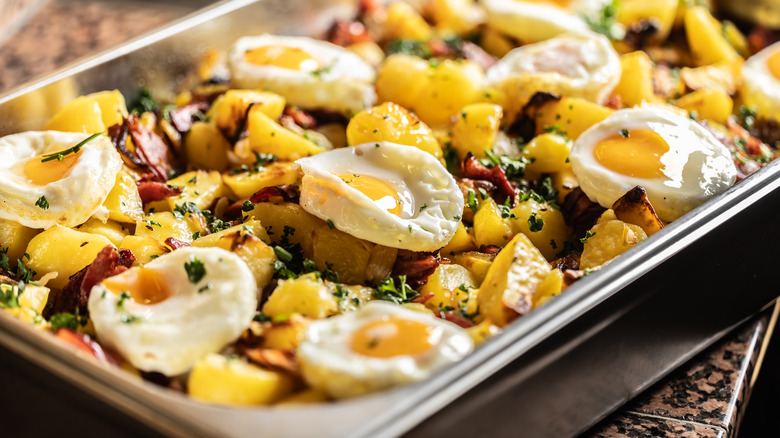
If you've ever rejected an online recipe because the photography made it look about as appetizing as your cat's favorite Fancy Feast, you at least subconsciously understand how food can be made to look more or less appealing using tricks that have nothing to do with how it tastes. Chefs call this "presentation," and buffets call this "making the expensive food look like something you might be served in a hospital or an economy airline."
Yes, there is a way to make plain mashed potatoes look gourmet, and it's called parsley. Fresh herbs can make any food item appear at least 50% more boujee (disclaimer: That's a made-up statistic, not a scientific one). So, those clever buffet owners will spruce up the cheap dishes with a little greenery, and naive customers will go "ooooh, isn't that lovely," and just like magic, there's no room left on your plate for a fried chicken breast (though you might want to avoid the buffet's fried food options).
Similarly, the buffet's proprietors will also make sure that spruced-up bowls of mashed potatoes are showcased under bright, cheerful light but fail to notice that the lights over the roast beef are burned out, flickering, or otherwise unflattering. This is not an accident. Bright light makes things look appetizing, dull light makes them look meh. It feels a bit backward, yes, but buffets are deliberately making their own gourmet food look less gourmet so you won't eat it.
They set up the serving area to ensure natural bottlenecks
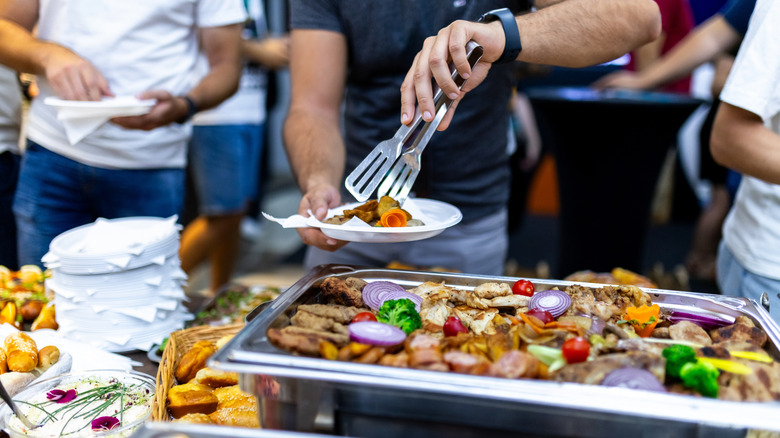
Standing in a maddeningly slow-moving line at a buffet can really try your patience, and you may not be okay with letting your potatoes and broccoli casserole go stone cold while waiting for access to the meat station. You might even decide it's more prudent to return to your table, eat what's already on your plate, and hope the crowd dies down by the time you've finished helping number one. But, after you've cleared one plate, you might also be so satisfied that you don't even care about the meat anymore.
Seems like random bad luck, right? Often, it's not. Some buffets lay out their serving areas so that queue bottlenecks happen naturally, meaning fewer diners reach the more expensive dishes before dropping out of the line.
One of the ways a buffet might do this is by gradually narrowing the walkway as you approach the meat station, so even diners who don't want to partake of those beautifully garnished potato dishes will be a lot less likely to rudely squeeze past other patrons on their way to the real spoils. The salad bar may also be strategically positioned so that bypassing it requires complex circumvention. And that guy in the chef's hat at the end of the line who's perfectly carving the roast beef? He's been trained to serve up paper-thin slices and to glare disapprovingly at you when you ask for an extra helping.
They use tricks of perspective
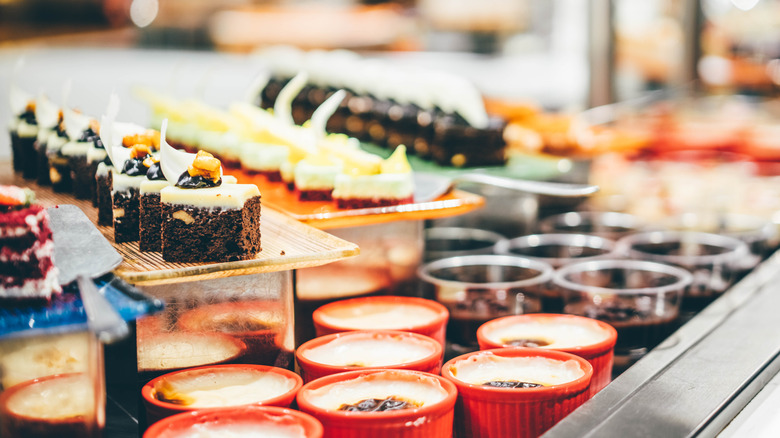
If you've ever played with perspective when shooting photos on your phone — making your dog look like he's about to Godzilla the neighborhood, for example — then you understand how perspective can be used to make things look bigger or smaller than they actually are. Buffets understand this, too, though the tricks tend to be a bit more subtle.
Desserts are one of the pricier items buffets offer, so it's in the restaurant's interests to either ensure you don't get anywhere near the dessert station (you know, cause you ate too many potatoes) or to make you think the desserts are more generously sized than they actually are, thus discouraging you from taking more than you can reasonably eat. One way buffets do this is by elevating the dessert area so those smaller portioned items look bigger. Another neat trick is to pile all those bite-sized things onto an extra-large, decorative platter so you don't really notice how bite-sized they are and only notice the abundance of them.
This works in reverse, too. Placing just a few meat items onto a large platter can make customers hesitant to take too much, either because it seems rude to hog what's left or because you don't want the guy behind glaring at you for taking the last piece. And those expensive proteins are often cut up a lot smaller, too, with a typical "deck of cards" sized serving of fish divided into two or even three smaller portions.
They give you too much choice
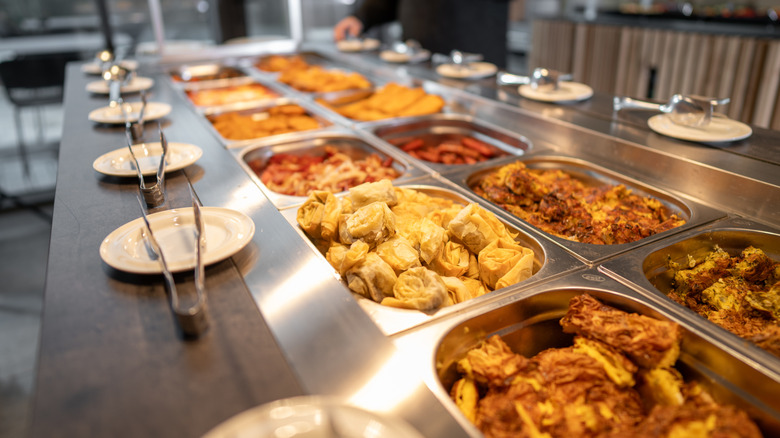
If you live in America, you're used to having choices. In fact, you've probably wasted a total of six or seven days of your life trying to figure out which salad dressing to buy or what the flavor difference is between mesquite-smoked and hickory-smoked barbecue sauce. Buffets play around with choice, too, not because they particularly care how much of it you have but because they care about how you behave in the presence of choice, and how that affects your perceived satisfaction with your buffet experience.
Generally speaking, people connect value not to how full their stomachs are when they walk out the door, but to how much choice they had. A diner who takes small portions of a lot of different dishes tends to be more satisfied with the experience than someone who only eats a couple of different things. In other words, the guy who had the poached salmon with lemon butter asparagus and strawberry cheesecake for dessert is more likely to grumble than the guy who had a gigantic salad, two different kinds of potatoes, jambalaya, fettuccine Alfredo, sauteed broccoli, and a chocolate bonbon for dessert with a scoop of ice cream on the side. There's an art to this, however. In a 2024 study, researchers warned that giving diners too much choice can result in "cognitive overload," which creates the mad desire to try a little bit of everything, most of which ends up in the trash.
They serve up-cycled food items
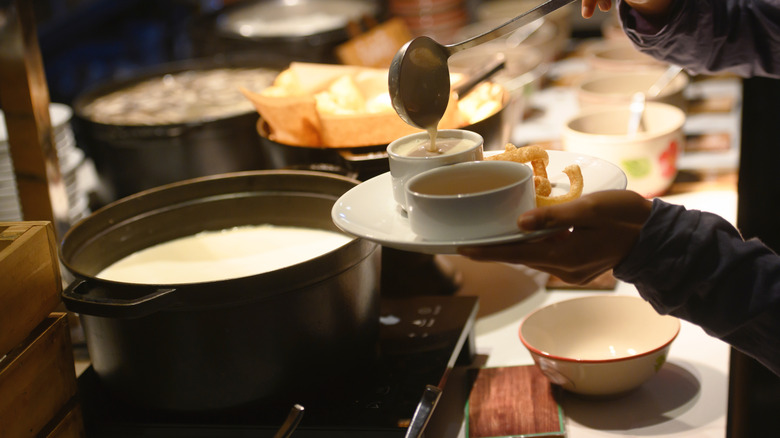
Up-cycling is a fun word for the socially responsible act of taking a piece of garbage and turning it into something useful. It's great for crafters and people who use Pinterest, but it's generally not a word we like to see applied to food. What exactly do we mean by "up-cycling" at the buffet, then?
Buffets generally don't up-cycle under the truest definition of that word, so don't worry that your chicken chow mien might have been scraped off some other guy's plate and put back in the warming pan. That doesn't happen. Probably. But buffets — especially the ones in restaurants that also have traditional menu service — do tend to be the destination du jour for the kinds of scraps that can be repurposed. Ham bones leftover from yesterday's service can become a base for today's split pea soup, for example. Vegetables that didn't make it out of the fridge can get diced and thrown into a stir-fry.
Up-cycling scraps isn't just something buffets do; traditional restaurants are discovering the value in repurposing edible trimmings, day-olds, and random other leftovers, too. This is not just because being smart about what you put in the trash is good for a restaurant's bottom line, but also because it's generally good for reducing greenhouse emissions and food insecurity. For buffet diners in particular, it's important to know that up-cycled items don't come directly off the line (that's a health code violation). They are handled the same way as non-scrap ingredients, but with more creativity. Just be wary of taking home buffet leftovers, as you don't know how long food has been sitting out.
They engage in strategic purchasing
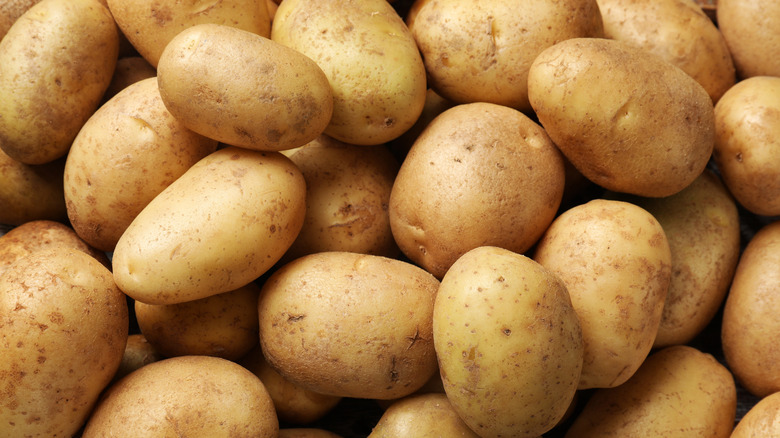
Smart buffet owners also engage in the least offensive of cost-saving measures: buying locally grown, in-season items and purchasing staples at bulk rates. Being smart about what you buy and when you buy it helps buffets reduce overhead costs before they even start to think about how to camouflage the pork roast or how many different rice dishes they can put on the line at the same time. Traditional restaurants do this too, of course, so this isn't exactly sneaky, and it does have benefits that go beyond just making sure diners don't get their money's worth.
Any restaurant — buffets included — can save money just by being flexible with the menu. Instead of serving strawberry cheesecake year-round, for example, serving it only when strawberries are in season makes the dish cheaper, which might even mean the proprietors will be a little less annoyed if you take more than one slice. Looking out for price reductions in meat or surpluses in produce and adjusting the menu to make use of these ingredients while costs are low is another way that restaurants can save money. And low-cost staples like rice and potatoes have a longer shelf life, so purchasing them in bulk can also be a strategic move. Finally, when a restaurant buys locally grown ingredients, it's not only reducing greenhouse emissions and transportation costs, it also gets to call itself a "farm-to-table" business and brag about supporting local growers.