

9 Brazilian Snacks You Need To Try At Least Once
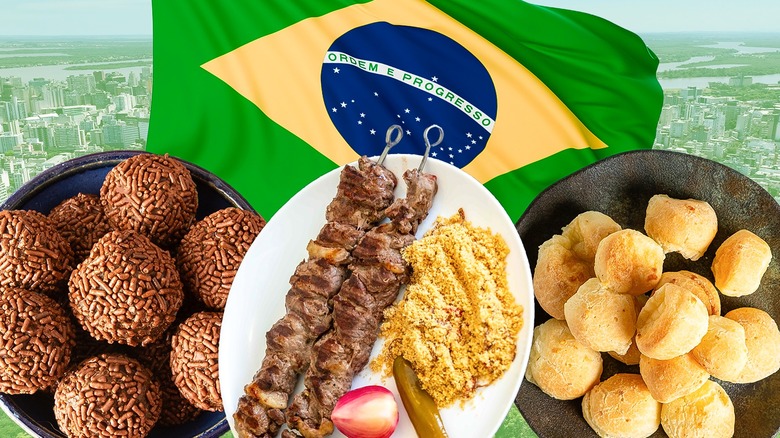
Brazilian cuisine is a vibrant reflection of the country's complex history as a cultural melting pot, shaped by centuries of encounters between Indigenous, European, and African peoples. From the Amazon basin to the southern pampas, Brazil's vast and varied geography provides an extraordinary range of ingredients, from tropical fruits and freshwater fish to root vegetables and cattle. These regional landscapes and the movement of peoples have created a kitchen that is both deeply local and strikingly global. More recent arrivals, such as Japanese and Arab immigrants, have also added their flair to Brazil's contemporary food culture.
Many of Brazil's foundational ingredients, including okra, black-eyed peas, and dendê oil, trace their lineage to Africa, a legacy of the country's position as home to one of the largest Black populations in the Americas. Iberian colonizers brought techniques of baking, preserving, and confectionery that still define many beloved sweets and breads, while Indigenous traditions — especially the use of manioc (also known as tapioca, yuca, or cassava) and native fruits — remain at the core of everyday cooking.
Snacks embody this creative fusion and form the heartbeat of Brazil's celebrated food culture, particularly in its bustling cities. Whether savory or sweet, they appear in bustling street markets and in the ubiquitous neighborhood snack bars known as lanchonetes, where locals stop for a quick bite and coffee. From cheesy breads to coconut-flavored confections, these small treats reveal Brazil's history and its appetite for bold flavors and conviviality.
1. Pão de queijo
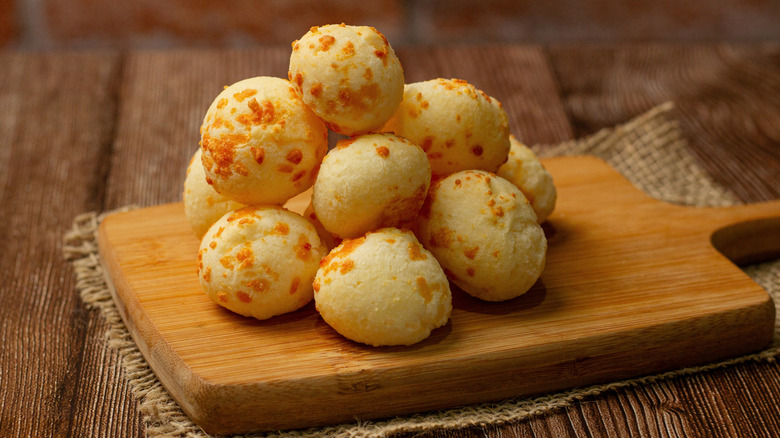
Pão de queijo is Brazil's most beloved bite-sized bread, a snack that captures both the simplicity and ingenuity of the country's culinary heritage. These golden, round morsels are made from a short list of pantry staples—tapioca flour, eggs, butter or oil, and a semi-hard cheese, yet the result is delightfully chewy, airy, and fragrant. The key ingredient, tapioca flour, comes from manioc, a root crop cultivated by Indigenous peoples for millennia and still central to Brazilian diets today. The flour's naturally gluten-free quality gives pão de queijo its characteristic stretch and an appealing chew, and also makes it a tasty option for celiacs and low-gluten diets.
Although you can find baskets of these cheese breads sold fresh on street corners and in bakeries throughout Brazil's major cities, the snack traces its origins to the inland state of Minas Gerais. There, the customary cheese known as queijo Minas lends a slightly tangy flavor and creamy melt to each roll. Historical accounts suggest that during the colonial period, cooks began using manioc starch instead of wheat flour — then scarce in the interior — while incorporating local cheeses, producing the ancestor of today's version.
Pão de queijo is equally at home beside a morning cup of strong Brazilian coffee or served as a warm appetizer at family gatherings. Its enduring popularity shows how Indigenous ingredients, colonial adaptations, and modern tastes can combine to create a simple yet storied snack.
2. Coxinha
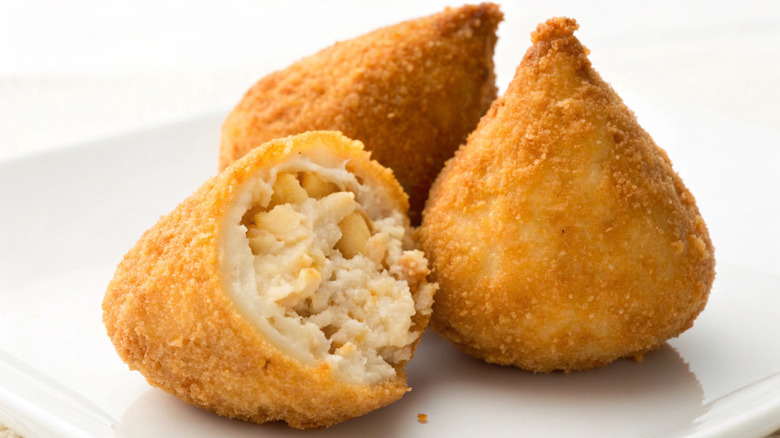
Coxinha is one of Brazil's most iconic street snacks, a teardrop-shaped croquette that blends comfort food with a touch of royal legend. Its name literally means "little thigh," a nod both to its shape and to the story that surrounds its creation. According to popular lore, the son of Princess Isabel of Brazil — famously known for signing the 1888 decree that abolished slavery — was an extremely picky eater who would only eat chicken thighs. To indulge him, the family cook shredded chicken meat, mixed it with a creamy, lightly seasoned cheese similar to catupiry, and shaped the filling into a morsel that mimicked the prized cut.
The croquettes were then coated in a soft dough made from wheat flour and chicken broth, breaded, and fried to a golden crisp, creating a snack that is both crunchy and tender. Coxinhas quickly left the royal kitchen behind and became a favorite in São Paulo, Brazil's "culinary capital," where waves of immigrants and a booming urban culture turned street food into a defining feature of city life. From there, they spread nationwide, finding a home in lanchonetes (snack bars) and on street carts throughout the country and beyond.
Today, coxinhas are as ubiquitous as they are versatile. They can be filled with traditional chicken and cream cheese, spiced beef, or even vegetarian mixtures, offering a quick, inexpensive, and deeply satisfying burst of flavor and energy to anyone on the go.
3. Espetinhos

Espetinhos are Brazil's answer to the universal love of food on a stick — small, flavorful skewers of meat, fish, cheese, or vegetables grilled over an open flame. The name comes from espeto, meaning "skewer," and the technique has long roots in Brazilian backyard barbecues and street fairs. These skewers capture the essence of the country's grilling culture in a format that is easy to carry and quick to cook.
While the concept resembles the skewered meats served in Brazilian steakhouses known as churrascarias, espetinhos are a more casual, street-style version. Vendors typically season cubes of beef, chicken, pork, or even firm white fish with a simple blend of salt, garlic, and regional spices before searing them over charcoal. In coastal areas, you might also find skewers of shrimp or squid brushed with garlic butter, while inland towns often feature local, non-melting cheeses such as queijo coalho grilled until the outside turns golden and crisp.
Espetinhos are more than just a snack. They are a social staple, shared at sporting events, open-air markets, music festivals, and late-night gatherings. Their portability makes them ideal for eating while walking through crowded streets, and their variety means there is something for every palate, from meat lovers to vegetarians. Whether served with a squeeze of lime or a drizzle of hot sauce, espetinhos embody Brazil's talent for transforming simple ingredients into vibrant, crowd-pleasing street food.
4. Cachorro-quente

Every country seems to have its own spin on the hot dog — and Brazil's cachorro-quente is among the most colorful and indulgent. This street-food staple starts with a sausage that is sliced open and simmered in a tomato-based sauce until it soaks up rich flavor. The cooked sausage is then nestled into a baguette or soft roll spread with mayonnaise and loaded with an exuberant list of toppings. Peas, corn kernels, mashed potatoes, grated carrots, cheese, and a crown of crispy potato straws called batata palha all compete for space, turning the simple hot dog into a layered — and uniquely Brazilian — meal.
The dish rose to popularity in the mid-twentieth century when American culture was becoming more visible in Brazil. Street vendors and snack bars adapted the imported hot dog to local tastes. Regional variations soon followed. In some parts of the country, you might encounter quail eggs, sautéed onions, or even a drizzle of ketchup sweetened with tropical fruit.
Beyond its bold flavor, the cachorro-quente speaks to Brazil's ability to absorb global influences and reimagine them through local creativity. Whether enjoyed late at night after a concert, grabbed on the way to a football match, or served at a family gathering, it embodies the country's flair for making familiar foods exuberant and festive — a perfect bite that is both comforting and full of surprise.
5. Quibe (or kibe)
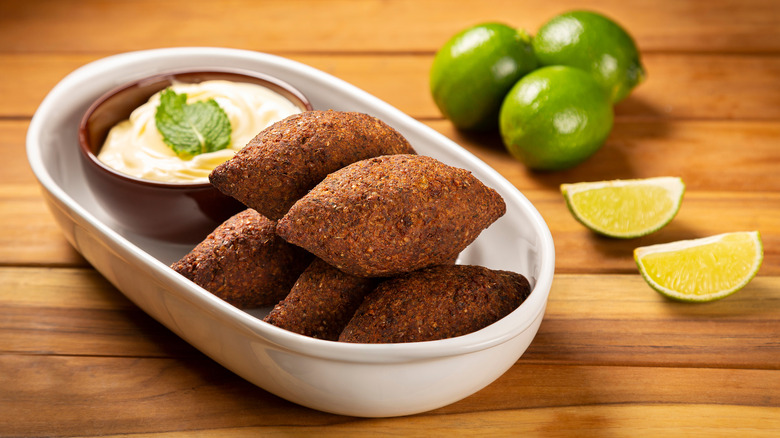
Quibe — sometimes spelled kibe — is a beloved Brazilian snack with clear Middle Eastern roots. These golden, torpedo-shaped croquettes are made from a mixture of finely ground meat and soaked bulgur wheat, seasoned with garlic, onion, fresh mint, and a hint of cinnamon. The combination produces a crispy crust and a tender, aromatic filling that makes quibe both hearty and elegant.
This dish arrived in Brazil with the wave of Syrian and Lebanese immigrants who settled in the late nineteenth and early twentieth centuries. These communities brought their culinary traditions with them and quickly found a receptive audience. Brazilian cooks embraced the flavors and adapted them to local ingredients, creating a snack that feels at once foreign and completely at home. In contrast to middle eastern kibbeh, Brazilians tend to prefer beef over lamb as a filling. Over time, these morsels have become a familiar feature of lanchonetes (snack bars) and street markets, enjoyed by people of every background.
Quibe can be prepared in several styles. The most common version is deep-fried until the outside turns a rich brown, but you will also find oven-baked quibes that offer a lighter option. Many Brazilians serve them with a squeeze of lime or a spoonful of spicy sauce. More than a tasty bite, quibe stands as a testament to the cultural exchange that has long defined Brazilian cuisine — a Middle Eastern classic transformed into a Brazilian favorite without losing its original soul.
6. Brigadeiros
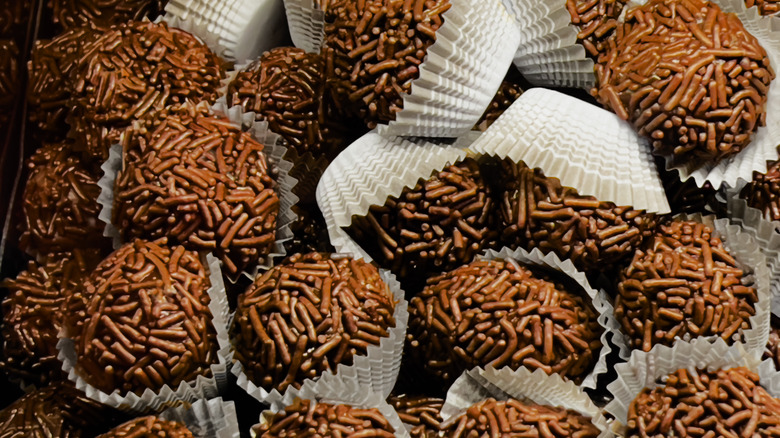
Brigadeiros are Brazil's most iconic bite-sized sweet — a chocolate confection that is simple to make yet endlessly festive. These round treats are prepared by slowly cooking sweetened condensed milk, cocoa powder, butter, and a pinch of salt until the mixture thickens into a glossy, fudgy dough. Once cooled, it is rolled into small balls and coated in chocolate sprinkles or grated chocolate, creating a texture that is slightly chewy on the inside and delightfully crunchy on the outside.
Although brigadeiros resemble European chocolate truffles, their base of condensed milk gives them a distinctively creamy consistency and a flavor that is rich without being heavy. The sweet became popular in the mid-20th century and is said to have been named after Brigadeiro Eduardo Gomes, a Brazilian Air Force brigadier whose political campaign parties featured the treat. The brigadeiro's invention also represents the early rise of industrial foodstuffs in Brazilian society, with Nestle heavily marketing sweetened condensed milk in Latin American markets in the early twentieth century. Whatever its origin, the candy quickly became an essential element of children's birthday parties, weddings, and holiday celebrations.
A close cousin, the beijinho or "little kiss," follows the same method but swaps cocoa for coconut, sometimes using cooked sweetened coconut milk to supplement the condensed milk. Whether presented in elegant paper cups at a wedding or scooped straight from the pan during a casual family gathering, brigadeiros show how Brazil transforms everyday pantry staples into sweets that inspire celebration.
7. Quindim

Quindim is a jewel-like dessert from northeastern Brazil — a golden, glossy custard made primarily of egg yolks, sugar, and grated coconut. Its silky texture and intense yellow color make it as eye-catching as it is delicious. Lemon zest or a touch of vanilla is often added to balance the sweetness, giving each bite a subtle brightness.
The recipe reflects Brazil's colonial history and its deep ties to Portugal. Portuguese convents were famous for sweets that used large quantities of egg yolks, a tradition that took root in Brazil during the 16th and 17th centuries. Egg whites were often used for starching clothes or clarifying wine, leaving an abundance of yolks for desserts. In Portugal, this practice gave rise to egg-based pastries like the famous pastéis de nata and its Cantonese equivalents in Hong Kong; in Brazil, local cooks combined this Iberian technique with native ingredients such as coconut to create quindim.
Quindim is typically baked in small, fluted molds that give it its signature domed shape and mirror-like glaze. It is often served chilled, which accentuates its rich, custardy interior and the delicate chew of coconut at the base. Whether enjoyed at a family celebration or offered as a special treat in a neighborhood bakery, quindim embodies the fusion of Old World culinary practices and tropical flavors — a dessert that captures both the elegance of Portuguese sweets and the exuberance of Brazilian ingredients.
8. Bolo de rolo
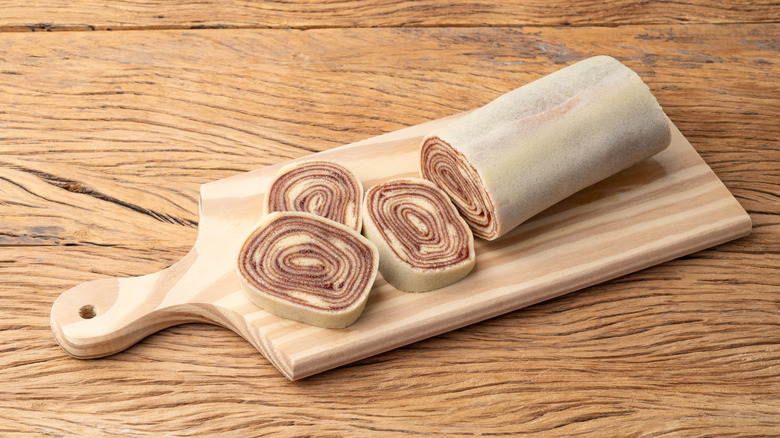
Bolo de Rolo is a signature cake from the northeastern state of Pernambuco — a delicate dessert that showcases Brazil's love of tropical fruit and European baking traditions. At first glance, it resembles a Swiss roll, but the technique is far more intricate. Bakers spread an ultra-thin layer of guava paste over an equally thin sheet of sponge cake, then carefully roll it up and repeat the process again and again. The result is a tight spiral of dozens of layers, creating a beautiful pattern when sliced.
The cake's origins date to the Portuguese colonization of Brazil, when settlers brought their recipe for pão de ló, a simple sponge cake. Local cooks transformed it by adding the guava paste that was abundant in the tropical northeast, producing a sweet that is both visually stunning and intensely flavorful. Over time, bolo de rolo became an emblem of Pernambucan identity and was even declared part of the state's intangible cultural heritage.
Traditionally served with coffee — Brazil remains the world's leading coffee producer – bolo de rolo provides a striking contrast of soft cake and fragrant fruit. Its refined appearance makes it a popular gift and a centerpiece for festive occasions, while its delicate layers invite admiration for the skill of the baker. Whether enjoyed as an afternoon treat or presented at a celebration, bolo de rolo captures the artistry and flavor that define Brazilian pastry traditions.
9. Pé-de-moleque
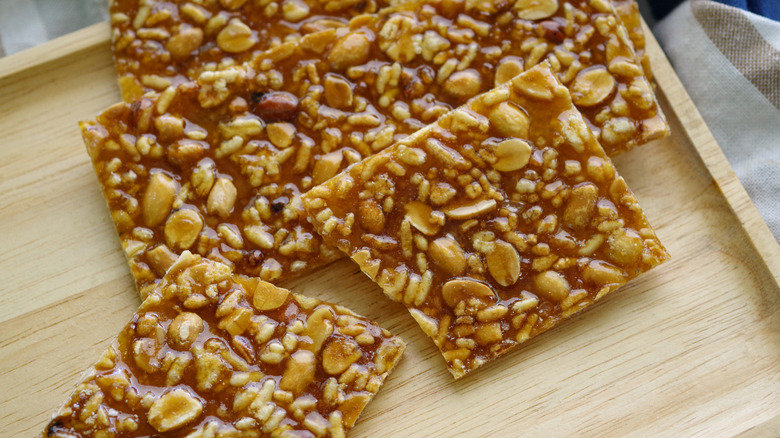
Pé-de-moleque is a classic Brazilian candy that combines rustic simplicity with irresistible crunch — a traditional peanut brittle made with peanuts and rapadura, an unrefined cane sugar. The name translates to "kid's foot," and though its origin is debated, many believe it refers to the candy's rough, uneven shape.
To make pé-de-moleque, roasted peanuts are stirred into a bubbling mixture of rapadura — a type of solid cane sugar high in molasses — and water until each nut is coated in thick, caramelized syrup. The hot mixture is poured onto a greased surface and left to cool into a hard, shiny slab that can be broken into pieces. The result is a treat that balances the deep flavor of unrefined sugar with the nutty richness of peanuts. Because rapadura retains minerals and nutrients that are lost in refined sugar, pé-de-moleque provides a boost of energy along with its sweetness.
This candy is closely linked to Brazil's rural traditions and is often prepared during June festivities known as Festas Juninas, which celebrate Catholic saints and the harvest. It is commonly enjoyed with a cup of strong coffee or as a quick snack for an afternoon pick-me-up. Pé-de-moleque shows how humble ingredients — peanuts and raw sugar — can be transformed into a treat that is both satisfying and emblematic of Brazil's agricultural heritage. With every crunchy bite, it offers a taste of the country's countryside and the enduring appeal of simple, time-honored sweets.