

One Look At This Seafood Dish And You'll Know How Wild Food In The '70s Got
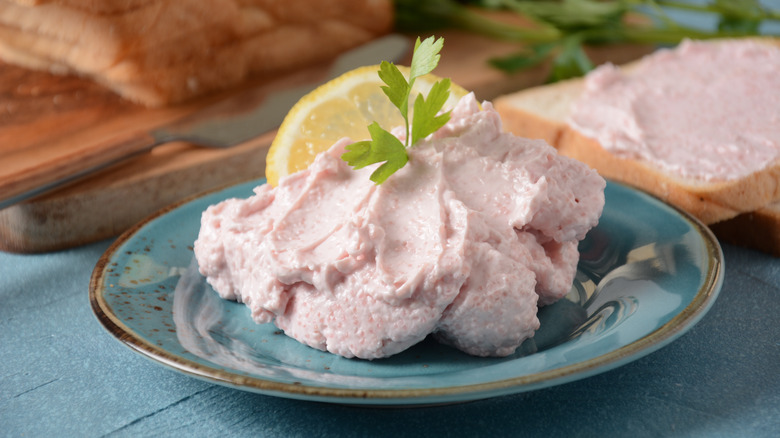
The 1970s was a decade of mind-blowing music, free love, and some really wild food choices. It was a time when you could enjoy ketchup-flavored ice cream, cheese balls suspended in gelatin, and retro breakfast dishes like the one that combined ham, bananas, and cheese sauce. But even if you didn't know any of this, all you really need to understand just how wild the food could get in the '70s is a look at one of the decade's more unusual fish dishes: shrimp mousse.
At first glance, it's hard to imagine why something like this would be so popular during the disco era. It's a pale pink paste dotted with flecks of herbs and spices, looking remarkably similar to canned cat food. In some recipes, it's stiffened with gelatin and set in a fish-shaped mold, giving it an unusual gloss on top of the odd fact that it's shrimp disguised as an entirely different type of seafood.
By today's standards, it would probably be seen as some sort of elaborate prank; in the '70s, however, it was par for the course. In fact, it might have been one of the tamer things you'd spot at a dinner party, where you were just as likely to find a plate of shrimp mousse next to fruits and cheeses arranged to look like a hedgehog along with other obscure vintage appetizers.
The 1970s created the perfect environment for weird food
The rise of shrimp mousse and other bizarre foods in the 1970s was, like many things from that decade, the result of an increased accessibility to ingredients and techniques that used to be reserved for the upper class. From medieval times and well into the 1800s, dishes like aspic and savory mousses were so labor-intensive to make that they were often limited to the rich — after all, not everyone could afford the exotic ingredients and sizable kitchen crews needed to pull them off. This stayed embedded in people's cultural memories, so that meat encased in gelatin or processed into a light, fluffy paste was effectively a symbol of sophistication.
In the 1900s, however, the barrier to entry for these dishes virtually vanished. Gelatin had become much more affordable, and the invention of electric blenders meant that anyone could pulverize their fish into a fine paste. The rising middle class suddenly had access to these culinary signs of wealth, and this led to a period of experimentation in the 1960s and 1970s. Your average housewife could now bring the elegance of shrimp mousse to the dinner party, dressed up as creatively as she could muster as a means of impressing her guests.
Why you should probably still try modern seafood mousse
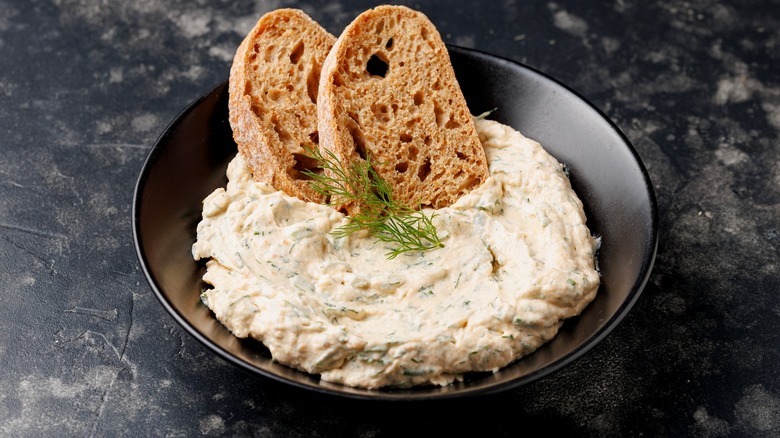
Savory mousses might have fallen out of fashion, but you can still find a few recipes here and there. Modern recipes tend to skip blending everything completely, opting instead to let a few chunky bits provide some contrast to the texture. This goes a long way toward making the mousse more palatable for a lot of us, since the seafood would still feel like seafood in the mouth. Flavors also tend to be a little more intentional now in terms of balance; you won't find many people telling you to blend chicken, mango, and mayo together for color and body.
If you want to give seafood mouse a try, you can skip the shrimp and start with something easier instead. This recipe for a smooth tuna mousse dip gives you a low-risk, high-reward chance to experience what our mothers and grandmothers might have considered to be a status-defining dish. Serve it up with crostini and some white wine, and you'll have a snack that feels as classy today as it would've been back in the Victorian era.