

Apron Sink Vs Farmhouse Sink: Which Is Right For Your Kitchen?
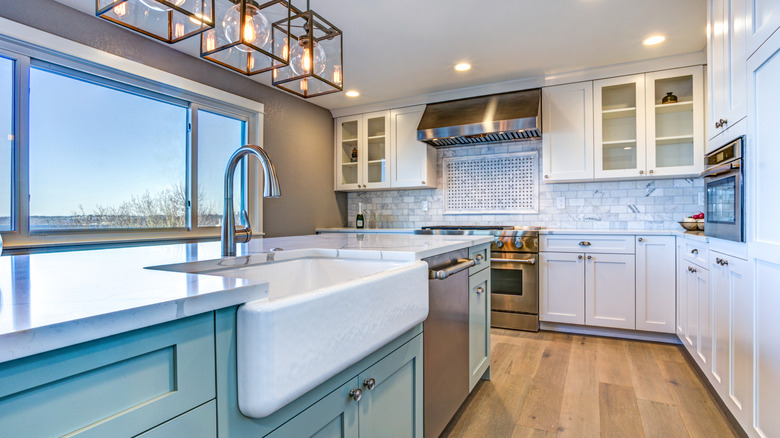
One of the most important kitchen elements is the sink. In fact, the overall layout of any good kitchen starts with an effective kitchen triangle, ensuring that the three main elements — stove, refrigerator, and sink — are all within easy reach. Thus, choosing a kitchen sink that fits your needs as well as the kitchen's aesthetic is crucial. Because of how important kitchen decor has become, a bewildering variety of sinks is now available. Farmhouse and apron kitchen sinks are particularly popular, especially among those looking for a blend of chic-rustic and functional aesthetics. Since both have a visible "apron" on the front, their designs can often overlap. However, it's worth understanding the differences between the two since their use cases can differ quite significantly, which is why we reached out to Brandy Rinehart, interior designer at Rinehart Design Group Inc., for her expertise on the topic.
"Apron-front refers to the exposed front panel of the sink," Rinehart says. Farmhouse sinks are traditional, usually larger versions of the apron sink, but they're still distinct. "Not all apron sinks are farmhouse style. Today's market includes modern apron sinks in stainless steel, concrete, or even quartz composites, which deviate from the rustic farmhouse aesthetic but retain the exposed front," she explains.
In her exclusive conversation with Chowhound, Rinehart, who has nearly three decades of experience in curating kitchen and bathroom spaces, shared what homeowners should consider when choosing between the two. "In larger kitchens, the visual weight of a farmhouse or apron sink can help ground the design and become a focal point," she says. "Modern layouts often favor sleek stainless apron sinks, while traditional or rustic homes may lean toward classic fireclay farmhouse designs," she adds.
Apron sinks are essentially exposed-front kitchen sinks
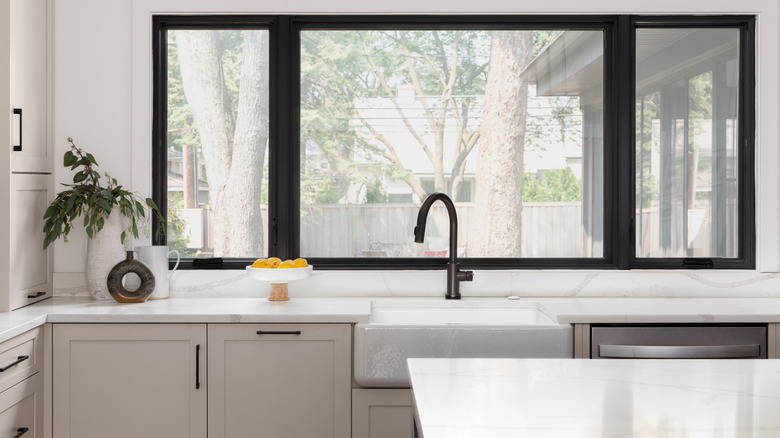
While farmhouse sinks are most likely how apron sinks originated, the latter is now a wider category because of all the options for design, material, and, most importantly, size. "In smaller kitchens, a single-basin or apron-front sink can save space and serve multiple functions, especially if paired with space-saving accessories," says Brandy Rinehart, reiterating that apron sinks are available in relatively smaller sizes than their farmhouse counterparts, allowing them to be installed in kitchens where space is at a premium. This makes them a great mix of practicality and aesthetics, since the exposed front design adds dramatic flair to the space.
It's worth noting, however, that apron sinks are still relatively large and are therefore suited to a house where the kitchen sink gets regular use, whether through frequent cooking or by a large family. Furthermore, unless you have an expansive kitchen island, an apron sink is the best choice if you want an exposed-front unit on your island. The range of material options and their relatively lighter weight also make apron sinks more versatile, allowing them to be matched to a wide variety of kitchen styles.
Conversely, apron sinks also carry some of the downsides of their larger farmhouse counterparts. For one, according to Rinehart, the exposed front design might require custom cabinetry or modification to the kitchen counters. Thus, getting one of these models could prove counterproductive if you're trying to save money on a kitchen remodel. Since apron sinks extend to the edge of the counter, there's also a slight danger of front-panel drips, but this can be avoided with proper drying habits, Rinehart notes.
Farmhouse sinks are a large, rustic type of apron sink
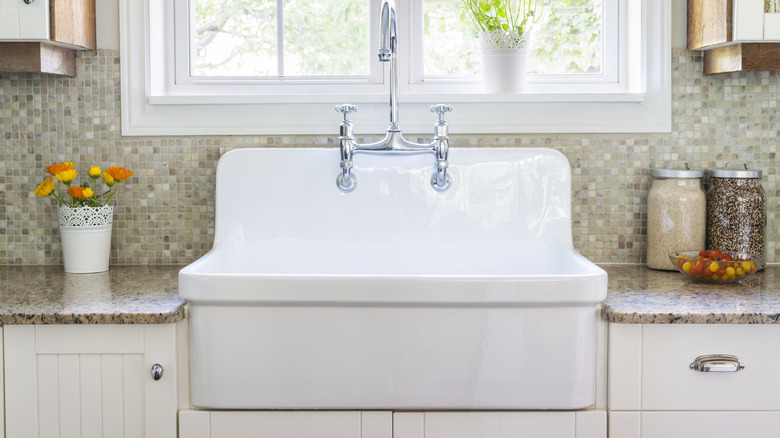
Farmhouse sinks, as the name suggests, are the kitchen sink style to pick if you're after the spacious, rustic, or Tuscan kitchen aesthetic. Channeling the same exposed-front look as apron sinks (since farmhouse sinks usually have apron fronts), these units are generally made of traditional materials, which makes farmhouse sinks potentially inconveniently weighty. "Many farmhouse sinks, especially cast iron or fireclay, are extremely heavy — so cabinet reinforcement may be necessary," Brandy Rinehart says. While durable and eye-catching, these materials also may call for special maintenance. "Fireclay and cast iron options can chip or show wear over time if not cared for properly," Rinehart says.
On the plus side, the size of farmhouse sinks makes them perfect for busy kitchens. Rinehart praises their "deep basins that accommodate large cookware or high dish volumes." that use large cookware or have heavy use. Therefore, they can be a practical addition to a large kitchen while still bringing in what she describes as a classic, timeless appeal.
Conversely, the investment required to install a farmhouse sink shouldn't be overlooked or even underestimated, and homeowners planning on getting one should know what they're getting into. Unlike modern apron sinks, farmhouse sinks are available in significantly fewer design styles and materials, so ensure that it matches the kitchen decor. Furthermore, deep kitchen sinks pose the hidden danger of sometimes being less ergonomic than shallow ones, so make sure your back doesn't end up paying the price for that cavernous farmhouse sink.