

How To Maximize Every Inch Of A Compact C‑shaped Kitchen, According To Design Experts
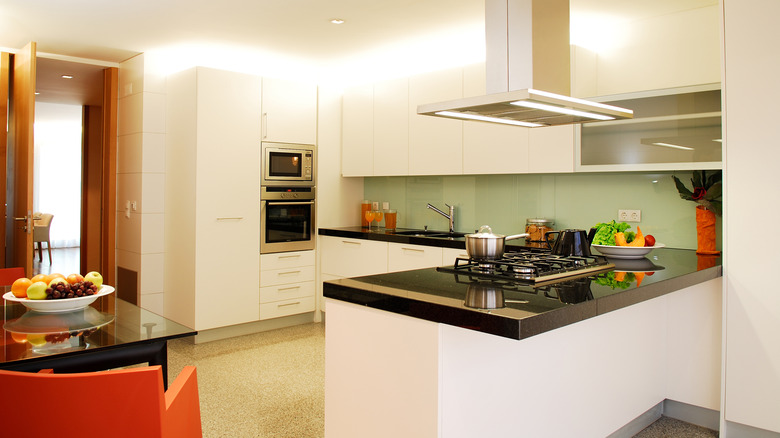
A C-shaped kitchen is a common and appealing layout in many homes, with countertops and cabinets on three sides that open to the rest of the living space. Without careful planning, a C-shaped kitchen can lead to traffic jams, obscure valuable corners, and create storage challenges. With these issues in mind, however, a savvy kitchen designer or DIY-er can work a C-shaped kitchen to its greatest potential, taking advantage of every inch of this kitchen layout.
And before you ask: Yes, C- and U-shaped kitchens are often used interchangeably. However, some sources argue that a C-shaped kitchen is often incorporated into a larger open-concept space, where one of the "arms" serves as a jutting peninsula to divide the space. A U-shaped kitchen is typically situated in its own room, laid out along the perimeter of three walls. Chowhound spoke with two kitchen and home designers about their tips and tricks for maximizing space in a smaller C-shaped kitchen, and we're here to share them with you.
Use space saving cabinet add-ons
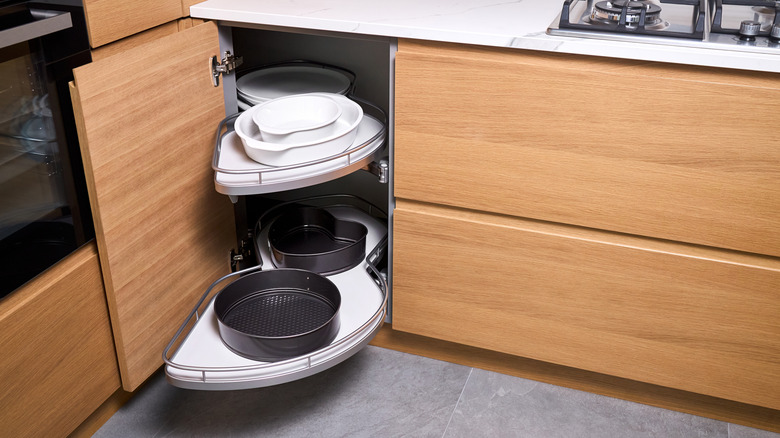
Most kitchens have a corner, and almost anyone who has been in a kitchen knows its pitfalls: dishes lurking in dark corners, spices lost beyond all hope, and cabinet doors that hit one another and jam fingers. While not all kitchens have such design obstacles, C-shaped kitchens do. "Without careful planning, they can turn into wasted space," Judi Cooper, the principal interior designer of Kitchens Inside Out, said of corners in a C-shaped kitchen. "Custom pull-outs or kidney-shaped mechanisms make those spots fully accessible."
Thomas Borcherding, the owner of Homestar Design, agreed. "Integrated functionality options come in handy here, such as lazy Susans and pull-out trays." For those of us who don't visit hardware store cabinet sections regularly, the upgrades in kitchen technology might come as a pleasant surprise. And we're not talking about smart fridges. Sure, lazy Susans and their kidney-shaped cousins have been around for a while, but they have never been as accessible to the average kitchen user as they are now. For blind corners, install a special cabinet organizer with shelves that swivel or glide out. For others lucky to have a "pie cut" corner cabinet, a lazy Susan or even V-shaped drawers are an option. Pull-outs with organizers for Tupperware or small appliances can also make storage far more efficient. "In a C-shaped kitchen, it's important to make the corners work with inserts and pull-outs, so you'll never have to crouch or reach blindly," Cooper said.
Make the most of vertical space
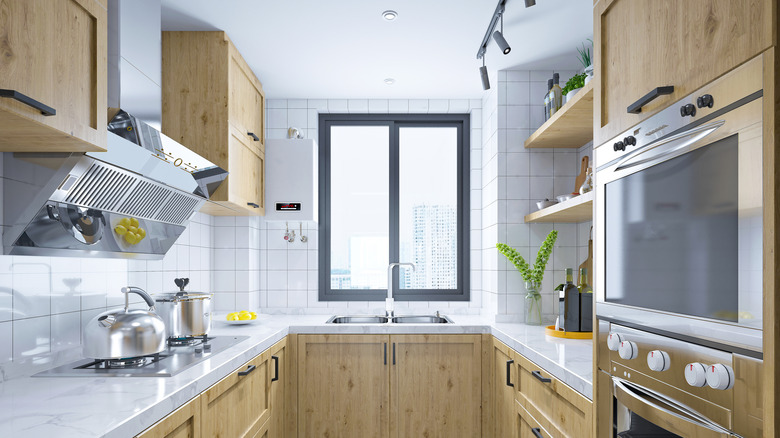
A good rule for maximizing space in any kitchen, especially the C-shaped kind, is to have cabinets that rise to the ceiling, maximizing that precious vertical space. Everyone has items like a giant platter, a waffle iron, or a special tea set that don't get used often in their kitchen — those high shelves in tall cabinets are perfect for storing these.
According to Thomas Borcherding, "A good kitchen designer alongside a skilled carpenter will be able to run cabinets to the ceiling, even if the ceilings are out of level," he said, and in other cases, drywall might have to be removed, and joists adjusted, to even things up. "By running upper cabinets to the ceiling, you maximize available storage." It's essential to ensure everything remains level, as ceiling-flush cabinets can present pitfalls — but leaving a small gap above the cabinets may resolve them.
Judi Cooper suggested running a tall tile backsplash as a way to create the illusion of more space without much effort. "Hand-painted tile that runs all the way up the wall adds both depth and personality," Cooper told Chowhound.
Integrate appliances
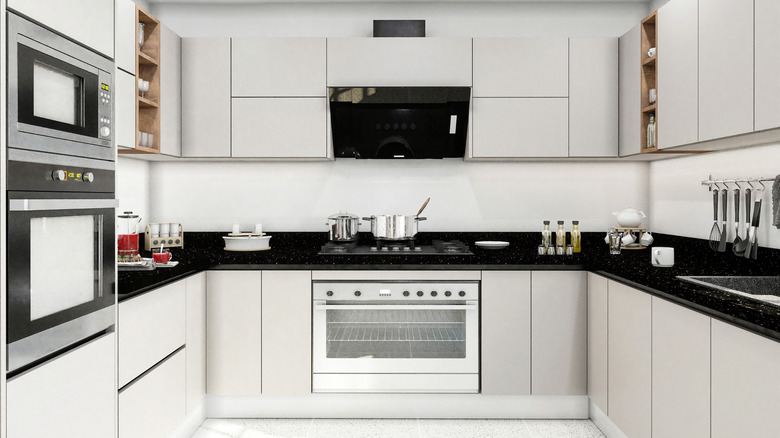
Although C-shaped kitchens have more storage and counter space than a galley or L-shape, maximizing that space remains a top priority. Our designers do this by integrating appliances into drawers and countertops. Home chefs should keep smaller appliances in deep drawers or built-ins under the counter, if possible. Judi Cooper told Chowhound of C-shaped kitchens, "integrate small appliances and tools into deep drawers or custom pull-outs so the space feels streamlined and uncluttered."
Thomas Borcherding had another tip: "Embrace over-the-range microwaves," he said. "While decorative range hoods can dramatically enhance the appearance of a kitchen, sometimes it's best to leave the microwave over the cooktop." This way, the microwave doesn't take up precious countertop real estate and allows you to store even more above the microwave in an upper wall cabinet, "further enhancing storage," he added.
Cooper also said that C-shaped kitchens should incorporate counter-depth appliances that don't interrupt the flow of traffic, such as a fridge, oven, microwave, or dishwasher that sit flush with the cabinet faces rather than protruding into a walkway.
Curb creeping cabinets and counters
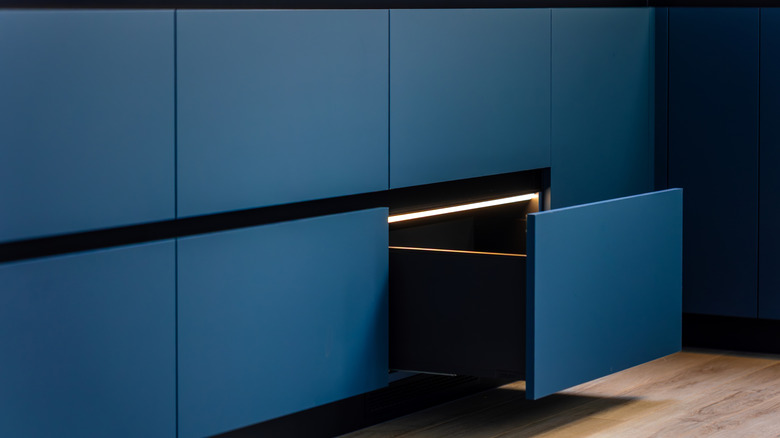
Compared to the corral of a C-shaped kitchen, those with a more open layout, like the L, offer more lines of approach or entry. Both our designers made one thing clear: things can get crowded with more than one person in a C-shape. "C-shaped kitchens don't offer the most friendly pathing when it comes to multiple kitchen-goers, Thomas Borcherding said. "The black hole-esque traffic pattern that C-shaped kitchens induce can quickly become frustrating to homeowners and guests."
He said C-shaped kitchen owners can eliminate some of this clutter, especially in a smaller C-shaped kitchen, with reduced-depth cabinetry, flush countertop overhangs, and handle-less designs — elements that contribute to what's sometimes known as an "invisible kitchen." Reduced-depth cabinetry may offer slightly less storage, but it creates a wider walkway with room for movement and less reaching for buried items. Keeping countertop overhangs flush to lower cabinets is another subtle way to widen paths without sacrificing any storage (just beware of spills and splashes that may fall directly onto cabinet or drawer faces). Handle-less cabinet and drawer designs also create a smooth, clear path without any protrusions (and less to clean with those flush overhangs).
Manage traffic at the ends of the C
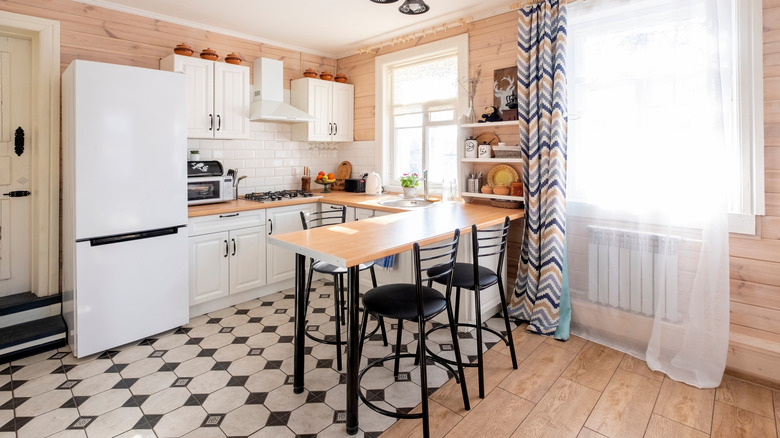
Managing traffic in a C-shaped kitchen might require a multi-pronged approach, especially for home chefs cooking for a crowd. Our designers recommended placing the refrigerator — a hub for increased kitchen activity — strategically. Each C-shaped kitchen has "arms," essentially, the parts of the C on either side of the middle.
According to Thomas Borcherding, "When dealing with a C-shaped kitchen, you want the refrigerator to be located on the outside of the C so that passersby can quickly grab a beverage or other items without entering the workspace." He added, "This can entail relocating electrical and water lines to accommodate the new space of the fridge."
Many, including renters, may not have the luxury to do so. But for those that do, or whose fridges are already situated on one end, breathe a sigh of relief. For home cooks constantly shooing people out of the kitchen, it's one less pileup to manage.
Open a wall to the dining area
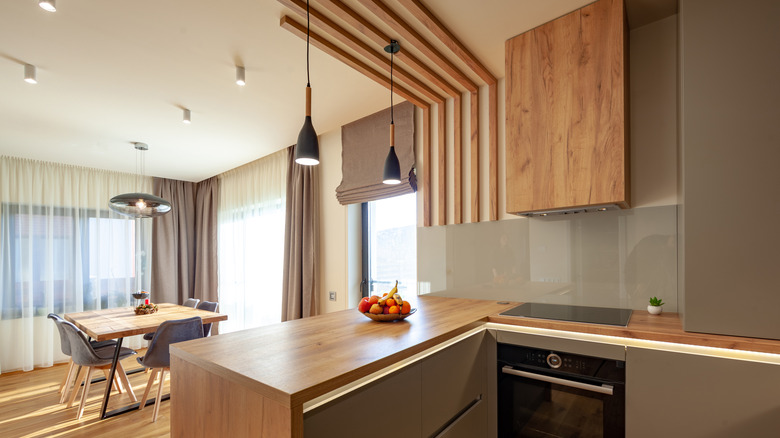
Some C-shaped kitchens are already positioned in an open-concept layout, where one arm of the C separates the kitchen from another visible living space. Other C-shaped kitchens are confined to their own three-walled area (sometimes referred to as a U-shaped kitchen). Three walls with cabinets and counters can create a cluttered, cave-like environment. If possible, Judi Cooper says, removing one wall can create the illusion of much more space. Adding or widening a window can have the same effect.
Aside from managing tricky corners in a C-shaped kitchen, "The other priority is light and openness," she said. "Replacing a small sink window with something much larger or opening a wall to the dining area can transform the kitchen from dark and closed-in to bright and family-friendly." Of course, to preserve a C-shape, you'll want to add an arm back in. If money isn't an object, consider creating a smartly designed peninsula or breakfast bar, which might offer even more storage than an older set of cabinets. Take a moment to visualize a few different designs before committing to your newly airy, open C.
Take advantage of the C ends
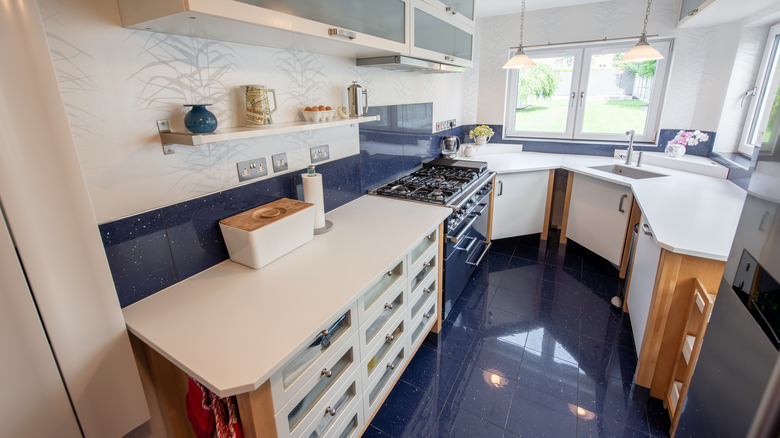
One easy-to-overlook part of a C-shaped kitchen is the "ends" of the C. In an open-concept layout, a countertop and row of cabinets may stop abruptly, creating, at worst, an unattractive distraction and, at best, an underutilized space. "Think about the transition into other rooms. The end panels of your cabinetry run on both sides of the C will likely be exposed," Thomas Borcherding said. "A good kitchen designer will utilize moldings to create a decorative, furniture-like appearance on these end panels, as opposed to simply a flat end panel."
Designers see the end of a C-shaped kitchen as an opportunity to maximize space. Apart from blending the end into its surroundings, Judi Cooper said, "Another strategy is to dedicate the end of the C to a full-height pantry or specialty zone, such as a coffee station, which keeps essentials organized and countertops clear." In a recent kitchen remodel, Cooper created a chic pantry wall at one end of the C and a built-in espresso station.
Illuminate every part of your C-shaped kitchen
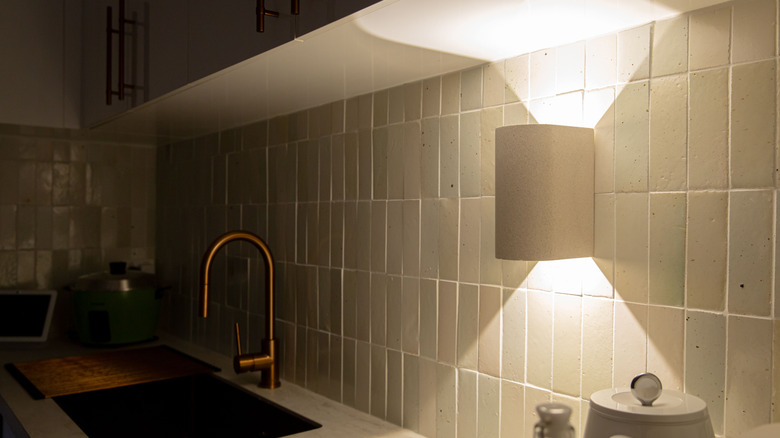
Another way to deal with those pesky dark corners in a C-shaped kitchen? Lots of lighting, in lots of places. Under-cabinet lighting helps give the illusion or more space and gets more mileage out of another underutilized spaces. "It's best to implement under-cabinet lighting to illuminate these dark spots located in the corners," Thomas Borcherding said. "This functions to enhance both task lighting used for cooking and ambient lighting used for aesthetics." Lights inside cabinets can also help make the most of existing storage space.
Beyond strictly practical lighting strategies, Judi Cooper had some tips for enhancing a feeling of space in a C-shaped kitchen. "Large picture windows and layered lighting, including sconces, give the room height and presence so it feels expansive instead of confined." Layered lighting is an approach that combines ambient lighting (like windows and overheads) with task lighting (like those under-cabinet lights for your prep work) and decorative accent lighting, like a sconce or in-cabinet lights, to highlight features like a favorite art piece or display item.
Use visuals to make a C-shaped kitchen feel more spacious
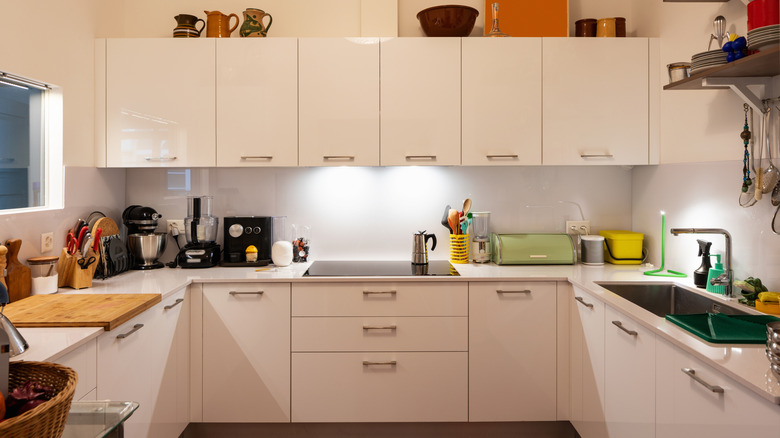
Okay, so we know repainting walls or adding glass surfaces won't physically give you more spots to store that heirloom china set. But the aesthetic aspects of your C-shaped kitchen can create an illusion of more breathing room — call it psychological space. Smart color and finish choices can take even the most cluttered-feeling C-shaped kitchen from dark and severe to light and airy. And if your C-shaped kitchen has plenty of ambient light, color can bring a welcome warmth to a space in danger of feeling square and sterile.
According to Judi Cooper, "A C-shaped layout can feel boxy, so visual tricks make a big difference." Apart from tile spanning the height of a wall, and strategically layered lighting, "Hardware in a finish like honey bronze softens the palette and reflects light." Painting in lighter colors and using glossy finishes on cabinets can also create a space that looks bigger — and don't forget mirrors and other shiny surfaces, like a glass-topped table or stainless steel appliances. There are infinite ways to trick the eye into extra square footage, even if the eye you're tricking is yours in your own C-shaped kitchen.