

How To Build The Ultimate Rosh Hashanah Food Board
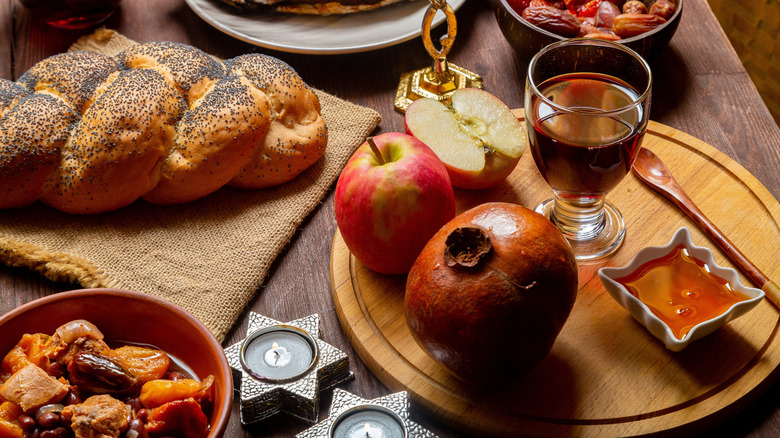
Food is frequently an integral feature of holiday celebrations across the globe. Many cultures turn to food not only as a means of fostering community and connection, but to symbolize various deities, reinforce diverse spiritual qualities, and to serve as a vehicle for sharing stories and history in a tangible way. Nowhere is this perhaps more evident than it is in Judaism.
Not only do symbolic foods make appearances at regular meals, including a loaf of challah during the weekly Sabbath, every holiday is celebrated by the consumption of specific ingredients and dishes. Though the Passover Seder might be considered the most explicit example of this, Rosh Hashanah, or the celebration of the Jewish New Year, is another important food-centric holiday.
The Jewish New Year dinner is punctuated by a number of symbolic foods that are often presented in an elegant way on a grazing board to help make the evening special. To help illuminate the meaning behind these foods and how to serve them in the most festive way, we consulted with Jake Cohen and Eitan Bernath of New York City's first and largest food rescue organization City Harvest, which is gearing up to host its annual High Holy Days Food Drive to collect kosher food to help feed Jewish families in need across the city. Read on to discover the fantastic suggestions this duo had for building the ultimate Rosh Hashanah food board.
What is a Rosh Hashanah food board?
To understand what a Rosh Hashanah food board is, it is important to explain the concept of simanim. The best way to do this is through the lens of Passover. If you have ever attended a Passover Seder dinner, you may be familiar with the Seder plate. The Seder plate features different foods, like bitter herbs and matzah, that are referenced in the Haggadah and sampled during the meal.
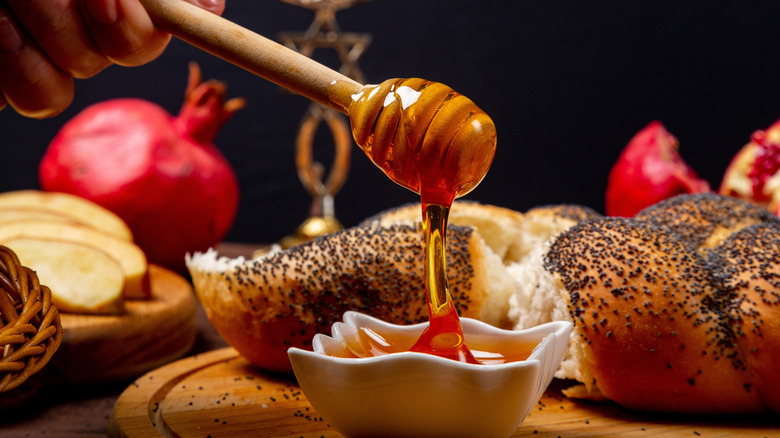
At Rosh Hashanah, a similar concept exists where symbolic foods, known as simanim, are ceremoniously displayed on a platter or board during the meal to be acknowledged and consumed. Simanim, which translates to "signs," represent good omens for the coming year. Partaking in these is commanded in the Talmud.
While simanim can be placed onto plates or in bowls, as Eitan Bernath notes, "A Rosh Hashanah food board is a modern way of presenting the Simanim ... like a grazing platter or cheese board. Instead of serving them in bowls, you can make them a centerpiece of the meal. I love serving it at the start of the holiday meal so everyone can say the blessings together before moving into the rest of the meal."
Key components of a Rosh Hashanah food board
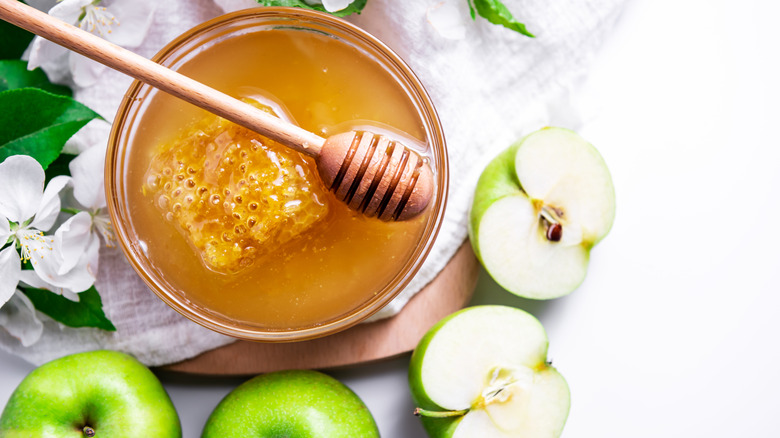
Though the precise construction of a Rosh Hashanah food board may vary, the simanim that are included are consistent. Eitan Bernath explains, "Apples dipped in honey symbolize a sweet and good year, while carrots represent an increase in merits. Leeks, beets, dates, and gourds are eaten to ward off negativity. Pomegranate reminds us to multiply our good deeds like abundant seeds. Fish represent fruitfulness and multiplication, and a head of a fish is placed on the table as a prayer that we should be like the head and not the tail."
These simanim are not the only symbolic foods that may appear on the Rosh Hashanah menu. There are others that are either served as accompaniments on the Rosh Hashanah food board or in conjunction with it. Perhaps the most important of these is the challah, which should be round as opposed to braided for Rosh Hashanah. The round challah signifies the circle of life and the start of a new year. While it can be purchased, making your own challah for Rosh Hashanah is both easy and can be a great way to feel more connected to the symbolism of the festivities.
Another staple at Rosh Hashanah is a hearty and juicy brisket. Brisket remains popular during this holiday because it is kosher, cost-effective, and benefits from slow cooking, which is advantageous when you aren't allowed to cook during the Sabbath, which lasts from sundown on Friday until sunset on Saturday.
The best ways to display a Rosh Hashanah food board
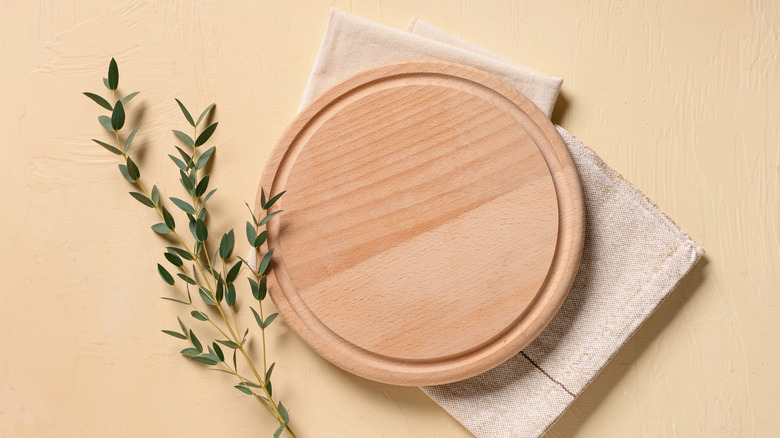
Some of the rules of thumb to follow when displaying a Rosh Hashanah food board are consistent with those for a charcuterie or cheese board. Eitan Bernath says "I like to build mine on a large wooden or marble board like a cheese board with little bowls of honey and date syrup tucked in ... For a more traditional feel, some families use a seder-style plate with designated spots for each which can be very meaningful, too."
The best board to use is one that is made from a material that is easy to clean, large enough to accommodate the components required for the Seder, and is also elegant. While assembling the ingredients on the board, it is important to keep the simanim nice and organized. This can be accomplished by using sticky notes to keep track of each item added to the board so that nothing is inadvertently omitted.
Lastly, it is important to take the entire table layout into consideration. As Bernath notes, "Just like we honor the secular new year often with a toast of champagne in nice flute glasses, so too you should elevate how you honor and celebrate the Jewish new year. Make it special and exciting." By this token, keep table arrangements simple, yet elegant. And, by all means, don't overcrowd the table with too many decorative touches, as these will overwhelm the food board itself, which should be the star of the evening.
Tips for assembling a Rosh Hashanah food board
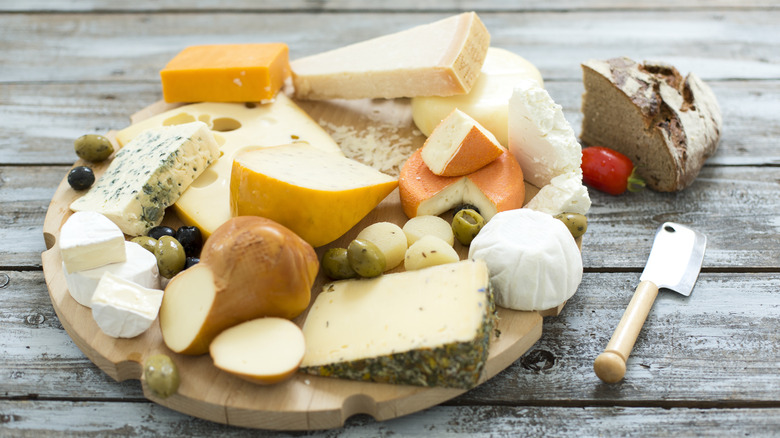
Some of the best tips for assembling a Rosh Hashanah food board mimic those for an expert charcuterie board. Perhaps the most important factor is using the diverse simanim to your advantage. Eitan Bernath says, "Grouping by color and texture makes it visually beautiful. Think apple fans surrounding honey in a small bowl or pomegranate seeds in a bowl that look like jewels."
Additionally, when filling a Rosh Hashanah food board, it can be helpful to consider this golden rule first: keep the components accessible. While it is important to make the board visually appealing, you should be able to easily grasp each ingredient. This can readily be achieved by placing larger items in the center of the board and building outward until the whole thing is filled. Bernath also suggests that you should, "Stack, layer, and use bowls to break things up" so that they can be seen and reached.
A final recommendation from Bernath is to, "Prep some items ahead that can hold well but slice apples last minute so they stay fresh." This is good advice, particularly if you are hoping to assemble a majority of the Rosh Hashanah food board ahead of the Seder, especially when the meal falls on the Sabbath and preparations must be completed before sundown on Friday evening.
Possible variations on a Rosh Hashanah food board
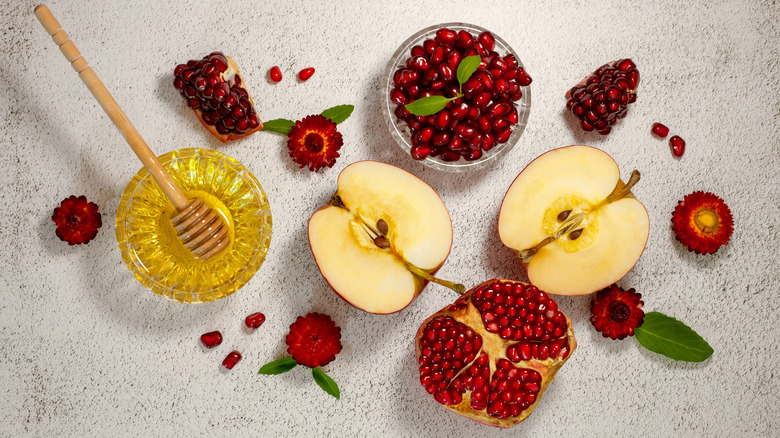
When it comes to variations on a Rosh Hashanah food board, Jake Cohen and Eitan Bernath have different philosophies on the matter. For Bernath, "Classics are a classic for a reason! I like to stick to the simanim," while Cohen believes, "Since the meaning is to sweeten the new year, you have flexibility to add in other foods that can offer that same intention!"
Perhaps a good rule of thumb is to include the traditional simanim and build upon them, incorporating other ingredients that complement and reinforce the meanings of the primary symbols. And, while these can be added to the food board, it may also be useful to imagine other ways of presenting the simanim that offer a creative change of pace. One such concept is to envision the presentation the way you might put together the foods served during an afternoon tea party. These can be elegantly displayed on a tea stand or tower, the way you might expect finger sandwiches and scones to be served.
Another variation might be to visualize the simanim the way you might Spanish tapas, as a sequence of small dishes. If you have ever dined in a Moroccan household, you might discover small, decorative tagines filled with various ingredients, like olives, salads, and more. These could easily be used to present the simanim in a unique way with a nod to Sephardic Jewish culinary traditions.
Other ways of incorporating symbolic foods into the Rosh Hashanah celebrations
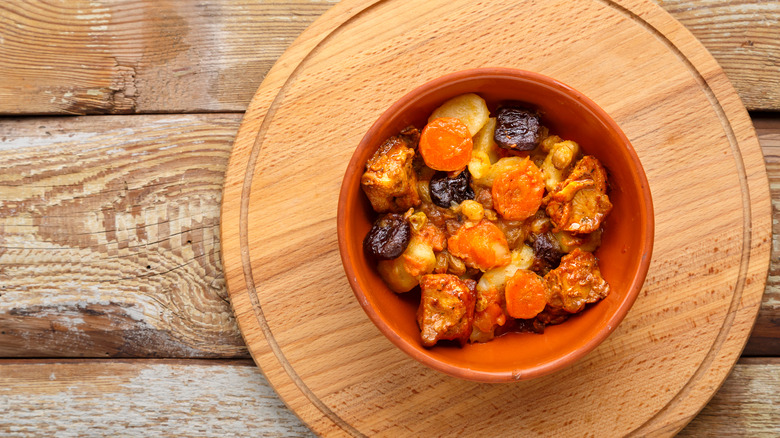
While displaying the individual simanim on a food board, plate, or other special platter is traditional for Rosh Hashanah, these ingredients can also be incorporated into various other dishes served throughout the meal. For example, carrots can be transformed into a creamy soup or a classic tsimmes, featuring dates and pomegranate seeds. Pomegranates can also be showcased in any number of other recipes, including a salad made with roasted beets or an authentic Ashe Anar, which is an Iranian meatball soup.
When it comes to fish recipes, some of the best of these can also be found in North Africa in Sephardic Jewish homes. One such dish is a rich fish tagine complete with vibrant, herbaceous chermoula and zesty preserved lemons. Another is a dish of fish meatballs or patties, known as ktzitzot dagim, which can be augmented with leeks for added symbolism.
Lastly, apples and honey have practically limitless possibilities in the kitchen. These can be transformed into soup, salads, cakes, or a festive spin on a noodle kugel. As long as the simanim are featured and the overall themes and symbols of Rosh Hashanah are respected, you are only restricted by your creativity in the kitchen and kosher laws.