

10 Old-School Candies No One Seems To Eat Today
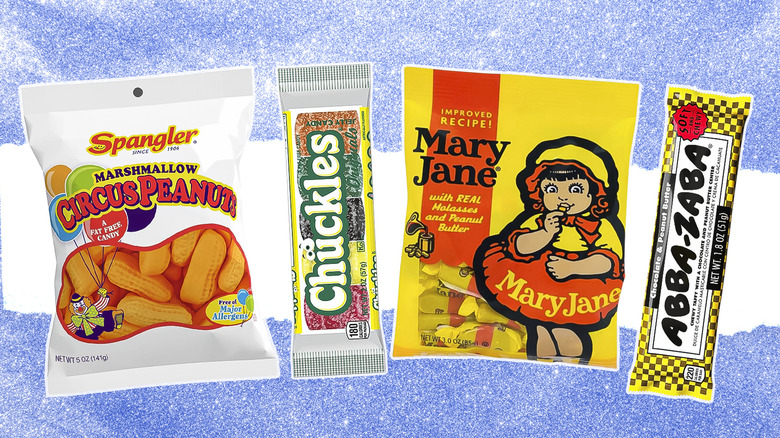
When people think of candy today, the lineup is dominated by crowd-pleasers from peanut butter candies like Reese's, M&M's, and Kit Kats. But dig back a few decades, and you'll find some quirky, inventive sweets that don't get much love anymore. These were the once classic candies tucked into penny jars at corner stores, sold in wax paper wrappers, or handed out by grandparents who swore they were the best treat around.
All of these are still being made, though just not nearly as popular as they were in their heyday. Found primarily through online shops and specialty candy stores, these candies aren't waiting for you with the other classic movie theater snacks. Why? Well, their flavors or textures might not suit every modern palate, but they tell a story about how candy once leaned on novelty and, perhaps, unusual flavors instead of flashy marketing. From chewy peanut butter taffy to bright orange marshmallow peanuts, we're diving headfirst into nine old-school candies that people don't seem to eat anymore.
1. Abba-Zaba
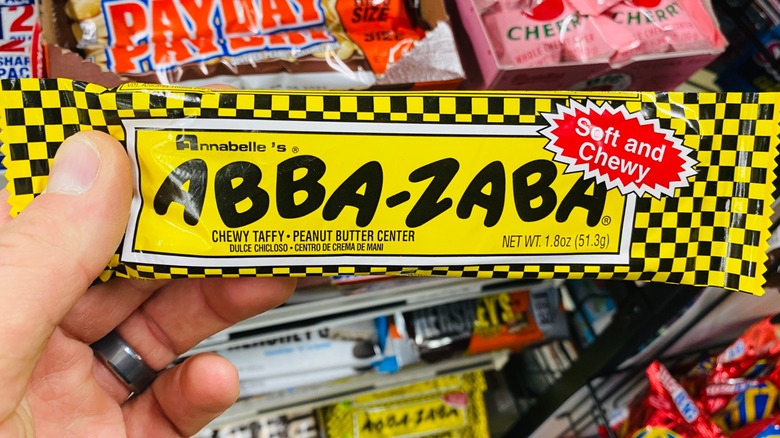
Abba-Zabas were one of those candies that people either loved at first bite or struggled to finish, and that primarily comes down to the difficulty people had in chewing it. First sold in the 1920s, its distinctive yellow-and-black wrapper stands out immediately. The candy itself is a thick vanilla taffy bar filled with creamy peanut butter, creating a contrast of stretchy chew and smooth nutty center. Eating one is a slow process — it's the kind of candy that makes you work a little for the payoff.
Though still made by Annabelle Candy Company, Abba-Zaba has shifted from mainstream bar to cult classic. It pops up in references across pop culture, perhaps most famously in the comedy "Half Baked." While its chewy texture and subtle sweetness might not appeal to modern snackers who prefer quick bursts of flavor, Abba-Zaba remains a fascinating reminder of how inventive candy once was. For adventurous eaters, it's a chewy, nutty bite of nostalgia wrapped in retro style.
2. Mary Jane
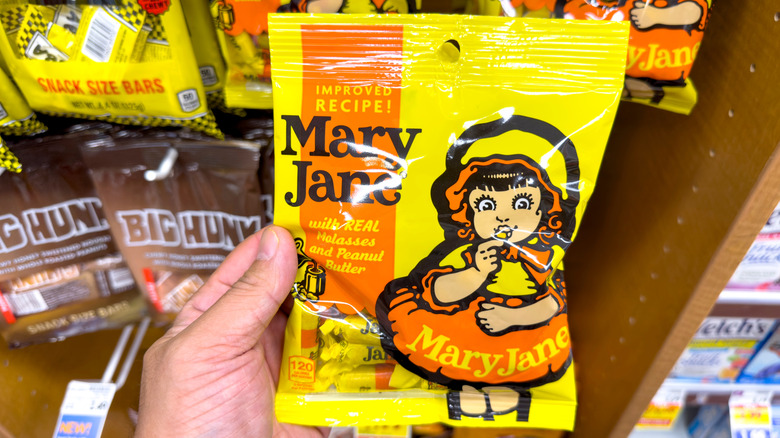
Few candies feel more old-fashioned than a Mary Jane. Invented in 1914, these candies combine chewy molasses taffy with a peanut butter center, wrapped simply in wax paper. Their taste is distinct — rich and earthy, with a depth you won't find in today's candy bars. Unlike airy chocolates or sour candies (which are great as cocktail garnishes), Mary Jane candies were meant to be savored slowly, each bite lasting far longer than a quick sugar fix.
They've been through ups and downs, disappearing briefly before Atkinson Candy brought them back. Their strong molasses flavor can be polarizing, but for many, that's the appeal. They're a taste of an earlier America, when candy wasn't about bright colors or gimmicks but about stretching a penny into something satisfying. Mary Jane candies may not compete with flashy modern brands, yet they continue to attract loyal fans who appreciate their nostalgic chew. They remain a sweet, sticky symbol of classic candy-making.
3. Chuckles
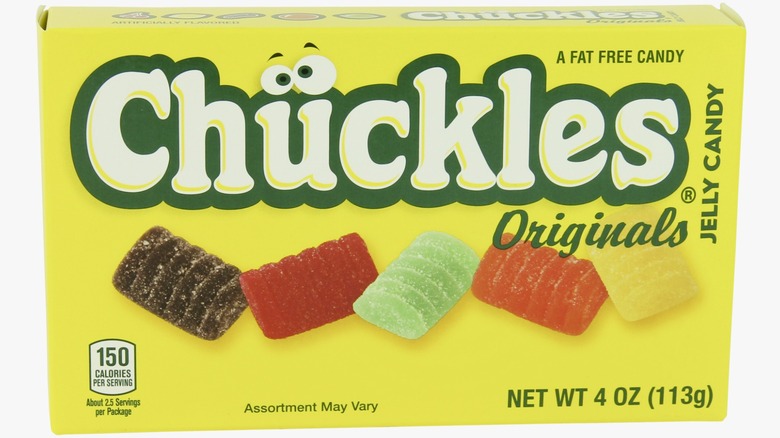
Chuckles offer a perfect example of straightforward candy fun. Each pack contains five brightly colored jelly rectangles, dusted in sugar and lined neatly side by side. Cherry, orange, lemon, lime, and licorice make up the set, and the debate has always been the same: eat them in order or skip right past the licorice?
Debuting in the 1920s, Chuckles were surely a hit in movie theaters long before the gummy craze we know today took over. Their soft chew and mild sweetness made them an accessible treat for all ages. While they're still made today by Ferrara, they're harder to find on shelves, often overshadowed by more popular flavored candies. Still, there's something undeniably nostalgic about tearing into a pack. They're a reminder that candy doesn't always have to be bold or extreme to make people happy — sometimes it just needs to be simple, colorful, and sweet enough to share.
4. Circus Peanuts
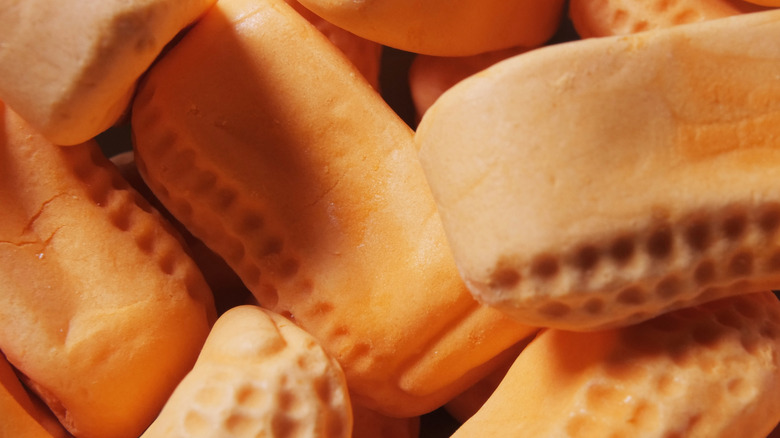
Love them or hate them, Circus Peanuts are unforgettable. These soft, orange, peanut-shaped marshmallow candies date back to the late 1800s, making them one of the oldest confections still on the market. Oddly enough, they're banana-flavored – a quirky twist considering their appearance. Their foamy, spongy texture makes them unlike anything else in the candy world, though whether that's a good thing is still up for debate.
While many dismiss them as strange or outdated, Circus Peanuts played a surprising role in shaping modern candy culture. General Mills reportedly created Lucky Charms cereal after experimenting with cutting Circus Peanuts into oats, proving their influence goes beyond novelty candy bins. Whether you love the weird charm of this candy or can't stand a bite, they're a piece of confectionery history. And the fact that they've survived more than a century suggests that, odd or not, someone, somewhere out there still finds them irresistible.
5. Choward's Violet Mints
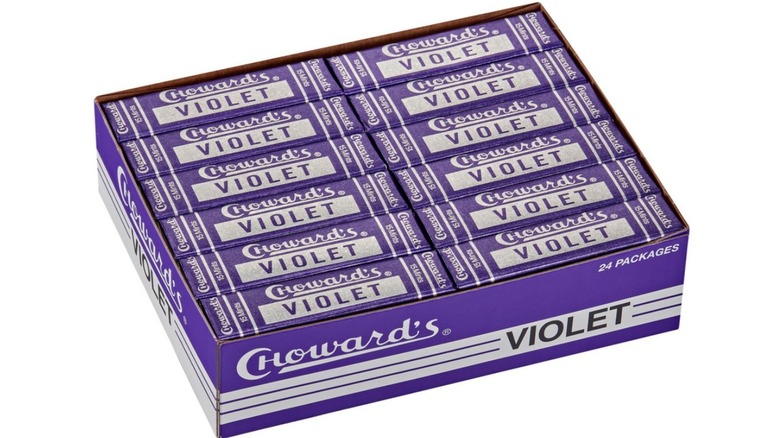
For something completely different, Choward's Violet Mints stand out for their bold floral flavor. Introduced in New York in the 1930s, these pastel purple squares were intended as a refined breath mint rather than a kid's treat. Their taste is strong and perfumed — violet essence gives them a flavor profile closer to soap or perfume than traditional candy.
They're polarizing, to say the least. Some people find them elegant, refreshing, and unique, while others can't get past the floral taste. But that's precisely why they've endured — no other candy tastes like them. Today, they remain a retro novelty, beloved by niche fans who crave something unusual. If you're willing to try a candy that transports you to an entirely different era, Violet Mints offer a sensory trip back to mid-century Manhattan sophistication, complete with their unapologetically old-world charm, but prepare to go on a hunt to find them.
6. Chick-O-Stick
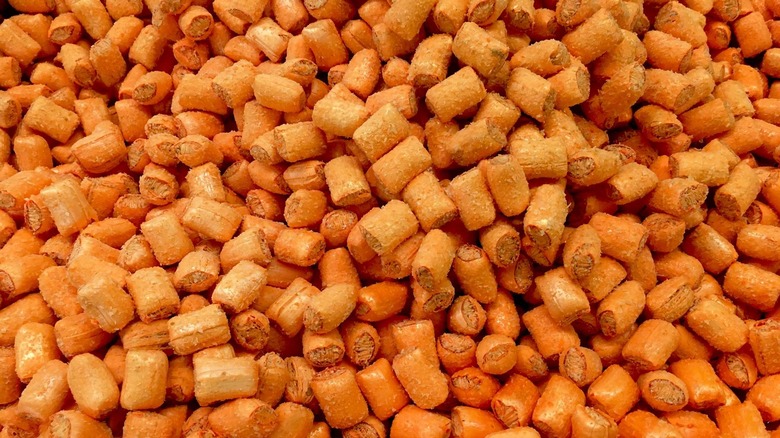
Chick-O-Stick first hit shelves in the 1930s and remains one of the most unique peanut butter candies ever made. Imagine the inside of a Butterfinger — crunchy, crumbly, and nutty — rolled in toasted coconut. That's essentially what a Chick-O-Stick is. Its orange hue, thanks to the candy coating, made it eye-catching in store displays, and its unusual texture gave it a satisfying crunch.
While it was once a gas station and roadside shop staple, Chick-O-Stick now lives mostly in specialty candy aisles. Atkinson Candy still produces both full-size and bite-sized versions, and loyal fans swear by the flavors; an almost perfect mix of nutty and coconut flavors. For younger generations, it might feel like a hidden treasure, waiting to be rediscovered. Chick-O-Stick proves you don't always need chocolate for candy to be crave-worthy; sometimes crunch, flavor, and nostalgia alone are enough to make a sweet stand out if you can find it.
7. Zagnut
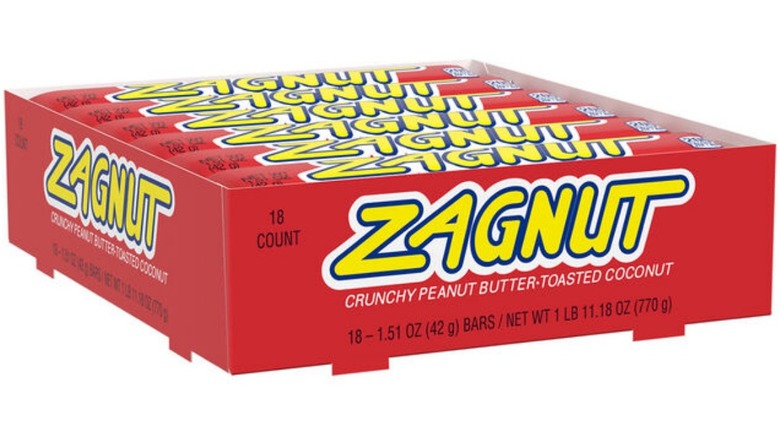
The Zagnut bar has always been an oddball. Introduced in 1930, it ditches chocolate entirely. Instead, it layers crunchy peanut butter with a coating of toasted coconut, creating a bar that's lighter and crisper than most of its peers. The combination feels surprisingly modern considering its age, offering sweetness without heaviness.
Despite its creative recipe, Zagnut never achieved blockbuster success. Hershey still makes it, but it's produced in limited batches and rarely spotted in mainstream stores. The candy did enjoy a moment of fame with a cameo in the hit 1988 film "Beetlejuice," which helped it retain cult status among movie and candy enthusiasts alike. Coconut lovers in particular find it irresistible, and we can understand why, given its balance of flavor and texture. Even if it's tough to find, Zagnut proves that innovation in candy isn't always about new flavors, sometimes it's about doing something different from the rest.
8. Black Jack Gum
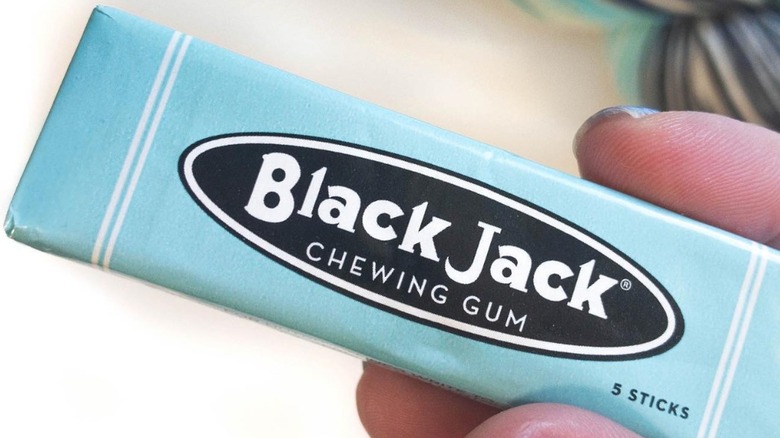
Chewing gum was once as much about novelty as it was about fresh breath, and Black Jack Gum is proof. Created in the late 1800s, it was the first widely distributed flavored gum in America, offering a bold anise taste. Instead of cooling mint or fruity sweetness, it delivered a licorice-like flavor that surprised first-timers and built a loyal fanbase over the decades. For many, the taste was polarizing — but that was part of its charm.
Today, Black Jack gum is usually produced in small runs, given the lack of demand, and often sold alongside fellow vintage gums like Clove and Beemans. While it may not compete with modern gum's long-lasting flavor or breath-freshening abilities, Black Jack remains an important piece of candy history. Chewing it now feels less like a breath-freshening choice and more like a time-travel experience, linking you to candy's earliest experiments. Its resilience proves that novelty has its place in history, even if the flavor is a love-it-or-leave-it affair.
9. Valomilk
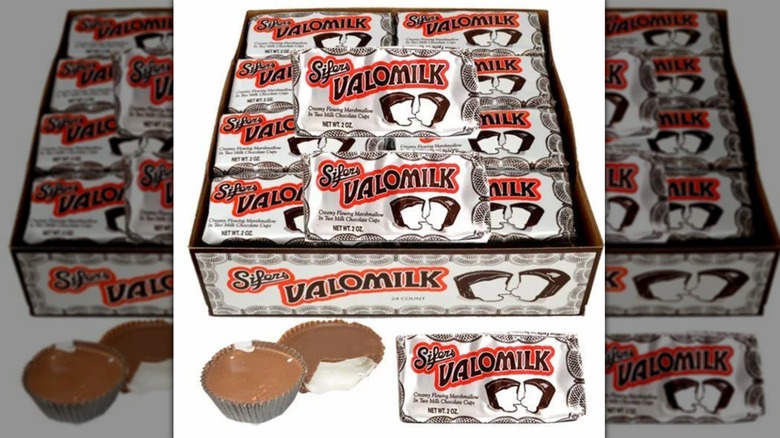
Valomilk is a candy that embraces the joys of getting messy. Created in Kansas during the 1930s, it set itself apart from other chocolate cups by being filled not with peanut butter or caramel, but with gooey, runny marshmallow cream. Unlike most candies that try to minimize mess, Valomilk celebrated it, calling itself "the original flowing candy bar." One bite, and you're guaranteed a messy drip of marshmallow down your fingers.
Though it never reached the same fame as Reese's, Valomilk still has dedicated fans. The Sifers family continues to make it in small batches, staying true to the original recipe and vintage-style packaging. Trying one today feels like a glimpse into a time before corporate candy streamlined every product for neatness. It's messy, yes, but also charmingly human. For those willing to get sticky, Valomilk delivers pure retro indulgence for those who are able to find them in stores or online.
10. Albert's Chocolate Ice Cubes
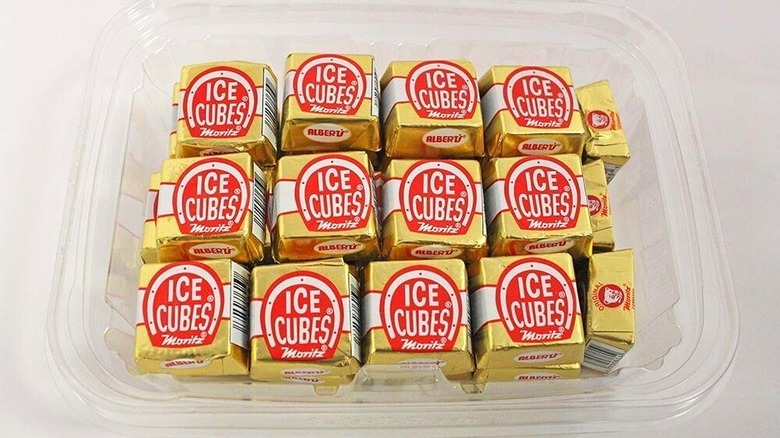
Few candies melt quite as luxuriously as Albert's Chocolate Ice Cubes. These foil-wrapped chocolate truffles got their name from their smooth, cooling sensation, which felt almost icy on the tongue. Made with European-style milk chocolate, they were considered decadent when they appeared in the mid-20th century. Unlike flashy bars stuffed with caramel or nougat, Ice Cubes kept things simple, relying on silky texture and melt-in-your-mouth appeal to stand out. For many, it was the elegance of restraint — pure chocolate that lingered with each bite.
Over time, they slipped out of the mainstream. Still, they never fully disappeared and have a loyal fanbase online. Specialty shops and online retailers keep them alive for those willing to seek them out. Unwrapping one feels like a small ritual, a moment of nostalgia and indulgence that doesn't need bells and whistles to impress. Ice Cubes may no longer dominate checkout counters, but their creamy, melt-away consistency ensures they remain a cherished secret among chocolate traditionalists.