

6 Best Fish To Use For Homemade Sushi
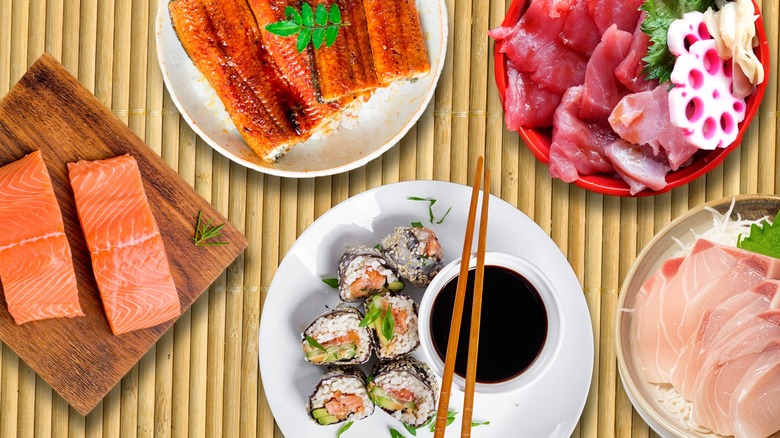
After six years running the kitchen at a Japanese tapas house, I've watched countless professional chefs and home cooks alike struggle with fish selection for sushi. The difference between good and fantastic sushi isn't just technique — it's understanding each fish's unique texture, flavor profile, and bone structure. During my tenure, I developed relationships with trusted fishmongers and learned which fish species will forgive mistakes and messy knife cuts. From fatty bluefin tuna otoro that will completely melt in your mouth to delicate red snapper that teaches you how to be a wizard with your knife cuts, choosing the right fish transforms your homemade sushi from an amateur attempt to a legendary at-home sushi.
Beyond technique and flavor, anytime you're serving raw fish or seafood if you have to be sure you're using ones that are marked as "sushi-grade". For those of you who don't know, sushi-grade, also referred to as "sashimi-grade", is an unregulated marketing term that indicates the fish is of high-quality, fresh, and has been handled properly to be safe for raw consumption. It's crucial to only use fish and seafood with this label to prevent any foodborne illness.
Next time you're thinking of hosting some friends and family over for dinner, impress them by laying a beautiful spread of homemade sushi — who knows, you might just be crowned best chef of the group. Use this list as your guide to the 6 best and easiest to prepare fish for homemade sushi that never failed me or my fellow coworkers on the prep station.
1. Tuna
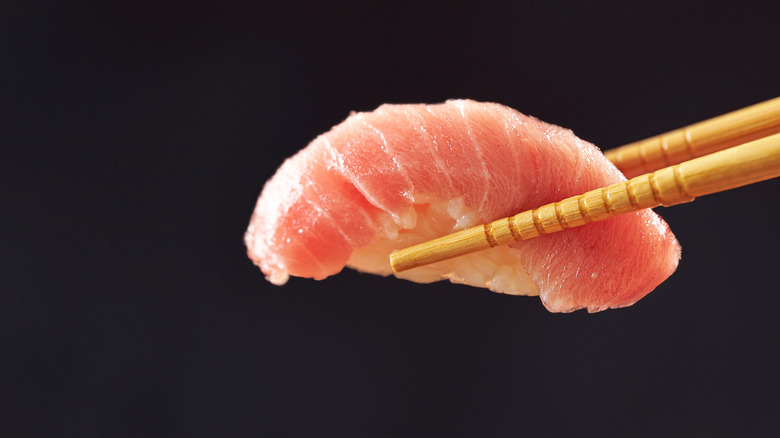
One of the most frequently used fish for sushi, tuna or maguro in Japanese, is a classic choice that's perfect for homemade sushi. Oftentimes, sushi chefs use the bluefin tuna species due to its rich flavor, beautiful dark red color, and buttery texture. Different cuts of the tuna offer a variety of textures and flavors — however, there are three that an at-home sushi chef should pay attention to: akami, which is the leanest and most affordable cut; then there is the chutoro, which has a medium-fatty balance; and lastly, the famed otoro, which is the fattest part of the fish with incredibly rich and luxurious flavor.
The otoro is by far the most expensive cut due to its scarcity and high-fat, melt-in-your-mouth flavor. This cut of the tuna comes from a very small section underbelly, and with high demand and growing popularity, the cost of it has skyrocketed. If you're not willing to break the bank, consider getting the chutoro instead. This one is found between the otoro and akami, and it has the perfect balance of both cuts. Beyond sushi, there are plenty of other delicious tuna dishes you can make with raw tuna.
2. Salmon
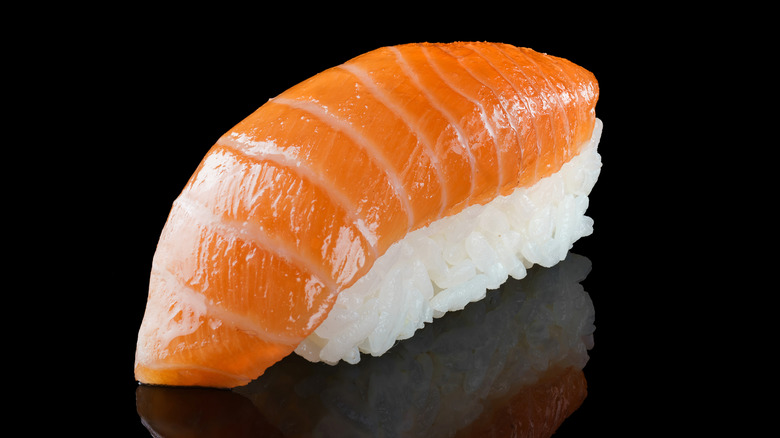
If you're looking for an easy, beginner-friendly fish option that won't cause you stress on your homemade sushi night, then you should use salmon. With its rich, buttery flavor and forgiving texture, it's a relatively easy fish to filet and slice into paper-thin slices. It has a mild fishy flavor, so any sauces and seasonings like soy sauce, sesame oil, and yuzu paste will pair perfectly with it. Plus, it has naturally high fat content, making it delicious eaten raw, and it's fairly affordable compared to other sushi-grade seafood options.
At Asian grocery stores, you might see it labeled in the fish section as "sake", which means salmon in Japanese. Mainly King and Sockeye salmon are used for sushi preparations due to their subtle fishy taste, tasty buttery flavor profile, and their wonderful tender texture. You can use it to make hand rolls, sushi rolls, sashimi, nigiri, or even this scrumptious salmon sushi bake recipe from the Tasting Table.
3. Eel
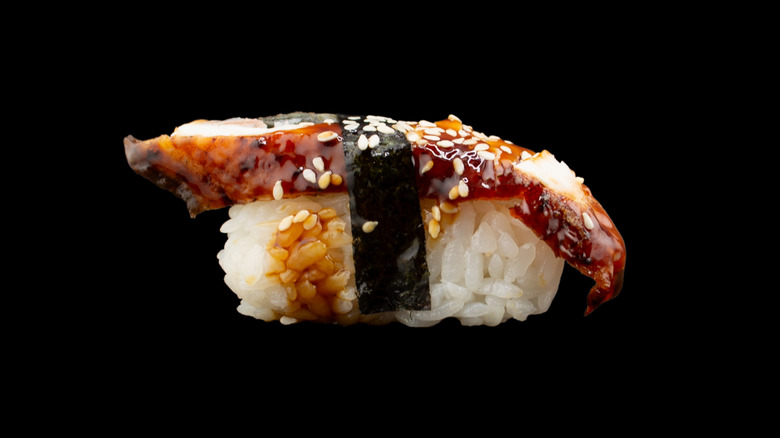
You might be wondering if an eel is even a fish — well, yes, it is! Eels are actually classified as fish since they have gills, fins, and scales (though their scales are tiny and embedded in their skin, making them appear scaleless). Freshwater eel is the most commonly used eel species in sushi, and it's always served cooked since raw freshwater eel is not safe for consumption. They're incredibly easy to use to incorporate into your homemade sushi night since most eels sold at Japanese and Asian grocery stores are premarinated, precooked, and already filleted.
If you haven't tried it before, eels or "ungai" in Japanese have an incredibly meaty, savory, umami-packed flavor, and are often described as tasting like a blend of fish and chicken. The pre-marinated eels are typically coated in a sweet and savory sauce called kabayaki sauce. If you're looking for an easy way to make an impressive spread of sushi, you should definitely go for the premarinated version.
4. Yellowtail
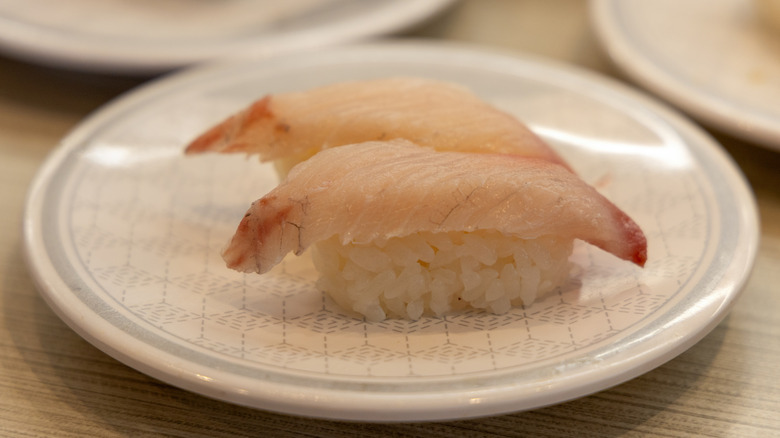
Yellowtail, also known as "hamachi" or "buri" in Japanese, is another delicious fish that's great for homemade sushi. Often, people confuse the fish with the yellowfin species from the tuna family; however, the two are completely different. Yellowtail lives throughout the Northern Pacific and is from the Carangidae family, specifically the amberjack group. These fish have light pink to deep white flesh with a buttery texture, unlike yellowfin, which has a much firmer consistency and deep red color.
One of the more common fish to use for sushi, you can find it being sold either whole or filleted at most Asian grocery stores. If you buy one whole, don't get nervous by its large size, yellowtail is surprisingly super easy to de-bone and filet — plus, it will save you money in the long run! This fish is well-known for its delicate, sweet flavor and silky texture. The belly portion is especially creamy and melts in your mouth (often viewed as a cheaper version of bluefin tuna's legendary otoro), making it a favorite at high-end sushi restaurants.
5. Sea bass
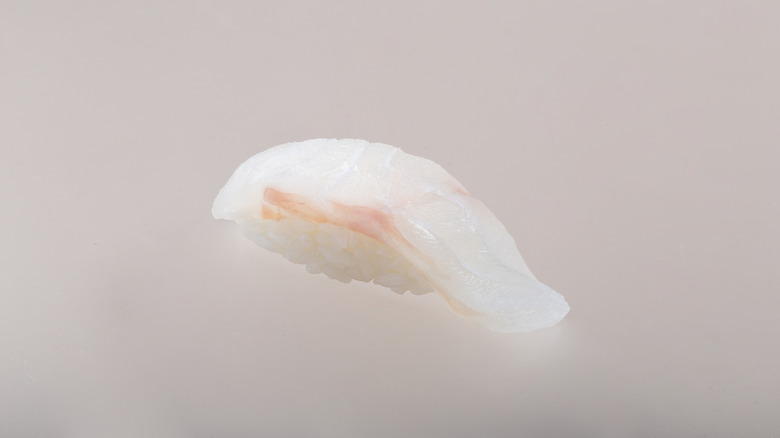
Affordable, widely available at most Asian grocery stores, and easy to fillet, the sea bass is another great beginner choice of fish to use for homemade sushi. The fish served raw has a subtle, clean taste with firm yet tender flesh. Its mild flavor makes it perfect for those new to raw fish, and it pairs beautifully with simple preparations and sauces.
Found along the southern coast of Hokkaido and the Korean peninsula, the Japanese sea bass is the most commonly used sea bass subspecies for sushi preparation. You might find it labeled at grocery stores and menus at sushi restaurants under its Japanese name, "shiromi" or "suzuki".
Nigiri is the most common type of sea bass sushi, where the fish is sliced paper-thin and molded over a ball of seasoned sushi rice. Traditionally, a small dollop of wasabi is added between the fish and rice; however, feel free to get a little creative in the kitchen. To further enhance its natural flavor, you can pair it with the citrus-based soy sauce, ponzu, a speckle of yuzu paste for zingy, peppery flavor, or even a squeeze of Meyer lemon juice. It also pairs wonderfully with fresh herbs such as cilantro, shiso, micro radish stems, and perilla leaf.
6. Sea bream
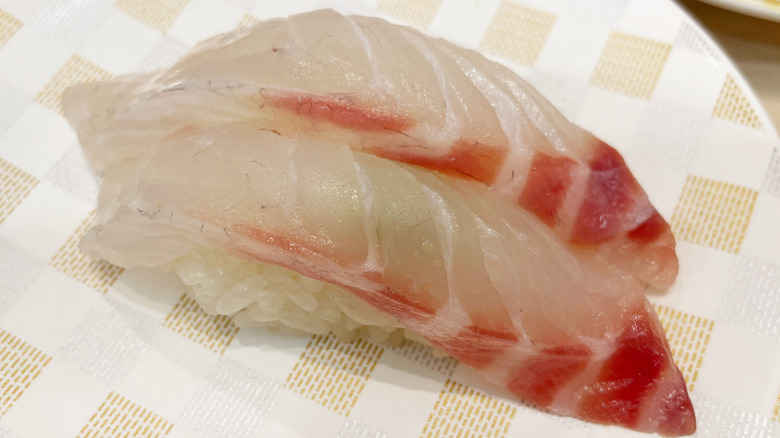
In the world of sushi, 'tai' is the general term for sea bream, which includes various species like kurodai, aodai, and most importantly, madai. Madai is a specific variety of tai that's considered the king of sea breams in Japanese cuisine and should definitely be included at your next at-home sushi night. This variety has a more delicate flavor with a subtle sweetness and firmer texture, while regular tai can refer to various sea bream species that may have a slightly more pronounced fishy taste with a chewier consistency. While madai can be a bit more expensive due to its beautiful pinkish color and clean taste, it's a great option if you're looking to treat you and your guests.
When shopping for sea bream, specifically for sushi preparations, you should opt for a whole fish. While it might sound a bit intimidating to debone and filet your own fish, it's actually quite easy, plus it'll help you practice your knife skills. With a similar bone structure to sea bass, sea breams are very easy to filet at home and get the delicate slices necessary for sushi. Beyond slicing and dicing, sea bream bones are amazing for stock and broths. Its lean, white flesh doesn't have a high oil content, which will prevent your stock from becoming overly greasy and oily.