

21 Old-School Dining Etiquette Rules No One Follows Anymore
In the not too distant past, if you were invited to attend a formal meal at a restaurant or in someone's home, you were expected to adhere to some basic rules of etiquette, like placing your napkin on your lap or navigating a fully set table. These classic rules of etiquette emerged in the French courts, where behavior was strictly prescribed. They filtered into more mainstream dining with the codification of French cuisine in the 19th century by chefs like Marie-Antoine Carême and were adopted by cultures across the globe.
While some of these rules are still followed in fine-dining settings, many of them have become antiquated as society has become less formal as a whole. Today, whether you are eating out or hanging at someone's house, meals tend to be more about relaxing in a casual setting and gathering with others without any pressure. Though they differ around the world, for the most part, a lot of these old-school dining etiquette rules have gone by the wayside.
1. Include a full table setting
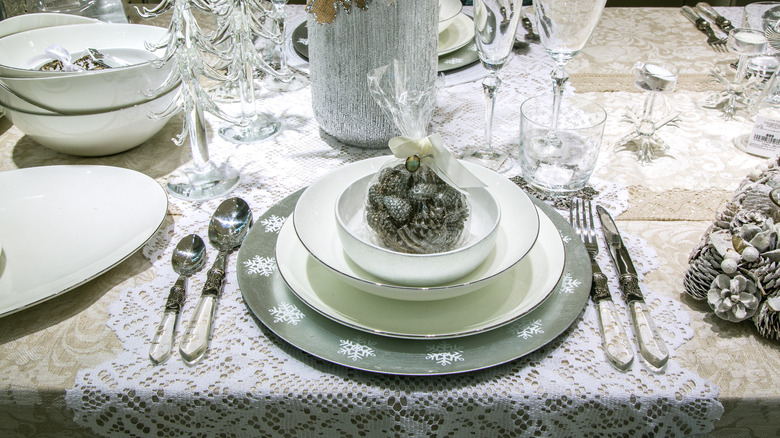
Historically-speaking, formal meals would be multi-course, elaborate events that required a legion of plates, utensils, and glasses. In fact, a formal table setting could require in excess of 15 pieces of glassware and cutlery to accommodate the multiple courses served. This is no longer the case in most restaurants. Even in fine dining establishments, rather than cluttering the table by pre-setting it, fresh utensils are delivered ahead of each course.
Similar logic can be applied to hosting a dinner party at home. Among Ina Garten's top tips for setting the table for a dinner party is to keep things simple so that the focus can be on the company and the conversation.
2. Wear formal attire
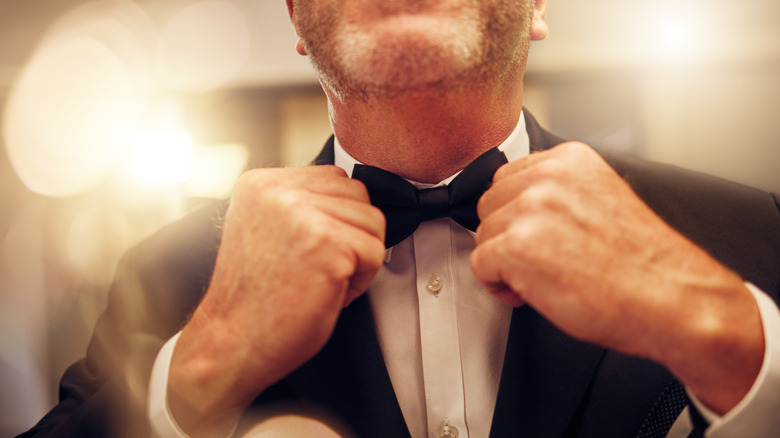
In the not too distant past, many restaurants, particularly fine dining establishments, required formal attire for its patrons. Formal attire typically included a dark-colored suit and tie with a jacket for men and a modest, dark-colored gown or cocktail dress for women. Guests who showed up without the proper attire could be turned away and would lose their reservations even if they were made months in advance.
Today, these requirements are less frequent and are often unenforced. Even some of the top restaurants in the world with Michelin stars, like Alinea in Chicago, are foregoing formal attire, opting for a more flexible and less fussy "elevated casual" or "business casual" dress code. That said, restaurants are still likely to turn you away if you aren't wearing shoes or a shirt.
3. Wait for everyone to be served before digging in

According to Mrs. Isabella Beeton's 1861 trope on etiquette, "The Book of Household Management," it is impolite to take a bite until everyone at the table has been served. This rule emerged at a time when the order of the meal was very regimented and any disruption in service could potentially derail the evening.
While this rule may still apply in very formal settings, it is far less proscriptive in casual restaurants, buffets, and large gatherings or banquets. In these cases, it is not uncommon for food to be served as it is ready or for each diner to order a different number of courses.
4. Keep your elbows off the table
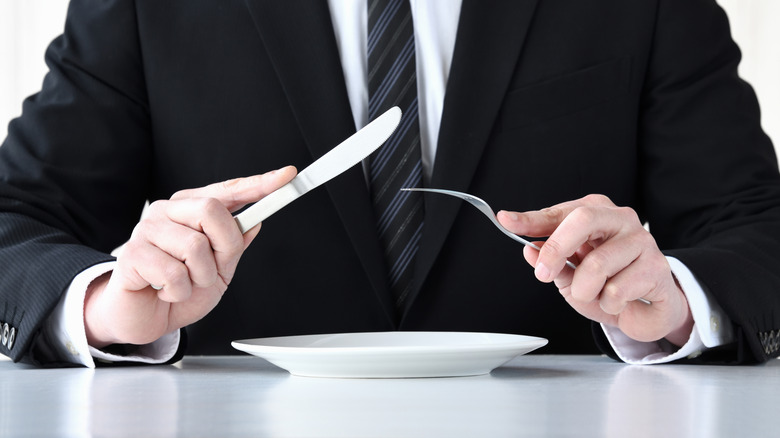
One of the oldest rules of etiquette on the books is to keep your elbows off the table while you eat. Though the precise origins of this rule are debatable, there are a number of reasons that it may have emerged. These range from leaving ample space on the table for the food and table settings to preventing the outbreak of violence at feudal tables during the Middle Ages.
While it is still considered polite to do so, and may perhaps aid in digestion, keeping your elbows off the table is no longer seen as a hard and fast rule. People often rest their elbows on the table between courses while engaging in conversation or or awaiting the next course, particularly in casual settings.
5. Pass the salt and pepper at the same time
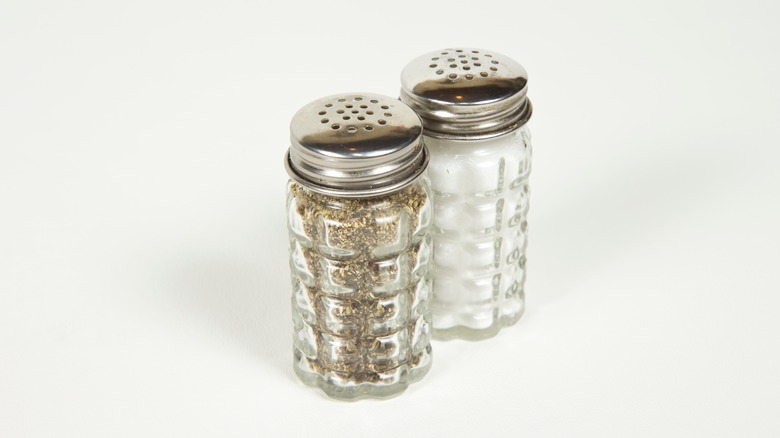
If you happen to be at the dinner table and someone asks you to pass the salt, according to proper etiquette, it is polite to pass both the salt and pepper as a pair using one hand. This rule emerged to ensure that the two seasonings remain together should someone else request them later in the meal.
While there may be some logic to this rule, it isn't especially convenient, nor is it necessary. Most people will simply grab whichever seasoning was requested and hand it to the person needing it. What's more, many restaurants have eliminated salt and pepper shakers from the table altogether to eliminate clutter, prevent the spread of germs, and encourage diners to try the food as-is before adulterating it.
6. Butter one bite of bread at a time
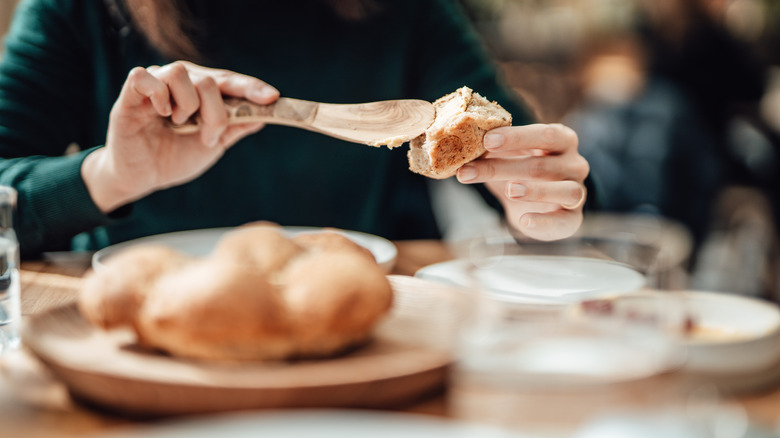
According to proper etiquette, you should butter your bread one bite at a time. Start by placing a small pat of butter onto your bread plate. Next, tear off a piece of bread, slather it with butter, and pop it straight into your mouth. Never smear butter onto a whole slice of bread and leave it sitting on your bread plate.
While this sounds lovely, it is unrealistic. Not only do most of us prefer to evenly spread the butter across a slice of bread, some of us even prefer to dip it into the butter or olive oil provided. And, many restaurants nowadays provide individually-wrapped portions of butter for each diner to use rather than a butter dish, making this one basically obsolete.
7. Serve women first
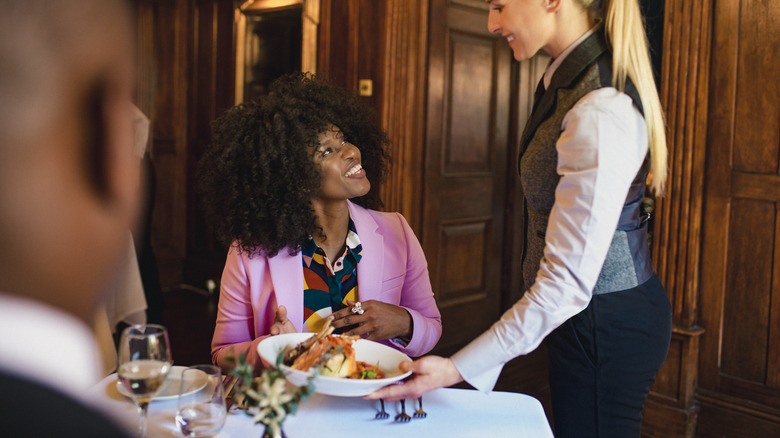
As recently as the 1970s, women were forbidden from entering restaurants without a man in certain American jurisdictions, and it was customary to serve women first. This antiquated gender-specific service is increasingly being eliminated by restaurants, casual and fancy alike, in favor of more gender-neutral service.
To understand why, one need look no further than the societal push for less discriminatory business practices that are sensitive to gender equality. It also makes sense from a practical perspective. Most restaurants have seat numbers for each table, allowing the server to bring the correct dish to the diner who ordered it. Eliminating the need to locate the female diners first streamlines the service process and prevents food from getting cold before it is delivered.
8. Pass dishes counterclockwise
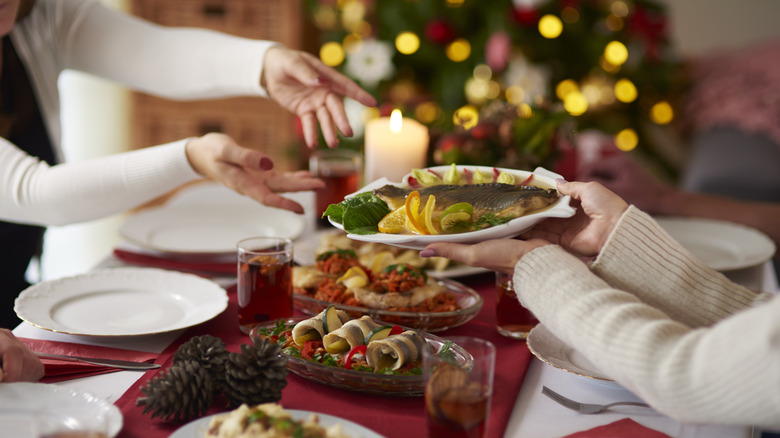
If you are enjoying a family-style meal, it is customary to pass the dishes to the right, or counterclockwise. The logic behind this rule is that most people are right-handed and doing so helps to simplify the distribution of food, allowing for everyone to get a serving and preventing chaos at the dinner table.
While this is still sound advice, in reality, most people don't follow it to the letter. There is no reason why the dishes can't be served to the left, or clockwise, nor is it a faux pas to pass a dish across the table to someone requesting it. Most of us simply aren't that fussy and a little organized chaos just makes the dinner that much more entertaining.
9. Men should always pay

In the past, it was customary for the man to pay for a meal when at a restaurant. This tradition emerged in an era when fewer women worked outside of the home, couldn't have a bank account, and couldn't obtain a credit card. This is no longer relevant, nor are traditional gender norms.
As gender-neutral service becomes more commonplace, restaurants are increasingly sensitive to offering diners options in terms of how they would like to pay. It isn't uncommon to have a server ask if you want separate checks, even if the diners happen to be a male and female eating together. Alternatively, rather than handing the check to someone, servers will simply place it in the middle of the table, allowing for anyone to pay, which eliminates any awkwardness.
10. Leave a bite of food on the plate
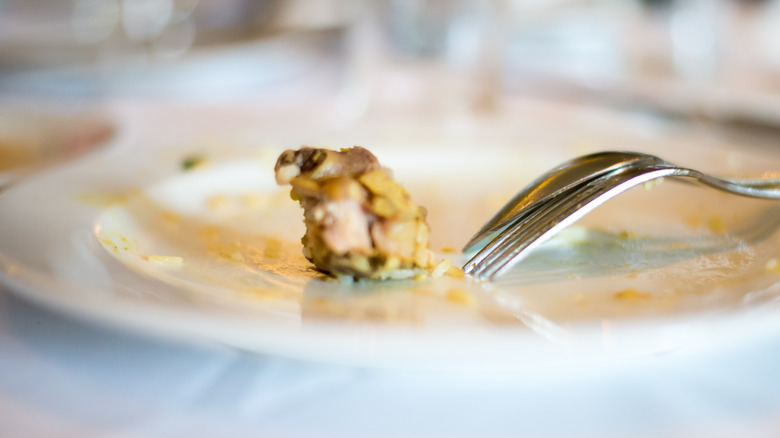
According to the rules of formal etiquette, it is polite to leave a bite of food on your plate, despite the habit of moms everywhere of encouraging kids to clean their plates because "there are starving children somewhere." While this is no longer the case at most restaurants, it may be advisable according to psychologists and nutritionists, who suggest the practice can encourage more mindful and intuitive eating.
That said, if you really loved a dish, there is no shame in eating every last bite. Chefs will see this as a compliment and it certainly makes the job of the dishwasher easier. Even better, ignore that bread and butter rule and sop up every last bit of sauce with a piece of bread.
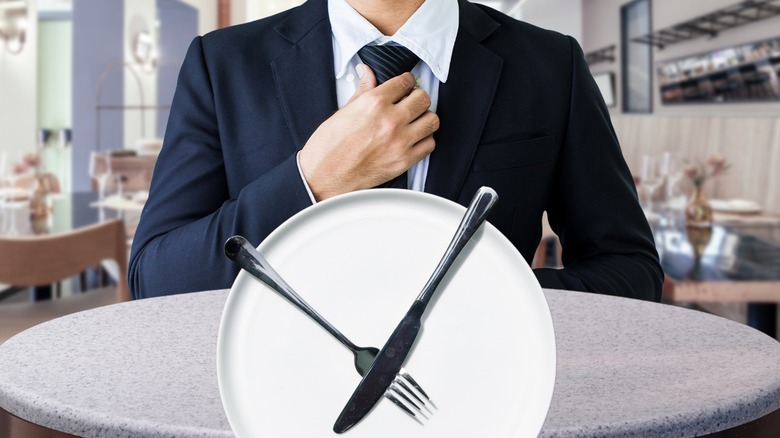
11. Place the utensils on the plate to indicate you are finished
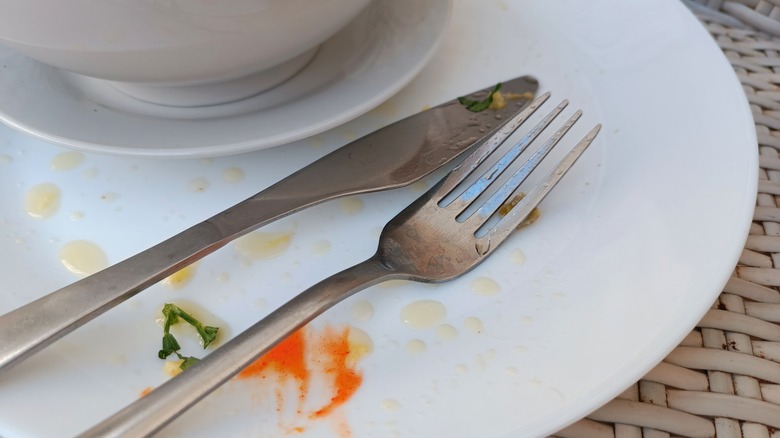
Proper decorum suggests that the proper way to signal that you are finished eating is to place the handles of your knife and fork at the four o'clock position on the right rim of your plate with the tips resting on the plate. The blade of the knife should face inward toward the fork and the fork tines should be pointing upwards.
This particular rule of etiquette actually has a practical use, despite the fact that it is rather antiquated. Waiters at a restaurant or your aunt Ethel may not know if you are done eating a particular dish just by looking at you unless you have gobbled up every last bite of food on the plate. That said, most restaurants will ask you before removing the plate if they have noticed you have stopped eating, even if your fork and knife are nowhere to be found.
12. Serve from the left and clear from the right

It is relatively standard in fine dining establishments for food to be served from the left side of the guest and for plates to be cleared from the right. Historically-speaking this was designed to facilitate efficient service for right-handed servers and to avoid the need for reaching across the guest to place a plate on the table.
While you may still find this rule in play in really fancy restaurants, fewer servers adhere to these rigorous standards across the board. This is partly because left-handedness has become increasingly normalized and largely a general shift in restaurants opting for more casual service where plates are delivered in the most convenient way possible. This may vary depending on the layout of the restaurant, how crowded it is, and how many diners there are at the table.
13. Drink from the same spot on your wine glass

The number of rules that exist surrounding how to appropriately sip wine, from how to sniff it to how to swirl it before tasting, can be daunting. One rule that used to be important was drinking from the same spot on your wine glass every time you take a sip. This rule originally prevented wine glasses from becoming stained with lipstick, which was unsightly and could potentially alter the aroma and flavor of the wine.
In today's world, many lipsticks are not only waterproof, they are smudge-proof, eliminating their transfer to glassware and flatware and allowing for a more unadulterated dining experience. Additionally, in an attempt at making wine tasting more accessible, many restaurants are relaxing the fussiness of their wine service to encourage more people to imbibe, which is good for business and is more pleasurable.
14. Spoon soup away from you
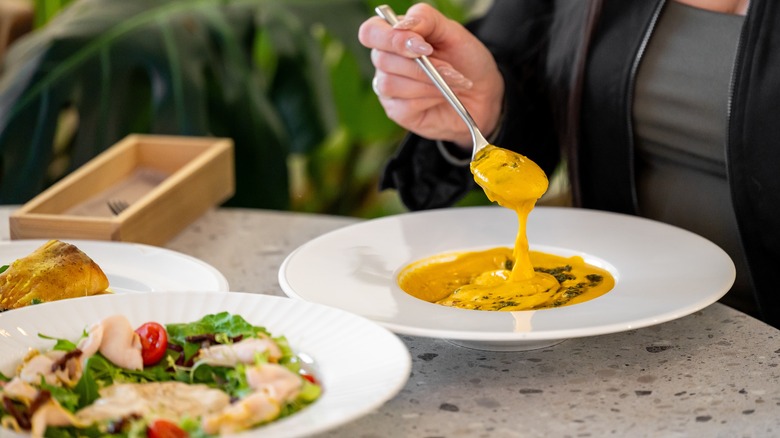
According to classic etiquette rules, the proper way to eat soup so that it doesn't dribble onto your lap is to scoop it away from your body with a spoon and wipe the bottom of it on the edge of the bowl to remove any residual droplets. While this certainly works, it takes a lot of getting used to and most of us can't be bothered to fuss with it.
Not only is it perfectly acceptable to scoop soup toward you in the bowl, restaurants often serve soup in vessels other than bowls, such as cups or goblets, which are designed to be picked up and sipped or slurped, rather than eaten with a spoon. What's more, dunking your bread into the soup bowl to wipe up every last bit of goodness is not only encouraged, it is welcomed by chefs who are eager to see clean plates come back to the kitchen.
15. Put your napkin on your lap

It used to be standard decorum for diners to place their napkins onto their laps when seated at the dining table and to put them on their seats if they had to get up at any point during the meal. These rules emerged in an era when most napkins in restaurants were made of cloth and were intended to be used throughout the meal.
While this may still be proper when enjoying a meal at a fine dining establishment, most casual restaurants have switched to disposable paper napkins. This allows for diners to get a clean napkin anytime they would like during a meal and to be less ceremonious about where it should be placed and how it should be used.
16. Take a seat from the left and get up to the right

As a general rule, in formal settings, it is customary to take a seat from the left and get up to the right. The main reason for the existence of this rule is to eliminate the possibility that guests bump into one another or knock something off the table. While this procedure may actually be functional, it is seldom adhered to in today's world.
People are less likely to sit down and get up at the same time when dining out, and the seating layout of restaurants is increasingly becoming less fussy, with many restaurants opting for a more lounge-like setting or even communal tables. As such, the rules of who sits when and where are more casual and relaxed, unless you are attending a wedding or banquet with assigned seating.
17. Refrain from hanging a purse from the back of a chair
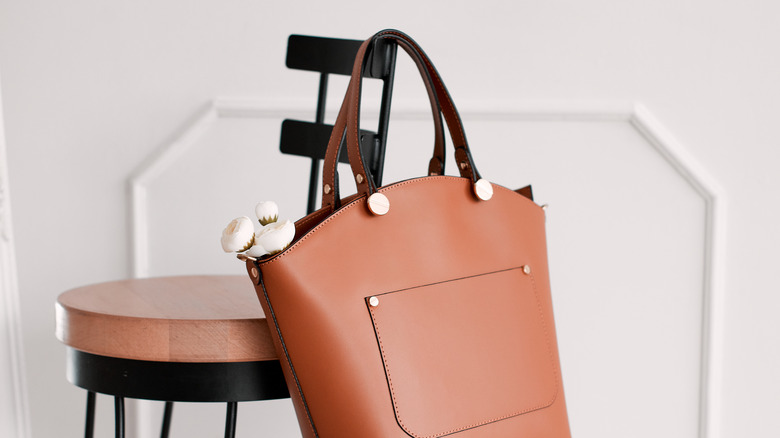
Proper etiquette requires that any person carrying a purse or handbag refrain from hanging it on the back of their chair, on the table, or on the floor at a restaurant. This is considered both rude and a potential trip hazard for servers. The proper placement for a purse or handbag is behind you on the chair or in your lap, under the napkin.
Realistically, this isn't functional. Most people don't have dainty purses that can comfortably fit on the chair. Additionally, not having a hand or an eye on the handbag can make it a prime target for theft. If a restaurant happens to have a handbag hook, use it. Otherwise, many people place their purse on an empty chair or on the table where it isn't in the way and can easily be observed.
18. Men should always stand to greet a women, but not vice versa

According to basic rules of civility, it is always expected that men should stand up when a woman arrives at the dinner table and any time she leaves to powder her nose. This rule does not apply in reverse. Not only does this involve a ton of impractical sitting and standing, which could disrupt both food service and the flow of the conversation, it is rather old-fashioned.
In today's world, practices that in any way differentiate men from women are seen as passé or even offensive. If you choose to stand when someone joins the table or is departing for any reason, make it a common courtesy for everyone, regardless of gender. Otherwise, it may just be best to skip it and perhaps acknowledge the person in another way.
19. Don't order before everyone at the table has been sat

It is generally customary for you to wait for your entire party to be seated before ordering drinks or food. That said, many restaurants won't even allow you to go to your table until everyone in the party has arrived. There is a lot of sound reasoning for this, including helping the restaurant maximize profit by turning all of its tables as many times as it can per night and facilitating smoother service for both the wait and kitchen staff.
Despite this, many restaurants are opting for more relaxed protocols, allowing customers to stagger in and encouraging them to linger over drinks and appetizers. As long as you are sitting, you might as well order something and give the restaurant a chance to turn a profit on your table.
20. Have the same number of courses as your dinner mates
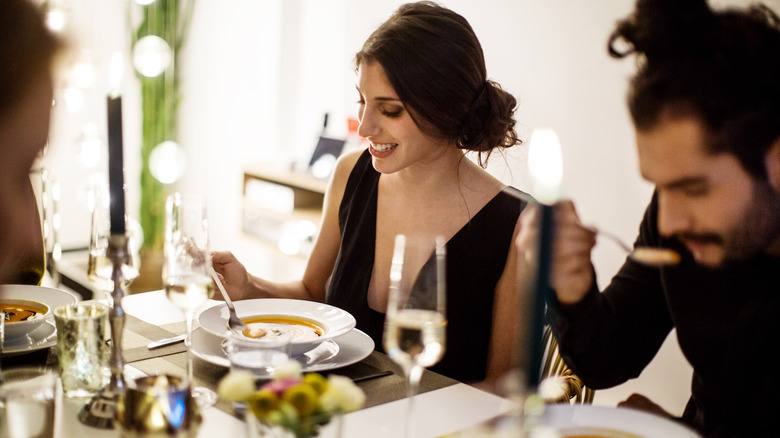
A very antiquated rule of etiquette that is seldom adhered to anymore is what is often known as "matched ordering." This rule, which is a relic of fancy, multi-course taster menus, refers to each diner ordering exactly the same number of courses at a meal. The practice typically ensures that the dinner is well-paced, the food comes out at the same time, and the server keeps track of all the food being distributed.
This rule doesn't allow for differing appetites, shared plates, or splitting meals, all of which are important considerations. Most restaurants are happy to accommodate these requests and can orchestrate what dish comes out and when as long as this is clearly communicated when you order.
21. Don't eat with your hands
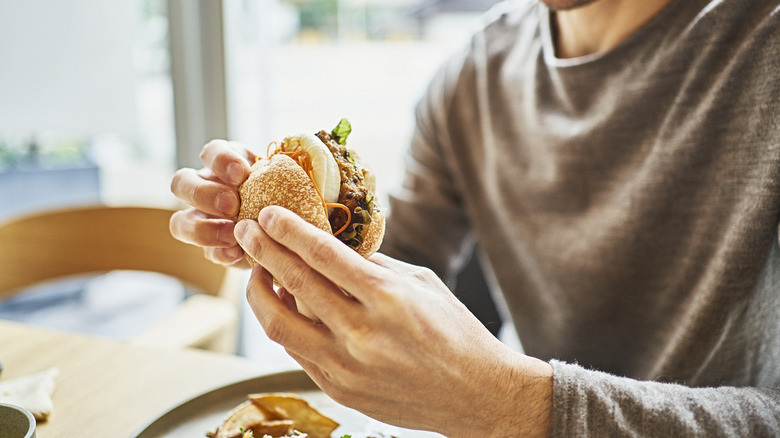
One fine dining rule of etiquette that many suggest you should never break no matter how hungry you are is eating with your hands. Historically-speaking it was considered rude to eat anything without utensils, even items we often consider to be "finger foods."
Fortunately, this rule is far less rigid in today's casual dining scene than it once was. Not only is it customary to eat certain foods with your hand, including pizza, sandwiches, and tacos, it may be expected. Eating with your hands is commonplace in many cultures, and not doing so can be considered offensive. As long as you aren't sticking your grimy hands on every surface of the restaurant, go ahead and pick up your food.