

You Can Still Dine At These 13 Chain Restaurants' Original Locations
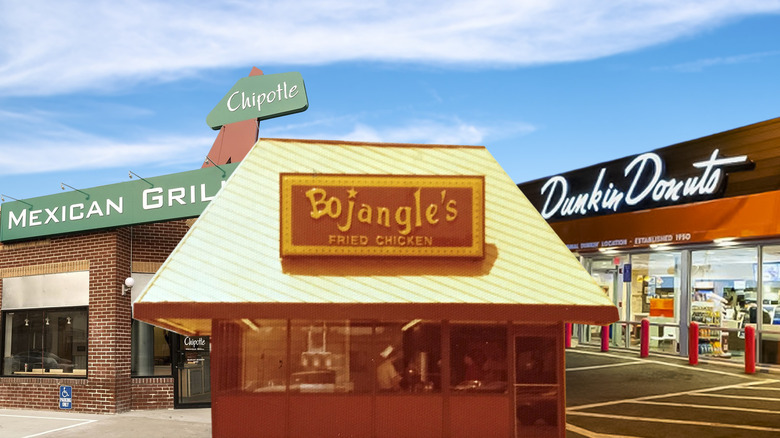
Fast-food and casual-dining chains are so woven into the fabric of American life that it's easy to forget they all started somewhere else. While we're used to going to the nearest location, there's a unique thrill in visiting the spot where it all began. Imagine eating a donut at the very first Dunkin', or biting into a burrito at the first Chipotle. Some die-hard fans will go out of their way to travel to a chain's flagship, extending road trips, or traveling to a location with the specific intent of eating at the inaugural spot.
These founding locations are more than just restaurants; they're time capsules preserving those early days of brands whose futures were largely unknown. Elements lost to franchising or corporate standardization may still be preserved in these locations. Some maintain original decor and menu items, while others have evolved with the times. Most companies celebrate the historical significance of their first establishments with museums, or adorn walls with old photos and memorabilia. All the chains on our list, with varying levels of renovations over the years, still operate at the location where they first opened, providing a tangible connection to their past.
1. Dunkin'
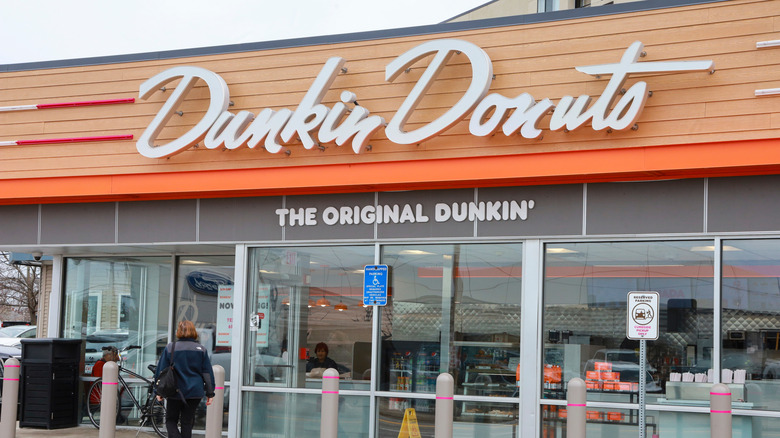
America has run on Dunkin' since its first location opened in Quincy, Massachusetts, 75 years ago. Founder William Rosenberg started the business in 1948 as Open Kettle, serving coffee and donuts for ten and five cents, respectively. Two years later, it was renamed Dunkin' Donuts, inspired by the idea of dunking donuts into coffee. Within four years, Rosenberg had opened five locations.
While the first Dunkin' remains at its original location and is fully operational, it has undergone modernization over the decades to reflect the brand's evolution. The exterior still features old-fashioned script signage reminiscent of the original sign. A gold donut-shaped plaque on the wall marks the store as the site of the original Dunkin' Donuts. The interior is a thoughtful blend of past and present, featuring historical photos, old menus, and company logos that have been used throughout the years. The retro diner-style counter and signature pink and orange stools are a tribute to the original 1950s design of the first shop.
Today, the initial Dunkin' is just one of 14,000 locations worldwide. While the modern brand has evolved into a global coffee powerhouse, the Quincy storefront serves as a reminder of the enduring appeal of the simple, yet delicious, coffee and donut pairing.
(617) 472-9502
543 Southern Artery, Quincy, MA 02169
2. Chipotle
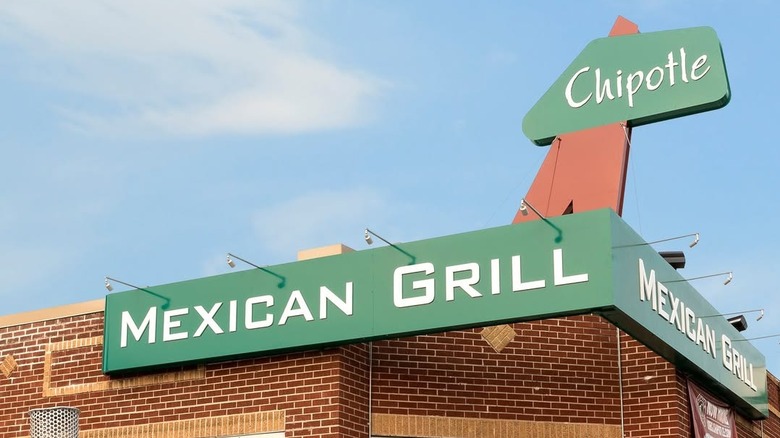
Just a few blocks from the University of Denver campus, the original Chipotle Mexican Grill remains a landmark in the history of fast-casual dining. Founder Steve Ellis was working as a chef in San Francisco when he wanted to open a fine-dining restaurant. He decided a low-risk investment, like a small burrito shop in Colorado, could be the solution for raising capital for the upscale restaurant. The first Chipotle location opened in Denver in July 1993 in an old ice cream shop. Sales exploded after word of mouth spread among students on campus, and the store became profitable within the first few months of being open. Ellis opened a second location in Denver, just a year and a half after the first, and a third in 1996. Today, there are over 3,800 Chipotle locations globally.
The original location underwent a summer-long renovation in 2017, its first in 24 years. The changes to the 850-square-foot space were mostly behind the scenes, including an expanded basement to accommodate more storage and food prep. The dining room received some style updates while preserving the original charm of the first restaurant. While the inaugural store operates with the same assembly-line and menu as every other location, it does so in a notably smaller footprint with minimal seating. Outside, a plaque recognizes the site as the original Chipotle, where a revolution wrapped in foil began.
(303) 722-4121
1644 East Evans Ave, Denver, CO 80210
3. Nathan's Famous

Nathan's Famous was born in 1916 in Brooklyn when Polish immigrant, Nathan Handwerker, started selling hot dogs from a small stand in Coney Island. Nathan was working as a longtime bun slicer for Feltman's, a neighboring frankfurter shop, when he quit to set up a rival hot dog establishment nearby. Using a $300 loan and his wife Ida's secret recipe, he undercut his competitors by half, selling hot dogs for just five cents. Half-priced franks had potential customers questioning the quality of Nathan's meat. In a ploy to bring in customers, he hired men in white lab coats to pose as doctors to eat at his stand, all in an effort to prove his products were made from healthy ingredients. The ploy worked, and Nathan's has gone on to sell over 500 million hot dogs since its inception.
The original location of the century-old hot dog standhas been renovated and expanded over the decades, taking up almost an entire city block. The building's exterior features the brand's iconic green logo, neon signs noting seafood and delicatessen offerings, and a cartoon mascot of a sausage wearing a chef's hat. The experience remains similar to its origin, with customers ordering directly at the counter, and a hot dog recipe that has remained relatively unchanged (the only change being that the hot dogs are now gluten-free).
(718) 333-2202
1310 Surf Ave, Brooklyn, NY 11224
4. Hooters
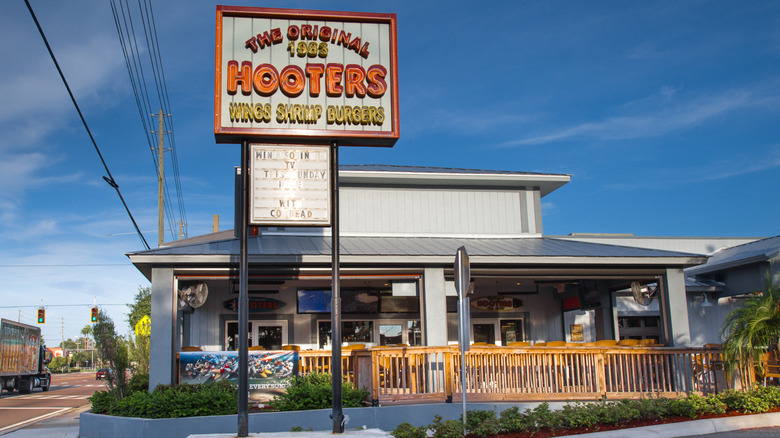
Hooters was incorporated on April Fools' Day, 1983, by six local businessmen and friends (now known as the Hooters Six) with no prior experience in the food industry. It began as a casual beach eatery in Clearwater, Florida, with a now iconic identity built on chicken wings, sports, and Hooters girls waitstaff. Opened in October of the same year, the concept, though controversial, proved to be wildly successful. By 1984, the restaurant was dealing with two-hour waits to get in the door. Later that year, the six friends sold the expansion and licensing rights to businessman Hugh Connerty, who expanded to Tampa, Lakeland, and Atlanta.
The flagship Hooters has been extensively remodeled over the decades, with the most recent refurbishment in 2012. The restaurant reopened after an 11-week renovation to feature an expanded 7,000 square feet of space, new indoor and outdoor bars, a museum, a new exhibition kitchen, and 35 flat-screen TVs. You'll still find wings and burgers on the menu like when the restaurant first opened, but now you can also enjoy the addition of seafood and salads. While the exterior and interior have been modernized, the original feel of the chain is preserved through displayed historical photos and memorabilia. The original Hooters still offers the fun and energetic sports-bar vibe that first made it a cultural phenomenon over forty years ago.
(727) 797-4008
2800 Gulf to Bay Blvd, Clearwater, FL 33759
5. Jamba

Jamba, or Jamba Juice, opened in April 1990 in San Luis Obispo, California, under the name Juice Club. The smoothie shop was founded by then 26-year-old Kirk Perron, who created the juice shop as his senior project at California Polytechnic State University. Perron would go to Blazing Blenders, a smoothie shop that claims to be the first in California, around four times a week after cycling and working out. His daily visits are where he drew inspiration for going into the smoothie business. He realized other people were likely habitual customers and recognized a large untapped smoothie market. By 1993, the success of the first store resulted in a second location opening in Irvine, and a third in Palo Alto soon after.
The first Jamba has undergone significant changes that reflect the brand's transformation, including a rebrand from Jamba Juice to just Jamba in 2019. The store has been modernized to align with a cleaner and brighter aesthetic with white tiles and wooden accents, complete with digital menu boards and ordering systems. A plaque on the outside of the building, dedicated on April 19, 2010, commemorates the twentieth anniversary of the store and its mission to help make San Luis Obispo a happy and healthy community.
(805) 549-0637
17 Chorro St, Suite C, San Luis Obispo, CA 93405
6. Carrabba's Italian Grill
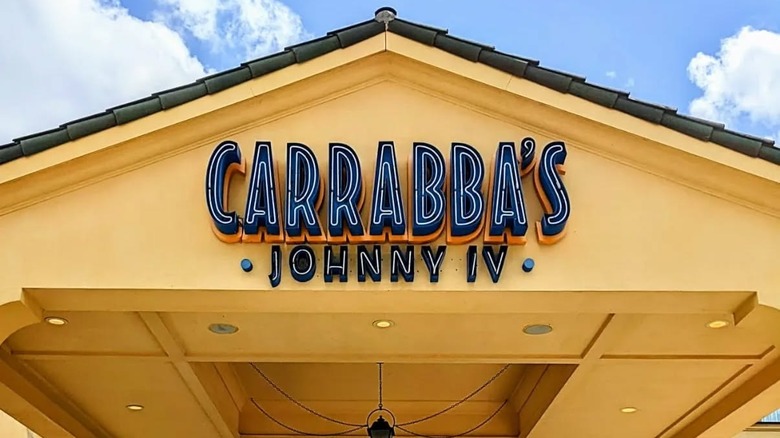
Carrabba's Italian Grill was founded in 1986 in Houston, Texas, by Johnny Carrabba and his uncle Damian Mandola. The concept was born out of the Carrabba family's Sicilian heritage, love of food, handmade flavor, and family traditions. They wanted to create a place that stayed true to their roots, which consisted of made-from-scratch sauces, big portions, and a wood-fired grill. This genuine approach to food led to its success, and a second location opened its doors in 1988. In 1993, they formed a joint partnership with Outback Steakhouse, Inc. (now Bloomin' Brands), subsequently opening over 250 restaurants nationwide.
Unlike its corporate successors, the first location is still owned and operated by Johnny Carrabba and his family. The building itself has undergone significant changes, having been expanded and then completely rebuilt on the same lot in 2011 after Hurricane Ike caused roof damage. Despite the significant changes the restaurant has endured, the Carrabba family remains committed to serving fantastic food in a warm, inviting atmosphere.
(713) 522-3131
3115 Kirby Dr, Houston, TX 77098
7. Panda Express

While the first Panda Express was established in the food court of the Glendale Galleria in Glendale, California, the original concept actually came about in Pasadena. A decade before the chain's debut, Andrew Cherng was working at his family's restaurant, Panda Inn, opened by his father, master chef Ming-Tsai Cherng, in 1973. Drawing on the family's roots in Yangzhou, Taiwan, Japan, and home in the US, the Cherngs aimed to introduce authentic Mandarin and Sichuan flavors to American palates. The concept for Panda Express emerged as the fast-food version of the standalone restaurant, and with more than 2,300 stores worldwide, has become the largest family-owned and operated Asian dining concept in America.
Visit the first floor of the food court at Glendale Galleria, and you'll find the original serving counter. Although the location has seen significant renovation and expansion over the years to accommodate its immense popularity, it retains elements of its founding identity. Co-founder Andrew Cherng notes that the steam tables, build-your-own-menu, and even some of the original dishes, remain the same experience that captivated early visitors. Its parent restaurant, Panda Inn, also continues to operate from its original location at 3488 East Foothill Boulevard in Pasadena. The restaurant closed temporarily in 2023 to undergo an extensive three-million-dollar renovation before reopening in 2024.
(818) 507-4740
1134 Glendale Galleria, Glendale, CA 91210
8. Bojangles

In 1977, the first Bojangles opened its doors in Charlotte, North Carolina, as the dream operation of founders Jack Fulk and Richard Thomas. The pair aimed to create a quick-service restaurant based on the simple concept of distinctive flavor profiles, high-quality ingredients made from scratch, and a fun restaurant design with fast and friendly service. The brand became famous for its cajun-seasoned fried chicken, a Southern-style chicken biscuit (that requires 49 steps to make), and legendary iced tea. A strong regional-flavor profile and all-day breakfast menu allowed for rapid expansion throughout the southeast, and today, there are over 800 locations globally.
In 2023, the original location underwent its most extensive renovation since opening 46 years prior, temporarily closing for six months. The remodel included a complete overhaul of the restaurant's interior, an extended drive-through window, self-serve kiosks, and digital menus and signage. Photos show that the previously carpeted dining room has been updated to an easier-to-clean wood-look tile. The restaurant's grand reopening event featured a throwback family meal priced at $19.77 in honor of the year it was founded, and a ceremonial unveiling with the CEO and one of the original Bojangles employees.
(704) 332-8924
300 West Blvd, Charlotte, NC 28203
9. Shake Shack
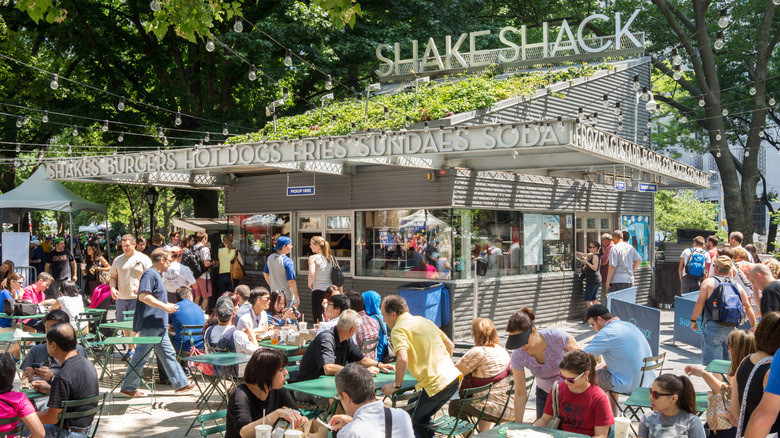
This famous burger stand technically started as a temporary hot dog cart in New York City's Madison Square Park as part of an art installation in an effort to revitalize the park. Celebrity chef, Danny Meyer, opened the stand in 2001, in an ideal location just one block from the iconic Flatiron building. The cart was an immediate success, drawing long lines during lunchtime hours. The city, wanting to add permanent fixtures to the park, began soliciting bids for potential projects. In July 2004, Meyer won the bid and was able to convert the popular hot dog cart into a permanent, fast-food kiosk that still operates in the southwest corner of the park.
The world's first Shake Shack was modeled after a classic roadside burger stand. To complement the park location, the kiosk features a green roof with the park's natural foliage, and an open-air design blends the seating area seamlessly with the rest of the park. Its first major renovation in 2014 expanded the kitchen's footprint by four feet, overhauled the kitchen, and transformed the basement for additional storage. Despite the changes, the kiosk retained its familiar appearance and offers heated, covered, and outdoor seating, so it can be enjoyed by visitors year-round.
(212) 889-6600
23rd Street and Madison Ave, New York, NY 10010
10. Raising Cane's
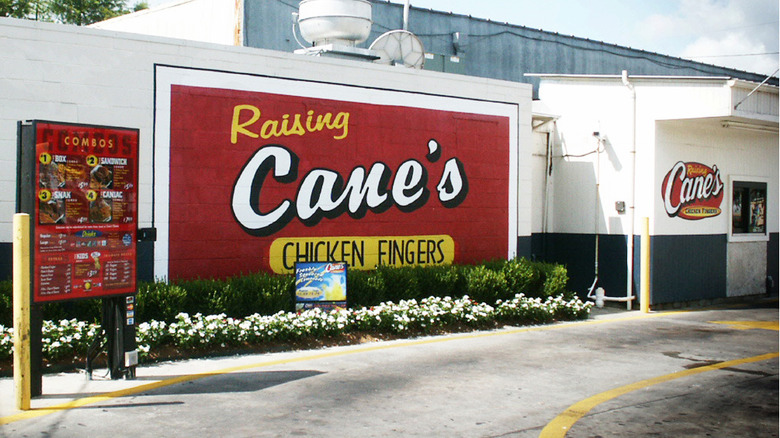
Raising Cane's is the second restaurant on our list (the first being Jamba) that began as a class project. In 1994, founder Todd Graves came up with the concept of a restaurant dedicated solely to chicken fingers. His business plan received the lowest grade in the class because his professor didn't believe the idea was sustainable. After rejection from banks and investors, Graves traveled to Los Angeles, where he worked 90-hour weeks as a boilermaker at an oil refinery and later as a commercial fisherman in Alaska. By 1996, he had earned enough money (and secured an SBA loan) to start the first Raising Cane's restaurant, just steps away from the North Gates of Louisiana State University. Graves, along with his friends and a few contractors, did a lot of the renovation work himself. He named the restaurant after his yellow Labrador Retriever, Cane, who would often hang around the work site.
Today, the original Raising Cane's remains a Baton Rouge staple and is commonly referred to as 'the mothership' by locals. The interior features tiger-striped booths as a nod to LSU pride. The walls are covered in old photos and memorabilia, and still feature the old painted mural of a bread bakery that was revealed during the building's renovation. The original menu of chicken fingers, fries, Texas toast, and coleslaw also remains the same, proving simplicity was sustainable after all.
(225) 387-3533
3313 Highland Rd, Baton Rouge, LA 70802
11. California Pizza Kitchen
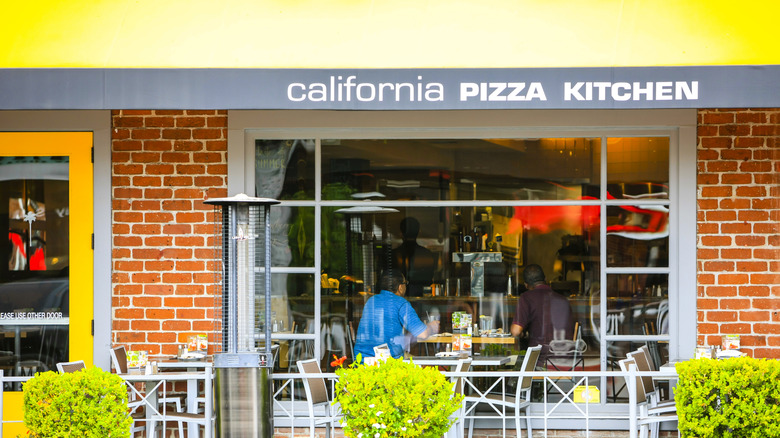
Just blocks from Rodeo Drive in Beverly Hills, California, sits the very first California Pizza Kitchen, or CPK. The chain is the first restaurant for founders and former prosecutors, Rick Rosenfield and Larry Flax, who traded the courtroom for the kitchen to pursue their passion for food. Their concept was to innovate California-style pizza using high-quality, fresh, and seasonal ingredients. They introduced now-iconic pies like the original barbecue chicken pizza, and pushed culinary boundaries with industry-firsts with gluten-free and cauliflower crusts. The casual atmosphere, open kitchen, and nontraditional pizza topping combinations made CPK a staple in the American suburbs.
The first restaurant of the lasting chain celebrated its 40th birthday on March 27, 2025. Although the chain has evolved in many ways (new decor, updated table and seating options, and a revamped menu), the flagship store serves as a touchstone for the brand's identity. The classic yellow tile wraps around the open kitchen's pizza oven, emphasizing the brand's artisanal focus. The dim mood lighting creates a cozy atmosphere and is a stark contrast to the brightness found at the chain's typical mall locations. The colorful green and yellow walls, and the sounds of jam band music playing, add to the 80s and 90s nostalgia. You can still order the famous barbecue chicken pizza, which serves as a reminder of the chain's innovative spirit.
(310) 275-1101
207 South Beverly Dr, Beverly Hills, CA 90212
12. Peet's Coffee
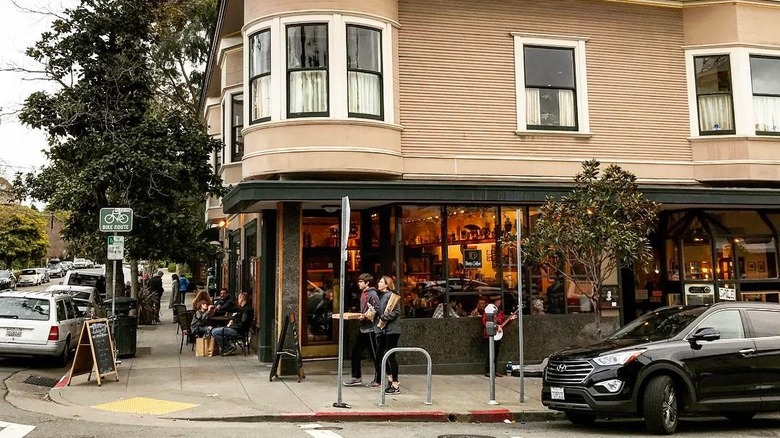
When Alfred Peet moved to San Francisco in 1955 to work for a coffee importer, he was shocked to discover Americans were drinking what he thought to be lousy coffee. Out of his discontent, he went on to open Peet's Coffee in Berkeley in 1966, at the corner of Vine and Walnut Streets near the University of California campus. Having grown up around the coffee industry (his father owned a small coffee company), it was important to Peet to help the American consumer understand and appreciate freshly roasted craft coffee. This meant short distances between roaster and customer, using high-quality beans, and a sensory roasting technique to achieve an even roast. The brand is credited with revolutionizing the way Americans consume coffee, and with good reason. In 1971, Peet provided a two-year training to three young entrepreneurs who would go on to found Starbucks.
Today, the corner shop serves as both a monument to its founder's exacting standards and a neighborhood staple for coffee lovers. If you visit, you can sip on a cup of coffee while browsing the mini museum located in the back of the store. Glass cases hold old photographs, newspaper clippings, memorabilia, and antique coffee-making equipment. According to the San Francisco Standard, some of the original customers still frequent the location to this day.
(510) 841-0564
2124 Vine St, Berkley, CA 94709
13. Potbelly
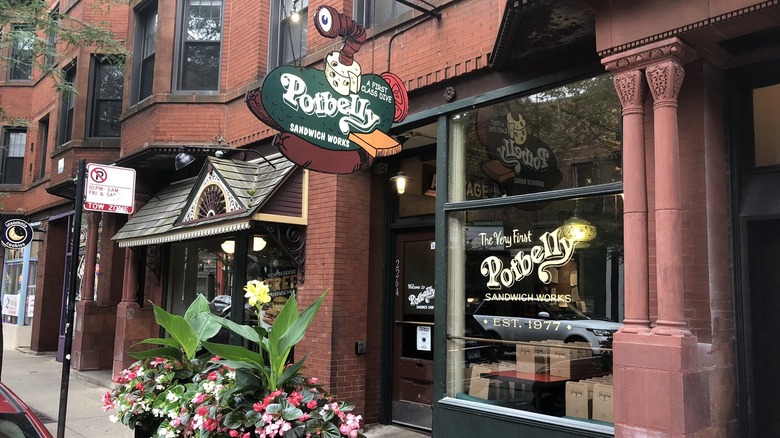
Potbelly Sandwich Works didn't get its start as a restaurant chain, but as a small antique store in Chicago's Lincoln Park neighborhood. The original owners, Pete Hastings and his wife, decided to start serving sandwiches and homemade desserts to browsing customers in an effort to boost sales. The sandwiches were so popular that Hastings renamed the store Potbelly in 1977. Potbelly became a well-known neighborhood sandwich shop with a loyal following of regulars. One of those regulars, Bryant Keli, loved the sandwiches so much that he bought the shop from the husband and wife team in 1996. Over the next twelve years, Keli grew the company from one shop to 250 shops.
The iconic location remains a beloved neighborhood staple. Though the store has been renovated, the interior is still adorned with original antiques, historical photos, and of course, the potbelly stove, which locals say used to keep everyone warm in the 80s and early 90s. Regulars on forums like Reddit maintain that the sandwiches at the original restaurant even taste better than their franchised counterparts.
(773) 596-2000
2264 North Lincoln Ave, Chicago, IL 60659