

12 Ways To Tell If Your Vintage China Is Actually Valuable
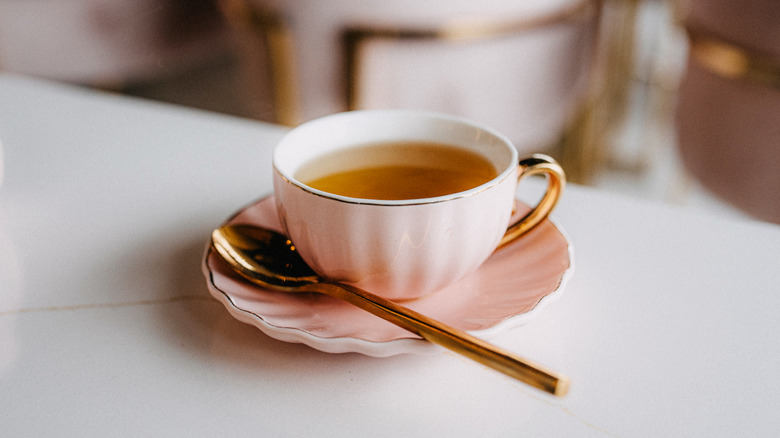
You love mixing and matching plateware to create beautiful tablescapes. You've taken pains to display your china beautifully in your dining room, or elsewhere in the house. You love the opportunity to use your grandmother's wedding set whenever guests come by. But you've always wondered, is your china really worth anything? Good question, with a not-so-easy answer: It depends on many factors, which our experts were kind enough to illuminate for Chowhound.
First up, those experts say, some happy news: China really is valuable, if you've got the right stuff. We spoke to Iryna Kolosvetova, creative director and table styling expert at Fine Dining 4 Home, Eamonn Turley, insurance expert at MultiQuoteTime, Richard Smith, co-founder of Tea & Coffee, and Rachel Blindauer, principal interior designer at Rachel Blindauer. "Unlike diamonds (which many argue owe their value to clever marketing), fine china is genuinely rooted in history, artistry, and craftsmanship," explains Kolosvetova. "For centuries, porcelain was a luxury import from Asia before European manufacturers learned to produce it, making it a symbol of prestige in European homes. That legacy carries forward today." For that reason, she says, some pieces have hefty price tags.
These factors are far from random, and it's not just branding. "While there is some brand prestige that comes into play, most collectible china has its value predicated on tangible factors," says Turley. These include the quality of craftsmanship, rarity, historic relevance, and, yes, the brand's reputation. "A 200-year-old, hand-painted Royal Crown Derby or Meissen dinner service, for example, can be insured for a far higher amount than a modern mass-manufactured set since its market replacement value is tied to scarce supply and strong demand from collectors," he says. So, what might make your vintage china valuable? Here are tips for finding out.
1. Look for the stamp on the back of the dish
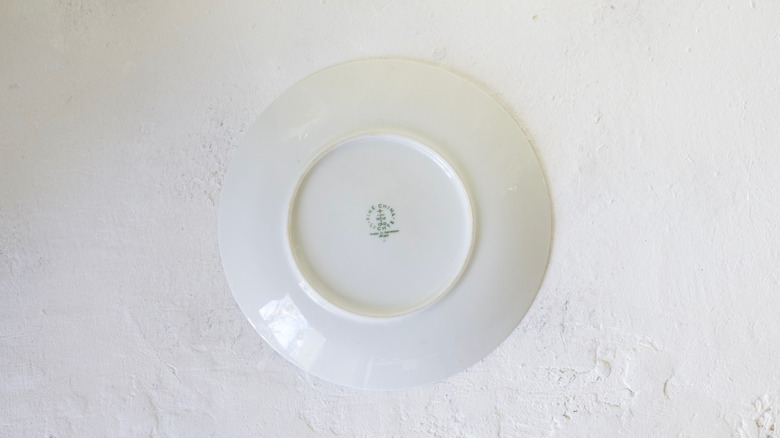
One of the easiest ways to tell if your vintage china is valuable is to turn it over and check out the stamp on the back of the dish. Researching this can often lead to important maker information as well as some good hints about its value. "This is the china version of looking at the back of your bottle of wine," says Richard Smith. "That small backstamp may reveal to you the maker, the era, and sometimes even the very year. If it's stamped 'Made in Occupied Japan' or has a crown, you're already in fascinating territory." What if there's no mark at all? "It may still be expensive... or just playing hard to get," Smith jokes. Of course, it may also have no value at all, which is where other tips come in.
The combination of the mark and the date also carries information that is more than the sum of its parts. "The evolution of a company's stamp can act as a timeline," explains Rachel Blindauer. "Early Wedgwood or Meissen marks, for example, instantly signal higher value than later mass-market runs." Other brands, such as Limoges and Royal Copenhagen, also have marks that change over time, telling you about their origins. Or at least, telling the expert collectors and appraisers who can help you determine their worth.
2. Research the china pattern
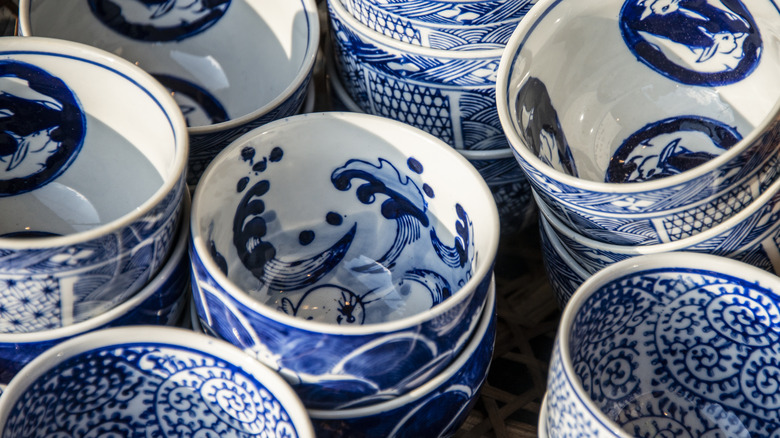
Beyond the stamp, what else makes your vintage china valuable? Pattern, for one. Not only do color and pattern add dimension to your dinner table, they can also increase the value of your dishes, cups, teapots, platters, and more. "Patterns are like celebrity rumors — some are immediately familiar, others require a little detective work," Richard Smith says. "A quick internet search might uncover that your plates were part of a brief series collectors are bidding on in droves or that they're the 'denim jackets' of the china set — a still-fun, but not top-of-the-line, option."
Insurance agents take this into account when deciding how much to cover china for. "We take into account whether the pattern is retired, whether it was a limited release, and whether it has a strong secondary market reputation," Eamonn Turley says. "For example, a twelve-place setting of a sought-after Royal Doulton pattern can have a tens of thousands replacement value, while a partial, everyday set in a popular pattern may not even meet minimum household contents levels." Those everyday patterns, Rachel Blindauer says, were often produced for decades with little variation, which dramatically reduces their value. A pattern that is rare or retired, however, can become highly collectible, even if the pattern is similar to an unpracticed eye.
"It comes down to a combination of maker, rarity, pattern, and condition," Iryna Kolosvetova says. Department store brands usually won't do much for you, no matter how lovely the pattern. However, she says, "certain patterns are timeless and collectible," such as Bernardaud's Constance or Wedgwood's Florentine.
3. Assess the rarity of the vintage
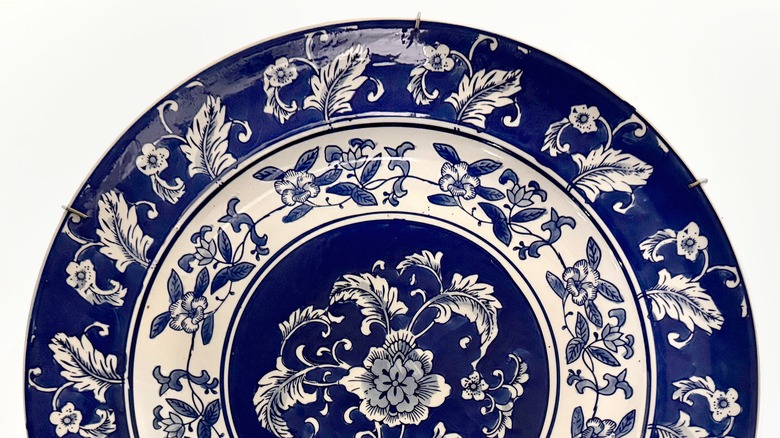
Another thing that makes china valuable is the rarity of the vintage. "Limited runs, discontinued glazes, or designs tied to a specific historic moment — say, commemorative coronation china — will always command more attention," Rachel Blindauer says. Other specific moments that get commemorated include anniversaries, special events, or royal to-dos, which means that pattern will be hard to find, therefore more desirable, therefore more expensive to obtain and less likely to be sold by the collector who owns it.
How can you tell how rare it is, then? "If it's everywhere on the web, chances are it's nothing special," Richard Smith says. "If you can't find it anywhere, you've probably won the jackpot — or you've discovered the tableware equivalent of an 80-year-old novel that nobody has ever opened. Either way, rarity breeds intrigue (and typically expense)."
Sometimes, the rarity of a pattern will make it hard to find. If you can't determine what it is from the stamp on the back, and you can't find what it looks like online, there's a handy hack: Google Lens. Snap a picture of your china's pattern, then upload it to Google Lens. You can also take a picture directly from the phone app by first opening a new page in Google, looking at the search bar, and tapping the little camera-shaped icon on the far right. The algorithm will then search through its vast database of images to pull up the ones that are similar to yours, then return all the hits that seem relevant. You will either see your rare china, or you will see nothing — which likely indicates 80-year-old novel territory.
4. Evaluate the china's condition
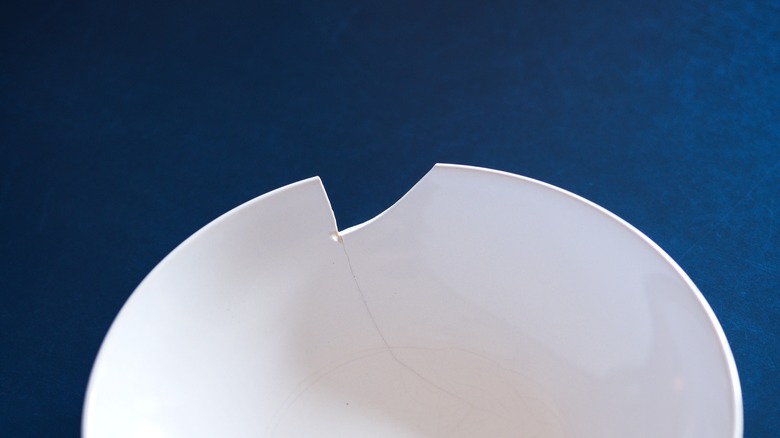
Being in great condition can also make vintage china valuable. "A flawless teacup with intact gold trim can be worth far more than the same cup with a hairline crack," Iryna Kolosvetova explains. The same goes for chips. "Collectors are paying for preservation as much as for artistry." There is one possible exception, which is kintsugi, a centuries-old Japanese technique of filling in chips and cracks with gold and lacquer. Porcelain featuring this time-honored repair technique can go for significant amounts of money.
It's not just the dish itself, either. "Collectors pay a premium for pristine sets, particularly in original boxes," Rachel Blindauer says. That's because they "show provenance and careful storage," Kolosvetova explains. If your china comes in its original packaging, make sure to take good care of it, just as you would with the china itself.
China dishes are a type of ceramic, albeit a very delicate one, but that means you can remove scratches and scuffs from them using an old-fashioned ceramic-renewal trick: baking soda or cream of tartar. Yes, this works just as well as it does on regular dishware, so don't worry about harming your dishes as long as you scrub gently. Before you go all out researching your china to see how much it's worth, give this a whirl to see if you can remove some of those imperfections.
5. Address discoloration that could lower the value
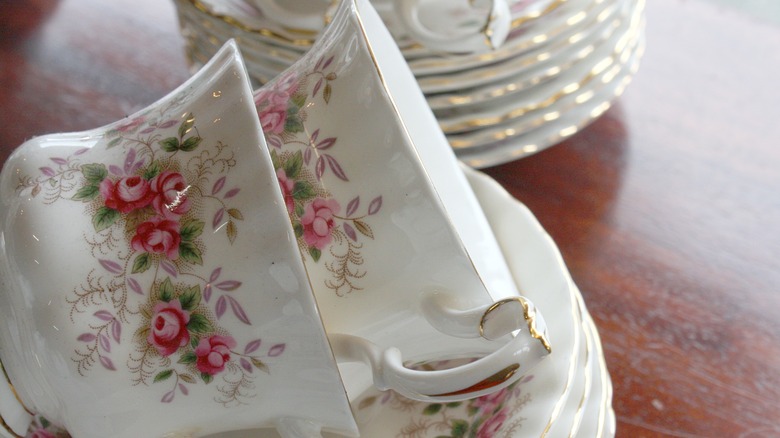
Flaws exist beyond chips and cracks, unfortunately, even if your china looks "pretty good" from several feet away. It's not enough simply to check out the china's condition; you must seek out such flaws and, where possible, address them. This is important not only for looks, but for value; both its cost on the market and its insurance replacement value are impacted, Eamonn Turley explains.
For instance, crazing is a common problem with china, that spider-webby pattern of fine, dark crackling on the surface of your china. These are different than actual cracks, and some people find them appealing, even. However, they're not safe to eat off of or drink out of, because they can harbor bacteria. In this case, there's not much to be done; you can clean the dish to remove debris from the cracks, and therefore make them less noticeable, but you can't repair it. Such a flaw is a non-starter for serious collectors, Richard Smith says. "Restoration would improve it, but it's cosmetic surgery for plates: everybody knows up close," he adds.
Discoloration is another issue, but happily, it's one you have a better chance of fixing. You simply soak the china in hydrogen peroxide for several days, bake it in an oven at 200 F, then let the plates cool and scrub them. This process lifts deep-down stains onto the surface of the porcelain so that you can scrub it off, and expert collectors swear by it.
6. Account for the number of dishes or completeness of the set
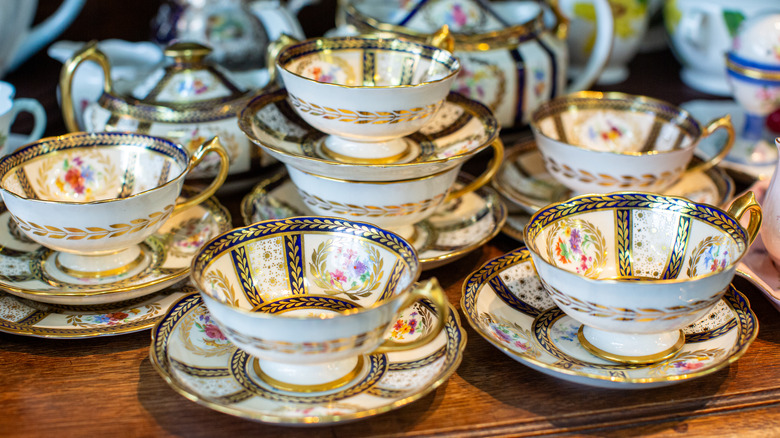
Collecting (or already having) a complete set often makes vintage china more valuable. "A lone dinner plate, however lovely, is less appealing than a twelve-piece service," Rachel Blindauer says. "Matching sets with serving bowls and platters are exponentially more desirable."
This desirability translates to the price your china can fetch. "Single plates may have decorative appeal," Iryna Kolosvetova says, "but a full set of Blue Danube can sell for several thousand dollars, while individual pieces might only fetch $20 to $30 each." The good news is that means you can often find replacement pieces to complete your set, potentially increasing its value significantly. There are even online sites dedicated specifically to help you do this, specializing not only in china, but in silverware, glassware, jewelry, and other items. Just an FYI for collectors who collect to sell rather than to keep.
7. Figure out if it's a limited edition
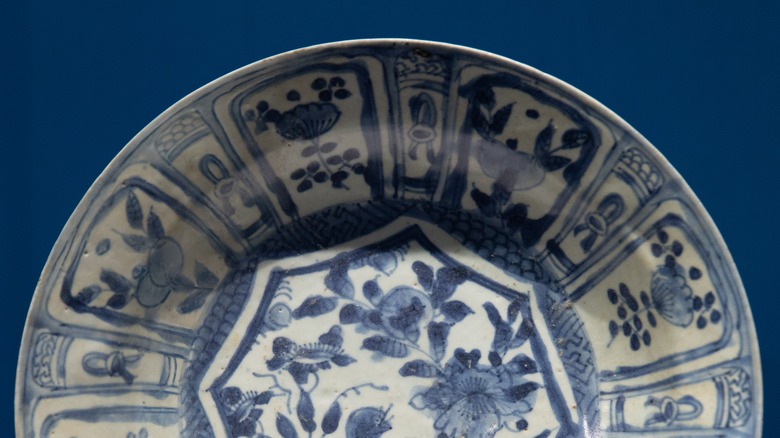
Limited editions of vintage china are often more valuable by dint of the fact that they're limited, i.e., bound to be harder to find. This specific type of rarity can fetch a higher price at market, especially if the limited edition happens to match the current aesthetic. "Trends are cyclical," Richard Smith says. "The modern minimalist aesthetic means that your elegant floral service is in vogue — until maximalism comes back."
If you're not sure whether or not your china constitutes a limited edition, ask an expert. They will help you determine its value by checking the date stamps as well as spotting fakes that might try and take advantage of limited-edition status. If you're trying to get your china insured but want to keep it, this is useful on its own. If you're trying to sell it, then the valuer can give you an extra bit of advice: whether to sell or hold onto it for a while.
8. Check out reference books
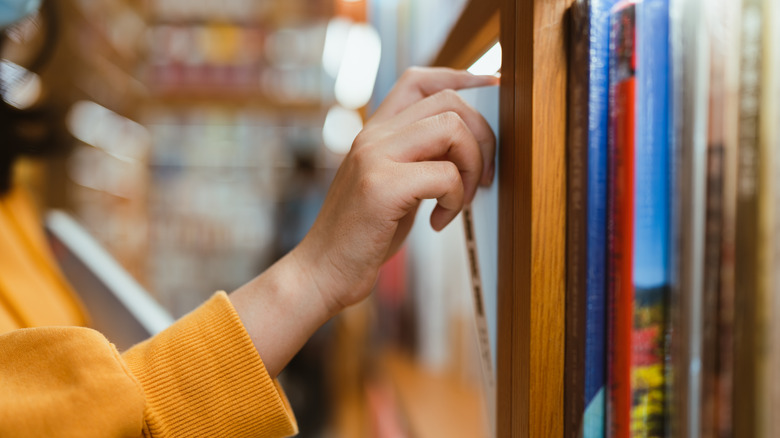
If you believe the above factors make your vintage china valuable, but you want to be sure, you can try checking out a reference book. Tomes such as Dinnerware of the 20th Century: The Top 500 Patterns can clue you in to whether or not your china has any resale price or is just another pretty set made by a department store. Patterns that carry real cachet are likelier to be represented in such a book.
However, keep in mind that books are niche: The one above, for example, only includes dinnerware from the 20th century, so you may need to dig deeper to find information from other eras. However, if your china is valuable, you'll likely find it. "In contrast to diamonds, there isn't even a single cartel artificially driving up prices," Richard Smith says. "There is beauty in skill and scarcity."
9. Look for comparable china in online marketplaces

If your vintage china is valuable, then chances are you will see pieces from your same collection in online marketplaces, selling for high prices. Again, if you can't find your dishes easily by checking Etsy, eBay, Facebook Marketplace, or a more niche online distributor, then you can use Google Lens. Uploading images of your china will pull up not only the images, but the link to the online listing, so you can see what such pieces are selling for. Try to check out both individual pieces and complete sets so you know how much more valuable your set might be if you completed it. That way, you'll know if it's worth pursuing.
Plus, you never know what might happen while you're online. "While preparing my answers for this article, I couldn't resist ordering a few pieces myself — including two from holiday collections, and now I can't wait for Christmas!" Iryna Kolosvetova says. Even if you don't end up finding or completing your own china, you could find some lovely tableware for adding to your collection. "It feels like holding a small part of history," Kolosvetova says. "I especially love mixing in stand-alone serving bowls or appetizer plates for shared meals. They always spark conversation and bring a sense of uniqueness and story to the table."
10. Review results from past auctions
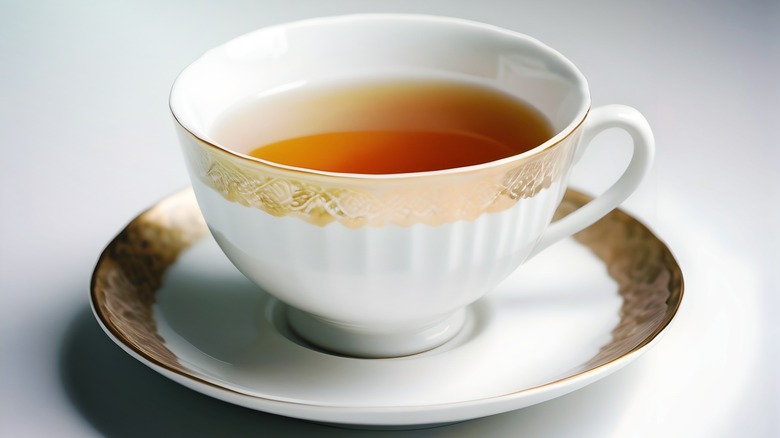
So, is your vintage china valuable? Well, if it has sold well in auctions, then the chances are pretty good. "Use auctions as if you were following the stock market for your plates," Richard Smith says. "Knowing what the same kind of things actually sold, not listed, for will keep your expectations realistic and your retirement plans on track." This is a great addendum to reference books and online marketplaces, because it helps you avoid making the mistake of selling your pieces for too little or buying new pieces for too much.
As for where to look, Iryna Kolosvetova recommends auction houses such Christie's or Sotheby's, which maintain searchable archives of sold pieces so that you can research your specific set. "Looking up similar items can give you a realistic sense of demand and pricing," she says. Remember, don't rely on that price staying the same forever. "Value is never static," Rachel Blindauer says. "It ebbs and flows with taste."
11. Determine past ownership by notable people

Another factor that can help make vintage china valuable is if notable people have owned your set, or pieces from it. This is known as provenance, the historical lineage of a piece or set of china. Whether it was passed down from one person to the next or owned by a single family throughout long stretches of time, this influences the price.
"China is a work of applied art and a mirror of cultural history," Rachel Blindauer says. "Families pass it down as heirlooms, newlyweds select it as a beginning, and collectors hunt it as treasure. In that sense, its value is never purely economic. Every plate, cup, or serving bowl is the product of centuries-old craftsmanship, social ritual, and, often, international exchange." Thus, she says, if your china once belonged to a notable family or was used in a historic setting, it carries a layer of cultural significance beyond design alone. In other words, what notable people thought of these pieces — specifically, whether they thought them worth owning — means a lot.
China needn't necessarily have been pre-owned by specific people in order to be valuable, however. Some types of china are more valuable due to associations with the White House, say, or because a particular duchess had the same set and loved it. It's worth looking into, though. "Provenance can add extraordinary value," Iryna Kolosvetova confirms. "It will command a much higher price simply because of its history." If your china doesn't come with history in the form of documentation or family, you can ask an expert to look into it for you.
12. Get a professional valuation
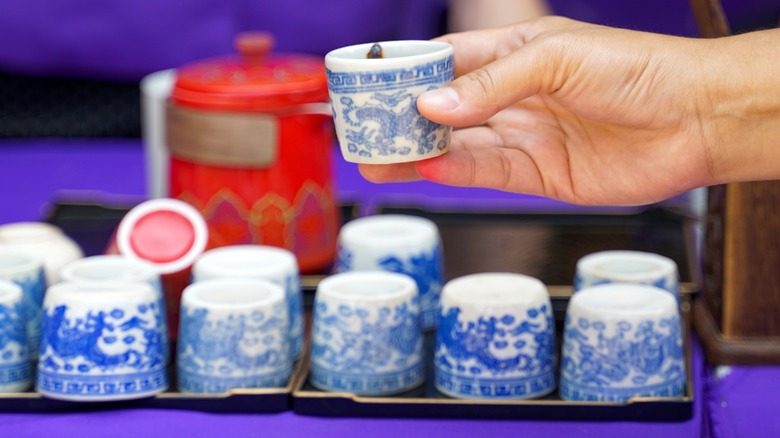
If all else fails and you can't determine if your vintage china is valuable, as a professional for a valuation. There are online china services that provide this, and insurance agents usually require that you get a professional opinion before they'll cover the value of your set or sets. As for the extra insurance? Yeah, you're gonna need it.
"Few people know that standard homeowners or renters insurance usually provides very limited coverage for collectibles, sometimes as little as $1,500 to $2,500 total," Eamonn Turley says. "Fine china usually has to be protected by a scheduled personal property endorsement or a stand-alone collectibles policy." Such policies will cover breakage, loss (even in transit, such as while moving), and theft, up to the agreed-upon value of the coverage. "I also recommend revaluing every three to five years since market conditions change replacement costs, and insurers aren't going to automatically boost your coverage unless you update the valuation."
When getting a valuation, he says, there are several steps you should take. First, photograph each piece clearly, including the back. Insurers will require the maker's stamp or hallmark to verify its origin and value. Next, get that professional appraisal. "Carriers base coverage levels on documented fair market or replacement value, not sentimental value," he says. Make sure you have all the right documents and go through a reputable valuation service. Lastly, he says, make sure you keep receipts, auction records, or other proofs of purchase in a safe place. "Documentation substantiates a claim in the event of loss," Turley explains.