

10 Tips For Baking With Kids Every Parent Should Know
We may receive a commission on purchases made from links.
Baking with your children is a joy. It's a good feeling knowing you get to teach them the best baking secrets, guide them past those beginner mistakes, and help them develop the oh-so-important but oh-so-disliked chore of cleaning up. Okay, so maybe that last one isn't so great, but it's a package deal, right? Even if all you do is explore Little Debbie snack cake hacks together (would love to try this), it's still fun, relaxed, valuable family time.
The thing about baking with kiddos, though, is that they have no idea what they're doing — and when it comes to tasks that the rest of us have spent a lifetime performing, it can be hard to know what's appropriate and what isn't (the curse of knowledge and all that), especially as it changes with the age of your children. Rather than trying to perfect the baked good itself, therefore, it's better to focus on the journey. What makes baking with kids fun? What helps them learn? Where does safety come in? What are the tricks that keep you on track, minimize mess, and maximize love?
I'm no expert, but I do have an 11-year-old and a 12-year-old, and we've been baking together since they could stand up straight. From tiny aprons and baby whisks to today's ability to assign recipes to my children and walk away, I've learned a lot. If you're just starting out, take heart: Any parent can learn to enjoy the process and get good results, too. Let's take a few at 10 of the best tips for baking with kids.
1. Make time to enjoy it
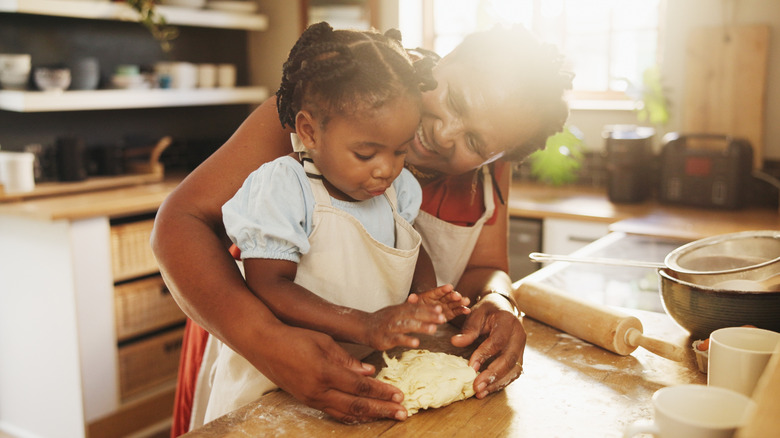
First and foremost, make time. Don't enlist in a baking project with your kids when you're tired or on a time crunch. Make no mistake: It's a bit of a chore, in the sense that it will definitely take longer to make muffins with your children than it will by yourself, but slowing down is part of the fun. If you give yourself enough time to assemble the batter, pour it into muffin cups, wait for it to bake, then enjoy the results together, you will all get so much more out of it.
Just make sure you have the time to do it. Set aside double the time you think those muffins will take (or that it says it will take at the top of the recipe). Don't rush anyone through any steps, instead teaching new techniques and explaining the chemistry of baking patiently. If you can afford to take an afternoon off at the spur of the moment, good on you. If you can't, choose a calm slot after school or a weekend day when no one has any activities upcoming, so that you can really lean into the activity. Let your kids know that you'll be baking then, so that they can look forward to it.
Then make sure to follow through. Pushing your holiday cookie extravaganza to the following day might seem like a simple reordering of tasks to an adult, but to a child, it can be crushing. (I've learned this the hard way, and only slowly began to recall how disappointed I felt by little delays as a kid.) Only reschedule if you have to.
2. Choose your recipe ahead of time
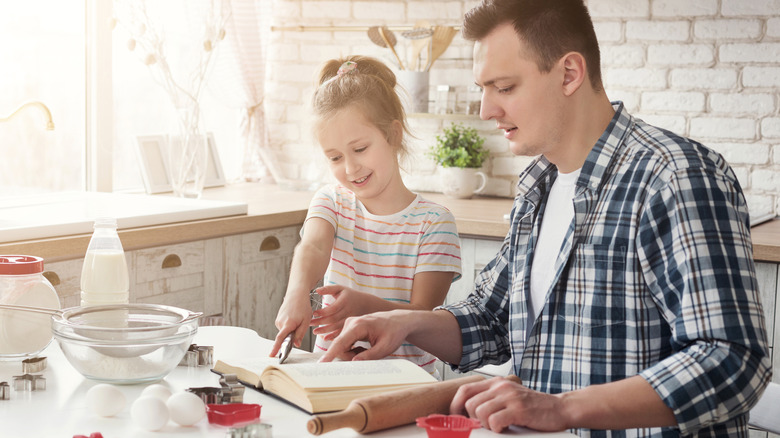
Make sure to choose your recipe ahead of time. There are a number of reasons for this, on which we will focus in more detail below: giving them time to read through it, answering questions ahead of the fact, and double-checking (read: quadruple-checking) your ingredients. It also helps you frame what the process will look like, so that you can set aside enough time to really enjoy it. (I can't say enough what a crucial element that is when it comes to tips for baking with kids.)
Depending on the age of the child, you can choose the recipe yourself and lead them toward it ("I know how much you've always wanted to make yellow cake!") or select the recipe together. Either way, you'll get further with kids if you make a plan beforehand; otherwise, you'll use up valuable time and energy doing this at the outset, and they might need that energy to see the project through.
Remember that praise for hard work, rather than praise for natural talent, is essential when it comes to raising children. Praising effort rather than ability helps to instill a mindset of determination and grit in your kids, so give them kudos for sitting down with a recipe book or the internet and putting in the time to choose a recipe at which they think they'll be successful and that they'll enjoy. If they can't yet read, that's okay: Do this with them, and praise their stick-with-it-ness.
3. Have kids read through the steps

Once you've chosen the recipe, have your children read through it. Again, if they're not yet competent readers, read it to them, but either way, go through it all. Show children how it works to lay out the tools and ingredients, preheat the oven, combine the ingredients, and so on. If you can, do this days ahead so that they'll get enthusiastic about the process and look forward to it, which is likelier to create an anticipatory and excited atmosphere when you finally get down to the baking. (I've found this keeps fights and snits down, because everyone's just so happy it's finally cupcake time.)
Another reason this is one of the great tips for baking with kids is literacy. Reading recipes is an excellent way to pick up new words to which kids might not otherwise be exposed. For example, how often do you see words such as mince, grate, sift, or simmer in everyday life? Other words are common enough, but get used in different ways when it comes to baking. (Think "temper" and "fold," for instance.) Moreover, recipes are text, and the more text children can practice with, the stronger their reading skills become. Help them with the tough stuff, but make it an expectation of baking together to have familiarized themselves with the recipe before you start.
Point out to kids that some things need to be at room temperature before you bake, such as butter and eggs. Make a note together — whether on a sticky or a device — to take those items out the night before to warm up.
4. Explain the tools
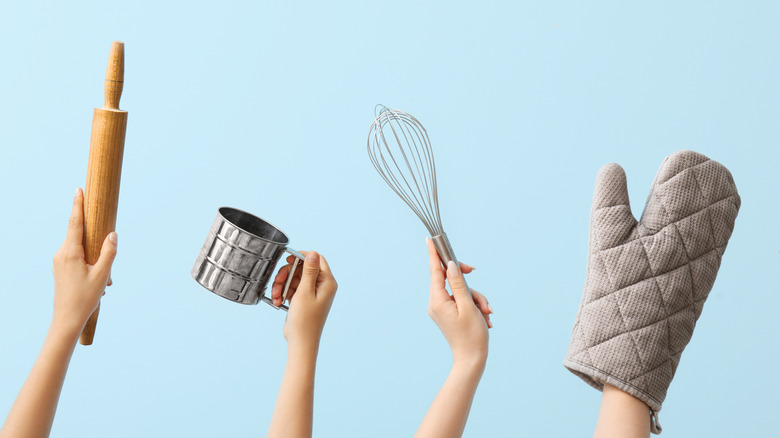
What seems obvious to us adults is not obvious to kids, especially toddlers and preschoolers. What are tongs? Oven mitts? Piping bags? Cupcake liners? Take a few minutes and go through all the tools you'll be using, explaining what they are and what they do in accessible language.
Another of the important tips for baking with kids is to make sure the tools you have on hand are high-quality. Low-quality implements are likelier to break, leach nasty chemicals into your baked goods, or not work as expected ... none of which will help children learn to bake like pros. (Okay, semi-pros. Okay, total plebs. But you get the point.) Opt for nice, well-reviewed items such as Gorilla Grip BPA-Free Soft Silicone Oven Mitts and Hotec Heat Resistant 600℉ Food Grade Silicone Rubber Spatula Set, for instance. And if you're going to use countertop appliances, make sure they're well-rated and safety-conscious as well. The KitchenAid Artisan Series 5 Quart Tilt Head Stand Mixer, has dedicated fans across the decades.
Important safety tip: Make sure, when you're using a stand mixer with children, that you never walk away from it. When working on high speed, or with dense doughs, the stand mixer can jiggle itself across the counter. One of the most terrifying moments of my life was walking back into the room to watch a mixer full of pizza dough crash to the ground a foot away from my 2-year-old daughter's head. It still gives me shivers to think about. I even had one of those rubber mats to hold it in place, and it still didn't work, so learn from my mistake.
5. Check ingredients ahead of time
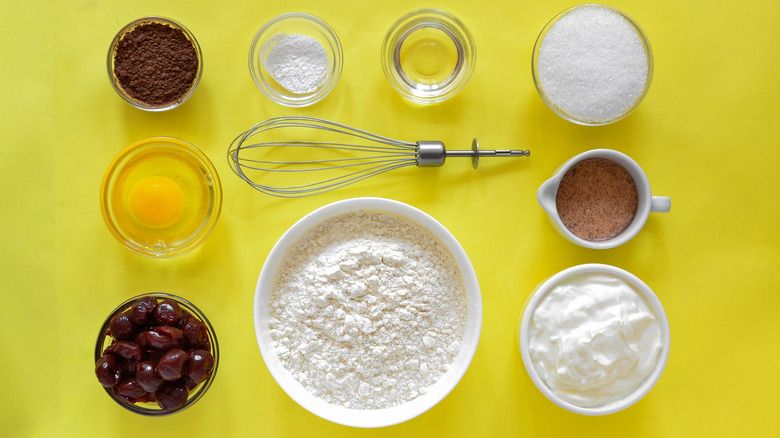
Always make sure you have every ingredient on the list before mixing a drop. Honestly, this isn't just for baking with kids; even adult bakers who are making cookies by themselves should do this, because it saves a lot of heartache and borrowing sugar from the neighbors. Once you've chosen your recipe, inventory the cupboards and see what you need to buy ahead of time. Plan in enough time to go to the store before your (hopefully) stress-free baking session. If you don't have enough time to do it several days before — which, let's face it, many working parents do not — then add the shopping trip to your day with enough time to spare for the activity itself.
Model for children how to check ingredients before starting a project as well. With the recipe open in the cookbook or on your phone, run down the checklist and pull everything out of the cupboard and fridge. (Remember to pull out items such as butter and eggs the night before or the morning of so they can come to room temperature.) Once everything is on the counter, go through the checklist again, with someone reading out the item and the other person/people checking the lineup and reporting "check." This way, you can catch any last-minute slips and correct them before the sifting and mixing begin.
6. Review the safety basics
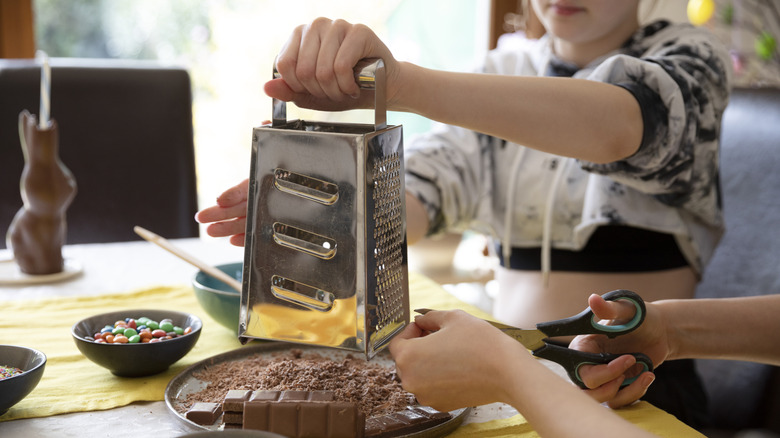
This isn't so much one of the tips for baking with kids as one of the musts. If your kids will be using heat, knives, graters, or anything else dangerous, go through the rules right at the beginning. Then go through the rules again before you let them engage with the situation, asking them to mirror your instructions back to you. If they haven't yet used those tools, always show them how they work and how to use them safely before you put them behind the wheel. For instance, always demonstrate the proper assembly of a food processor, then how to load food and put the lid on safely before pressing any buttons. Also, model how to turn appliances off as well as on. I've had a panicked child wave me over furiously because I showed them how to start the blender but not stop it.
Make sure you also have a sharp grater on hand if you're going to be shredding zucchini, cheese, chocolate, or anything else. Dull graters are more likely to cut, and to cut more severely, than high-quality tools. This Spring Chef Professional Cheese Grater is highly reviewed and would be a good addition to your kitchen if you're in the market for a new one. If you want to teach knife skills to little ones without mishap, consider a Tovla Jr. 3-Piece Kitchen Cooking and Baking Knife Set, which is a great way to get those hand motions down before you introduce stainless steel into the mix.
7. Play the supervisory role
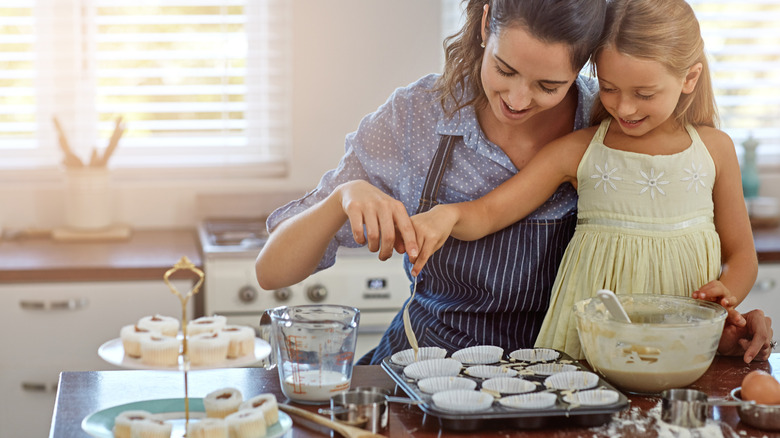
When baking with kids, education is the goal. Remember, you're not actually getting help or baking "together." (That will come later, when you're both furiously making pies for Christmas and dreading the annual visit from Cousin Eddie.) Rather, you're teaching your children to bake, so give them enough information to succeed and then let them go for it.
If you're baking with toddlers, show them how to stir with a spoon, then guide their hand while doing it for a minute, then let them do it themselves. Show kindergartners higher-level skills, like turning a bowl while you mix and scraping down the sides. For grade-school children who can read competently, hand them the recipe (after reading through it, getting out ingredients, etc.), and then stand by while they work their way through it on their own.
Resist the urge to say "I'll do this part myself" when anything difficult comes up. Personally, I've had to bite my tongue when a kid starts stirring too quickly or vigorously, knowing the pancakes were going to turn out tough and just accepting it. Give gentle guidance such as "Remember, we should put our ingredients away quietly while a cake is baking, because banging could cause the cake to fall." (Although, fun fact: In researching for this article, I discovered that this is mostly an old wives' tale that dates back to extremely finicky desserts such as soufflé that, along with less-reliable ovens, made this more of a problem back in the day than now. Why am I kind of bummed out by this? Do I secretly love screaming "stop running in the house"?)
8. Make it a fun experience

Another of my favorite tips for baking with kids is to make it fun, and you really don't need to go all-out on your baking project in order for it to be a fun experience. Sure, that seems obvious, but we sometimes set ourselves up for failure by choosing difficult recipes. Children probably don't want to attempt ladyfingers or croissants. Bring out the easy ingredients, bright decorations, sprinkles, frosting tips, and All The Things. That way, children stay engaged and don't get bored halfway through.
Most of the skills you teach in the kitchen are best learned step by step, after all. Don't jump into a trifle with your 5-year-old unless you have exceptional patience and they have exceptional interest. Instead, start small. Give store-bought vanilla cupcakes a churro twist, dye and flavor sugar cookies with Jell-O, or make three-ingredient biscuits just because you can. While these projects might seem overly simplified to you, remember: Little ones who are just starting out lack a whole wealth of skills you take for granted. From mixing without spilling to whipping up cinnamon sugar to using cookie cutters, it's all new to them, and therefore worth explaining with a project that takes just enough time to provide satisfaction.
If you don't have a kid-stocked cupboard, start one. Check out easily accessible, affordable online items such as these 365 by Whole Foods Market Rainbow Sprinkles, this Baketivity DIY Cake Pop Baking Kit for Kids, and these 12 Color Food Grade Vibrant Food Dye Tasteless Liquid Color Set, for example. Better yet, let the kids come to the store with you and choose.
9. Emotionally prepare for the mess
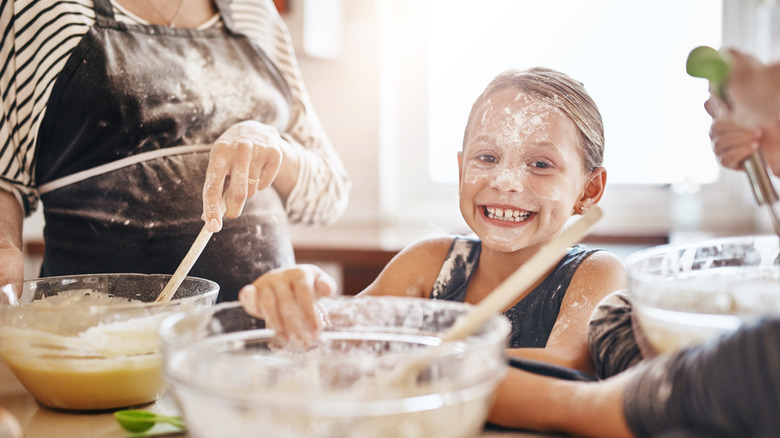
Yeah, there's gonna be a big mess. A big one. And that's okay. One of my favorite tips for baking with kids is to accept it. With little ones, mess is part of the fun. (Remember: These people make mud pies when they're not making actual pies.) Put yourself in a benevolent mindset before you even step into the kitchen, so that you don't end up nagging and finger-wagging the whole time, which really ruins the experience.
I still remember the first time I baked with my 2-year-old son and, with his very first stir of muffin mix, he sloshed clouds of flour all over everything. He looked at me guiltily, I shrugged, and he knitted his tiny eyebrows like, "Wait, what? Who are you? Did someone bodysnatch my mom?!" Which was both a clue that I needed to chill out about toys and that I was on the right track in the kitchen.
In terms of how to manage the mess, make sure to keep the space clear so they don't get flour all over your heirloom milk glass collection ... or break your heirloom milk glass collection. Make sure to keep bowls well apart from one another to avoid crises like adding dry goods to wet ones at the wrong time. Carefully explain techniques such as stirring and folding, even if they seem obvious to you. Set yourself up for success with a Cookie Scoop Set to help little hands portion out cookies, muffin batter, biscuit dough, or chocolate truffles without getting it everywhere. And if you have toddlers, just chill: No amount of preparation will suffice anyway.
10. Do the cleanup together

The mess that comes from baking doesn't clean itself up. Mopping up together is part of the training, and deciding to enjoy it is our final tip for baking with kids. As Anne Shirley of Green Gables fame once said, "It's been my experience that you can nearly always enjoy things if you make up your mind firmly that you will." She then adds, "Of course, you must make it up firmly." Make up your mind firmly to keep a smile on your face as you go through the cleanup process.
Don't have them play a token role, either; expect them to be there throughout the entire process. Show them how to roll up bags of flour and sugar, then clip or rubber band them. Explain how important it is to do this tightly and not spill when you're putting items away, otherwise, you might attract ants. Model carefully wiping up spills from the countertop, cupboard doors, and floors. (Soft products such as Swedish Reusable Kitchen Dishcloths and Homexcel Microfiber Cleaning Cloth Cleaning Rags Cleaning Towels can help here.) You should also have them bring dishes to the sink, rinse them for the dishwasher, or wash them by hand and put them in the drain rack.
It's beneficial to do the cleaning up while your goodies are in the oven. That way, you can keep reminding kids that you can eat them as soon as they come out ... so long as the kitchen is clean. (I've never had trouble convincing my kiddos to do dirty jobs when monkey bread was in the offing, I'll say that much.)