

9 Myths About Costco You Should Ignore
Costco, the membership-based warehouse club known for its bulk buys, unbeatable deals, and high-quality products, has earned a loyal following across the globe. From groceries and household essentials to furniture, electronics, tires, and even $1.50 hot dog combos, it's a one-stop shop for millions of savvy shoppers.
Since opening its first warehouse in Seattle in 1983, Costco has grown to more than 800 locations worldwide, with the majority in North America. But with its immense popularity comes plenty of misconceptions. Ranging from confusion about who can access Costco's unbeatable perks to what services Costco offers — as well as its return policy — there is a lot of confusion that can lead even seasoned shoppers to miss out on savings and perks. To help separate fact from fiction, we've rounded up several common Costco myths you can safely ignore so you can shop smarter, save more, and make the most of the Costco experience.
1. Myth: You can only shop at Costco if you're a member
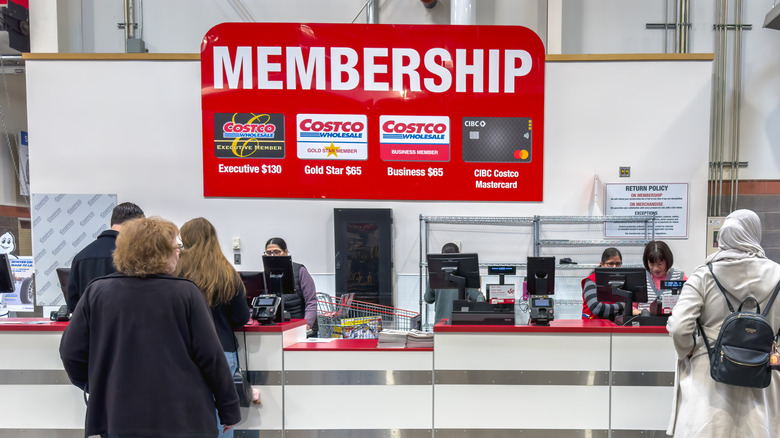
One understandable myth about Costco is that you must have a membership to shop at its stores. While Costco does operate on a membership model to help keep its prices down, there are several ways to shop without one. For example, you can still access certain services as a non-member. The pharmacy is open to everyone, allowing you to pick up prescriptions, and the optical center offers eye exams without requiring a membership. However, you won't be able to purchase glasses or contacts without signing up.
In some states, you can also purchase alcohol without a Costco card. Costco has a variety of alcohol options under the Kirkland Signature brand, so this is a great way to save some money. To take advantage of Costco's discounted liquor and wine prices, simply let the team member at the entrance know that you're there for alcohol, and they'll explain the process.
If you want the full Costco experience, ask a friend or family member with a membership to bring you along as each member can bring up to two guests. Another workaround is the Costco Shop Card (essentially a gift card) that allows non-members to shop on their own. Just have a member load one for you, and you can browse the aisles freely.
Don't know anyone with a card? Delivery services like DoorDash and Instacart give you another option. Non-members can place orders through their apps without showing a membership card, though keep in mind that a surcharge may apply.
2. Myth: All Costco stores sell the same products
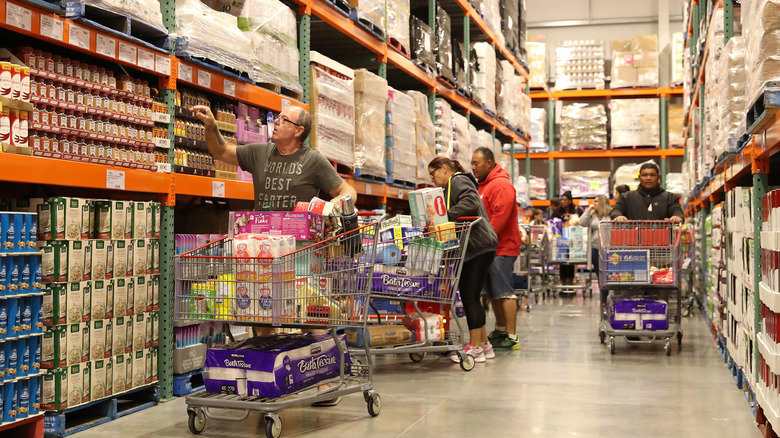
Because Costco is an international chain, it's easy to assume that every store stocks the same products, but that's far from the case. In fact, while most locations carry a core lineup of staple items and Kirkland Signature products, there's actually a surprising amount of regional variation. From selling poke at the Hawaii locations to bear spray in Alaska, Costco mixes it up from location to location.
Costco tailors its product offerings based on regional specialties, local demographics, and even income levels. This approach allows the company to partner with nearby suppliers and better reflect the tastes and needs of each community. Your Costco membership allows you to access every single Costco store, no matter where you are in the world. So, the next time you're traveling, don't skip the local Costco; you might discover unique products and regional favorites you won't find at your home store.
3. Myth: Everything at Costco is returnable
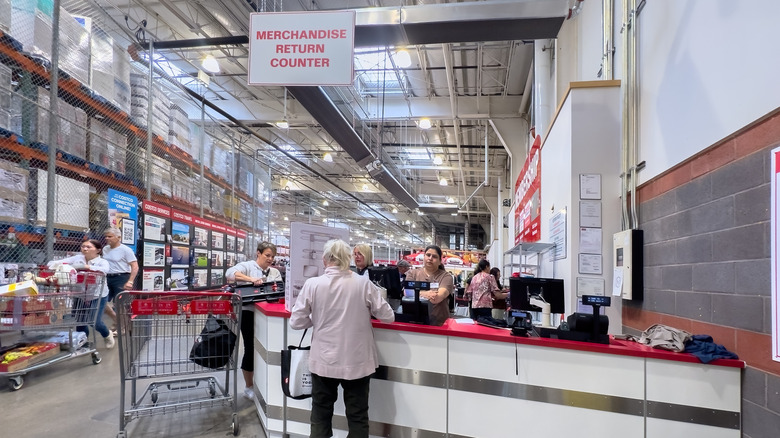
A common myth about Costco is that everything it sells can be returned easily without any questions asked. While Costco is known for its generous return policy, it's not a blanket guarantee for all products. From the actual Costco membership to grocery items, most items are covered by the store's 100% satisfaction guarantee, meaning you can return them at almost any time if you're unhappy with your purchase. It's important to keep in mind, though, that there are key exceptions.
Electronics such as TVs and major appliances have a limited return window, and certain items, like airline or event tickets, are not returnable at all. Cigarettes and alcohol are non-refundable, "where prohibited by law," meaning eligibility depends on local laws in the state or country. Costco's return policy is still one of the most flexible in retail, but it's important to read the fine print and know which items are final sale. For some purchases, you'll want to be extra certain before buying, because you might not be able to bring them back.
4. Myth: Everything sold at Costco is bulk-sized
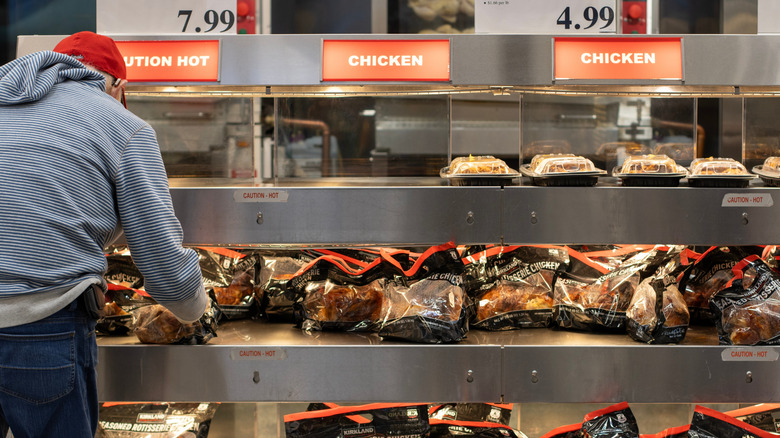
Costco is best known for its bulk bargains, but it's a myth that that's all it offers. While the warehouse is famous for its towering packs of toilet paper, oversized snack tubs, and industrial-sized condiments, it also carries a wide range of items in standard, everyday sizes. Staples like the iconic $4.99 rotisserie chicken, fresh bakery goods, and ready-to-eat meals come in portions that suit both families and individuals.
Beyond groceries, Costco's shelves are stocked with a surprising variety of products you don't need to buy in massive quantities, including electronics, clothing, and seasonal décor that all come in standard sizes. The mix of bulk and non-bulk shopping is part of what makes Costco so appealing. Whether you're planning for a large household, picking up a quick dinner, or looking for a deal on a new laptop or winter coat, Costco can provide options to fit your needs.
5. Myth: Costco is only cost-effective for families or larger households
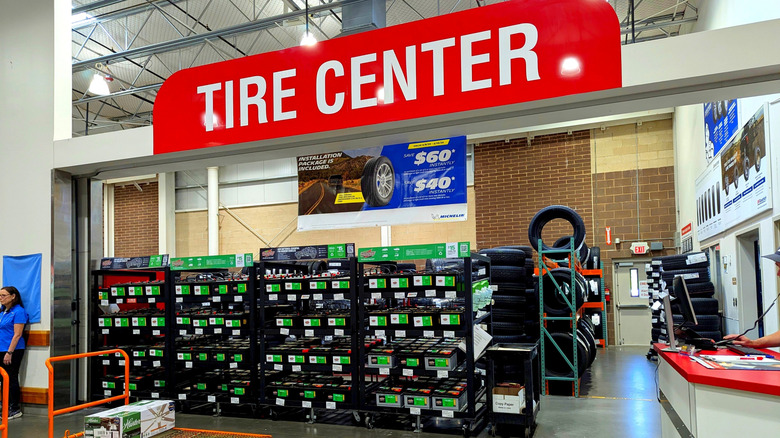
One myth leads into another, and because Costco is known for being the place to buy in bulk, another common misconception is that the warehouse only makes sense for large households. In reality, many of Costco's offerings, like discounted gas, tire services, and optometry, can be worthwhile for individuals and smaller families, too.
For pantry or freezer-stable items, buying in bulk can still be a smart move even if you live alone or with a partner (all you need to do is find a way to store everything). Household essentials like detergent, paper towels, and cleaning supplies often come at a better price per unit and store easily. Non-perishable foods, frozen produce, and shelf-stable snacks are also great buys since they won't expire quickly. If you're part of a small household, it might make sense to consider adding Costco to your monthly shopping routine. Stocking up on essentials just once in a while can save you both time and money, making your membership worthwhile no matter the size of your household.
6. Myth: Costco loses money on its hot dog deal
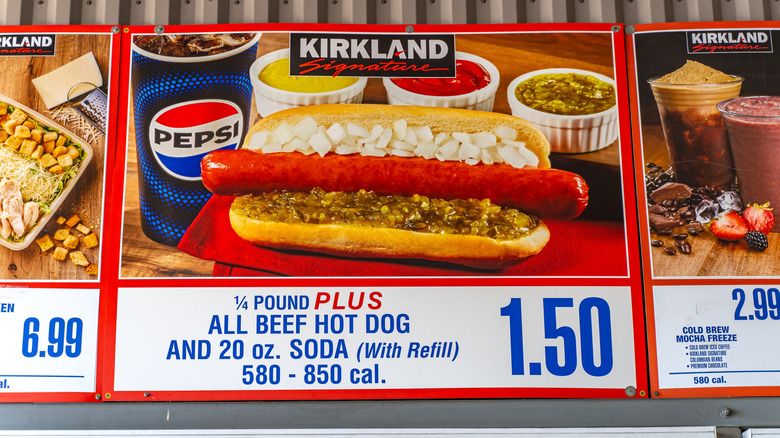
Costco's legendary $1.50 hot dog has earned the affectionate nickname "inflation-proof," and it's easy to see why. For decades, this simple combo of a hot dog and soda has held steady at the same price, making it a beloved staple for shoppers across the country. Its reputation has spawned a number of myths, including who actually makes the hot dogs, whether the price will ever rise, and, most famously, whether Costco loses money every time one is sold.
While it's true that the hot dog isn't a major profit center on its own, it definitely is not a financial mistake. According to pricing experts, the hot dog is part of a clever business strategy. By offering such an unbeatable deal, Costco attracts more customers to its warehouses. Once inside, shoppers are exposed to a wide range of higher-ticket items, driving overall sales. In this way, the hot dog serves as both a crowd-pleasing treat and a subtle marketing tool. It may not make Costco rich on its own, but it plays a critical role in keeping customers coming back and boosting the company's bottom line over time.
7. Myth: The Costco food court is open to non-members
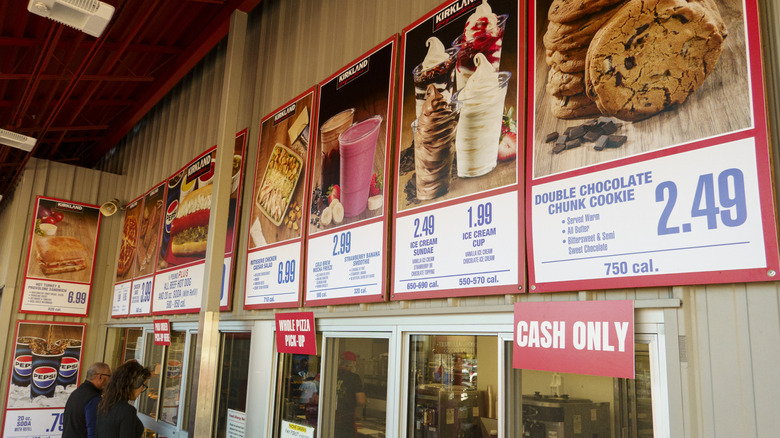
One of Costco's most beloved features is its iconic food court. Famous for its $1.50 hot dog and soda combo, oversized pizza slices, and creamy soft-serve, the food court has truly become a hallmark of the Costco experience. Conveniently located near the store's entrance and exit, it makes it easy to grab an on-the-go bite before or after shopping.
However, a common misconception is that the food court is open to everyone, even non-members. While this policy used to be rarely enforced, Costco has begun cracking down in recent years. Today, most warehouses require a membership card to order food court items, meaning those irresistible deals are officially reserved for members only. This change reflects Costco's broader goal of keeping its perks exclusive to paying members. So, if you've been eyeing that hot dog deal without a membership, you may be out of luck, unless you tag along with a friend who has one.
8. Myth: You shouldn't unload anything from your cart at checkout
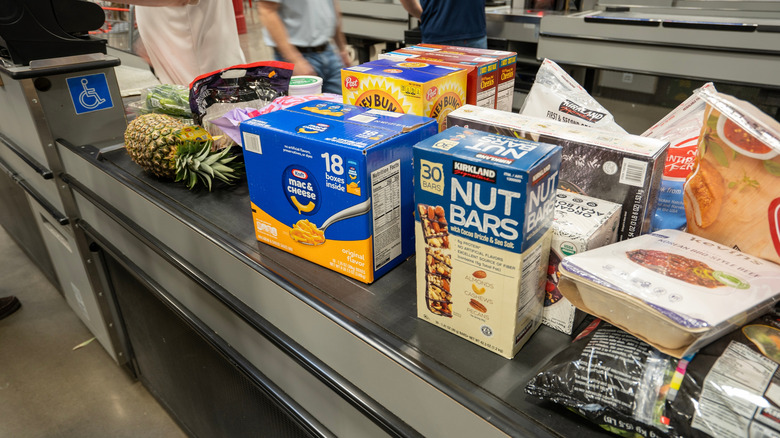
If you've ever watched the checkout process at Costco, you've probably noticed team members using extra-long scanners designed to reach bulky items so you don't have to lift heavy packs of water or giant paper towel bundles onto the belt. However, a common myth is that these scanners are meant for everything in your cart. In reality, you should treat checkout much like you would at a regular grocery store and unload most of your items onto the conveyor belt.
Doing this not only helps the staff scan your purchases more efficiently but also makes it easier for them to organize and pack your items neatly into boxes for transport. If you want another hack to speed things up, consider setting the items on the belt barcode-side up. Doing both these things keeps the line moving quickly and prevents bottlenecks at busy times. Save the long scanner for the big, heavy items (your back, and the people in line behind you, will thank you).
9. Myth: Costco only checks receipts after checkout to catch shoplifters
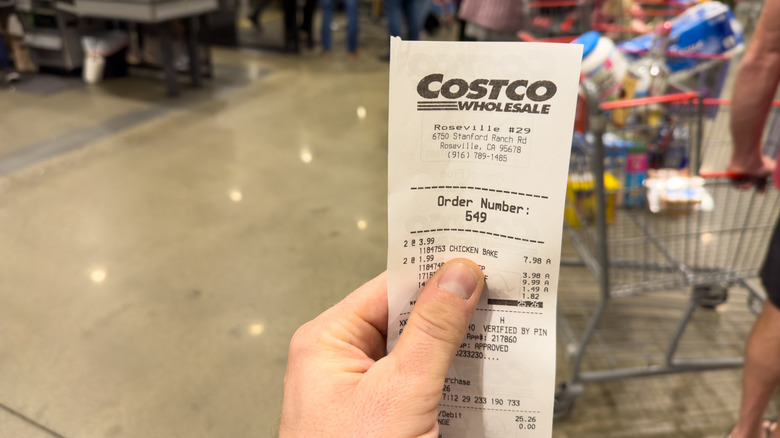
If you've ever shopped at Costco, you may have noticed and wondered why an employee is stationed near the exit to check receipts and carts after checkout. Many people assume this is primarily an anti-theft measure, but Costco has a few reasons for doing this.
While preventing shoplifting is certainly part of it, Costco explains that this extra check is largely about ensuring accuracy and customer satisfaction. With so many large and bulky items and the potential for an overwhelming number of products on the conveyor belt, mistakes can happen. During the checkout process, items may be missed, scanned twice, or rung up incorrectly. By having an employee verify your receipt and cart before you leave, Costco makes sure you're charged fairly and that no one goes home with an item unaccounted for or pays twice by accident. This is one of the ways the company prioritizes transparency and a smooth shopping experience for its members.