

How McDonald's Value Menus Have Changed Through The Years
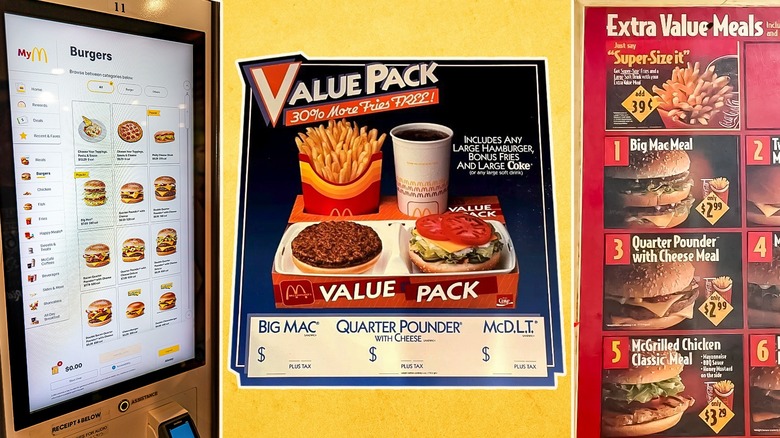
Yes, as wise parents have said since the dawn of fast food, you certainly do have food at home. But sometimes the heady mix of carbs, salt, and a healthy modicum of guilt is just too much to resist when we drive past those famous golden arches. You always know exactly what you're going to get, how it'll look, and most importantly how it'll satisfy your junk food cravings. It would be a mistake, however, even in these days of near-hyper inflation, to forget the biggest draw of all: McDonald's offers amazing value.
Mickey D's has made it a bit harder to find that value since the rise of the app and the death of the Dollar Menu's golden age, but it's still one of the most reliable options for the price no matter where you happen to be. From breakfast burritos and hash browns to Quarter Pounders and Big Macs to triple thick shakes and McFlurrys, (and of course, gloriously crispy shoestring fries) the deals at McDonald's have remained fast food staples since the restaurant first took off. But oh boy have the deals changed since the halcyon 1950s, when a dollar could buy you and yours a decadent feast.
Early McD's: All value, all the time
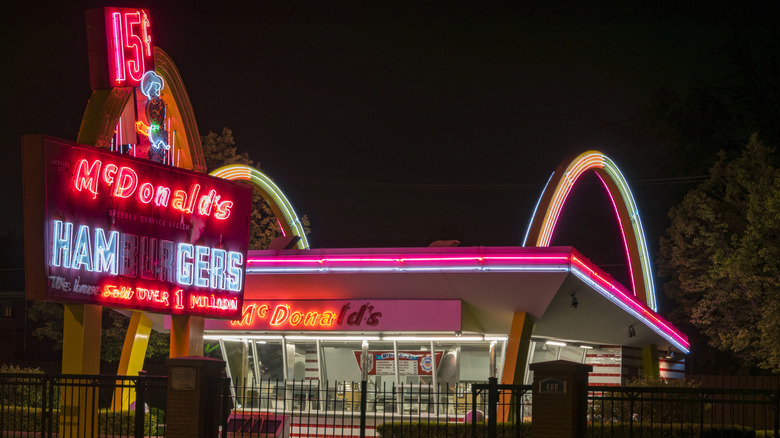
When McDonald's first opened in the 1940s, way before billions and billions were served and when the Filet-O-Fish wasn't even a glimmer in Ray Croc's skeptical eye, McDonald's began its life as a humble bar-b-cue joint in San Bernardino, California. Founded by two brothers named (you guessed it, McDonald), by 1948 McDonald's would transition into a hamburger restaurant serving quick, consistent and delicious burgers, fries and shakes. Anchored by the McDonald brothers' ingenious "Speedee System," which allowed employees to follow a strict routine and ensure a uniform product, ready when ordered. The system soon caught the eye of restaurant supplier Ray Croc, who recognized its genius and determined to bring it to the masses. With cutthroat business acumen and an eye toward innovation, Croc took the McDonald brothers' system and sold it, creating an empire that still stands.
Back then, the entire menu consisted of nine items, not a single one of which cost more than a quarter. The offerings, which constitute a value menu better than any we can imagine today, were as follows:
Hamburger: $0.15
Cheeseburger: $0.19
French Fries: $0.10
Milk, Coffee, Orangeade, Root Beer, or Coca-Cola: $0.10
Milkshake (Chocolate, Vanilla, or Strawberry): $0.20
Meal Deals and Happy Meals
The 1960s were a time for big changes at McDonald's, a microcosm of the seismic cultural changes going on around the country and the world. As Ray Croc's hold on his growing empire solidified after being made chairman of the board in 1955 (a position he would hold until the globally momentous year of 1968). As part of his experiments in making this once-humble burger stand a financial powerhouse, McDonald's began advertising what might be called the first value menu item in its history: The All-American Meal. Bundling a hamburger, fries and drink together for one low price, the All-American Meal became a staple on the McDonald's menu as McDonald's was becoming a staple of the growing suburban landscape.
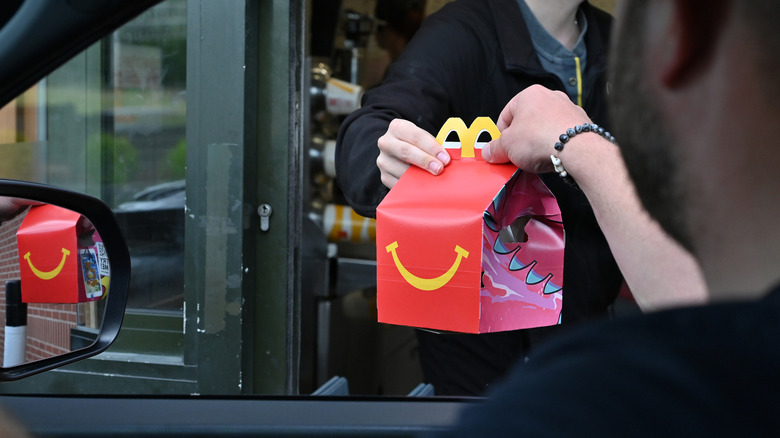
But the 1970s brought a much more iconic item to the McD's menu, one that's still a staple almost 50 years later. The Happy Meal, specially designed for kids with smaller portions, different side and drink options, and even a unique toy. But one thing about the Happy Meal is still in dispute: just who is responsible for creating it? Three McDonald's employees, Yolanda Fernández de Cofiño, Dick Brams, and Bob Bernstein all lay claim to originating the famous McDonald's kids meal. De Cofiño, a franchisee from Guatemala, began serving smaller hamburgers with a sundae and toy in 1976. Brams and Bernstein, a corporate employee of McDonald's and an advertising whiz, re-tooled the "Fun Meal" from competitor Burger Chef, taking the Happy Meal national in 1979.
The 1980s: Value packs and styrofoam
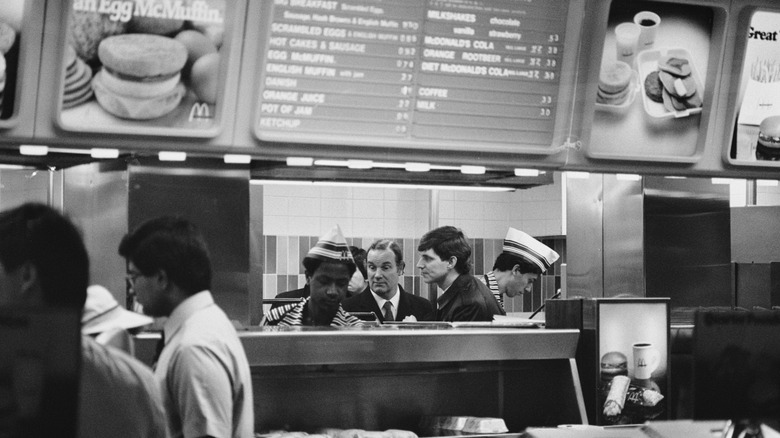
During Generation X's heyday, when kids roamed free until the streetlights came on and John Hughes dictated culture alongside MTV, McDonald's did everything it could to stay relevant in the fast-paced Reagan years. From McPizzas to the beloved and missed McDLT (whose double-sided styrofoam container kept your burger warm while keeping the lettuce and tomato cool and crispy), the 1980s were a time for experimentation. McNuggets got new sauces themed to "Fiesta" and "Shanghai" and special promos advertised each.
With the fiesta, coin collectors were happy to receive a coin from Latin America with their nine or 20 piece nuggets. With the Shanghai meal, diners received a McFortune cookie and chopsticks. Perhaps the biggest change to the menu for value seekers was a reimagining of an old favorite. The All-American Meal got a makeover, slick new packaging and a new name: the Value Pack. Customers could choose a Big Mac, Quarter Pounder with Cheese, or Filet-o-Fish with a drink and fries for just $2.59. These value packs mark the beginning of McDonald's earnest forays into a value menu, offering classic options for a reduced price.
The 1990s: Super Size
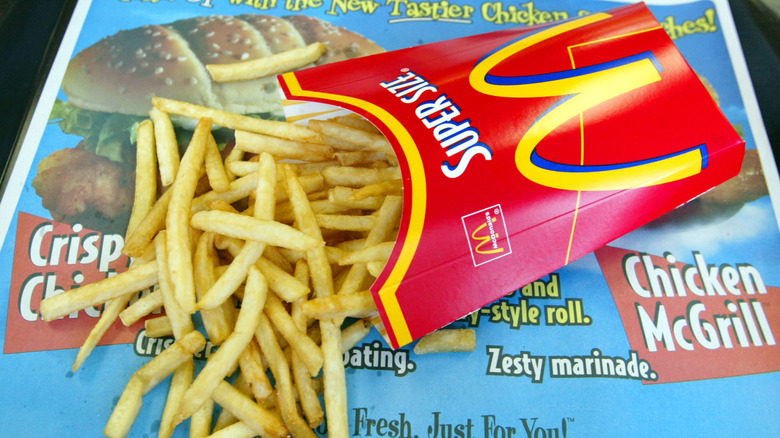
"Would you like your meal supersized?" It may have been the most famous upsell in the world between 1987, when McDonald's first started offering Super Sizing, and 2004, when it was phased out. Offering an even larger option for fries and drinks, the Super Size option began as a summer promo and was meant to be limited to that season. In the late 80s, Super Sizing your fries or soft drink was a mere 89c, while a Super Sized thick shake would run you $1.09. The Super Size option proved to be such a big seller that McDonald's would extend its run, even tying it in with movie releases like "Who Framed Roger Rabbit?" and "Jurassic Park."
This latter promotion proved so successful that Super Sizes became a permanent part of the menu in 1993. Once again, the whole McDonald's menu had a value option attached. Super Sizing remained popular throughout the 1990s until in the early 2000s a number of factors led McDonald's to phase out Super Sizing. First, in 2002, it debuted the first Dollar Menu, changing the face of fast food and offering new ways to save. Then, in 2004 Super Sizing became a byword for American excess thanks to Morgan Spurlock's documentary "Super Size Me."
Dollar Menus: The Golden Age
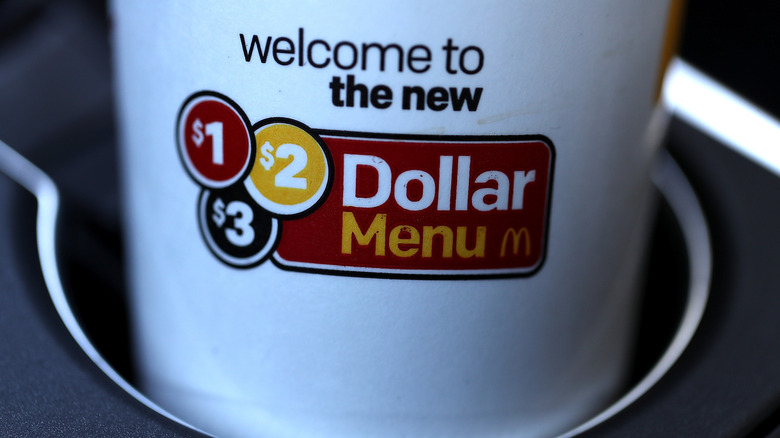
In the midst of the tech-bubble recession in 2001, a McDonald's franchisee named Jim Lewis met with colleagues in Midtown Manhattan, desperate for a way to buck the downward sales trends that accompanied the recession. At this meeting, the foundation for the quintessential McDonald's value play, the Dollar Menu. Rather than offering deals on set meals, the Dollar Menu would allow customers to build their meal out of $1 components. McChickens, any sized coffees, onion nuggets, apple pies, ice cream cones, McDoubles, and McNuggets were all just a buck. The element of choice, Lewis told Sherwood in 2024, was the key.
Rather than a few more fries or a few extra ounces of soda, McDonald's gave the customer the option to truly have it their way, to borrow a phrase from another fast food giant. Want two apple pies and a McChicken? Or a vanilla cone and two McDoubles? That'll be $3. One problem soon became clear, however: The deals were so good, customers were spending less each time they went to McD's. Before long, the profit margins began to show it and McDonald's was forced to start a process of tinkering with the value menu that would last until it was eventually phased out. The $1, $2, $3 menu offered customers the same choice with more deluxe items (and more profit for the restaurants), the McPick 2 let diners pick any two signature sandwiches for $5. As production costs skyrocketed in the 2010s and early 2020s (beef, for example, went up in price more 80% between 2002 and 2015). The beloved dollar menu was simply not sustainable anymore.
What's the deal now?
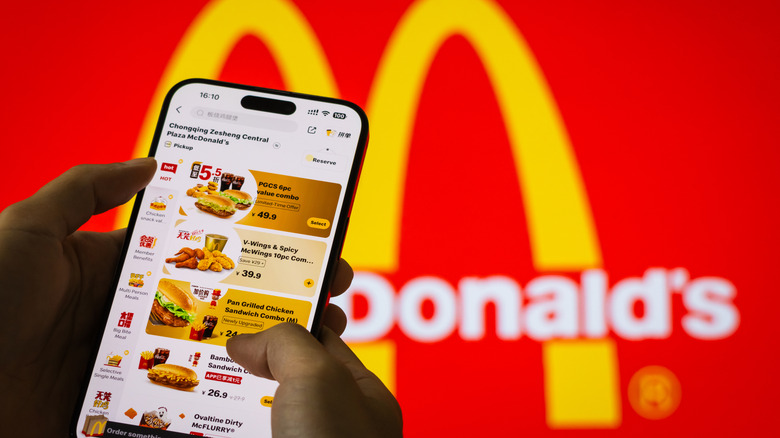
Perhaps only the Drive Thru can compare to the smartphone app in terms of sheer technological integration in the fast food industry. The ubiquity of the iPhone and Android has made every convenience a one-touch process. So, while you might not see the familiar dollar menu hanging above the counter at your local McDonald's, there are still plenty of deals to be found for savvy app users. Those who opt in on the McDonald's app receive a daily deal coupon that offers a kind of pop-up dollar menu with a rotating offer. Sometimes the daily deal is a buy-one-get-one, sometimes it's a simple discount. But it varies every day, removing some of the critical element of choice that made the classic dollar menu so beloved.
In 2025, the Golden Arches also introduced the new McValue menu for both breakfast and lunch/dinner. This new take on the value menu offers rotating limited time meal deals starting at $5. For example at the time of writing a McDouble meal was featured, offering fries, a drink and a small order of McNuggets. The other main feature of the new McValue menu is the option to add an extra item to your plate for a dollar after a qualifying purchase. For breakfast, that means you can buy any one of the following and add another from the same list for a dollar: Sausage Biscuit, Sausage McMuffin, Sausage Burrito or hash brown. For lunch and dinner, the qualifying items are: McChicken, six piece McNuggets, Double Cheeseburger, or small fry.