

10 Creative Ways To Use Up All Those Summer Peaches
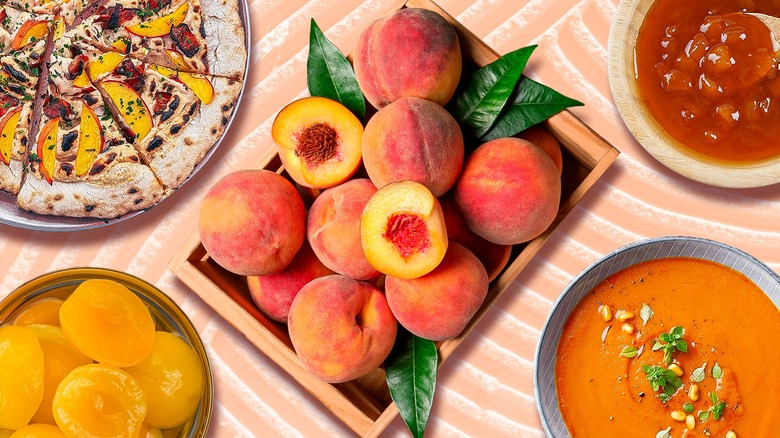
Summer is the best time of year for a bunch of things: going to the beach, traveling, and our personal favorite, eating fruit. Many different species reach their peak growing season in the summer months, and if you're anything like us, you know how important it is to stock up on fresh produce. However, the desire to eat fruit at its peak flavor can cause some problems (read: opportunities), as our kitchen is overrun with bags upon bags of fruit — especially peaches.
Peaches don't stay ripe forever, so we have a tendency to fill our fridges and countertops with them in anticipation of progressive sweetening. Eating a ripe peach out of hand, only to have it dribble down your arm, shirt, and every surface you touch, is wonderful, but there is much more to peaches than just eating them straight. If you are swimming in fresh peaches this time of year, you might be looking for ways to use them beyond conventional snacking and pie and jam making — and you're in luck. The next time you're looking for inspiration, you'll want to turn to this list of creative ways to use the delicious stone fruit.
1. Swap peaches for tomatoes in your BLT

We're not saying there's anything wrong with a BLT. In fact, it's one of the most well-known sandwiches for a reason: That perfect contrast of salty bacon, crisp lettuce, juicy tomato, and toasted bread is absolutely divine. If you have something against tomatoes or you're looking to switch up your BLT routine, try making this sandwich with sliced peaches instead of tomato. Like tomatoes, peaches have an acidic and slightly tart flavor, though you'll get far more sweetness if you opt for peaches (making it a BLP, if you will). While it may take some getting used to, the sweet, honeyed profile of the stone fruit will mesh well with the saltiness of the bacon, making for an excellent and well-balanced bite. Just be prepared for your sandwich to get a little juicy. A sturdy bread, like sourdough or ciabatta, will both soak up all that peach juice like a sponge and taste great.
Ripe peaches are best for this sandwich, as they are sweet and soft enough to bite into. Layer your thinly sliced fruit onto your bread with the bacon and the lettuce, and add a little smear of mayo to the bread if you prefer. You can also take this sandwich up a notch by drizzling on some hot honey instead of mayo. This spicy-sweet sauce would be an excellent pairing for grilled peach slices, especially when matched with the salty bacon. You can swap out the lettuce for something more strongly flavored, like arugula, to give your sandwich a more peppery bite.
2. Turn them into a dessert sauce
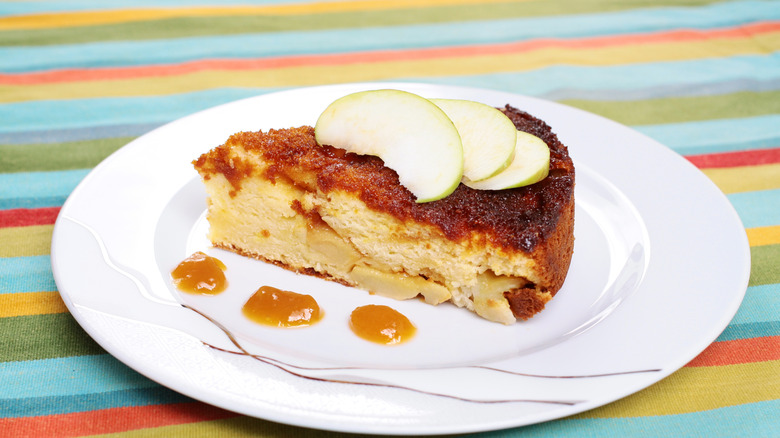
Peaches offer a bright acidity and honeyed flavor, making them an excellent addition to dessert sauces and spreads. If your kitchen is overrun with a bumper crop of the stone fruit, try turning them into a three-ingredient peach sauce, perfect for everything from ice cream to smoothies. You'll want to cook the peeled and diced fruit down with a little bit of lemon juice for acidity and sugar for sweetness. Then, transform it into a thick puree with a food processor, countertop blender, or immersion blender. You can leave it as-is if you don't mind its pulpy consistency, or pass it through a strainer for something a little smoother.
Desserts are an excellent place to use this sauce. You can spoon a little onto a freshly baked buttermilk biscuit for a fun take on a peach shortcake (add extra grilled peaches to up the ante), or drizzle it atop a slice of cheesecake for a summery twist. Since the recipe is simple, it would be easy to use this versatile sauce for drinks and savory dishes, too. Pour it over your baked chicken or grilled salmon instead of peach preserves, or pour a little bit into your Champagne flute for a fresh take on a Bellini. You can also eat it for breakfast; it would be an excellent drizzle for a slice of toast or atop a batch of buttermilk pancakes.
3. Pickle them for later
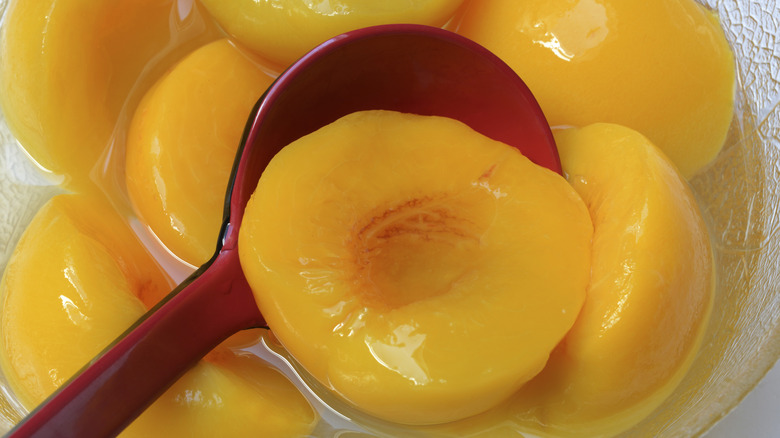
If you live in the South, the idea of pickling peaches may not be entirely new to you. However, when we discovered that you can easily preserve this summer fruit by pickling it, there was no stopping us. As with other types of pickles, the peaches are suspended in a vinegary, sweet brine that helps them maintain their texture and flavor. They're often flavored with spices; cloves and cinnamon are popular options, as the warming spice complements the honeyed flavor of the fruit quite well. If you like it hot, you may also try adding Sichuan peppercorns to your jars.
The pickling process changes the flavor of the fruit, so it may be a bit of a learning curve to find ways to use these plump, soft, and delightful pickley fruits in your kitchen. Since the preserved fruits are both sweet and tangy, they would be excellent garnishes for rich meats, including pulled pork, tenderloin, and chops. You can also add the fruit to a chutney or a salsa recipe; it would be preferable over the fresh fruit if you want a more acidic flavor profile. You can also use them as you would regular peaches, like a topping for ice cream, pancakes, or toast. We like using them for desserts because the flavor is not overwhelmingly sweet, yet you still get the juiciness and the brightness of the fruit in every bite.
4. Add the juice to your favorite summery beverages

If you have a surplus of peaches in your kitchen, your mind might immediately go toward all the ways to use the whole fruit — but the juice alone can be just as useful and worth experimenting with. While we won't argue with a fresh peach Bellini, it's far from the only beverage where peaches should play a starring role. We love adding the juice to our black iced tea, lemonade, and Arnold Palmers for a sweet twist. The peach juice will sweeten up all of these drinks, which can come in handy when you don't want to add a ton of added sugar or simple syrup to them. You can also customize your drinks with other fruits and compatible flavorings. A blackberry-peach iced tea or lemonade is excellent, as the tart berry flavor can be the perfect complement to the sweet fruit. If you like herbs, try muddling some mint into your drink.
Juicing your peaches is easier than you think. If you have a juicer, you can simply put the fruit through the hopper. You can also blend the peeled fruit with an immersion blender or standard countertop blender. Afterward, pass it through a cheesecloth and a sieve to remove the pulpy flesh. This hack will work for frozen fruit as well as fresh fruit. If you go with the former, you're just going to want to thaw your fruit ahead of time so that it's easier to work with.
5. Toss your peaches on the grill for a simple dessert
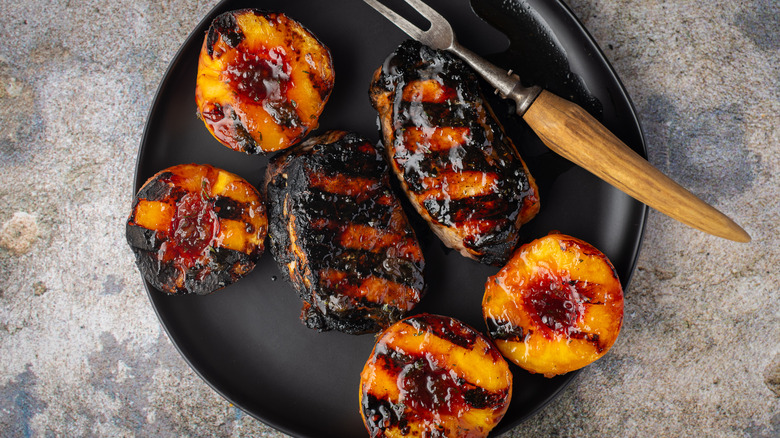
There's something pleasing about biting into a juicy, sweet, ripe peach, but a far better way to enjoy this summer fruit is after it has some time on the grill. What's nice about this method is that you can use grilled peaches for almost anything you'd use regular peaches for, including salsa, dessert, and more. You can also slice them up and eat them out of hand, or add a drizzle of honey and a scoop of homemade whipped cream on top for a sweet, decadent dessert. Alternatively, take inspiration from Emeril Lagasse and top your fruit with decadent, creamy mascarpone.
Making great grilled peaches is all about selecting the right ones and properly cooking them. Your peaches should still be firm when you give them a squeeze. Ones that are too squishy will produce too much juice, caramelize too quickly, and potentially plunge through the grill grates down into the charcoal below. If you're worried your peaches are a little too ripe, try cooking them in a grill pan so you don't have to worry about losing them to the flame underneath. It's also crucial to coat them in oil, as the natural sugar can cause them to stick and burn on the grill or pan. You'll only need to cook your fruit for about five minutes on each side, or until you start to notice grill marks forming. You can safely cook your peach halves over direct heat — just make sure not to leave them on too long or they'll burn to a crisp.
6. Layer them on your pizza

When the phrase "fruit on pizza" comes up, your mind might dart straight to the divisive elephant in the room: pineapple. While people can argue about whether pineapple deserves a spot on pizza or not, there's no denying other fruits like peach. Peach is one of the best additions to a pizza because it has subtly sweet and juicy qualities that make it an excellent pairing for other pizza toppings — even ones outside of the dessert realm. One classic pairing is peach and prosciutto; the fruit is the perfect complement to the salty and deeply savory meat. You can also add a sprinkle of basil on top to balance out the flavors, and stick to a relatively neutral-tasting cheese, like mozzarella or burrata, the latter of which is best added post-bake.
You'll want to stay away from a traditional red sauce base, as the tart and highly acidic flavor can conflict with the sweet notes of the peaches. Instead, try swapping out tomato sauce for another flavorful yet still neutral sauce base, like olive oil or an herb pesto. Since the fruits have a ton of moisture, it's best to cut them into thin slices to disperse the juice and ensure that they soften enough in the oven. Large chunks of peach will not only give you an unbalanced bite, but they won't soften at all in the oven. You can also grill your peaches ahead of time to make them taste even sweeter.
7. Chop up your fruit and add it to salsa
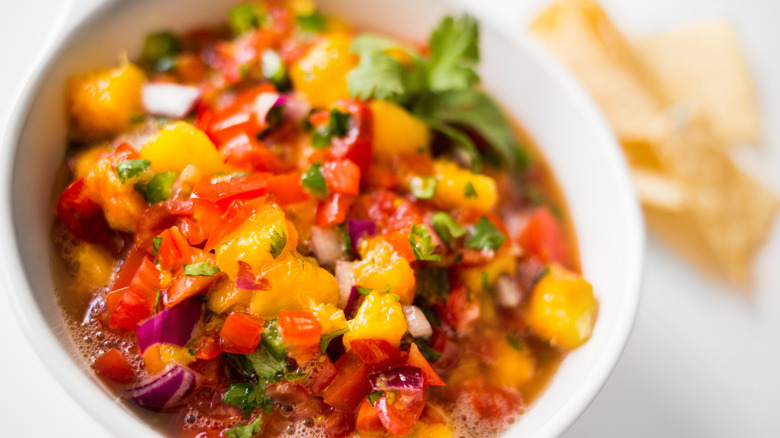
Salsa, like peaches, is an excellent food to enjoy during the summertime. The dip's sweet, tangy, and salty mashup, accented by juicy fruits and veggies and herbs, is excellent not only on tortilla chips, but also on or in anything that you can eat salsa with, like burritos, grilled fish, and tacos. The next time you're making a chunky pico de gallo-style salsa, try adding some fresh peaches to it. The sweetness and honeyed flavor of the fruit will work well with the juicy tomatoes, cilantro, sharp onion, and more. You can even abandon the tomatoes entirely and use peaches as the star of your show.
The nice thing about this salsa is that it can be mixed together and enjoyed fresh, or it can be canned and enjoyed at a later date. The latter method is relatively simple and allows you to use it to preserve bushels upon bushels of peaches. The only downside is that you should wait about a week after your peach salsa is canned before enjoying it for optimal flavor.
Peach salsa is an excellent starter to serve with tortilla chips, though we really like it served atop grilled fish and seafood tacos. The stone fruit's tanginess, complemented by lime juice and/or vinegar, can really ground the bite. You can use it on more than just white fish, too. Mahi mahi, salmon, snapper, and tuna steaks are all great candidates for your fruity salsa.
8. Serve it with mozzarella and basil
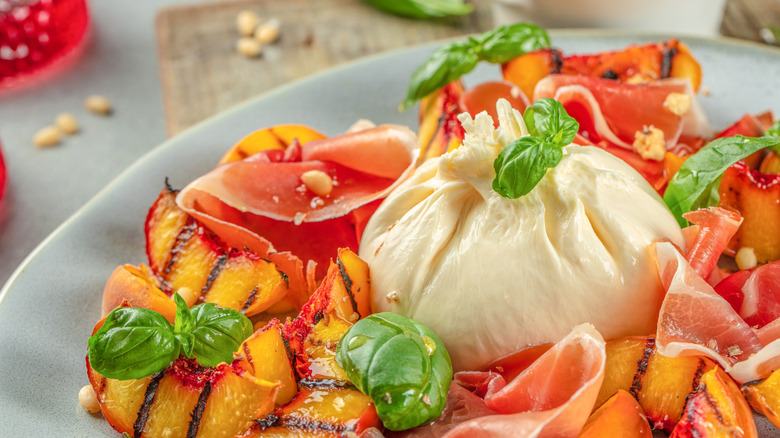
One of our favorite dishes to enjoy during the summer is Caprese salad. The combination of fresh, juicy tomatoes, creamy mozzarella, and fresh basil is divine, and the only way to make it taste even better is by inviting peaches to the party. We already shared how you can swap out tomatoes for peaches on a BLT, but that's far from the only place you can use this substitution. You can make a quick and easy appetizer by combining peaches, basil, and fresh mozzarella. This can take the form of a chopped Caprese salad spinoff, or you can construct little bites with grilled peaches, mozzarella, and a fresh basil chiffonade on top. Serve it as a starter or alongside your main meal; it goes especially well with grilled chicken or fish.
You can also start your day with this combination. Prepare burrata toasts with grilled or caramelized peaches, basil, and sturdy pieces of sourdough or ciabatta. You can certainly swap out the basil for thyme if you prefer a more woodsy flavor, or add prosciutto for a salty twist. We'd also recommend adding a balsamic glaze on top to tie the whole thing together.
9. Use peaches to flavor your gazpacho
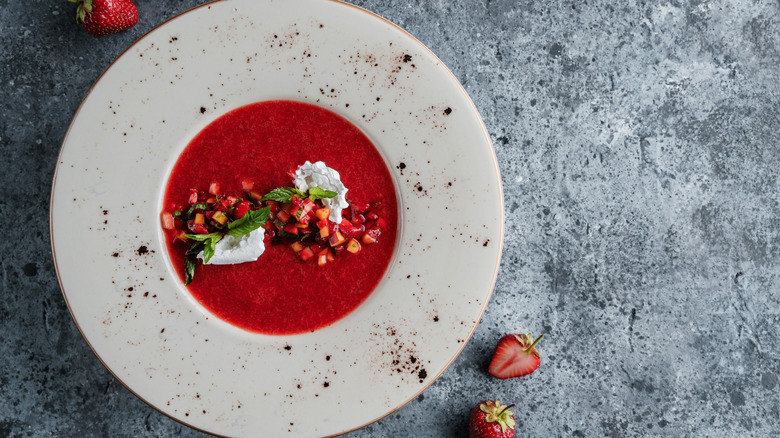
Soups are hearty, warming, and perfect for a chilly fall or winter's day, but gazpacho may be the exception to the rule. This soup is traditionally served cold and features a medley of veggies — often zucchini, tomatoes, and cucumber — but that doesn't mean that fruit has to be excluded. In fact, your bounty of summer produce can actually be turned into a chilled gazpacho relatively easily, and it's a great way to enjoy these ingredients without just eating them out of hand.
You can use both yellow and white peaches to make your gazpacho. Simply add the peeled fruit to a food processor or blender with your other soup components, like cucumber, lime, olive oil, and herbs, and pulse until it's smooth. Some people also add tomatoes to their soup, though we think that this ingredient isn't always necessary, as tomatoes can sometimes be too acidic and eclipse the peach's flavor entirely. Regardless of what you add to your recipe, always make sure you let it sit in the fridge and chill before serving. Not only is it more refreshing, but it gives the ingredients time to meld together.
Gazpacho is an excellent summer main dish, or it can be served as a simple starter. It's easily customizable, and you can always add your own personal twist to it. For one, try grilling your peaches for a sweeter flavor and add other fruits, like mango and cantaloupe, for a more unconventional twist.
10. Turn them into a flavorful chutney
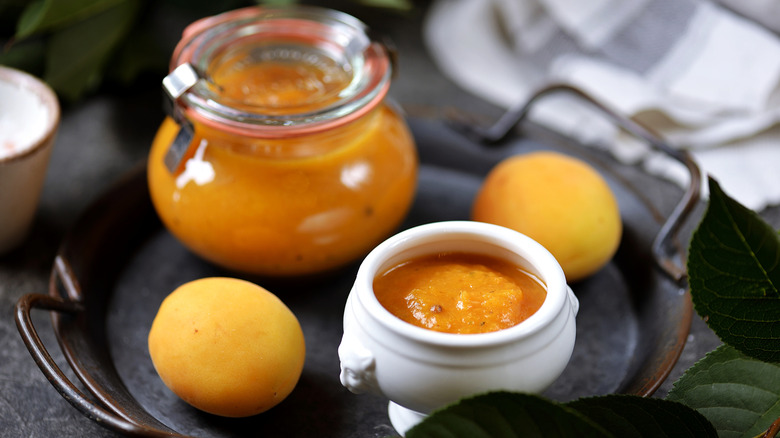
Chutney may not be a condiment that you're familiar with, especially if you don't find yourself cooking a lot of South Asian dishes. This fruity relish, which is popular in Indian cuisine, is enjoyed as a topping on street foods and homestyle dishes alike. It's not the same thing as peach preserves, as chutneys often integrate dried fruits, vinegar, and spices. While some of their ingredients may lean sweet, the overall profile of chutney is more savory.
Peach is an excellent addition to chutney because it has a jammy consistency and vibes well with other ingredients, like cardamom, chiles, and brown sugar. Blanch the peaches in boiling water to make the skins easier to remove before mixing the fruit with your other ingredients on the stovetop. Depending on the texture of your other ingredients, you may need to simmer your chutney for upwards of an hour until it's smooth. As long as the chutney is properly canned, it can last in your fridge for several months.
There are endless ways to put your chutney to good use. We love smearing chutney on a basic grilled cheese because it allows the flavor of the spread to shine. You can also add your chutney to a charcuterie board — it should come as no surprise that prosciutto is an excellent pairing for it. Once you get a feel for its flavor, try spooning it on roasted and grilled meats and fish.